
Perfume by Patrick Suskind
Why It's a Masterpiece (Week 48)


Perfume: The Story of a Murderer, a novel by German author Patrick Süskind, was first published in 1985. This remarkable literary work quickly garnered attention for its unique and evocative narrative style, blending elements of historical fiction with psychological thriller.
Set in 18th-century France, the novel delves deep into the life of Jean-Baptiste Grenouille, an olfactory genius with a dark obsession. Süskind's meticulous research and vivid descriptions bring the era to life, capturing the essence of Parisian streets, markets, and perfumeries.
The book's success was immediate and widespread, translating into numerous languages and earning acclaim from critics and readers alike. Its atmospheric and richly detailed storytelling, combined with a compelling and unsettling protagonist, has cemented Perfume as a modern classic, captivating audiences for decades.
Plot
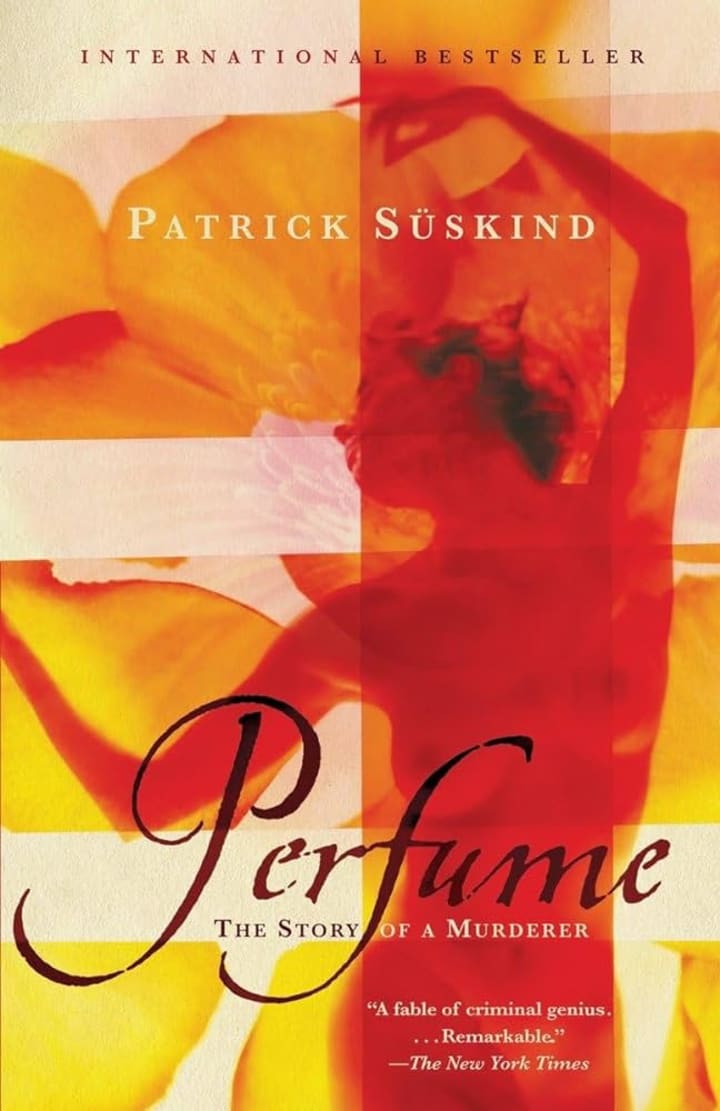
It follows the life of Jean-Baptiste Grenouille, born in Paris in 1738. Abandoned by his mother and left to die in the filthy streets, Grenouille survives against all odds, growing up in a grim orphanage. From an early age, he possesses an extraordinary sense of smell, which isolates him from the rest of humanity. Grenouille's unique gift leads him to the trade of perfumery, where he becomes an apprentice to Giuseppe Baldini, a failing perfumer. Grenouille's talent revitalises Baldini's business, but he soon tires of creating conventional perfumes and becomes obsessed with capturing the scent of a young virgin, believing it to be the ultimate fragrance.
Driven by this obsession, Grenouille embarks on a journey of murder and collection, killing young girls and preserving their scents. His gruesome activities create a wave of terror in the town of Grasse, where he settles. As Grenouille perfects his techniques, he finally creates the ultimate perfume from the essence of 25 murdered virgins. This perfume grants him a god-like power over people, compelling them to love and adore him. However, Grenouille's triumph is short-lived. Despite his newfound control over others, he finds himself disgusted by humanity and realises that he despises the world and himself.
In the end, Grenouille returns to Paris, where he allows himself to be consumed by a crowd of vagrants in a moment of cathartic self-destruction. The crowd, under the influence of his powerful perfume, believes they are engaging in an act of divine love. Grenouille's life ends in a brutal but fitting manner, reflecting the novel's dark and twisted exploration of the human psyche and the nature of obsession.
Into the Book

One of the central themes in Perfume is Grenouille's obsession with creating the perfect scent. This fixation drives him to murder innocent girls, reflecting a pathological pursuit of perfection. His extraordinary sense of smell isolates him from society, fuelling his desire to craft a scent that transcends human limitations.
For instance, Grenouille's first murder, that of a young redheaded girl, marks the beginning of his obsession. Her scent captivates him so profoundly that he feels compelled to possess it. This moment is pivotal, illustrating how his obsession overrides any moral considerations. Grenouille's relentless pursuit culminates in the creation of his ultimate perfume, highlighting the destructive nature of his perfectionism.
“He succeeded in being considered totally uninteresting. People left him alone. And that was all he wanted.”
- Perfume by Patrick Suskind
Grenouille's exceptional olfactory abilities set him apart from society, resulting in profound alienation and isolation. From his birth, he is rejected and abandoned, leading to a life devoid of meaningful human connections. This isolation is symbolised by his lack of personal scent, making him an invisible presence to others.
His detachment is further exemplified when he retreats to a cave for seven years, completely isolating himself from human contact. This period of solitude underscores his inability to relate to others and his disdain for humanity. Grenouille's isolation shapes his identity and actions, driving him to create a perfume that compensates for his lack of human connection by commanding adoration.
“...talent means nothing, while experience, acquired in humility and with hard work, means everything.”
- Perfume by Patrick Suskind
Scent plays a crucial role in Perfume, serving as a powerful tool for manipulation and control. Grenouille's understanding of scent allows him to influence people's emotions and actions. This theme is vividly illustrated when he creates a perfume that makes people perceive him as an angelic figure. The townspeople, under the influence of his scent, are driven to acts of worship and adoration, showcasing the profound impact of olfactory manipulation.
Another example is Grenouille's final act, where he uses his ultimate perfume to incite a frenzied orgy among the townspeople, demonstrating the extreme power of scent to override human reason and morality. Through Grenouille's experiences, Süskind explores the ethical implications of such power and the ease with which sensory perception can be exploited.
“Odours have a power of persuasion stronger than that of words, appearances, emotions, or will. The persuasive power of an odor cannot be fended off, it enters into us like breath into our lungs, it fills us up, imbues us totally. There is no remedy for it.”
- Perfume by Patrick Suskind
Why It's a Masterpiece
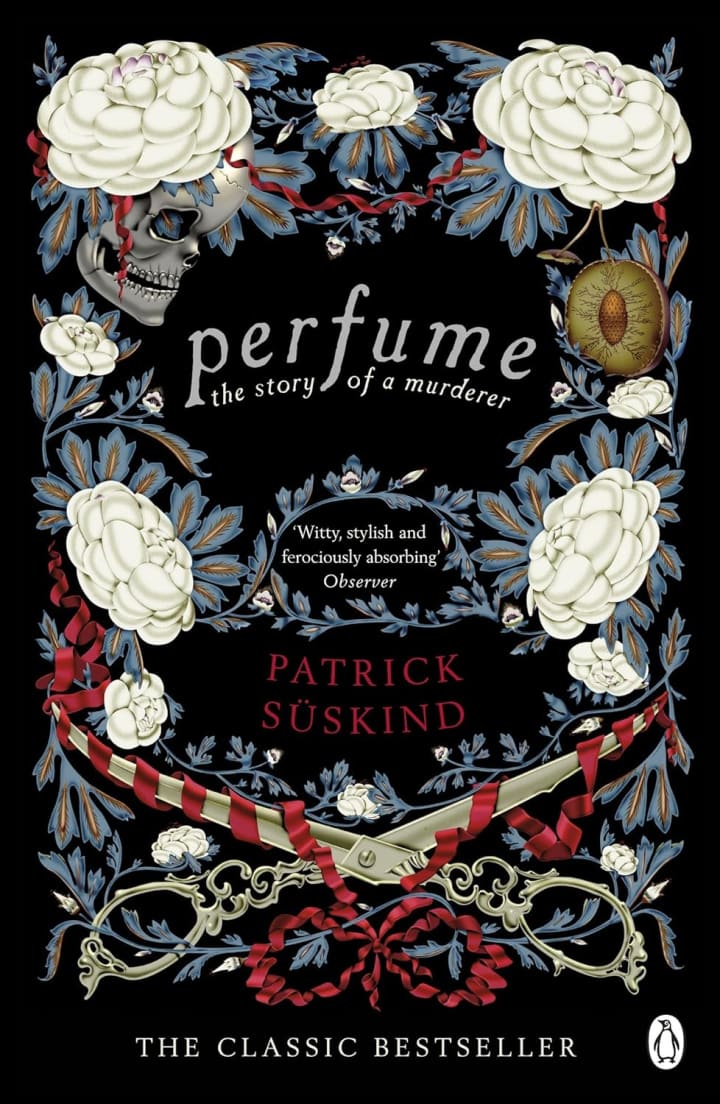
Perfume is widely regarded as a masterpiece due to its unique narrative style, profound themes, and evocative prose. Süskind's meticulous attention to detail immerses readers in the sensory world of 18th-century France, particularly through his vivid descriptions of scents and their effects.
The novel's protagonist, Jean-Baptiste Grenouille, is a complex and intriguing character whose dark journey captivates readers. Süskind masterfully balances historical context with psychological depth, creating a narrative that is both intellectually stimulating and emotionally engaging.
The novel's exploration of themes such as obsession, isolation, and the power of scent provides profound insights into the human condition. Moreover, the story's dark, almost gothic atmosphere, combined with its philosophical undertones, elevates it beyond a simple thriller to a work of literary significance.
The novel challenges readers to contemplate the nature of identity, the morality of artistic pursuit, and the ways in which individuals can manipulate and be manipulated. Perfume stands out for its originality, depth, and the haunting beauty of its prose, securing its place as a modern classic.
Conclusion
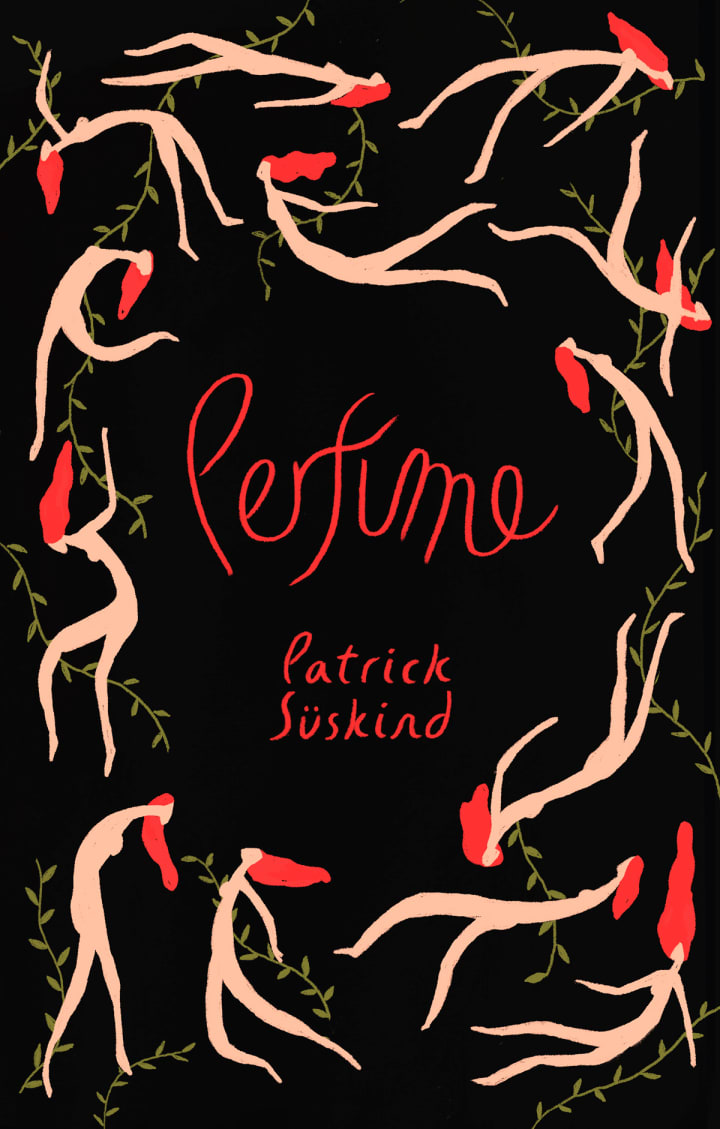
The text remains a relevant and compelling read today due to its timeless exploration of human nature and the senses. The novel's rich themes and intricate character study resonate with contemporary audiences, inviting reflection on the complexities of identity and the often-overlooked power of the senses. Patrick Süskind's masterful storytelling ensures that Perfume continues to enchant and provoke readers, solidifying its status as an enduring literary work.
Next Week: Love in the Time of Cholera by Gabriel Garcia Marquez
About the Creator
Annie Kapur
I am:
🙋🏽♀️ Annie
📚 Avid Reader
📝 Reviewer and Commentator
🎓 Post-Grad Millennial (M.A)
***
I have:
📖 280K+ reads on Vocal
🫶🏼 Love for reading & research
🦋/X @AnnieWithBooks
***
🏡 UK
Keep reading
More stories from Annie Kapur and writers in Geeks and other communities.
Another Birthday Article
I don't think I did one of these last year and well, I was kind of estranged from doing it this year until I had a really good idea. I'd like to see whether my requests for literature and film have changed from when I was younger (when I look back, they have not really changed all that much). I got out some notebooks from around a decade ago and saw what kind of notes I had made about my favourite books and movies and well, there's a worrying trend that means I may have remained more similar than I thought. Oh well, it's my birthday so lets carry on.
By Annie Kapur12 months ago in Geeks
Silver Screen Magic with Mae West
American actress and singer Mae West became a popular film actress during the Great Depression. She started entertaining in vaudeville, then performed on Broadway, and finally went to Hollywood. She signed up with Paramount Pictures and made her debut in the 1932 film “Night After Night.” She also starred in musicals, comedies, and crime dramas. The American Film Institute named her one of the best classic Hollywood actresses.
By Rasma Raisters8 days ago in Geeks
25 Years Ago The World Welcome Hobbits & Lord of The Rings into Theaters
Twenty-five years ago, a gamble reshaped cinema—and few people realized it in the moment. Where it all started! In December 2001, audiences stepped into Middle-earth with The Lord of the Rings: The Fellowship of the Ring, and something quietly seismic happened. This wasn’t just another fantasy movie arriving for the holiday season. It wasn’t a niche genre experiment or a disposable blockbuster meant to fade once the credits rolled. It was the opening chapter of a cinematic undertaking so ambitious that, even now, it feels borderline impossible that it worked at all.
By Lawrence Lease4 days ago in Geeks


Comments (1)
I love your writing here ✍️♦️♦️♦️♦️