
Movie Review: 'House of Gucci' True Crime Story or Parody of Excess? You Decide
House of Gucci is a mixed bag of bad accents, good performances, camp, and failed drama.


House of Gucci is a true crime story about the death of Gucci scion, Maurizio Gucci, played by Adam Driver. As a true crime story it’s not bad, as a serious drama about real people in a real life tragedy, House of Gucci is rather disastrous. Unable to distinguish whether he is making a real life crime drama or a campy satire of wealth and privilege, director Ridley Scott has made a strange and off-putting movie that is consistently at odds with itself, it’s intentions, and it’s actors who swing wildly from parody to serious intent.
House of Gucci picks up the story of Patrizia Reggiani (Lady Gaga) as she is working for her family trucking company. The immediate sense is that Reggiani has ambitions that exceed her family’s relatively modest fortune. At a party she may or may not have been invited to, Patrizia meets Maurizio Gucci, mistaking him for a bartender. In her defense, the future head of the House of Gucci was behind a bar and wearing a traditional tuxedo at what is purported to be a costume party.

The two dance the night away but Gucci ends up leaving with no plans to see Reggiani again. Not one to let an opportunity pass, Reggiani uses Maurizio’s family name as a clue to figure out where he might be so that she can arrange another meeting. Her ruse works and the two begin dating. The first test of their relationship comes when Maurizio introduces Patrizia to his legendary father, Rudolfo Gucci (Jeremy Irons). Rudolfo co-owns and runs the House of Gucci with his brother, Aldo (Al Pacino).
Sensing Patrizia’s nature as a social climber, Rudolfo dismissively tells his son that he can continue sleeping with Patrizia but he’s forbidden from marrying her. Unfortunately for Rudolfo, marriage is exactly what Maurizio wants, on top of being ambivalent about being the head of the House of Gucci. Using Patrizia as an out, Maurizio shows up on Patrizia’s doorstep and begs her to marry him and for her family to take him and give him a job. Patrizia says yes and for a time the man who would go on to be the billionaire head of Gucci works as a truck driver.

This changes after an encounter between Maurizio, Patrizia, and his Uncle Aldo. Dissatisfied with his son Paulo’s (Jared Leto) terrible taste and poor decision making, Aldo turns to Maurizio whom he wishes to groom to be the next head of the House of Gucci. With Rudolfo having begun the traditional movie death cough, it’s only a matter of time before he’s gone and someone needs to take on his responsibilities. After a failed effort by Paolo to impress his Uncle, Aldo manages to arrange a reconciliation between the estranged father and son just before Rudolfo's case of Hollywood movie cough, ends his life.
All while this is happening Patrizia is in the background pulling strings and pushing Maurizio to return to his family business, if only for her desire to be part of the House of Gucci herself. Once inside the family business, Patrizia becomes Lady Macbeth, helping to arrange Maurizio’s further ascent up the ladder only to find that her husband is far more Macbeth himself than she ever imagined. Rather than be wracked with guilt, ala Shakespeare's legendary lady, Patrizia finds herself seeking to arrange her husband’s demise to secure her own future.

And that’s House of Gucci on a plot level. The story is based on the book The House of Gucci: A Sensational Story of Murder, Madness, Glamour, and Greed by Sara Gay Forden but director Ridley Scott and screenwriter Becky Johnson take a number of liberties with the story. Fashion Designer Tom Ford, who was instrumental in reviving Gucci as a luxury brand in the early 80’s, indicated in a piece he wrote about the movie that many scenes appear to have been invented solely to give the big name actors more screen time.
Ford is absolutely correct as several scenes, including one in particular involving Irons and Leto’s characters, are so superfluous as to outright state their complete lack of necessity. The Leto-Irons scene does serve the narrative of a parody of wealth and obliviousness that is occasionally what House of Gucci is but it stands out more as an excuse to give these two actors a chance to indulge in their characters’ eccentricities. Leto especially appears to lean into eccentricity in just about every scene he gets.

The battle of tone at the heart of House of Gucci is the film’s biggest downfall. At times the opulence of it all becomes quite silly and the Machiavellian machinations tend closer to late night soap opera than a serious, Oscar intended drama. Scenes featuring Pacino scheming with either Driver or Gaga are a tightrope between parody and seriousness with the Italian stereotype accents tending to push everything further toward camp while the deathly seriousness of the performances tries desperately to sell the drama. In the end, neither parody or drama is inspired and apathy takes the lead.
Indeed, the lasting impression of House of Gucci is indifference. There are strong moments but not enough to create a satisfying whole. I enjoyed Adam Driver’s earnest performance and he seems to strike the best balance between the silliness of his accent and the seriousness of his performance, but it’s not enough to sell the drama of the movie. It’s unclear what the intended effect of House of Gucci is. I assume we are supposed to feel for the real life victim of murder, Maurizio, but by the end we seem him as a cold hearted failure who may not have deserved to be murdered but is not such an amazing person as to register as a tragedy we deeply care about.

That’s no fault of Driver but more of a movie that can’t strike a balance between genuine drama and a campy send up of wealth and privilege. There is a great deal that we could mock about the faltering house of Gucci and the desperate ways in which the family clung to wealth and power like leeches on a host body. Those elements are present in House of Gucci but the punches get pulled in favor of leaning into the familial strife and the serious tone struck by Gaga whose Patrizia vacillates wildly between camp and seriousness.
Patrizia is undoubtedly a character intended to vacillate as she does from loving wife to harridan, social climber to desperate housewife, but the movie fails her by not allowing the performance to dictate the tone of the movie. The film seems to take moments seriously and then let a moment of odd comedy sneak in as if they wanted to remind us of how aware the filmmakers are of the ludicrous levels of wealth and privilege on display. This choice, along with a strong desire to give each member of the big name cast a moment to shine and over-act to their heart’s content is what in the end renders House of Gucci so unsatisfying.

House of Gucci has elements of a story from my very favorite podcast, The Dollop with Dave Anthony and Gareth Reynolds. Indeed, their structure of a real life story paired with outlandish and bizarre flights of improv fancy, would provide a far more apt and impactful place for this story to be told. The absurdity of these characters and the seriousness of a murder plot could find strong purchase in Dave Anthony's brilliantly detailed stories that are wonderfully embellished by Gareth Reynolds' outsized and hilarious improvisations. Sadly, House of Gucci is not an episode of The Dollop but something akin to a screenwriters misunderstanding of why The Dollop format is so great for stories like this.
House of Gucci opened in theaters on November 24th, 2021.
About the Creator
Sean Patrick
Hello, my name is Sean Patrick He/Him, and I am a film critic and podcast host for the I Hate Critics Movie Review Podcast I am a voting member of the Critics Choice Association, the group behind the annual Critics Choice Awards.
Keep reading
More stories from Sean Patrick and writers in Geeks and other communities.
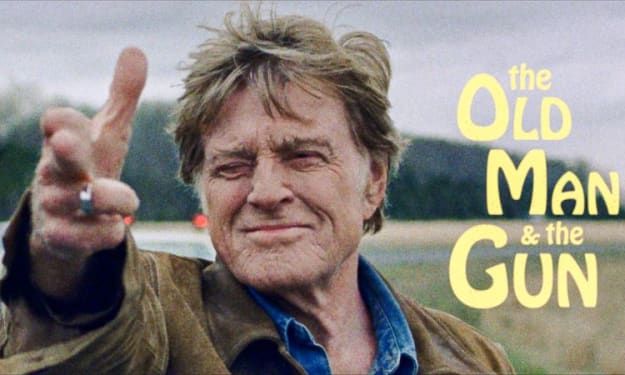
Movie Review: 'Old Man and the Gun' Starring Robert Redford
Robert Redford announced his retirement from acting in 2019. That means that his final performance is his role in the David Lowery helmed Old Man & the Gun. If that is indeed the case, that Mr. Redford is truly retired, he goes out on a pretty great note, playing a character that suits him. The consummate charmer, Redford plays bank robber Forrest Tucker with the kind of half-smile and glint in his eye which marked his all time greatest performances.
By Sean PatrickExclusive • 4 years ago
Silver Screen Magic with Mae West
American actress and singer Mae West became a popular film actress during the Great Depression. She started entertaining in vaudeville, then performed on Broadway, and finally went to Hollywood. She signed up with Paramount Pictures and made her debut in the 1932 film “Night After Night.” She also starred in musicals, comedies, and crime dramas. The American Film Institute named her one of the best classic Hollywood actresses.
By Rasma Raisters9 days ago in Geeks
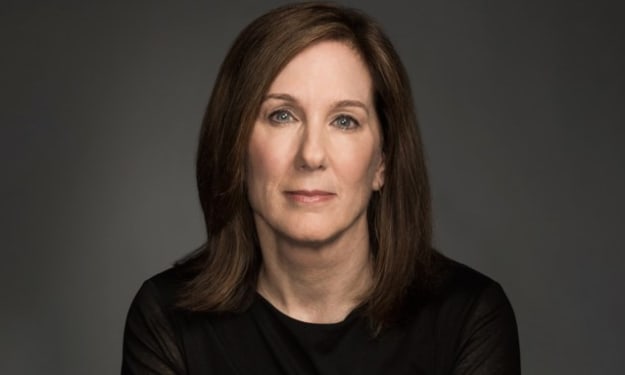
Kathleen Kennedy
Few figures in modern Hollywood have shaped blockbuster storytelling as profoundly as Kathleen Kennedy. With a career spanning over four decades, Kennedy has been instrumental in producing some of the most influential films of all time. From her early collaborations with Steven Spielberg and George Lucas to her leadership role at Lucasfilm, she has become a central figure in contemporary cinema. Today, discussions around Star Wars, creative leadership, and franchise evolution are rarely complete without mentioning Star Wars Kathleen Kennedy. From Storyteller to Studio Leader Kathleen Kennedy’s journey began long before she became president of Lucasfilm. As a producer, she worked on classics such as E.T. the Extra-Terrestrial, Jurassic Park, and Indiana Jones. These projects established her reputation as someone who understood both creative storytelling and large-scale production. This balance would later define her tenure at Lucasfilm. When George Lucas selected Kennedy as his successor in 2012, it marked a turning point. Her appointment wasn’t just symbolic—it signaled continuity and transformation. As Kathleen Kennedy Lucasfilm took shape, she inherited one of the most beloved franchises in history, along with the immense expectations that came with it. Steering Star Wars into a New Era Under Kennedy’s leadership, Star Wars entered a new chapter. The sequel trilogy reignited global interest in the saga, introducing a new generation of fans while reconnecting longtime audiences. Films like The Force Awakens achieved remarkable commercial success, demonstrating Kennedy’s ability to blend nostalgia with contemporary storytelling. However, steering Star Wars was never going to be simple. The franchise carries deep emotional weight for fans, and creative decisions often spark intense debate. Kennedy’s approach emphasized diversity of voices and experimentation, opening the door to new directors, writers, and storytelling styles. This philosophy reshaped how Star Wars stories could be told across film and television. Collaboration with Dave Filoni One of the most significant creative partnerships during Kennedy’s tenure has been with Dave Filoni. Known for his deep understanding of Star Wars lore, Filoni emerged as a key creative force through animated series like The Clone Wars and Rebels. As Dave Filoni Lucasfilm expanded into live-action storytelling, the franchise found a renewed sense of continuity and character-driven narratives. Kennedy’s decision to elevate Filoni was strategic. By pairing her executive vision with Filoni’s lore expertise, Lucasfilm strengthened its creative foundation. Today, Lucasfilm Dave Filoni is often credited with bridging the gap between classic Star Wars themes and modern television storytelling. Their collaboration highlights Kennedy’s leadership style—empowering creatives while maintaining a cohesive vision. Expanding Beyond the Big Screen Another hallmark of Kennedy’s leadership has been expanding Star Wars beyond theatrical releases. Streaming series transformed how audiences engage with the galaxy far, far away. These shows allowed deeper character exploration and long-form storytelling that films couldn’t always provide. Behind the scenes, executives like Lynwen Brennan, Lucasfilm’s Chief Financial Officer, played a crucial role in managing this expansion. While Kennedy focused on creative direction, Brennan helped ensure the studio’s financial sustainability. This balance between creativity and business is often overlooked, yet it’s essential to maintaining a franchise of Star Wars’ scale. Facing Criticism and Cultural Debate No discussion of Kennedy and Star Wars is complete without acknowledging controversy. Creative changes, shifting release schedules, and bold narrative choices have drawn criticism from some fans. Kennedy has often found herself at the center of cultural debates about representation, legacy, and creative ownership. Yet, leadership at this level requires resilience. Kennedy has consistently defended the idea that Star Wars must evolve to remain relevant. Rather than viewing criticism as a failure, she has framed it as part of stewarding a living mythology—one that reflects changing audiences and values. A Legacy Still in Progress What makes Kathleen Kennedy’s story compelling is that it’s still unfolding. Unlike many producers whose legacies are defined in retrospect, Kennedy continues to shape one of the most influential franchises in real time. Her impact isn’t limited to box office numbers; it’s reflected in how Star Wars exists across generations, platforms, and cultures. Her leadership has also paved the way for broader conversations about women in Hollywood power roles. In an industry historically dominated by men, Kennedy’s success challenges outdated norms. She has demonstrated that creative authority and executive leadership can coexist without compromise. Looking Ahead As Lucasfilm looks to the future, the foundation Kennedy built remains central. New films, evolving series, and emerging storytellers all operate within a framework she helped establish. With creative figures like Dave Filoni continuing to grow in influence and executives like Lynwen Brennan supporting the studio’s structure, Lucasfilm is positioned for long-term storytelling. Kathleen Kennedy may not always be a visible presence on screen, but her influence is embedded in every frame of modern Star Wars. Whether praised or criticized, her role as a steward of one of cinema’s greatest legacies is undeniable. In the end, Kathleen Kennedy’s career is a reminder that storytelling isn’t just about heroes and villains—it’s also about the leaders behind the scenes who shape the worlds we escape into. And in that sense, her impact on Star Wars will be felt for years to come.
By Saboor Brohi 6 days ago in Geeks
The CEO of Everything
They say "jack of all trades, master of none," but they forgot to mention the part where the jack of all trades is also the camera woman, the makeup artist, and the person currently yelling at a tangled Wii microphone cable in a her own bathroom while recording herself singing and trying to make it look realistic and professional. (As professional as you can make it with nothing but a cell phone camera and a mic that doesn't work)
By Sara Wilson4 days ago in Humans


Comments
There are no comments for this story
Be the first to respond and start the conversation.