
Moby-Dick; or The Whale by Herman Melville
Why It's a Masterpiece (Week 42)

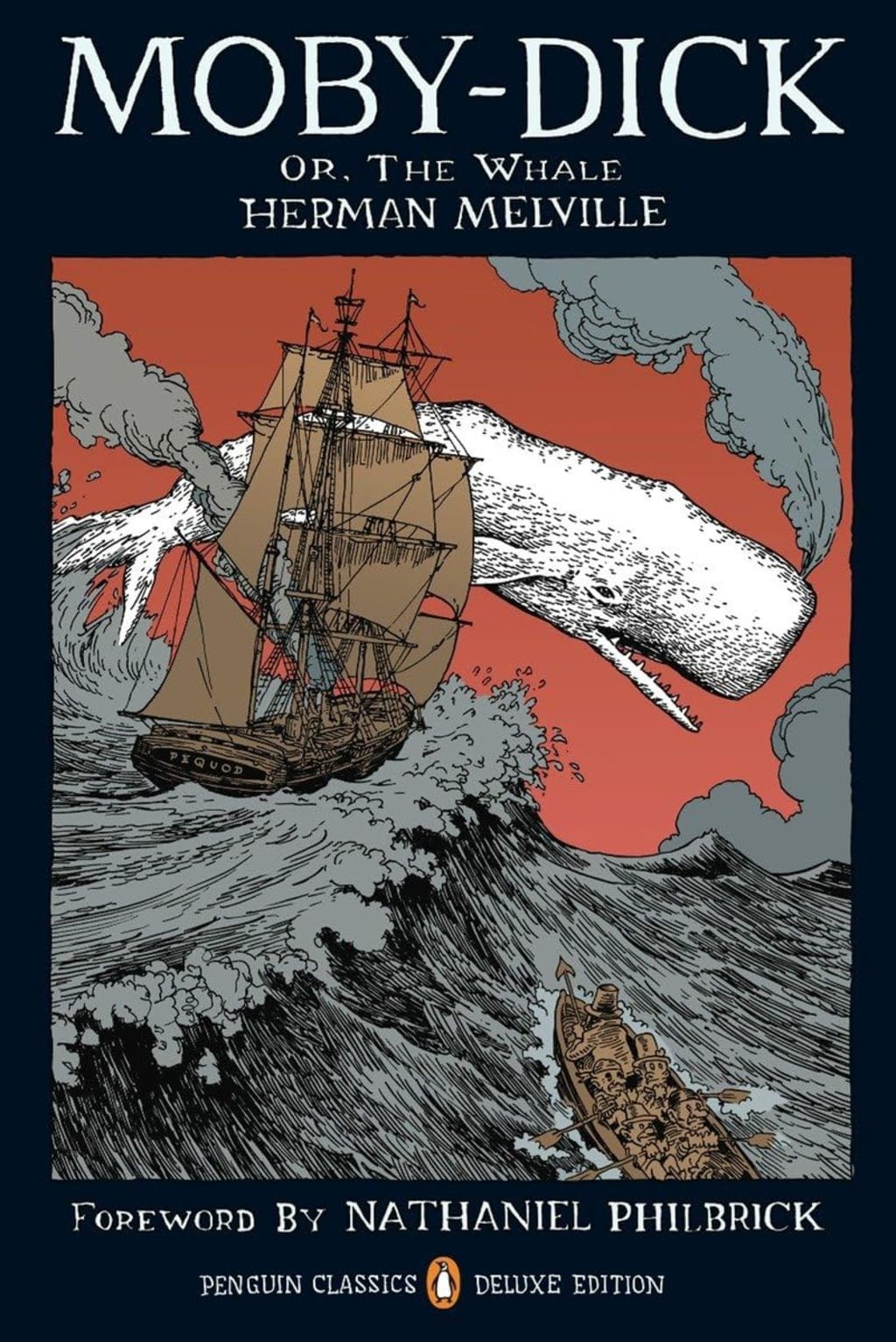
Herman Melville's monumental work, "Moby-Dick", was first published in London on October 18, 1851, by Richard Bentley of New Burlington Street. Initially titled "The Whale", this novel was born out of Melville's seafaring experiences and fascination with the deep mysteries of the ocean. Despite Melville's previous successes, "Moby-Dick" did not achieve immediate critical or commercial acclaim during its initial release. Reviews were mixed, with some critics praising its ambition and depth while others found fault with its unconventional narrative structure and philosophical digressions.
The American edition, published by Harper & Brothers in New York a month later, fared similarly, selling poorly and leaving Melville discouraged by the tepid reception. It was only in the 20th century that "Moby-Dick" began to be recognised as a masterpiece of American literature, appreciated for its complex characters, philosophical themes, and innovative narrative techniques.
Plot
"Moby Dick" unfolds as a vast, epic narrative chronicling the adventures and tragedies aboard the whaling ship Pequod. The story is narrated by Ishmael, a young sailor who seeks adventure and meaning in the maritime world. Ishmael joins the Pequod, captained by the enigmatic and monomaniacal Ahab, whose sole obsession is to hunt down and kill the legendary white whale known as Moby Dick. Ahab's fixation stems from a previous encounter where Moby Dick mauled him, leaving him physically and psychologically scarred.
As the Pequod sets sail from Nantucket, Ishmael introduces us to a diverse crew, each with their own stories and motivations. Among them are Queequeg, a South Sea Islander harpooner and Ishmael's close companion; Starbuck, the thoughtful first mate who questions Ahab's reckless pursuit; and Stubb and Flask, the jovial and pragmatic officers. Throughout their journey across oceans, the crew encounters various other whaling ships, each adding layers to the novel's exploration of human nature and the perilous quest for dominance over the natural world.
Central to the narrative is Ahab's growing obsession with Moby Dick, which intensifies as the Pequod encounters hardships and eerie omens at sea. Ahab's relentless pursuit leads the crew into treacherous waters, both literally and metaphorically, as they navigate storms, mutiny threats, and existential crises. Ishmael, meanwhile, serves as both participant and observer, offering philosophical reflections on life, death, and the ineffable mysteries of the ocean.
The climax of the novel culminates in a harrowing confrontation between Ahab and Moby Dick, a battle that symbolises the ultimate struggle between man's aspirations and the indifferent forces of nature. Melville's vivid descriptions and symbolic language evoke a sense of cosmic drama, underscoring the novel's exploration of existential themes and the consequences of unchecked ambition.
Into the Book
There are some huge themes in this book, far too many to cover completely, so I have chosen a couple here. If you have any more that you think are important, perhaps drop them with some analysis in the comments - I'd love to hear which ones you think are important. Obsession and revenge are central themes in "Moby Dick", shaping the characters' motivations and driving the plot towards its tragic climax. Captain Ahab's relentless pursuit of the white whale, Moby Dick, epitomizes the destructive power of unchecked obsession and the consuming nature of vengeance.
Ahab's obsession with Moby Dick stems from a profound injury: the loss of his leg to the whale during a previous whaling voyage. This physical and psychological wound becomes a symbolic scar that defines Ahab's identity and purpose. His quest for revenge against Moby Dick consumes him entirely, overshadowing his responsibilities as captain and disregarding the welfare of his crew.
Throughout the novel, Melville portrays Ahab's obsession with vivid imagery and intense language, illustrating the depth of his fixation. Ahab's monomaniacal speeches, such as his declaration to hunt Moby Dick "round perdition's flames," encapsulate the all-consuming nature of his vendetta. His obsession transforms him from a respected leader into a tyrant, alienating him from his crew and blinding him to the moral implications of his actions.
Ahab's pursuit of Moby Dick also explores the philosophical implications of revenge. It raises questions about the nature of justice and the ethics of pursuing personal vendettas at the expense of others. Ahab's obsessive quest leads to the destruction of the Pequod and the tragic deaths of most of its crew, underscoring the catastrophic consequences of unrestrained vengeance.
A pivotal scene in the novel occurs when Ahab first encounters Moby Dick. Instead of immediately attacking, Ahab delivers a chilling soliloquy, revealing his inner turmoil and vengeful determination. This moment highlights the psychological depth of Ahab's obsession and foreshadows the calamities that will unfold as a result.
“There are certain queer times and occasions in this strange mixed affair we call life when a man takes this whole universe for a vast practical joke, though the wit thereof he but dimly discerns, and more than suspects that the joke is at nobody's expense but his own.”
- Moby-Dick by Herman Melville
Another big theme I believe is important is nature. "Moby Dick" portrays nature as a powerful and enigmatic force that commands both awe and fear from humanity. The novel explores the sublime beauty of the natural world, juxtaposed with its inherent danger and unpredictability. At the heart of this exploration is Moby Dick himself, a mythical white whale whose symbolic significance extends beyond his physical presence.
Melville imbues Moby Dick with supernatural qualities, portraying him as a monstrous entity that eludes human comprehension. The whale's size, strength, and cunning make him a formidable adversary, challenging the hubris of those who seek to dominate the natural world. Moby Dick becomes a symbol of nature's indifference to human ambitions and a reminder of humanity's place within a larger cosmic order.
Throughout the novel, Melville uses vivid descriptions and allegorical language to evoke the majesty and terror of the sea. The ocean serves as both a setting and a character in its own right, shaping the destinies of the novel's protagonists and offering insights into the mysteries of existence. The sea's vastness and unfathomable depths mirror the complexities of life itself, prompting characters like Ishmael to contemplate their place within the universe.
Melville's portrayal of the Pequod's encounters with other whales and sea creatures underscores the novel's exploration of nature's sublime power. These scenes highlight the crew's simultaneous awe and trepidation in the face of the ocean's wonders, emphasizing the theme of humanity's fragile relationship with the natural world.
“To enjoy bodily warmth, some small part of you must be cold, for there is no quality in this world that is not what it is merely by contrast. Nothing exists in itself. If you flatter yourself that you are all over comfortable, and have been so a long time, then you cannot be said to be comfortable any more. For this reason a sleeping apartment should never be furnished with a fire, which is one of the luxurious discomforts of the rich. For the height of this sort of deliciousness is to have nothing but the blanket between you and your snugness and the cold of the outer air. Then there you lie like the one warm spark in the heart of an arctic crystal.”
- Moby Dick by Herman Melville
Isolation is a huge theme in the book that impacts every facet of the story and its characters. "Moby Dick" delves into themes of isolation and alienation, portraying characters who grapple with existential loneliness amidst the vastness of the ocean. The novel's narrator, Ishmael, serves as a lens through which these themes are explored, offering introspective reflections on the human condition and the quest for meaning.
Ishmael's decision to embark on a whaling voyage represents his desire to escape societal norms and seek spiritual enlightenment through the challenges of life at sea. However, Ishmael soon discovers that the isolation of sea voyages can lead to profound loneliness and introspection. His observations of the Pequod's diverse crew highlight the ways in which individuals cope with isolation, whether through camaraderie, superstition, or introspective contemplation.
Throughout the novel, Ishmael's narrative voice provides a philosophical perspective on the experiences of isolation and alienation. His musings on the similarities between whales and humans, as well as his reflections on mortality and identity, contribute to the novel's exploration of existential themes. Ishmael's journey serves as a metaphor for the universal quest for self-discovery and the search for connection in a world that often feels indifferent and isolating.
Ishmael's relationship with Queequeg, the South Sea Islander harpooner, exemplifies the novel's exploration of companionship amidst isolation. Despite their cultural differences, Ishmael and Queequeg form a deep bond based on mutual respect and shared experiences, challenging traditional notions of friendship and belonging.
“All men live enveloped in whale-lines. All are born with halters round their necks; but it is only when caught in the swift, sudden turn of death, that mortals realize the silent, subtle, ever-present perils of life. And if you be a philosopher, though seated in the whale-boat, you would not at heart feel one whit more of terror, than though seated before your evening fire with a poker, and not a harpoon, by your side.”
- Moby Dick by Herman Melville
Why It's a Masterpiece

Critics and authors have lauded Melville's masterful characterisation, particularly the enigmatic figure of Captain Ahab. Ahab's tragic obsession with the white whale, Moby Dick, has been interpreted as a metaphor for the destructive power of unchecked ambition and the consequences of hubris. His complex psychology and compelling rhetoric, epitomised in his fiery speeches and monologues, continue to captivate readers and inspire literary analysis.
Moreover, "Moby Dick" is celebrated for its rich symbolism and allegorical depth. The white whale, Moby Dick, serves not only as a formidable antagonist but also as a symbol of the sublime forces of nature and the unknowable mysteries of the universe. Melville weaves intricate layers of symbolism throughout the novel, inviting readers to interpret the text through various lenses — philosophical, religious, and existential.
The novel's thematic richness has sparked admiration and scholarly scrutiny across generations. Authors such as D.H. Lawrence praised Melville's ability to capture the elemental forces of nature and human psyche, while Fyodor Dostoevsky marvelled at the novel's psychological depth and moral complexity. William Faulkner considered "Moby Dick" a testament to Melville's genius in exploring the universal themes of human existence with unparalleled depth and insight.
Beyond its thematic and narrative achievements, "Moby Dick" has also been hailed for its lyrical prose and evocative descriptions of the sea. Melville's vivid imagery brings the maritime world to life, immersing readers in the sights, sounds, and smells of 19th-century whaling culture. His meticulous research and firsthand experience as a sailor lend authenticity to the novel's portrayal of shipboard life and the perilous nature of whaling expeditions.
Conclusion
In conclusion, "Moby Dick" stands as a testament to Herman Melville's unparalleled narrative vision and profound exploration of timeless themes. Through its expansive narrative canvas and penetrating insights into the human condition, Melville's literary craftsmanship has firmly established the novel among the pantheon of literary masterpieces. Its enduring relevance transcends generations, captivating readers with its profound philosophical depth and evocative storytelling. As authors and scholars continue to draw inspiration from its intricate themes and richly drawn characters, "Moby Dick" remains an enduring beacon of literary excellence, challenging readers to contemplate the complexities of existence and the enduring mysteries of the human spirit.
About the Creator
Annie Kapur
I am:
🙋🏽♀️ Annie
📚 Avid Reader
📝 Reviewer and Commentator
🎓 Post-Grad Millennial (M.A)
***
I have:
📖 280K+ reads on Vocal
🫶🏼 Love for reading & research
🦋/X @AnnieWithBooks
***
🏡 UK
Keep reading
More stories from Annie Kapur and writers in Geeks and other communities.
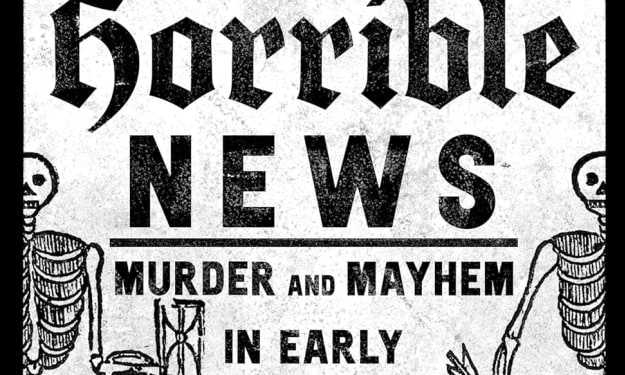
Book Review: "Great and Horrible News" by Blessin Adams
After reading A Taste for Poison Amazon seemingly thought I wanted to read all this old-world true crime, which I did and so I bought the book Great and Horrible News. This book is an exploration of murder in the Early Modern Period. Now, you all know how much I like to read about stuff in the past, for a while I made the realm of 18th Century French Politics my entire personality. At the moment, I have only recently finished it and so, it's still quite alive in my brain. The beginning is actually quite shocking and as we move into the book, we keep that atmosphere.
By Annie Kapurabout a year ago in Geeks
Silver Screen Magic with Mae West
American actress and singer Mae West became a popular film actress during the Great Depression. She started entertaining in vaudeville, then performed on Broadway, and finally went to Hollywood. She signed up with Paramount Pictures and made her debut in the 1932 film “Night After Night.” She also starred in musicals, comedies, and crime dramas. The American Film Institute named her one of the best classic Hollywood actresses.
By Rasma Raisters6 days ago in Geeks
Premier League in Singapore: How to Watch
The 2025–26 Premier League season is underway, marking the 34th edition of the competition and the 127th year of top-flight English football. Liverpool start their title defense with confidence after lifting their second Premier League trophy last season, but the return of Leeds United, Burnley, and Sunderland ensures fresh rivalries – including the long-awaited Tyne–Wear derby, back for the first time since 2015–16.
By David Cook3 days ago in Geeks



Comments
There are no comments for this story
Be the first to respond and start the conversation.