
Little Benjamina, the oldest evidence of social empathy in humans
the oldest evidence of social empathy in humans
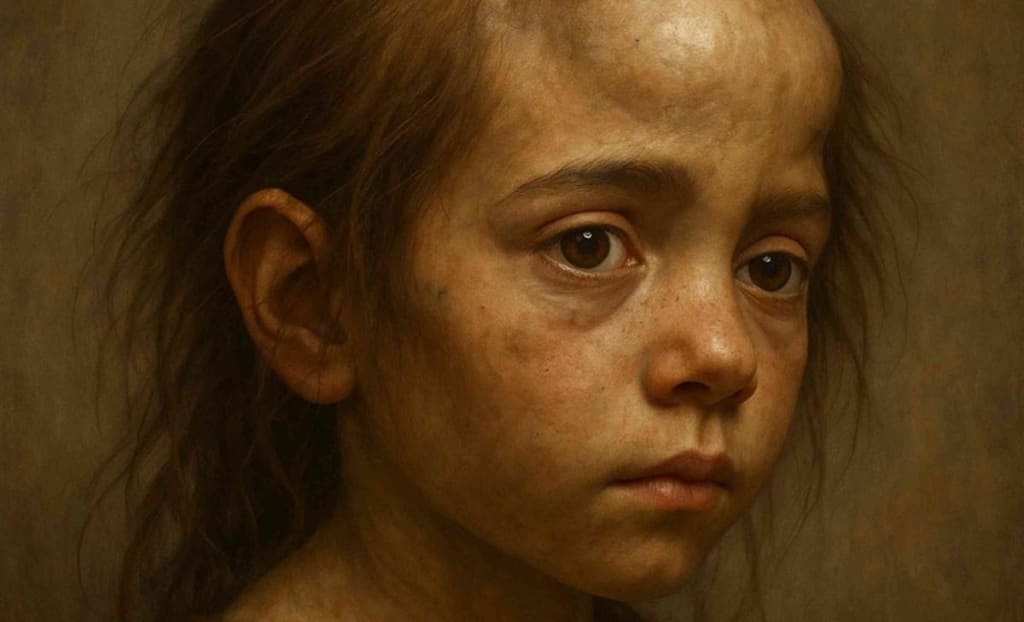
Benjamina’s small cranium lay hidden in Spain’s Atapuerca Mountains for more than half a million years. Today her story challenges long‑held ideas about when human empathy first appeared.
Juan Luis Arsuaga of the Complutense University of Madrid, who directs the Sima de los Huesos excavations, says the child’s remains force scientists to rethink social life in the Middle Pleistocene.
Excavators cataloged Benjamina as Cranium 14, an almost complete neurocranium from a Homo heidelbergensis girl aged about ten to twelve.
Computed‑tomography measurements place her brain volume near 1,200 cm³, slightly smaller than that of many modern pre‑teens.
Piecing together Benjamina’s life
Early restoration revealed that the left limb of the back‑of‑head suture had fused before birth, a condition called lambdoid synostosis.
True fusion of this suture occurs in only two percent of craniosynostosis cases, making it the rarest form of the disorder.
Modern epidemiology puts overall craniosynostosis prevalence at roughly one in 2,000 births.
Because the fused bone cannot expand, pressure diverts growth toward the forehead and opposite side, creating the asymmetrical dome seen on Benjamina’s right parietal plate.
Understanding lambdoid synostosis
Surgeons today open the fused bone within an infant’s first year to prevent raised intracranial pressure and vision loss.
Without intervention, secondary problems such as headaches, balance issues, and cognitive delays often follow.
Benjamina obviously received no operation. Even so, she survived long enough to lose baby teeth and grow permanent molars, milestones that show she lived at least a decade despite her deformity.
Signs of community care
“Benjamina offers early evidence of empathy and social cohesion in our evolutionary history,” noted the excavation team.
Keeping a disabled child alive in a hunter‑gatherer context would have required help with food, protection, and possibly mobility.
Skeletal studies of Neanderthals from nearby Valencia present a similar pattern, where a six‑year‑old with severe inner‑ear malformations lived well past infancy only through sustained group support.
Together these Iberian fossils imply that caregiving emerged deep within the genus Homo rather than as a late feature of our own species.
Why the name Benjamina matters
search-icon
Little Benjamina, the oldest evidence of social empathy in humans
06-28-2025
Little Benjamina, the oldest evidence of social empathy in humans
Jordan Joseph
ByJordan Joseph
Earth.com staff writer
Benjamina’s small cranium lay hidden in Spain’s Atapuerca Mountains for more than half a million years. Today her story challenges long‑held ideas about when human empathy first appeared.
Juan Luis Arsuaga of the Complutense University of Madrid, who directs the Sima de los Huesos excavations, says the child’s remains force scientists to rethink social life in the Middle Pleistocene.
EarthSnap
Excavators cataloged Benjamina as Cranium 14, an almost complete neurocranium from a Homo heidelbergensis girl aged about ten to twelve.
Computed‑tomography measurements place her brain volume near 1,200 cm³, slightly smaller than that of many modern pre‑teens.
Piecing together Benjamina’s life
Early restoration revealed that the left limb of the back‑of‑head suture had fused before birth, a condition called lambdoid synostosis.
True fusion of this suture occurs in only two percent of craniosynostosis cases, making it the rarest form of the disorder.
Modern epidemiology puts overall craniosynostosis prevalence at roughly one in 2,000 births.
Because the fused bone cannot expand, pressure diverts growth toward the forehead and opposite side, creating the asymmetrical dome seen on Benjamina’s right parietal plate.
Understanding lambdoid synostosis
Surgeons today open the fused bone within an infant’s first year to prevent raised intracranial pressure and vision loss.
Without intervention, secondary problems such as headaches, balance issues, and cognitive delays often follow.
Benjamina obviously received no operation. Even so, she survived long enough to lose baby teeth and grow permanent molars, milestones that show she lived at least a decade despite her deformity.
Signs of community care
“Benjamina offers early evidence of empathy and social cohesion in our evolutionary history,” noted the excavation team.
Keeping a disabled child alive in a hunter‑gatherer context would have required help with food, protection, and possibly mobility.
Skeletal studies of Neanderthals from nearby Valencia present a similar pattern, where a six‑year‑old with severe inner‑ear malformations lived well past infancy only through sustained group support.
Together these Iberian fossils imply that caregiving emerged deep within the genus Homo rather than as a late feature of our own species.
Why the name Benjamina matters
The name Benjamina comes from the Hebrew word for the youngest or most beloved child. Researchers chose it not only because of her young age, but because of the care she likely received during her life.
Assigning her a name also reflects a growing trend in paleoanthropology to humanize ancient individuals. It helps the public connect with prehistoric stories, not just as data points, but as once-living members of a social group.
Her group’s willingness to invest resources in a non‑productive juvenile hints at emotional bonds, shared responsibility, and perhaps rudimentary social norms.
Those traits would later underpin cooperative hunting, extended childhoods, and the cultural explosion that followed.
Benjamina also broadens the medical record. The report calls her cranium “the earliest evidence of craniosynostosis occurring in a hominid.”
Documenting pathology this ancient helps geneticists trace how skull‑fusion genes evolved. It also reminds clinicians that untreated children can reach school age, informing counseling for parents who decline surgery today.
Teaching the next generation
“The students in my Thermodynamics course were the first to see this demonstration. I believe this approach will eventually become more accepted,” said Martín‑Olalla from the University of Seville, emphasizing the value of introducing this proof to students early.
By rooting the theorem in the second law itself, rather than a loosely attached third principle, the argument might resonate with a new generation of physicists seeking internal consistency. Martín‑Olalla acknowledged the resistance that often meets reinterpretations of established theory.
Earlier fossil skulls like the Salé cranium and Singa 1 showed deformities, but neither could be definitively diagnosed with true lambdoid synostosis.
Unlike Benjamina, these individuals lacked the distinctive skull features or CT data needed to confirm the rare fusion type.
Other historical examples, such as the deformed skulls from the Münsingen-Rain burial site in Switzerland or the Bab-al-Hanax cemetery in Spain, occurred much later and show more variation.
Benjamina remains the oldest confirmed case with such precision in diagnosis, giving her a unique place in paleopathological records.
About the Creator
🍂🍂🍂.
Research on geopolitics
Silver Screen Magic with Mae West
American actress and singer Mae West became a popular film actress during the Great Depression. She started entertaining in vaudeville, then performed on Broadway, and finally went to Hollywood. She signed up with Paramount Pictures and made her debut in the 1932 film “Night After Night.” She also starred in musicals, comedies, and crime dramas. The American Film Institute named her one of the best classic Hollywood actresses.
By Rasma Raisters6 days ago in Geeks
The Devil's Cut
“Comrade, finally you’re awake.” The voice was smooth, sensual. A flickering incandescent bar was all that lit the white, sterile room. All Vladimir remembered was everything going black. He tried to move his arms and found them strapped to the gurney.
By Matthew J. Fromm5 days ago in Fiction



Comments
There are no comments for this story
Be the first to respond and start the conversation.