
Less Than Zero by Bret Easton Ellis
Why It's a Masterpiece (Week 65)


Less Than Zero, the debut novel by Bret Easton Ellis, was published in 1985 when Ellis was just 21 years old. Written while he was still an undergraduate at Bennington College, the novel became an instant sensation, capturing the disenchanted and nihilistic lives of Los Angeles teenagers in the 1980s. Inspired by Ellis’s observations of Southern California culture and the affluent, hedonistic lives of the people around him, Less Than Zero was heavily influenced by the music and media of the time, particularly the New Wave and punk movements.
The title Less Than Zero references an Elvis Costello song, a nod to the novel’s music-driven atmosphere and its themes of emptiness and alienation. Upon release, the book shocked readers and critics alike with its stark depiction of youthful detachment, casual drug use, and emotional numbness. Ellis’s minimalist prose style, influenced by writers like Joan Didion and Raymond Carver, created a detached narrative voice that mirrored the emotional void experienced by his characters.
Side Story: When I was 17 years' old I was perhaps so obsessed with this book I must have read it cover to cover at least ten times. I would carry my copy quite literally everywhere and ended up basing some of my creative coursework on it during the time. I would write little side stories about the characters and even tried to make a script out of an alternative ending I wrote for the book. Yeah, I was an obsessed kid. But every time I think about it, it makes me smile.
Plot
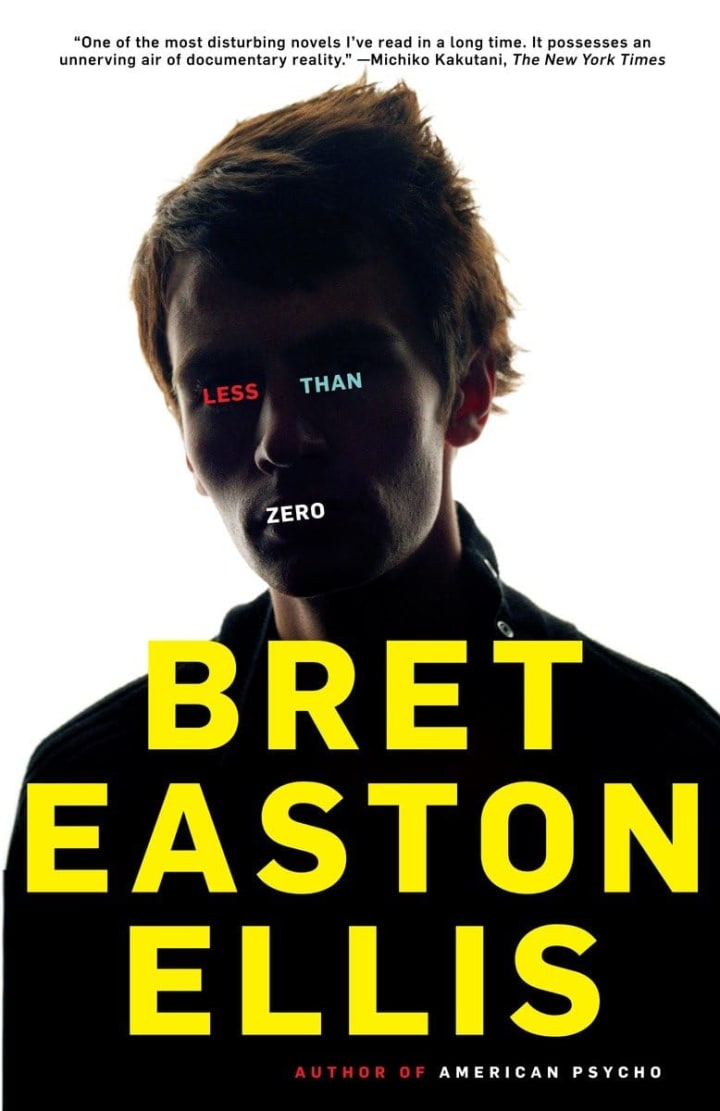
Less Than Zero follows the story of Clay who is a wealthy college student returning to Los Angeles for Christmas break. Set against the glitzy yet desolate backdrop of 1980s LA, the novel traces Clay’s interactions with his friends, family, and former girlfriend, Blair, as he re-enters a world of extreme privilege and moral decay. Clay’s friends are wealthy, attractive, and privileged, yet each appears lost, engaged in a never-ending cycle of drug use, reckless behaviour, and shallow relationships.
As Clay reconnects with old acquaintances, he becomes really disturbed by the complete apathy and self-destructive tendencies of those around him. His best friend, Julian, is now a drug addict who has turned to prostitution to support his habit. Blair, once his romantic interest, is involved with other men and is also part of the dissolute party scene. Clay witnesses countless instances of cruelty, violence, and indifference, and though he is deeply affected, he seems unable (or unwilling) to intervene.
The author's writing style contributes to the novel’s disaffected tone, with Clay’s observations delivered in an understated, detached voice that amplifies the feeling of emotional numbness and disconnection. The narrative unfolds as a series of bleak, disjointed scenes: from club nights fuelled by cocaine and heroin to moments of shocking depravity, including an instance where Clay and his friends encounter a young girl who has been sexually exploited.
As his holiday progresses, Clay’s sense of alienation intensifies, and he feels increasingly disturbed by the lack of empathy and compassion within his social circle. The novel ends without really ending, with Clay leaving Los Angeles but carrying a sense of unresolved disillusionment.
He leaves with more questions than answers about his identity, the emptiness of his lifestyle, and whether he can (or even wants to) change. Ultimately, Less Than Zero presents a raw, unfiltered look into the dark side of wealth and privilege in Los Angeles, as seen through the eyes of a disillusioned young man. This is something that is continued to be explored in the book's sequel, Imperial Bedrooms - named for another Costello song.
Into the Book
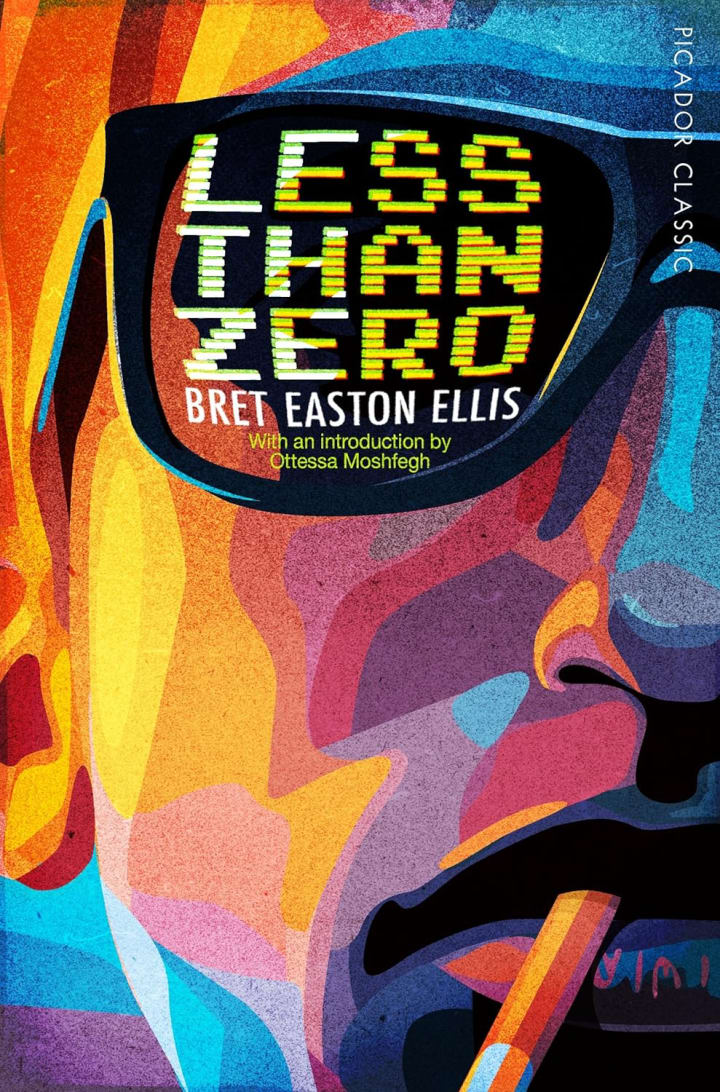
"Moral Nihilism" is at the heart of Less Than Zero, depicted through the pervasive sense of apathy and the lack of moral boundaries among Clay and his friends.
Throughout the novel, the characters engage in reprehensible acts, from rampant drug use and infidelity to instances of exploitation and abuse, with little to no remorse.
The protagonist, Clay, observes these actions passively, caught between revulsion and acceptance. The author's minimalistic writing style where he strips back the description to reveal what is underneath (very Ernest Hemingway) reinforces this nihilism. Sentences are often short, devoid of introspection, and stated matter-of-factly, highlighting the sense of moral void.
For example, Ellis writes, “People are afraid to merge on freeways in Los Angeles,” a line which captures the fear and detachment that govern the characters’ interactions, as if they are perpetually disconnected from both each other and themselves.
“But this road doesn't go anywhere,” I told him.
“That doesn't matter.”
“What does?” I asked, after a little while.
“Just that we're on it, dude,” he said.”
- Less Than Zero by Bret Easton Ellis
"Alienation" is a theme that pervades both the narrative and Clay’s internal monologue. Despite being surrounded by friends and family, Clay feels increasingly isolated and disconnected from those around him.
The author's language here is deliberately detached, often focusing on external details rather than emotional depth. This also emphasises Clay’s sense of being a passive observer, one who drifts through scenes without fully engaging; making the reader question how complicit he is in the actions of his 'friends'.
The recurrent description of Los Angeles as both glamorous and hollow symbolises Clay’s internal state, mirroring his own vacuous sense of self. Again, the novel’s opening line, “People are afraid to merge on freeways in Los Angeles,” serves as a metaphor for the characters’ inability to connect on any meaningful or moral level, as they drift through a world devoid of purpose and empathy.
People are afraid to merge on freeways in Los Angeles. This is the first thing I hear when I come back to the city.
- Less Than Zero by Bret Easton Ellis
"The Commodification of Human Relationships" is a theme Ellis explores through the transactional nature of friendships and interactions in Less Than Zero. Relationships, rather than being rooted in affection or loyalty, are often based on materialistic needs, desires, and drug dependencies.
Characters like Julian engage in prostitution as a means to fuel their habits, while Clay’s relationship with Blair seems to exist out of convenience rather than genuine connection. The dialogue often reduces people to their material needs or physical pleasures, reflecting a consumerist culture where even intimacy and friendship are commodities to be used and discarded.
The author's sparse dialogue underscores this transactional quality, with conversations that lack emotional depth and often focus on immediate gratification. Words like “need,” “want,” and “get” recur in the speech of characters, reinforcing the idea of relationships as means to an end.
“I don't want to care. If I care about things, it'll just be worse, it'll just be another thing to worry about. It's less painful if I don't care.”
- Less Than Zero by Bret Easton Ellis
Why It's a Masterpiece
Less Than Zero is considered a masterpiece for its terrifying portrayal of disillusioned youth culture and its unflinching examination of the dark underbelly of privilege. It captures a moment in American history which is the height of the 1980s. The era that was defined by excess, superficiality, and a focus on consumerism. However, beyond its time-specific setting, the novel’s exploration of moral emptiness, alienation, and the consequences of affluence has ensured its relevance. It is clear that we too, still live in this particular setting of consumerism and low empathy.
The author's blunt prose style, marked by a stark, detached narrative voice, is frequently cited as a significant innovation in modern literature. This narrative approach not only reflects the apathy of his characters but also immerses the reader in the desolate emotional landscape they inhabit. The novel’s depiction of a “lost generation” resonates with readers as an exploration of identity crises, moral ambiguity, and the consequences of an affluent but hollow existence.
Conclusion
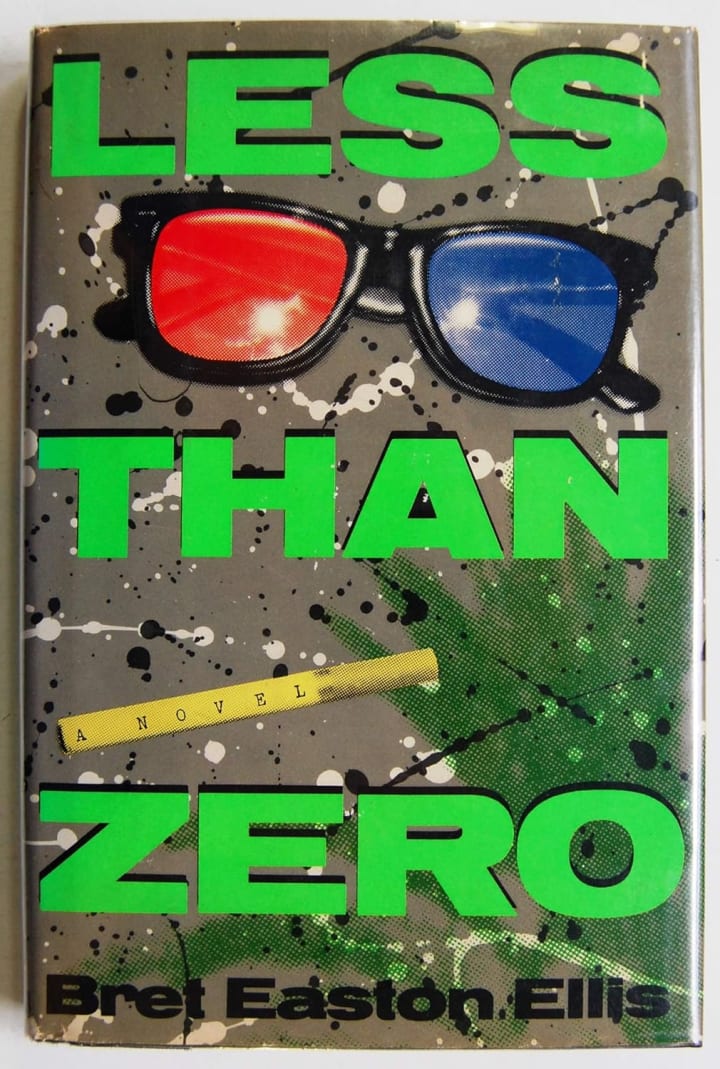
This book means so much to me and I hope you choose to pick it up soon. Not a lengthy read, it contains some of the most terse, yet terrifying implications of language from any book of the 1980s. There is definitely something to be said of Ellis's talents on the page after he wrote this. I would say definitely read it before you see the film - they are quite different to each other.
Next Week: Strangers on a Train by Patricia Highsmith
About the Creator
Annie Kapur
I am:
🙋🏽♀️ Annie
📚 Avid Reader
📝 Reviewer and Commentator
🎓 Post-Grad Millennial (M.A)
***
I have:
📖 280K+ reads on Vocal
🫶🏼 Love for reading & research
🦋/X @AnnieWithBooks
***
🏡 UK
Keep reading
More stories from Annie Kapur and writers in Geeks and other communities.
Book Review: "Mason & Dixon" by Thomas Pynchon
Oh lord have I got something to tell you. I found this book almost impossible to crack. It's April 2025 and I have been reading this book for about a week and a half almost constantly. I've taken it everywhere if not only to read a few pages whilst sitting in waiting rooms for appointments or on the bus to go somewhere. Thomas Pynchon is a challenging writer at the best of times, but I feel like this book was more about me breaking that wall than actually enjoying what I'm reading. There's a fine line there that I didn't have to deal with when reading Inherent Vice and I'm unsure what to make of it. So apart from me ranting about how weird this book is, let's take a look at a fairly interesting section: the storyline...
By Annie Kapur8 months ago in Geeks
Silver Screen Magic with Mae West
American actress and singer Mae West became a popular film actress during the Great Depression. She started entertaining in vaudeville, then performed on Broadway, and finally went to Hollywood. She signed up with Paramount Pictures and made her debut in the 1932 film “Night After Night.” She also starred in musicals, comedies, and crime dramas. The American Film Institute named her one of the best classic Hollywood actresses.
By Rasma Raisters9 days ago in Geeks
Who Owns Oak Island in 2026? The Private Entities Behind the Mystery
Oak Island remains one of the most enigmatic and heavily scrutinized plots of land in North America. Famous for its legendary "Money Pit" and the long-running History Channel series The Curse of Oak Island, this 140-acre island off the coast of Nova Scotia has fascinated treasure hunters for over two centuries. But behind the television cameras, ancient legends, and excavation equipment lies a very real question that continues to stir curiosity: who actually owns Oak Island in 2026?
By Rukka Nova6 days ago in Geeks
How to Succeed at the Benson Directory®
Congratulations and welcome to the Benson Directory® employee #22391! As our newest call handler, you will have the privilege of speaking with dozens of unique and interesting people on a daily basis as well as the opportunity to earn bonuses for high performance. Contained within this handbook you will find a set of ease to follow instructions designed to help you settle in to your new role and begin paving the way to success.
By S. A. Crawford6 days ago in Fiction



Comments (1)
Great song; great movie; the book...lingers on my shelf. And as a kid of the 80s, nothing really shocks me that much... I think. Thank you for this one!