
Josephine (2026): A Quietly Devastating Film About Childhood Trauma and the Long Road to Healing
A haunting exploration of childhood trauma, memory, and the fragile search for safety

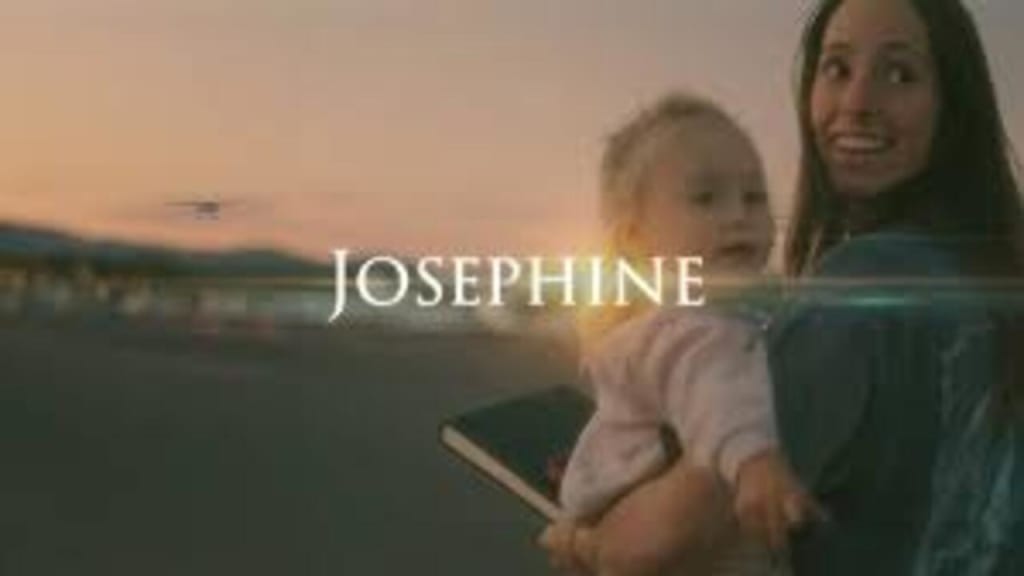
In an era when cinema often leans toward spectacle and escapism, Josephine (2026) arrives as a stark, intimate reminder of film’s power to explore the most fragile corners of human experience. Written and directed by Beth de Araújo, Josephine is a psychological drama that centers on a child’s confrontation with fear, memory, and the lasting effects of trauma. Rather than sensationalizing its subject, the film adopts a restrained and deeply empathetic approach, placing the audience inside the emotional world of its young protagonist.
Premiering in the U.S. Dramatic Competition at the 2026 Sundance Film Festival, Josephine quickly distinguished itself as one of the most emotionally challenging films of the year. It is not a movie designed to entertain in the conventional sense. Instead, it asks viewers to observe, listen, and sit with discomfort—much like its central character must do.
A Child at the Center of the Storm
The film follows Josephine, an eight-year-old girl living in San Francisco, whose life is irrevocably altered after she witnesses a violent act in a public park. The incident itself is not lingered on; in fact, the film avoids explicit depiction almost entirely. What matters is not what happened, but how Josephine experiences its aftermath. Her sense of safety fractures, and the world she once navigated with ease becomes unpredictable and threatening.
Josephine’s fear manifests in subtle but powerful ways—changes in behavior, emotional withdrawal, bursts of anger, and an overwhelming sense of vigilance. These reactions are portrayed not as plot devices but as natural responses to trauma, particularly in a child who lacks the language or emotional tools to explain what she feels. The film’s greatest strength lies in its refusal to rush this process or simplify it for audience comfort.
A Performance That Anchors the Film
At the heart of Josephine is a remarkable performance by young actress Mason Reeves. Carrying a film of this emotional weight is no small task, yet Reeves delivers a portrayal that feels unforced and deeply authentic. Her Josephine is not written as precocious or unrealistically insightful; she is confused, frightened, and at times difficult, embodying the messy reality of a child in distress.
The adults around her struggle to understand what is happening. Gemma Chan and Channing Tatum play key figures in Josephine’s life, portraying caregivers who are loving but overwhelmed. Their characters want to help, but the film carefully illustrates how adult logic and reassurance often fail to reach a child who is processing fear on a purely emotional level. This disconnect becomes one of the film’s most painful and honest observations.
Direction Rooted in Personal Experience
Beth de Araújo’s direction is restrained, deliberate, and deeply personal. Drawing from her own childhood experience, she crafts a narrative that prioritizes emotional truth over dramatic convenience. The film unfolds slowly, mirroring the way trauma lingers rather than resolves itself neatly.
De Araújo avoids melodrama, trusting silence and stillness to carry meaning. Scenes often linger just long enough to become uncomfortable, forcing the viewer to share Josephine’s unease. This approach may challenge some audiences, but it is precisely what gives the film its authenticity. Josephine does not tell viewers what to feel—it invites them to observe and reflect.
Visual Storytelling and Atmosphere
Visually, Josephine is understated yet precise. Everyday spaces—parks, homes, school hallways—are framed in ways that subtly shift from familiar to threatening. The camera frequently aligns with Josephine’s point of view, reinforcing the sense that the audience is seeing the world as she does: uncertain, watchful, and filled with unseen dangers.
The sound design is equally effective. Silence plays a crucial role, often more unsettling than music. When sound is used, it heightens emotional tension rather than guiding it, allowing moments to feel raw and unresolved. These technical choices serve the story rather than overpower it, maintaining the film’s intimate tone.
A Film That Refuses Easy Answers
One of Josephine’s most striking qualities is its refusal to offer simple solutions. There is no moment where everything suddenly makes sense, no dramatic confrontation that resolves Josephine’s fear once and for all. Healing, the film suggests, is gradual and uneven. Some wounds do not disappear; they become part of who we are.
This approach may feel frustrating to viewers accustomed to clear narrative arcs, but it aligns with the film’s core message. Trauma does not follow a script, especially in childhood. By resisting a tidy conclusion, Josephine honors the complexity of its subject and the resilience required to live with uncertainty.
Why Josephine Matters
Josephine arrives at a time when conversations about mental health and childhood trauma are more visible than ever, yet still often misunderstood. The film does not aim to educate in a traditional sense, but its impact lies in its capacity to foster empathy. It reminds viewers that children process fear differently, and that silence or behavioral changes are often expressions of pain rather than defiance.
In choosing to tell this story through a child’s perspective, the film challenges audiences to reconsider how society listens to young voices—and how often those voices are overlooked. It is a difficult watch, but an important one.
Final Thoughts
Josephine is not a film that seeks applause through spectacle or sentimentality. Its power lies in its quiet honesty and emotional restraint. By centering on a child’s inner world, it transforms a single moment of violence into a broader meditation on vulnerability, memory, and survival.
For viewers willing to engage with its slow pace and emotional weight, Josephine offers a deeply affecting experience—one that lingers long after the screen fades to black. It stands as one of 2026’s most meaningful independent films, not because it shocks, but because it listens.
About the Creator
Keep reading
More stories from David Cook and writers in Geeks and other communities.
Marty Supreme Review: Timothée Chalamet Is Excellent, The Movie… Not So Much
⭐ Rating: 2 out of 5 stars Marty Supreme Directed by Josh Safdie Written by Josh Safdie, Ronald Bronstein Starring Timothee Chalamet, Gwyneth Paltrow, Tyler The Creator, Odessa A'zion
By Sean Patrickabout a month ago in Geeks
Mobile App Budget Planning for Tampa Small Businesses
For small businesses in Tampa, mobile apps are no longer experimental tools. By 2026, they are increasingly tied to daily operations, customer retention, and revenue flow. That shift has changed how budgeting decisions are made.
By Samantha Blake5 days ago in Geeks




Comments
There are no comments for this story
Be the first to respond and start the conversation.