
Mobile App Budget Planning for Tampa Small Businesses
How Tampa small businesses are budgeting for mobile apps as long-term operating assets rather than one-time projects


For small businesses in Tampa, mobile apps are no longer experimental tools. By 2026, they are increasingly tied to daily operations, customer retention, and revenue flow. That shift has changed how budgeting decisions are made.
The biggest mistake small businesses still make is treating app budgets like one-time purchases. In reality, mobile apps behave more like long-term operational assets. Planning for them requires a different mindset.
This article breaks down how Tampa small businesses are approaching mobile app budgets realistically, without overbuilding or underestimating long-term costs.
Why Budget Planning Matters More Than App Ideas
Most small businesses do not fail at app ideas. They fail at cost planning.
The app launches. It works. Then operating costs appear. Updates are required. Performance issues surface. New devices behave differently. At that point, budgets that looked sufficient during development are already exhausted.
In Tampa’s small business market, this problem is amplified because apps often connect to:
- Scheduling systems
- Payment platforms
- Inventory or service workflows
- Customer communication tools
Each connection adds financial weight over time.
Tampa’s Small Business Reality Shapes App Costs
Tampa small businesses tend to operate with tighter margins and faster decision cycles. Unlike startups chasing growth, many are focused on efficiency, predictability, and customer experience stability.
This affects app budgeting in three ways:
- Less tolerance for rework
- Greater need for reliability from day one
- Higher sensitivity to recurring costs
An app that saves time but creates technical debt quickly loses its value.
Budgeting Starts With Use Cases, Not Features
Small business owners often begin with feature lists. Booking. Notifications. Dashboards.
Effective budget planning starts elsewhere.
The right first questions are
- Who uses the app daily
- What task would break the business if the app failed
- What data must remain accurate at all times
Apps designed around these answers tend to remain simpler and cheaper to maintain, even if they look less ambitious at launch.
Typical Budget Ranges for Small Businesses in Tampa
While every project is unique, small business apps in Tampa often fall into these general ranges:
Operational Utility Apps
$70,000 – $150,000
Focused on internal workflows, limited users, and controlled data environments.
Customer Interaction Apps
$120,000 – $300,000
Include payments, accounts, notifications, and customer-facing performance requirements.
Growth-Oriented Business Apps
$250,000 – $500,000
Support scaling users, integrations, analytics, and evolving business models.
These ranges typically cover planning, design, development, testing, and initial deployment.
The Hidden Costs Small Businesses Overlook
The most damaging budget gaps are rarely visible at the start.
Commonly missed costs include
- Ongoing OS updates
- Device compatibility testing
- Third-party service changes
- Security patching
- Performance tuning as usage grows
These costs do not appear monthly at first. They accumulate quietly.
Small businesses that plan for them early experience fewer financial shocks later.
Why Simpler Architecture Often Saves More Money
Complex systems are not always better systems.
For small businesses, overengineering is a real risk. Apps that try to anticipate every future scenario often become expensive to maintain.
Budget-smart teams prioritize
- Clear data flow
- Limited integrations at launch
- Modular features that can be added later
This approach allows businesses to grow the app alongside revenue rather than ahead of it.
Local Context Improves Budget Accuracy
Teams familiar with mobile app development Tampa projects tend to estimate more conservatively.
They account for:
- Regional service patterns
- Common platform integrations used by local businesses
- Realistic usage levels rather than idealized growth
This does not always reduce the initial budget, but it reduces the likelihood of cost overruns.
Maintenance Is Not Optional for Small Businesses
Small businesses often delay maintenance to save money.
In practice, this increases cost.
Deferred updates lead to compatibility issues, security risks, and performance degradation. Fixing these under pressure is always more expensive than maintaining stability gradually.
Budgeting even a modest annual maintenance allocation protects the original investment.
Planning for Change Without Overcommitting
The best mobile budgets include flexibility.
Rather than locking into large roadmaps, Tampa small businesses increasingly plan in phases:
- Phase one delivers core value
- Phase two responds to real usage
- Phase three supports growth or expansion
This phased approach aligns spending with outcomes instead of assumptions.
Closing Perspective
Mobile app budget planning for Tampa small businesses is no longer about finding the cheapest build. It is about avoiding financial surprises.
Apps that are designed with clear use cases, realistic scale expectations, and long-term ownership in mind tend to cost less overall, even if their upfront price looks higher.
In a market where stability matters more than novelty, careful planning has become the real cost advantage.
FAQs
Why do small businesses in Tampa struggle with mobile app budgeting?
Most issues come from treating the app as a fixed-cost project instead of an ongoing system. Initial development is only part of the expense. Updates, integrations, device changes, and maintenance introduce recurring costs that are often not planned for upfront.
Is it realistic for a small business to invest in a custom mobile app?
Yes, but only with clear boundaries. Successful small businesses define narrow use cases, limit early integrations, and design for gradual expansion. The risk comes from overbuilding too early, not from building custom software itself.
What is the biggest budgeting mistake small businesses make?
Planning around features instead of usage. Features look concrete, but costs are driven by how often the app is used, how critical it is to operations, and what happens when it fails. Apps tied to daily workflows require higher reliability spending.
How much should small businesses plan for ongoing maintenance?
A common rule is to allocate a steady annual budget rather than reacting to problems. OS updates, security patches, and performance tuning are unavoidable. Skipping them usually results in higher emergency costs later.
Does starting small actually reduce total cost?
Often yes. Apps that launch with focused functionality are easier to stabilize and cheaper to extend. Businesses that try to predict every future need tend to spend more maintaining unused or fragile features.
How does local experience affect budget planning?
Teams familiar with mobile app development Tampa projects are more likely to anticipate realistic usage patterns and integration needs common among local businesses. This improves budget accuracy and reduces mid-project surprises.
Are off-the-shelf or template apps cheaper in the long run?
They can be cheaper initially, but costs often rise as the business grows. Subscription stacking, customization limits, and forced workarounds can exceed the cost of a simpler custom app designed for the business’s actual workflow.
Should small businesses plan multi-year budgets for mobile apps?
Yes. Thinking in one-year terms hides ownership cost. Multi-year planning helps businesses decide which features are worth building and which can wait until the app proves its value.
How should businesses handle future changes without overspending?
By planning in phases. Deliver core functionality first, then expand based on real usage data. This approach aligns spending with outcomes rather than assumptions.
What defines a well-planned mobile app budget?
Predictability. A good budget accounts for development, maintenance, and change without relying on emergency spending. It supports steady improvement rather than constant fixes.
About the Creator
Keep reading
More stories from Samantha Blake and writers in Geeks and other communities.
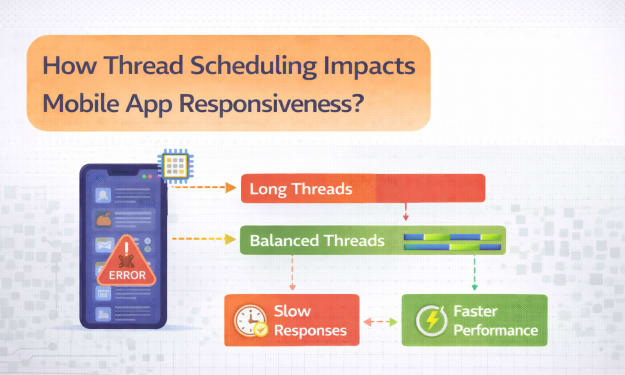
How Thread Scheduling Impacts Mobile App Responsiveness?
I used to think responsiveness was mostly about speed. Faster APIs. Faster devices. Better animations. If something felt slow, I assumed we needed optimization. Maybe fewer network calls. Maybe lighter layouts. Maybe caching.
By Samantha Blake2 months ago in Geeks



Comments
There are no comments for this story
Be the first to respond and start the conversation.