
I Watched this Psychological Thriller Film Alone
MEMENTO: This Movie is Directed by Christopher Nolan , A Well Known Director of Hollywood Cinema

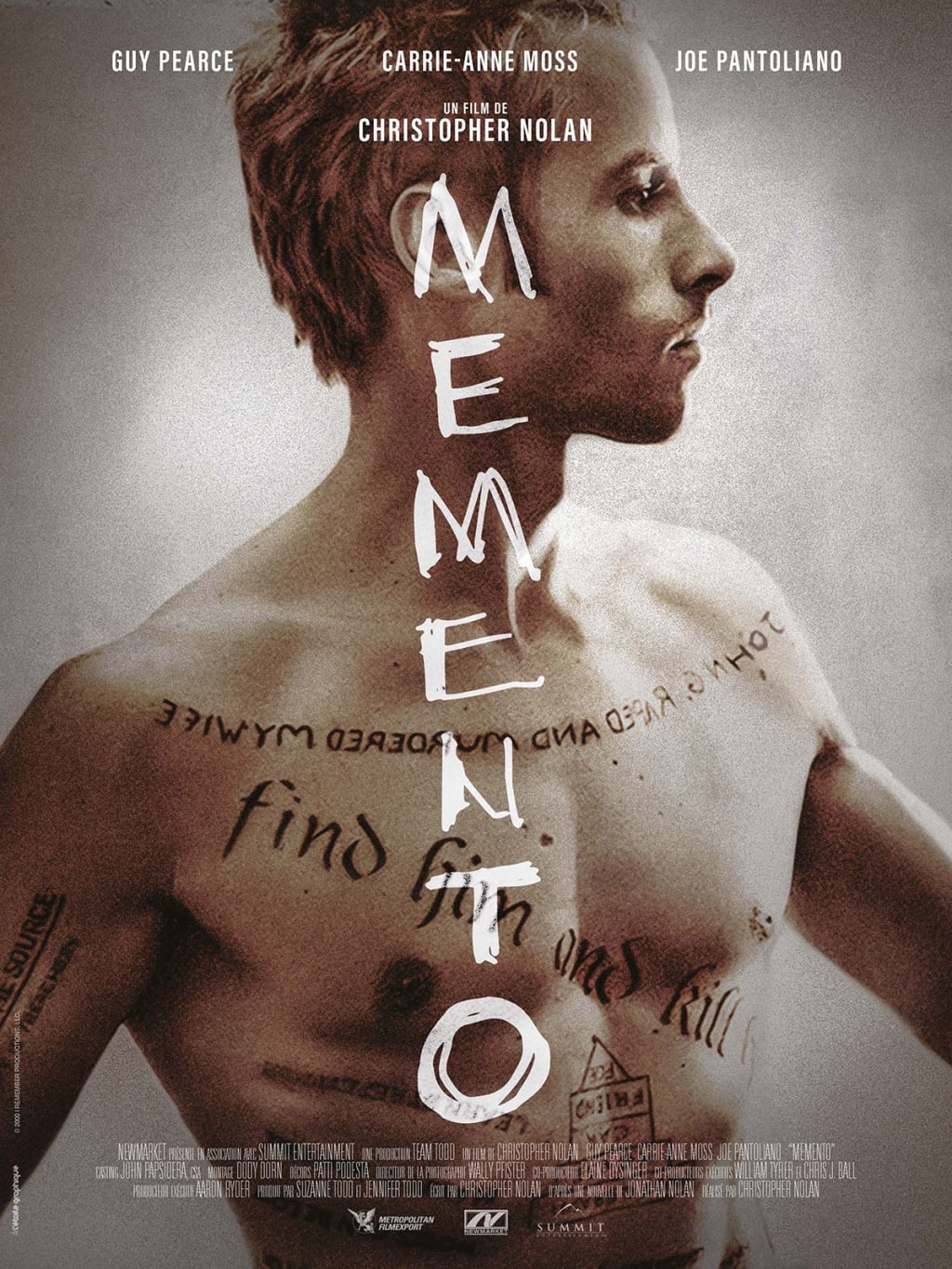
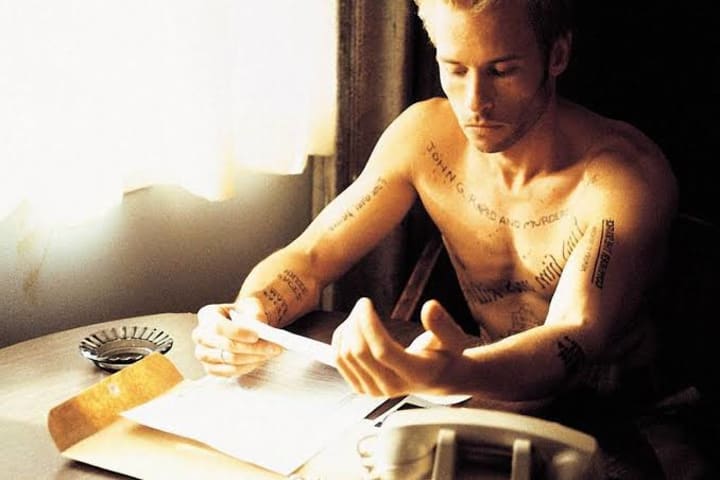
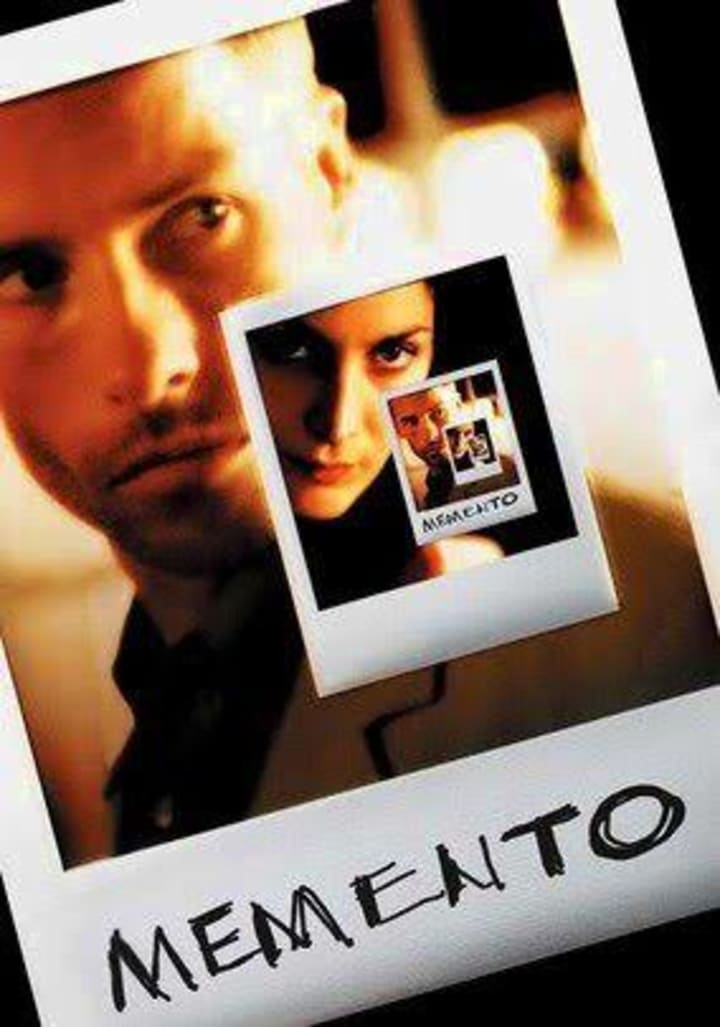
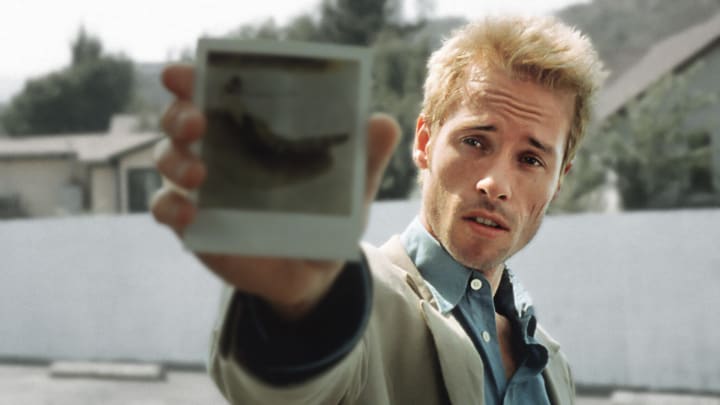
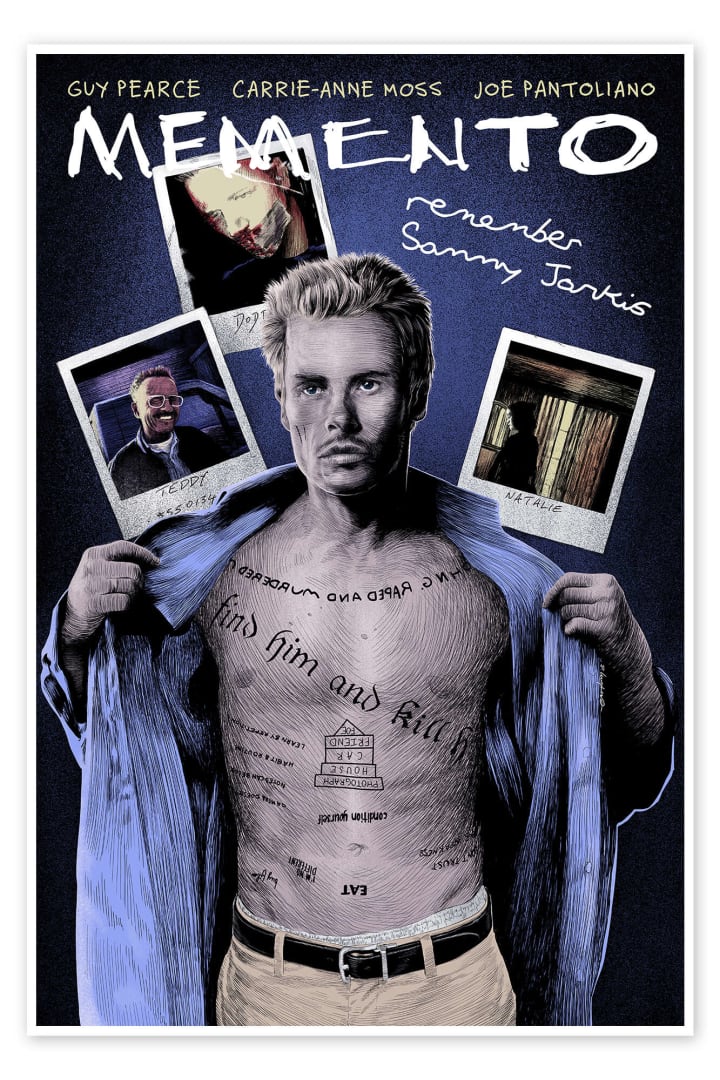
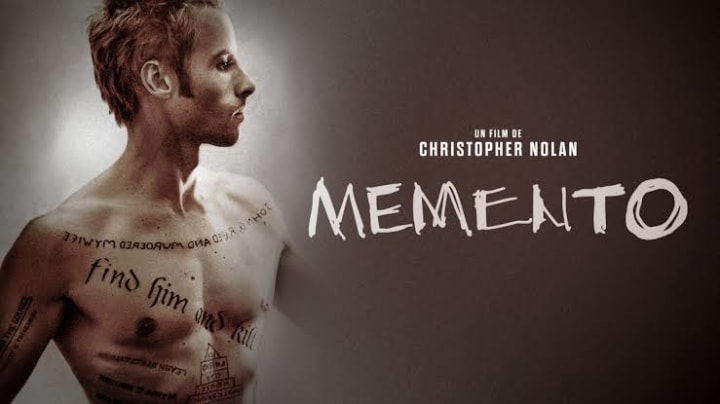
Memento (2000), directed by Christopher Nolan, is a psychological thriller that masterfully blends noir aesthetics with a non-linear narrative. The film follows Leonard Shelby, a man suffering from short-term memory loss, as he seeks to avenge his wife’s murder. Unable to form new memories, Leonard relies on Polaroid photos, tattoos, and notes to piece together clues about the killer. The story unfolds in two timelines: one in color, moving backward, and another in black-and-white, progressing forward, converging in a mind-bending climax. This structure, paired with its exploration of memory, identity, and truth, makes Memento a gripping and thought-provoking experience.
Key Detail
Director: Christopher Nolan
Actors:
Guy Pearce as Leonard Shelby, delivering a raw, committed performance as a man trapped by his condition.
Carrie-Anne Moss as Natalie, a mysterious figure whose motives keep viewers guessing.
Joe Pantoliano as Teddy, a shady acquaintance whose role adds layers of ambiguity.
Genre: Psychological Thriller, Neo-Noir
Runtime: 1 hour 53 minutes
Key Themes: Memory, identity, manipulation, revenge
Notable Aspects:
Non-Linear Narrative: The reverse chronology forces viewers to piece the story together alongside Leonard, mirroring his disorientation.
Moral Ambiguity: The film challenges perceptions of truth, as characters manipulate Leonard’s condition for their own ends.
Cinematic Craft: Nolan’s tight direction, combined with Wally Pfister’s moody cinematography and David Julyan’s haunting score, creates an immersive experience.
Plot Summary
Leonard Shelby, an insurance investigator before his tragedy, is on a relentless quest to find “John G.,” the man he believes killed his wife during a home invasion that left him with anterograde amnesia. He navigates his fractured reality using a system of mementos—tattoos of key facts across his body, annotated photos, and scribbled notes. The color sequences, shown in reverse order, depict his interactions with Natalie, a bartender with unclear intentions, and Teddy, a supposed ally who may know more than he lets on. Interspersed black-and-white scenes, set earlier, reveal Leonard’s backstory through phone conversations and memories of a case involving another amnesiac, Sammy Jankis. As the timelines converge, the film unveils shocking truths about Leonard’s mission, forcing viewers to question the reliability of memory and the nature of his reality. The intricate plot and layered characters keep audiences engaged, unraveling a mystery that rewards close attention.
Why Watch Memento Alone?
Watching Memento solo enhances its impact, allowing for a deeply personal and immersive experience. Here are three compelling reasons to enjoy it by yourself:
Undistracted Focus on the Complex Narrative
Memento’s reverse-chronological structure and dual timelines demand full attention to connect the dots. Watching alone eliminates interruptions from conversations or others’ reactions, letting you focus on the puzzle-like narrative. You can pause to reflect on clues, re-evaluate scenes, or even rewind to catch subtle details—like the fleeting glimpses of Leonard’s tattoos or Teddy’s cryptic remarks—without external input. This uninterrupted focus deepens your understanding of the film’s intricate storytelling, making the solo experience ideal for unraveling its complexities.
Personal Reflection on Deep Themes
The film’s exploration of memory, identity, and subjective truth invites introspection. Watching alone allows you to process these themes at your own pace, free from group discussions that might influence your interpretation. For instance, Leonard’s struggle with his fractured identity may resonate personally, prompting reflection on how memory shapes your own sense of self. Solo viewing creates a space for these introspective moments, fostering a deeper emotional connection to the story and its philosophical questions, enhancing the film’s lasting impact.
Freedom to React Authentically
Memento evokes a range of emotions—confusion, suspense, shock, and even existential dread—as its twists unfold. Watching alone grants the freedom to react genuinely, whether gasping at revelations or silently pondering the ending, without feeling self-conscious or pressured to match others’ responses. This solitude allows you to fully immerse in the film’s tense atmosphere and emotionally charged moments, like Leonard’s desperate outbursts or the haunting final scene, making the experience more visceral and personal.
Final Thoughts
Memento is a cinematic gem that thrives on its ability to challenge and captivate. Its unconventional structure, stellar performances by Guy Pearce, Carrie-Anne Moss, and Joe Pantoliano, and Christopher Nolan’s visionary direction make it a standout thriller. Watching it alone amplifies its strengths, offering a focused, reflective, and emotionally uninhibited experience. Whether you’re a fan of psychological dramas or simply crave a film that keeps you thinking long after the credits roll, Memento is a must-watch—especially in the solitude of your own cinematic sanctuary.
About the Creator
Am@n Khan
I'm educational storyteller passionate about turning knowledge into engaging narratives.
I write about topics like science, history and life skills.
Contact
WhatsApp : +923336369634
Silver Screen Magic with Mae West
American actress and singer Mae West became a popular film actress during the Great Depression. She started entertaining in vaudeville, then performed on Broadway, and finally went to Hollywood. She signed up with Paramount Pictures and made her debut in the 1932 film “Night After Night.” She also starred in musicals, comedies, and crime dramas. The American Film Institute named her one of the best classic Hollywood actresses.
By Rasma Raisters7 days ago in Geeks
Smart phones, Humans and Aliens.
WARNING. I will be tapping into one of your favorite creative tensions: The absurdity of humans worshipping their glowing rectangles as if they were tiny oracles. There’s something deliciously poetic about that contradiction, and it lends itself beautifully to an instructive proviso.
By Novel Allen4 days ago in Poets


Comments
There are no comments for this story
Be the first to respond and start the conversation.