
How AI is Revolutionizing Anime: From Fan Art to Full-Length Episodes
Ai Anime Future
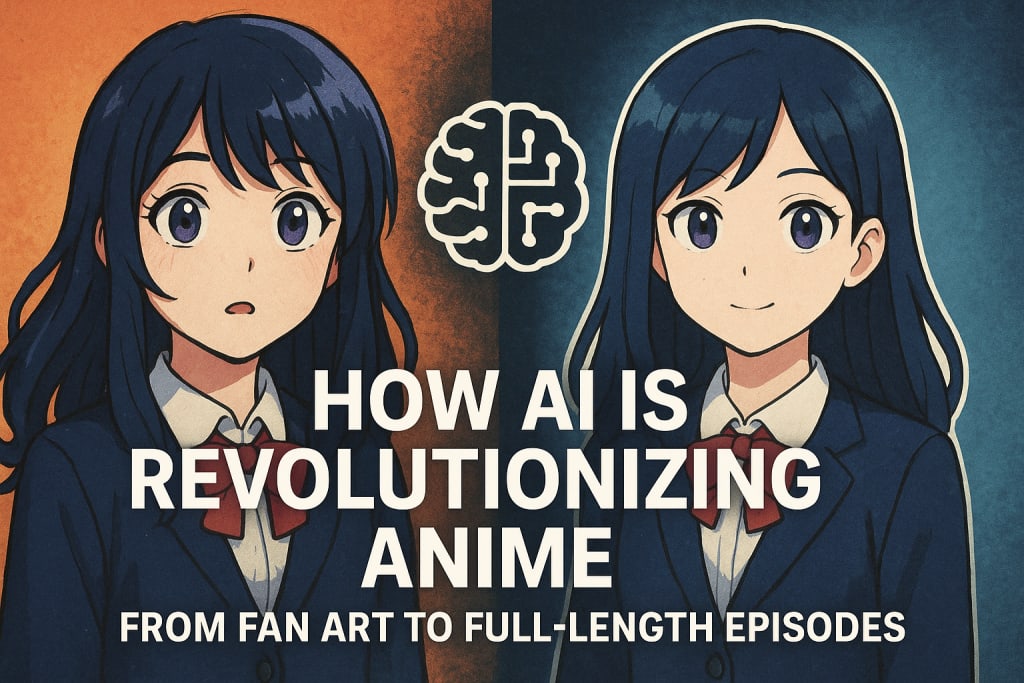
Meta Description :
AI is transforming anime creation, from fan art and character design to full-length episodes. Discover how technology is shaping the future of anime.
AI and the Future of Anime
Anime has always thrived on creativity and technological evolution. From the shift to digital coloring in the 1990s to the introduction of CGI in modern titles, each leap has reshaped how stories are told. Today, artificial intelligence is the next frontier. What started as fan experiments in AI art is now expanding into character design, storyboarding, and even full-length AI-generated anime episodes. The result is a revolution that could make anime more accessible than ever before.
AI Anime Fan Art: The Spark of the Revolution
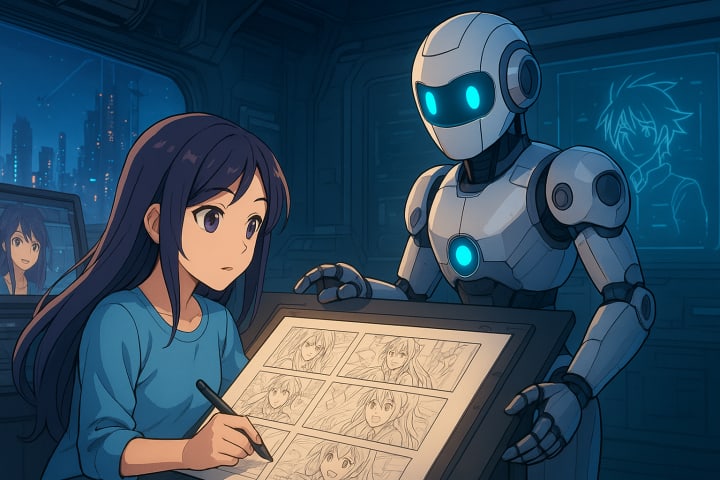
The AI anime wave began in online fan communities. Tools like Stable Diffusion, MidJourney, and NovelAI allowed fans to create anime-style illustrations instantly. With just a text prompt, anyone could generate an original character, reimagine an existing one, or design entirely new worlds.
For fans, this was groundbreaking:
- No art skills required — anyone could bring their vision to life.
- Endless variety — every prompt produced fresh variations.
- Support for indie creators — small teams could produce concept art for manga or visual novels without hiring a full staff.
However, the rise of AI fan art also sparked debates. Many professional illustrators felt AI art devalued their craft, while others argued that it democratized creativity. Regardless of opinion, one fact is clear: AI fan art introduced millions of people to the idea of anime made with machines.
AI in Anime Production: Tools, Not Replacements
While fans embraced AI art for fun, professional studios began testing it for practical uses. AI is not replacing animators—it’s acting as a digital assistant to reduce repetitive work.
Here’s how studios are already experimenting:
- Character design: Instead of sketching dozens of outfit variations, animators can use AI to generate options quickly.
- Background art: Highly detailed backdrops, like futuristic cities or forests, can be produced in minutes, saving weeks of labor.
- Storyboarding: Written scripts can be turned into rough visual sequences, giving directors a faster way to preview episodes.
This frees up human artists to focus on the subtleties—expressions, body language, and storytelling—that AI still struggles to master.
From Clips to Full-Length AI Anime Episodes
The boldest step in AI anime is happening right now: generating full-length episodes. Early efforts, often shared on platforms like YouTube and Twitter, were short clips. These videos looked surreal—sometimes inconsistent, sometimes uncanny—but undeniably anime-like.
By 2025, creators are pushing further. Tools like Runway, Pika Labs, and Kaiber can now animate longer, more coherent sequences. While they still lack the polish of studio productions, the rapid improvement suggests that fully AI-generated anime series are on the horizon.
Imagine an indie creator writing a script, feeding it into an AI, and releasing a complete anime episode within weeks. That’s no longer science fiction—it’s a near-future reality.
Opportunities of AI in Anime
AI anime opens exciting possibilities for fans, creators, and studios alike.
- Accessibility: Anyone with a story idea can bring it to life without a massive budget.
- Speed: Productions that once took years could be completed in months or even weeks.
- Diversity: More creators from around the world can experiment with anime, leading to unique styles and stories outside mainstream studios.
- Fan-driven innovation: Communities can collaborate to produce fan-made anime at a scale never seen before.
The Challenges and Controversies
But AI anime isn’t without problems.
- Quality consistency: AI still struggles with continuity in long episodes—characters may shift appearances between frames.
- Copyright and ethics: Many AI models are trained on existing anime art without explicit permission, raising legal and moral concerns.
- Employment shifts: If studios adopt AI heavily, what happens to traditional animators and background artists? Will their roles evolve, or shrink?
These challenges mirror debates happening in every creative field touched by AI, from music to writing. Anime, however, has a strong culture of artistry, making the conversation especially intense.
Conclusion: A Hybrid Future for Anime
Anime has always embraced innovation while staying rooted in artistry. AI is not replacing the medium—it’s reshaping it. We are likely heading toward a hybrid future, where human creators focus on story, emotion, and nuance, while AI handles repetitive production tasks.
For fans, this means more anime than ever before. For creators, it means fewer barriers to entry. And for the industry, it signals a new era where technology and imagination combine to push anime into uncharted territory.
The AI revolution in anime isn’t just coming—it’s already here. The question is no longer if AI will change anime, but how far it will go.
Author: Ahmed Hossam Abdelrahman
- Linkedin: https://www.linkedin.com/in/ahmed-hossam61/
About the Creator
Ahmed Hossam
AI & Computer Vision Engineer | Sharing insights on ML, coding, and building impactful projects.
Keep reading
More stories from Ahmed Hossam and writers in Geeks and other communities.
👉 Building an AI/ML Engineer Portfolio: From First Draft to Professional Showcase
Introduction A CV lists your experience. A portfolio shows it. For AI and ML engineers, demonstrating projects, code quality, and practical results is often far more persuasive than a long list of bullet points. A well-structured portfolio helps recruiters, collaborators, and hiring managers quickly understand what you can do and how you work.
By Ahmed Hossam5 months ago in 01
Silver Screen Magic with Mae West
American actress and singer Mae West became a popular film actress during the Great Depression. She started entertaining in vaudeville, then performed on Broadway, and finally went to Hollywood. She signed up with Paramount Pictures and made her debut in the 1932 film “Night After Night.” She also starred in musicals, comedies, and crime dramas. The American Film Institute named her one of the best classic Hollywood actresses.
By Rasma Raisters5 days ago in Geeks


Comments
There are no comments for this story
Be the first to respond and start the conversation.