
Hangsaman by Shirley Jackson
Why It's a Masterpiece (Week 36)

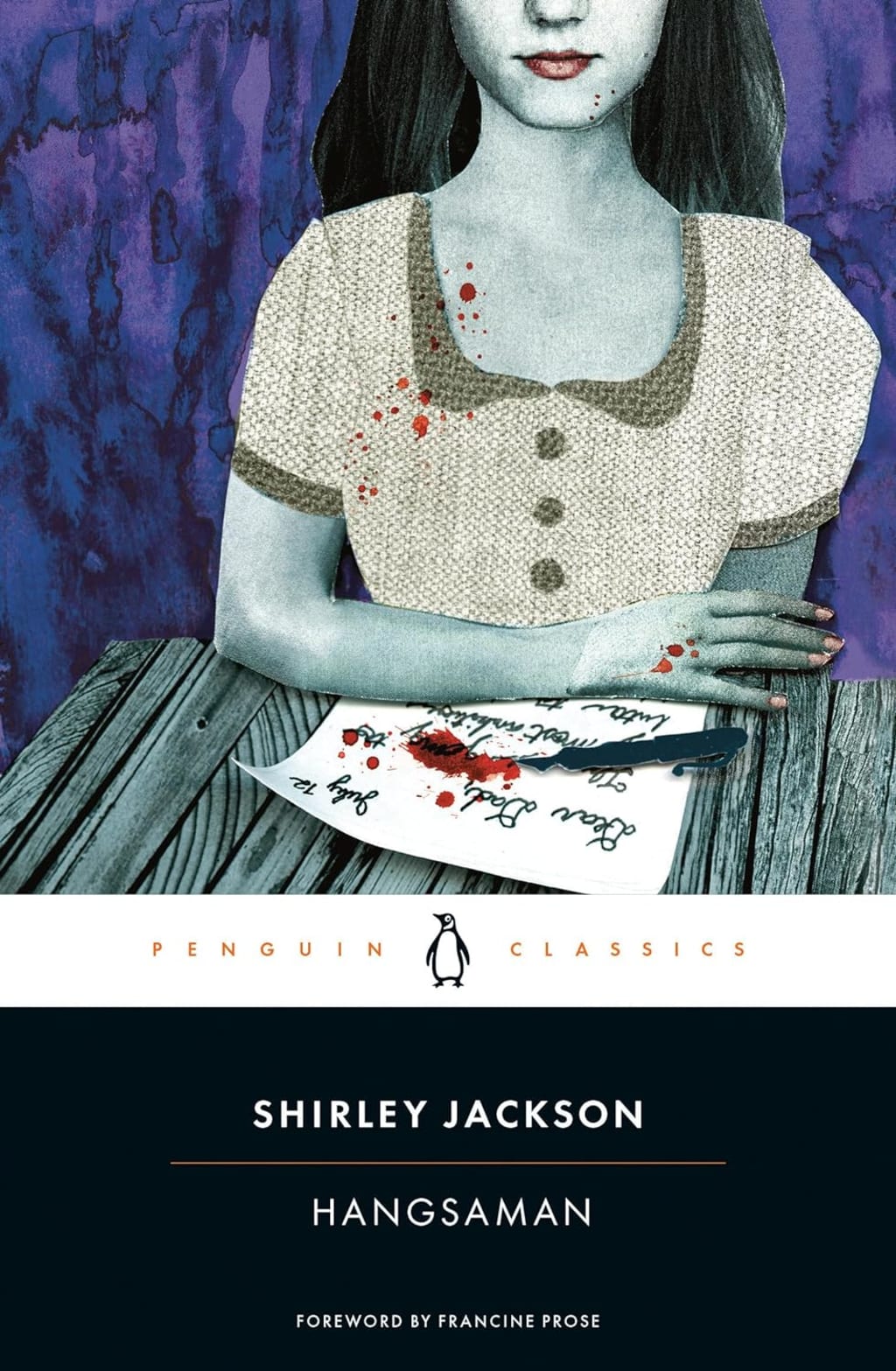
Hangsaman by Shirley Jackson, published in 1951, marks a significant departure from her more well-known works like "The Lottery" and "The Haunting of Hill House." This novel blends psychological suspense with a coming-of-age narrative, diving deep into the mind of its protagonist, Natalie Waite. Jackson's exploration of themes such as identity, alienation, and the complexities of human relationships is masterfully woven into the fabric of the story.
The novel received mixed reviews upon its release, with some critics praising Jackson's innovative narrative style and her ability to capture the inner turmoil of her characters, while others found the plot unsettling and challenging to categorize. Despite initial reception, Hangsaman has since gained recognition for its literary merit and psychological depth, solidifying Shirley Jackson's reputation as a master of Gothic fiction.
Plot

Hangsaman follows Natalie Waite, a young woman struggling to find her identity amidst the stifling expectations of her overbearing parents and the pressures of fitting into a college environment. The novel begins with Natalie preparing to leave for college, where she hopes to escape the suffocating atmosphere of her home and assert her independence.
At college, Natalie finds herself alienated and adrift, unable to connect with her peers or find her place in the social hierarchy. She forms a tenuous friendship with a girl named Tony, who introduces her to a mysterious older student named Jack. Jack exerts a strange influence over Natalie, drawing her into a web of manipulation and psychological games.
As the story progresses, Natalie's mental state becomes increasingly fragile. She experiences hallucinations and delusions, blurring the lines between reality and fantasy. Her relationships with her family and friends deteriorate as she becomes more withdrawn and introspective.
The novel reaches its climax with Natalie disappearing under mysterious circumstances, leaving the reader to question whether her experiences are real or a manifestation of her troubled mind. Jackson skillfully builds tension throughout the narrative, leaving the reader unsettled and uncertain about what is truly happening to Natalie.
Hangsaman concludes with a haunting ambiguity, as Natalie's fate remains unresolved. The novel leaves a lasting impression with its exploration of psychological instability and the haunting effects of isolation and alienation.
Into the Book

Hangsaman explores the theme of identity through Natalie's struggle to find herself amidst societal pressures and familial expectations. From the beginning, Natalie feels disconnected from her surroundings and yearns for independence. She grapples with the idea of who she wants to be versus who others expect her to become. For example, her father constantly criticizes her behavior and appearance, pushing her towards a mold that she resists.
As Natalie navigates college life, she experiences profound alienation. She finds it difficult to connect with her peers and feels like an outsider looking in. This sense of isolation intensifies as the story progresses, culminating in her withdrawal from social interactions and descent into paranoia.
Jackson portrays Natalie's journey as a quest for self-discovery, highlighting the internal conflicts that arise when one's identity is shaped by external forces. The novel underscores the complexity of identity formation and the profound impact of societal norms on individual autonomy.
“The gap between the poetry she wrote and the poetry she contained was, for Natalie, something unsolvable”
- Hangsaman by Shirley Jackson
Central to Hangsaman is the theme of psychological turmoil. Natalie's mental state deteriorates throughout the novel, marked by hallucinations and a blurred perception of reality. Her interactions with Jack, who represents both fascination and danger, exacerbate her fragile psyche.
An example of this turmoil is Natalie's increasing paranoia and suspicion towards those around her. She becomes obsessed with Jack's intentions and begins to question the motives of everyone she encounters. This psychological tension builds as the novel progresses, contributing to the overall atmosphere of suspense and unease.
Jackson skillfully portrays the intricacies of mental instability, depicting Natalie's descent into madness with empathy and insight. The novel challenges the reader to question the boundaries between sanity and madness, reality and illusion.
“She brought herself away from the disagreeably clinging thought by her usual method - imagining the sweet sharp sensation of being burned alive.”
- Hangsaman by Shirley Jackson
Another prominent theme in Hangsaman is the exploration of power dynamics and control. Natalie experiences a profound sense of powerlessness in her relationships, particularly with her parents and Jack. Her father exerts control over her life, dictating her choices and expectations. Similarly, Jack manipulates Natalie, exerting a magnetic influence that both fascinates and terrifies her.
Throughout the novel, Jackson examines the ways in which individuals seek to assert control over others and the consequences of such dynamics. Natalie's struggle for autonomy parallels her quest for identity, as she grapples with the impact of external influences on her sense of self.
An example of power dynamics is Natalie's ambiguous relationship with Jack, where she oscillates between attraction and repulsion. Jack's ability to unsettle and intrigue her underscores the complexities of power and desire in interpersonal relationships.
“I have been found wanting, Natalie thought; I have made myself unacceptable and am not worthy.”
- Hangsaman by Shirley Jackson
Why It's a Masterpiece

Hangsaman is considered a masterpiece of Gothic fiction due to Shirley Jackson's unparalleled ability to blend psychological depth with atmospheric tension. The novel challenges traditional narrative structures and delves into the complexities of identity, alienation, and mental instability. Jackson's prose is hauntingly evocative, drawing readers into Natalie Waite's inner world and leaving a lasting impression with its unsettling ambiguity.
The novel's exploration of psychological turmoil and the haunting effects of isolation resonates with readers on a visceral level, offering a profound commentary on the human condition. Jackson's narrative craftsmanship and keen insight into the complexities of power dynamics and control further solidify Hangsaman as a literary masterpiece that continues to captivate and provoke thought.
Conclusion

Hangsaman remains a relevant and compelling read in contemporary literature for its timeless exploration of themes such as identity, alienation, and psychological instability. Shirley Jackson's skillful depiction of the protagonist's inner turmoil and the atmospheric tension throughout the novel continues to resonate with readers interested in psychological fiction.
Moreover, the novel's ambiguous ending and exploration of existential questions ensure its enduring appeal. Readers are drawn to the complexities of Natalie Waite's character and the haunting atmosphere Jackson creates, which challenges conventional interpretations of reality and perception.
Next Week: Down and Out in Paris and London by George Orwell
About the Creator
Annie Kapur
I am:
🙋🏽♀️ Annie
📚 Avid Reader
📝 Reviewer and Commentator
🎓 Post-Grad Millennial (M.A)
***
I have:
📖 280K+ reads on Vocal
🫶🏼 Love for reading & research
🦋/X @AnnieWithBooks
***
🏡 UK
Keep reading
More stories from Annie Kapur and writers in Geeks and other communities.
Book Review: "Vertigo" by Harald Jähner
Full Title = "Vertigo: The Rise and Fall of Weimar Germany 1918-1933" by Harald Jahner You all know by now how much I love the cinema of the Weimar Republic and how interested I am in the culture that covered the entire era. In the 15 or so years that the Republic was around, we got some of the best movies that the old horror era has ever seen plus, when a lot of these directors got up and moved to America with the oncoming of Hitler to Germany, we then got the Universal Monsters era of the 30s and then some. The Weimar Republic was truly one of the first eras of actual film and its stars.
By Annie Kapurabout a year ago in Geeks
Silver Screen Magic with Mae West
American actress and singer Mae West became a popular film actress during the Great Depression. She started entertaining in vaudeville, then performed on Broadway, and finally went to Hollywood. She signed up with Paramount Pictures and made her debut in the 1932 film “Night After Night.” She also starred in musicals, comedies, and crime dramas. The American Film Institute named her one of the best classic Hollywood actresses.
By Rasma Raisters8 days ago in Geeks
After being accused of assaulting a ride-sharing driver, Kiefer Sutherland was arrested in Hollywood.
Following allegations that he "physically assaulted a ride-share driver and made criminal threats," Los Angeles police arrested veteran actor Kiefer Sutherland early Monday in Hollywood. The 59-year-old, who played President Tom Kirkman on "Designated Survivor" and Jack Bauer on "24," was taken into custody shortly after midnight following a call about an altercation with a driver.
By Raviha Imran7 days ago in Geeks
The Devil's Cut
“Comrade, finally you’re awake.” The voice was smooth, sensual. A flickering incandescent bar was all that lit the white, sterile room. All Vladimir remembered was everything going black. He tried to move his arms and found them strapped to the gurney.
By Matthew J. Fromm7 days ago in Fiction



Comments
There are no comments for this story
Be the first to respond and start the conversation.