
Hamnet Review: Chloe Zhao, Jessie Buckley, and Paul Mescal Deliver a Heart-Shattering Shakespeare Drama
Chloe Zhao’s Hamnet is a stunning, emotionally devastating drama starring Jessie Buckley and Paul Mescal as Agnes and William Shakespeare. This review explores the film’s themes of love, grief, artistry, and legacy in one of the best literary adaptations of the decade.


Hamnet ★★★★½
Directed by: Chloé Zhao
Written by: Chloé Zhao & Maggie O’Farrell
Starring: Jessie Buckley, Paul Mescal, Zac Wishart
Release Date: December 5, 2025
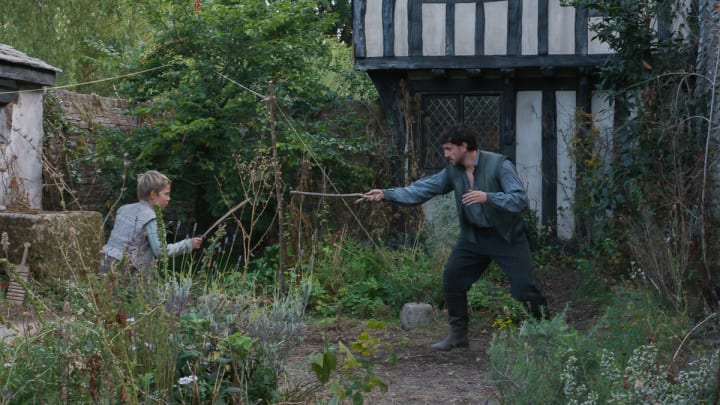
Hamnet Review: A Tragic, Soul-Stirring Look at Shakespeare’s Lost Son
Chloé Zhao’s Hamnet is a film drenched in emotion — a sweeping, deeply felt portrait of love, grief, artistry, and the impossible work of carrying on after tragedy. Jessie Buckley stars as Agnes, a wild, intuitive, and spiritually attuned woman living in mid-century England. The women of Agnes’s family can see visions of the future, though their meaning is often clouded and fragmented. When Agnes first meets William Shakespeare (Paul Mescal), she senses not only the intensity of his passion but the greatness simmering beneath his quiet tutor’s role.
Shakespeare, working for a wealthy local family, is instantly drawn to Agnes’ otherworldly presence. Their romance is electric — romantic, physical, spiritual — a combustion of creativity that becomes the foundation of the great playwright’s early life. Agnes sees the artist inside him long before the world does, encouraging him to pursue his writing and seek opportunity in England when their small home becomes too confining.
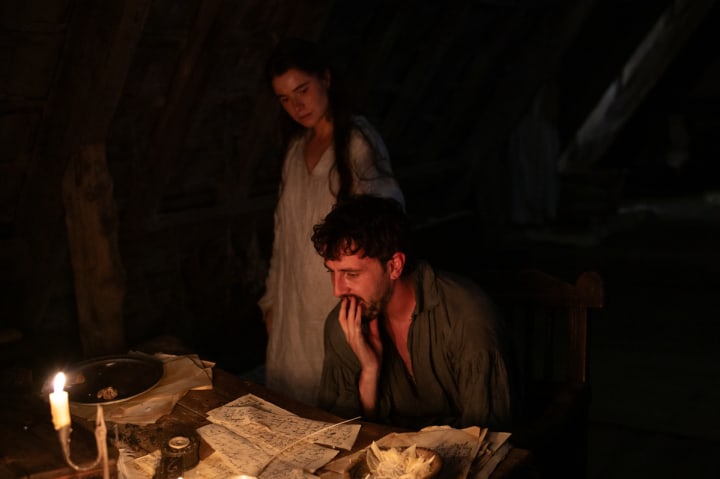
A Marriage Forged by Passion, Tested by Grief
Life at home is warm, messy, and full of longing as Agnes raises their daughter Susannah (Bodhi Rae Breathnach), waiting for Will’s return between his stretches in England. Their love only deepens when Agnes becomes pregnant again with twins: Judith (Olivia Lynes) and Hamnet (Jacobi Jupe). But Agnes has a vision she cannot shake — a sense that one of the children’s lives will be painfully short.
Her fear becomes prophecy when a plague sweeps across the countryside. Judith falls sick first, and Hamnet, in an act of tenderness beyond his age, sleeps beside her to comfort her. By morning, he becomes ill himself. Will rushes home to a wife in agony and learns that Hamnet — not Judith — has died.
The devastation fractures their marriage. Will flees into work, returning to England to bury himself in writing and to build a new life in the city. Agnes remains at home, drowning in grief, resentment, and the unbearable belief that she failed to protect her son. She can’t understand how Will can write — and worse, how he can write comedy — while their world has collapsed.
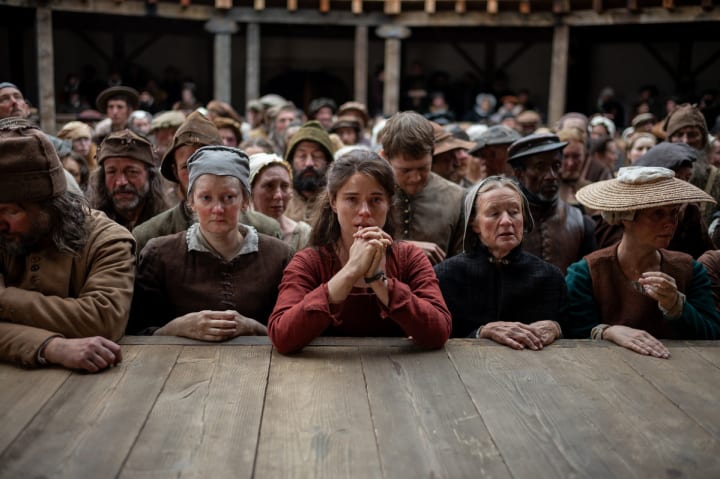
Hamlet as Catharsis, and a Marriage Reborn
Agnes eventually learns that Will has not been writing comedy at all. Instead, he is pouring every ounce of his grief, guilt, and heartbreak into Hamlet. The play becomes both a tribute to their son and a monument to the pain neither has been able to articulate.
In one of the film’s most extraordinary sequences, Agnes attends a performance of Hamlet at the Globe. Her initial anger — that Will has turned their tragedy into public spectacle — slowly melts as she sees their son reflected in the play’s wounded, contemplative soul. A young actor channels the same sensitivity that made Hamnet so beloved. Agnes watches, transfixed, as the performance reveals Will’s torment, his longing, and his desperate attempt to give their son a form immortal enough to outlive grief.
It is in this moment that Agnes and Will begin to understand each other again. Hamnet becomes the language through which they finally share the depths of their suffering.

A Masterful Film from Chloé Zhao
Chloé Zhao is at her best when exploring raw emotion and human complexity, and Hamnet is easily her strongest work since Nomadland. While Eternals left her stranded in a world unsuited to her sensibilities, here she is entirely in her element. She paints a vivid, tactile portrait of romance, marriage, creativity, and unbearable loss.
Jessie Buckley’s performance as Agnes is ferocious, tender, mystical, and alive. She captures a woman both guided and haunted by intuition, someone who loves deeply and suffers even more deeply. Paul Mescal meets her with equal power, embodying a Shakespeare who is brilliant, flawed, ambitious, and aching — a man whose art is both salvation and escape.
Together, they create a marriage that is intoxicating in its passion and shattering in its collapse.

Final Thoughts: One of the Most Moving Dramas of the Century
Hamnet is not an easy sit. Its emotional intensity never loosens, and its portrait of parental grief is almost unbearably intimate. Yet it is also one of the most profound, beautiful, and meaningful films of the 21st century. The loss of young Hamnet devastates you — and the moment he comforts his sister before falling ill is one of the most heartbreaking scenes Zhao has ever staged.
But the film’s emotional power gives Shakespeare’s legacy new dimension. Through Zhao’s lens, the art we revere is born not just of genius, but of love, empathy, and agonizing loss. Hamnet reminds us that the work that defines our culture often comes from the deepest wounds.
This is a masterpiece of emotional storytelling — a film as haunting as the play it inspired, and a portrait of grief that lingers long after its final moments.

Tags
Hamnet review, Chloe Zhao, Jessie Buckley, Paul Mescal, Shakespeare movies, Hamlet movie, Maggie O’Farrell, Hamnet film adaptation, historical drama films, 2025 movies, literary adaptations, Vocal Media reviews, period drama review
About the Creator
Sean Patrick
Hello, my name is Sean Patrick He/Him, and I am a film critic and podcast host for the I Hate Critics Movie Review Podcast I am a voting member of the Critics Choice Association, the group behind the annual Critics Choice Awards.
Keep reading
More stories from Sean Patrick and writers in Geeks and other communities.
Silver Screen Magic with Mae West
American actress and singer Mae West became a popular film actress during the Great Depression. She started entertaining in vaudeville, then performed on Broadway, and finally went to Hollywood. She signed up with Paramount Pictures and made her debut in the 1932 film “Night After Night.” She also starred in musicals, comedies, and crime dramas. The American Film Institute named her one of the best classic Hollywood actresses.
By Rasma Raisters6 days ago in Geeks
How to Succeed at the Benson Directory®
Congratulations and welcome to the Benson Directory® employee #22391! As our newest call handler, you will have the privilege of speaking with dozens of unique and interesting people on a daily basis as well as the opportunity to earn bonuses for high performance. Contained within this handbook you will find a set of ease to follow instructions designed to help you settle in to your new role and begin paving the way to success.
By S. A. Crawford3 days ago in Fiction



Comments
There are no comments for this story
Be the first to respond and start the conversation.