
Halloween Special: Why Harley Quinn and the Joker are NOT “Relationship Goals”
Why Her Romance with Poison Ivy Should Be Considered “Goals”

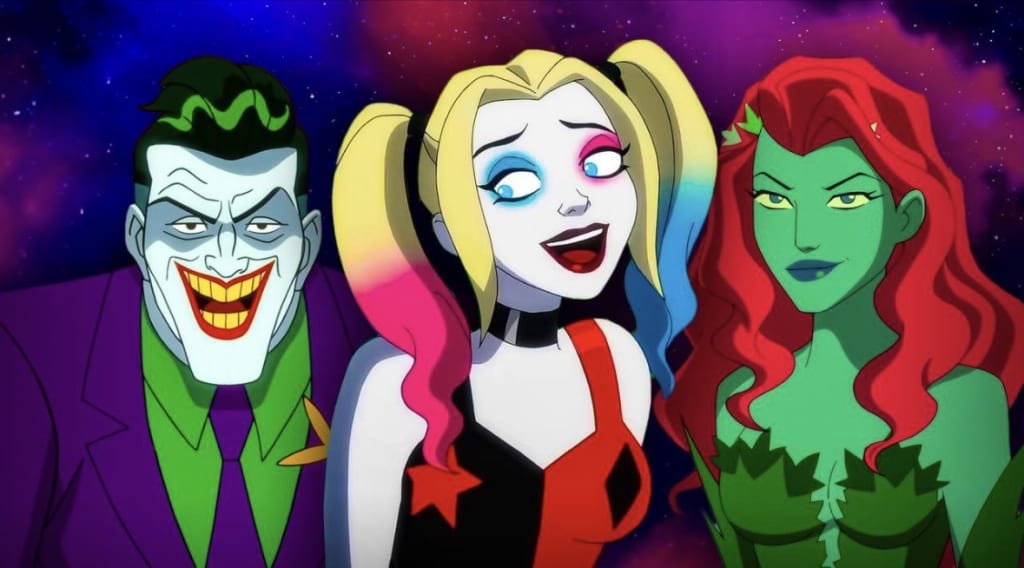
Trigger Warning: This article discusses emotional, physical, and psychological abuse.
Halloween, a time to revel in the mischievous and the monstrous, often blurs the line between destruction and devotion. This is true for the fictional couple, Harley Quinn and the Joker, whose relationship is frequently misunderstood.
Since her introduction in 1992's Batman: The Animated Series, Dr. Harleen Quinzel transformed from a promising psychiatrist into the Joker's sidekick and, eventually, his equal in crime. This complex evolution has captivated audiences for over three decades.
However, this fascination can be misleading. Many romanticize Harley and Joker's bond as "crazy love," a passion so intense it can devastate everything in its path. Social media is full of memes, fan art, and even cosplays depicting them as the ultimate "ride or die" duo.
The reality is far grimmer: their relationship is not romantic, but abusive. This Halloween, as we embrace villains and vixens, it's crucial to reveal the dark truth beneath the surface.
Harley's true journey towards healthy "relationship goals"—one built on love, respect, and mutual healing—lies not with the Joker, but with Poison Ivy.
The Birth of Harley Quinn: From Healer to Victim
Harley Quinn's origin story, at its core, is a tragic tale of manipulation and vulnerability. Co-created by Paul Dini and Bruce Timm, Harley first appeared in the Batman: The Animated Series episode Joker’s Favor as the Joker's comedic sidekick. However, Dini's 1994 comic Mad Love later delved into her backstory, revealing the profound psychological tragedy behind her character.
Dr. Harleen Quinzel, an ambitious psychiatrist at Arkham Asylum, became fixated on the Joker's case. He masterfully manipulated her, employing flattery, self-pity, and fabricated trauma narratives to gain her sympathy. This professional curiosity gradually devolved into emotional entanglement, a classic demonstration of coercive control and trauma bonding—psychological tactics abusers used to ensnare their victims.
Harleen genuinely believed she could "cure" the Joker. Instead, he systematically dismantled her career, her identity, and her very sense of self. She was transformed into Harley Quinn, the devoted, clownish follower of a man who viewed her as nothing more than a disposable tool. As psychologist Dr. Andrea Letamendi noted in her 2016 essay Why We Love Harley Quinn:
“Harley’s story resonates because it mirrors real patterns of abuse–the slow erosion of boundaries, the confusion of pain with love, and the desperate hope that affection can redeem cruelty”.
The Joker’s “Love”: A Study in Abuse
The relationship between Harley Quinn and the Joker is often misrepresented in pop culture as "relationship goals". But still, it is, in fact, a dynamic of domination and abuse, not affection or devotion.
Manipulation, insults, and assault, both in comics and animation, characterize the Joker's treatment of Harley. A prime example is Mad Love, where he brutally attacks her for capturing Batman, perceiving it as her "ruining his joke." This behavior aligns with trauma research, as described by Judith Harman in Trauma and Recovery (1992), where an alternating pattern of charm and cruelty, affection and violence, fosters psychological dependency in victims.
His "love" for Harley is conditional upon her submission; any assertion of independence is met with punishment. This clearly shows control, not devotion.
Despite this, films like Suicide Squad (2016) have romanticized their dynamic, presenting Harley's dive into acid and the Joker's slow-motion rescue as glamorous and gritty. This aestheticization of what should horrify distorts the reality of their relationship, framing it as passion.
However, there is nothing romantic about the Joker throwing the woman he claims to love into the very chemicals that created his madness. This is not "crazy in love," but abuse, disguised in a vibrant, neon facade.
When Fandom Romanticizes Toxicity
The romanticization of Harley and Joker’s relationship normalizes toxic dependency, as seen in social media captions like “if it’s not crazy love, I don’t want it” or “We go together like Harley and Mr. J.” This aestheticization of dysfunction, which cultural critic bell hooks might term “the commodification of trauma,” trivializes real-world abuse. Young audiences may internalize the idea that suffering is proof of love when they repeatedly see Harley forgiving the Joker.
Feminist media scholar Dr. Carolyn Cocca, in Superwomen: Gender, Power and Representation (2016), highlights how female characters like Harley are often framed through patriarchal lenses, where their pain is used to humanize male villains and their love is weaponized to justify cruelty.
Breaking the Cycle: Harley’s Reclamation of Self
In modern DC canon, Harley Quinn's narrative transcends submission, focusing instead on her journey of survival.
From the Harley Quinn (2019-) animated series to Harley Quinn: Breaking the Glass (Mariko Tamaki, 2019), we witness Harley reclaiming her agency. She sheds her identity as "the Joker's girl" to become her own chaotic, complex woman—a survivor who discovers strength through humor, rebellion, and friendship.
This evolution mirrors broader feminist and psychological discussions where abuse survivors reconstruct their identities, rebuilding themselves through new, affirming relationships and creative expression. Harley's transformation beautifully encapsulates this process.
Central to this recovery story is one pivotal figure: Poison Ivy.
Poison Ivy: Love That Heals
Poison Ivy, or Pamela Isley, first encountered Harley Quinn in 1993 during the Batman: The Animated Series episode, Harley and Ivy. After a heated confrontation with the Joker, Harley found herself rescued by Ivy, an event that significantly altered Harley's narrative.
Ivy became Harley's confidante, protector, and eventually, her partner. Their bond deepened into a relationship built on care rather than chaos. Unlike the Joker, who sought to control Harley, Ivy empowered her, encouraging her to acknowledge her own worth, appreciate her life, and cease apologizing for her existence. Where the Joker employed manipulation, Ivy offered mutual respect.
Their romance, now a recognized part of DC continuity (Harley Quinn, #25, 2021), stands out as one of the healthiest relationships in superhero fiction. While not without its imperfections, it is firmly rooted in consent, compassion, and mutual development. In terms of trauma theory, Ivy provides Harley with a secure attachment—a vital psychological foundation for healing after enduring prolonged abuse. Through her relationship with Ivy, Harley discovers that love can be a source of nurturing, not violence.
Rewriting the Villain’s Love Story
Ivy and Harley's relationship challenges traditional comic book narratives surrounding gender and sexuality. Historically, female villains were often punished for defying norms or solely defined by their relationships with male characters.
However, Harley and Ivy defy this convention. Their queer relationship redefines villainy as an act of liberation, a rebellion against patriarchy and abuse, rather than against morality.
As feminist theorists like Sara Ahmed (in The Cultural Politics of Emotion, 2004) suggest, love can be a political act—a conscious emotional alignment against harmful systems. Harley's love for Ivy embodies this by rejecting the idea that pain equates to passion.
Together, Harley and Ivy offer a model of love that fosters healing and celebrates identity, rather than causing harm or erasing individuality.
Why This Matters–Especially at Halloween
Every October, many couples embrace the iconic red-and-black costumes of Harley Quinn and the Joker. However, it's crucial to look beyond their pop culture status and consider the true symbolism behind these outfits.
Choosing these costumes without critical thought risks promoting harmful myths that equate abusive relationships with excitement and romance. This isn't about shaming anyone, but about fostering awareness.
Instead, imagine a Harley and Ivy couple's costume. While still embodying villainy and fierceness, it represents survival and solidarity. This is a love story truly worth celebrating during the season of monsters, as it redefines the meaning of "mad love."
Authentic love should empower you to heal and grow, not break you down.
The Real Madness is Mistaking Abuse for Love
Harley Quinn's transformation from the Joker's accomplice to Poison Ivy's partner is a powerful narrative of redemption in contemporary comics. Her journey mirrors the experiences of countless survivors who once mistook control for affection, ultimately discovering that true freedom lies not in obsession but in self-acceptance.
While the Joker may have created Harley Quinn, it was Poison Ivy who helped Harleen Quinzel reclaim her true self.
This Halloween, as Gotham's villains emerge, let's move beyond romanticizing "mad love." Instead, let's celebrate healing, queer joy, and self-liberation. After all, sometimes the most terrifying realization isn't confronting monsters, but acknowledging we once considered them "mine."
Sources
- Dini, Paul, and Bruce Timm. The Batman Adventures: Mad Love. DC Comics, 1994.
- Batman: The Animated Series. Warner Bros. Animation, 1992–1995.
- Harley Quinn. Warner Bros. Animation, 2019–.
- Johns, Geoff. Harley Quinn #25. DC Comics, 2021
- Tamaki, Mariko. Harley Quinn: Breaking Glass. DC Ink, 2019.
- Herman, Judith. Trauma and Recovery. Basic Books, 1992.
- Letamendi, Andrea. “Harley Quinn and the Cycle of Abuse.” The Arkham Sessions Podcast.
- Cocca, Carolyn. Superwomen: Gender, Power, and Representation. Bloomsbury Academic, 2016.
- Ahmed, Sara. The Cultural Politics of Emotion. Routledge, 2004.
- Hooks, bell. All About Love: New Visions. HarperCollins, 2000.
About the Creator
Jenna Deedy
Just a New England Mando passionate about wildlife, nerd stuff & cosplay! 🐾✨🎭 Get 20% off @davidsonsteas (https://www.davidsonstea.com/) with code JENNA20-Based in Nashua, NH.
Instagram: @jennacostadeedy
Keep reading
More stories from Jenna Deedy and writers in Geeks and other communities.
The Punisher’s Skull Has Been Hijacked
Trigger Warning: This article discusses violence, vigilantism, and extremist ideology. Frank Castle’s white skull emblem, adorning the Punisher’s chest, is one of the most misinterpreted and misappropriated symbols in comic book history. Marvel’s tragic antihero, the Punisher, is not meant to glorify lawlessness or authoritarian revenge; instead, he serves as a cautionary tale about the dangers of an individual's moral code overriding the very concept of justice.
By Jenna Deedy3 months ago in Geeks
Marty Supreme Review: Timothée Chalamet Is Excellent, The Movie… Not So Much
⭐ Rating: 2 out of 5 stars Marty Supreme Directed by Josh Safdie Written by Josh Safdie, Ronald Bronstein Starring Timothee Chalamet, Gwyneth Paltrow, Tyler The Creator, Odessa A'zion
By Sean Patrickabout a month ago in Geeks
Sadie Sink Found Out About Her ‘Spider-Man’ Casting Via Online Speculation: “There’s Sometimes Some Truth To It”
Although sworn to secrecy by the MCU, Sadie Sink admits there’s sometimes some truth to the online fan theories. The actress, who will star in Spider Man Brand New Day in an undisclosed role, admitted “it’s torture” not being able to tell people which character she’s playing in the fourth installment of the Marvel Studios franchise.
By Dena Falken Esqabout 15 hours ago in Geeks




Comments
There are no comments for this story
Be the first to respond and start the conversation.