
From Theaters to Streaming: Why the Future of Marvel Films Likely Belongs to Disney+
Rising ticket prices, shifting audience behaviors, and digital success stories are pushing Marvel — and Hollywood — toward a streaming-first future.

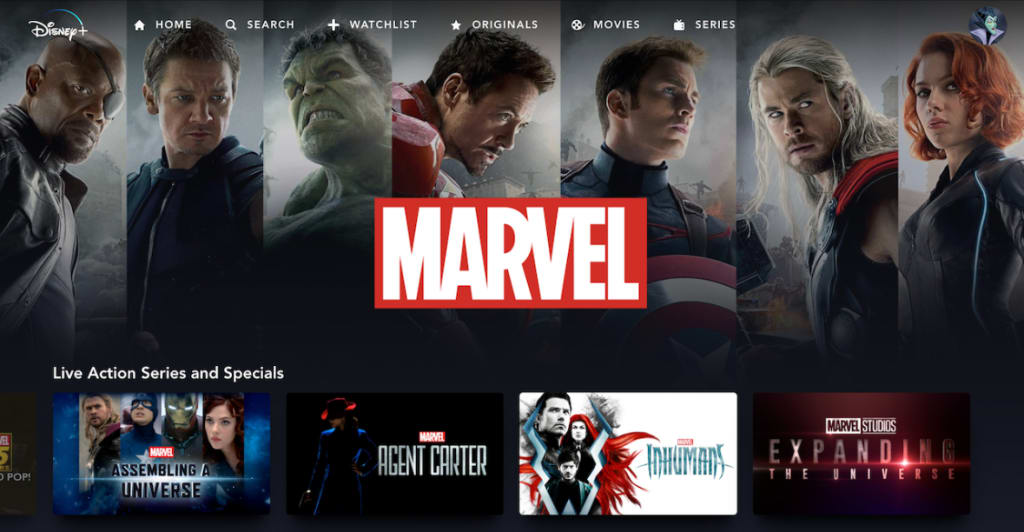
Author’s Note: This article is a continuation of ideas first explored in my previous piece, “From Infinity Saga to Chicken Jockey: The Changing Face of Moviegoing”, which can be found on my Vocal page. That essay examined the emotional and cultural shifts in how families (including my own) engage with blockbuster cinema today. This piece expands that analysis, focusing on Marvel Studios and Disney’s developing release strategy.
For over ten years, Marvel Studios revolutionized the cinematic blockbuster, turning interconnected narratives into a widespread cultural phenomenon. From Iron Man (2008) to Avengers: Endgame (2019), the Marvel Cinematic Universe (MCU) dominated the box office, generating billions in global revenue. However, with families facing increasing economic pressures and the maturation of streaming technology, this once-invincible model is showing signs of weakness.
It appears increasingly likely that Disney will move many future Marvel films from theaters directly to Disney+, its exclusive streaming platform. This is not mere speculation; it is a direction driven by developing economic realities, changing consumer preferences, and shifts in Disney’s strategic thinking. As we examine this transition, the evidence points toward a new Marvel experience—one enjoyed in living rooms rather than IMAX theaters.
The Price Problem: Moviegoing is Becoming a Luxury

Attending a movie at a traditional theater, once considered an affordable and accessible form of entertainment for families, has become a costly endeavor. In 2025, the average ticket price in the U.S. is approximately $16.08, according to the National Association of Theatre Owners. For a family of four, this translates to nearly $65 for tickets alone, and when factoring in typical concession items like popcorn, candy, and drinks, a single outing can easily exceed $80-$90, or even more.
Film commentator @theflitecast highlighted this financial burden in a widely shared Threads post, stating, “You’re looking at nearly $90 for a movie trip for four. And that’s not counting if you’re in a city or a premium theater.” This isn't an isolated issue; it's a widespread reality. Factors such as premium seating, online booking convenience fees, urban parking charges, and increasingly expensive food all contribute to a pricing model that has outpaced both inflation and consumer wage growth.
This shift isn't just financial; it's also emotional. In my Vocal article, From Infinity Saga to Chicken Jockey, I discussed how the Infinity Saga made theater-going feel like a communal celebration, whereas the present experience often feels more fragmented and financially strained. As I wrote, “The movie theater was once the stage for grand narratives...Now, it’s often bypassed for a Minecraft stream or a YouTube short that costs nothing and comes with no travel, babysitter, or $10 soda.”
This reflection stems from my growing moviegoing habits and the observation that I'm not alone. An increasing number of families are opting for entertainment experiences that don't demand sacrifice or strain, especially when premium content is readily available from the comfort of their own homes.
The Rise of Streaming and the Home Viewing Economy

The surging cost of cinema outings has significantly bolstered the appeal of streaming services. Disney+, for example, offers a vast Marvel library—encompassing films, series, animation, specials, and behind-the-scenes content—for a monthly fee of $10.99 (ad-supported) or $13.99 (ad-free). This means that for the price of one or two movie tickets, a family can enjoy a full month of on-demand entertainment, complete with their preferred snacks and the comfort of their own home.
This stark economic contrast is a primary driver of shifting consumer behavior. As one working parent on Threads articulated, "It’s too much. I’ve got two kids, so we'll wait for the Disney+ release. We can pause, snack, and rewind. It’s cheaper and easier."
National survey data corroborate this sentiment. A 2024 Morning Consult study revealed that over 60% of U.S. adults prefer watching new releases at home, with only 7% citing theaters as their top viewing choice. The reasons cited for this preference include cost, convenience, safety, and the increasing quality of home entertainment technology.
Considering these factors holistically, home viewing is now seen by the average family as a practical, cost-effective, and increasingly superior alternative. When paired with smart TVs, sound bars, and high-resolution monitors, streaming no longer feels like a compromise, but an upgrade.
Streaming-Only Success Stories: The Case of K-Pop Demon Hunters

The belief that major films require theatrical releases to achieve cultural impact is rapidly becoming obsolete. K-Pop Demon Hunters, an animated Netflix original, serves as an interesting counterexample. This film bypassed cinemas entirely, yet it became the platform's most-watched original film to date, generating record-breaking global viewership, trending for weeks on social media, and earning widespread critical acclaim.
Its success challenges the conventional wisdom surrounding the role of theaters in validating major film releases. K-Pop Demon Hunters didn't just succeed; it dominated. Despite lacking any box office revenue, it established itself as a cultural juggernaut through its accessibility, buzz, and immediate global reach.
Disney is well-positioned to replicate this model with its Marvel properties. With an even larger brand ecosystem, deeper fanbase, and exclusive control of its own distribution channel (Disney+), Marvel possesses all the components to create streaming-first blockbusters. K-Pop Demon Hunters showed that a cultural moment doesn't require a ticket stub; it simply needs an interesting story and a streaming platform adept at amplifying it.
Disney’s Business Model: Streaming First, Box Office Second

Disney's strategic priorities have shifted, with the launch of Disney+ in November 2019 marking a move from a theatrical-first approach to a hybrid and even streaming-first strategy. Marvel Studios quickly adapted, expanding the MCU beyond theaters with releases like WandaVision, Falcon and the Winter Soldier, and Loki (all 2021). These high-concept, visually stunning, and narratively essential additions to the MCU canon were exclusive to Disney+, and audiences followed.
While the pandemic sped up this trend, it didn't start it. Titles such as Soul, Raya and the Last Dragon, Turning Red, and Black Widow either premiered simultaneously on Disney+ or bypassed theaters entirely. Even after theaters reopened, Disney continued to experiment; Encanto, for example, gained significant popularity after its Disney+ debut despite modest theatrical success.
As argued in From Infinity Saga to Chicken Jockey, this represents more than just a distribution strategy—it's a creative transformation. The MCU is no longer solely a movie franchise but a streaming universe, and Disney understands that keeping subscribers may now be more crucial than opening weekend box office numbers. Observing Marvel's evolution from Phase 3 to Phase 5, it's clear that Disney+ is no longer merely a supporting platform but has become the narrative backbone of the franchise.
The Future of Marvel: Streaming Centric Storytelling
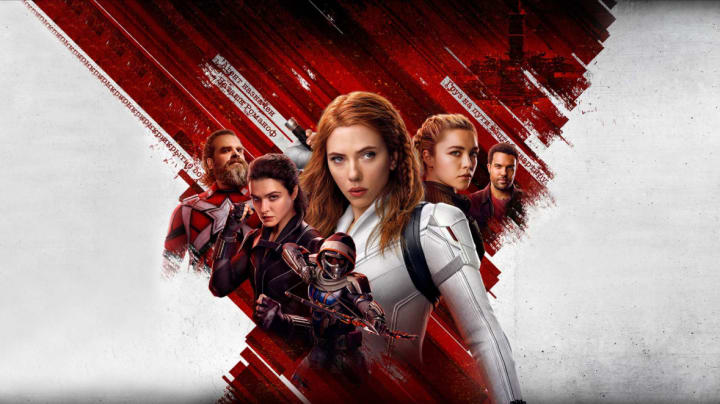
Disney is likely to increasingly prioritize Disney+ as the main platform for Marvel narratives, driven by financial, strategic, and behavioral considerations. While major upcoming titles like Avengers: Doomsday and Avengers: Secret Wars might have limited theatrical releases, their main purpose could be to boost streaming engagement rather than achieve top box office results.
The existing integration of streaming content with the broader Marvel Cinematic Universe (MCU) through shows like Loki, What If?, Ms. Marvel, Moon Knight, X-Men '97, and Echo has already established Disney+ as an essential viewing platform for audiences. This trend could lead to even major crossovers or Avengers-level events debuting directly on Disney+, especially if the economic benefits are favorable.
From a business standpoint, releasing content directly to Disney+ offers several advantages: it lowers marketing expenses, eliminates revenue sharing with theaters, and directly supports the subscription model. This approach also allows for greater creative freedom, as longer runtimes, episodic formats, and experimental content can thrive without the constraints of theatrical releases.
Conclusion: The Screen May Be Small, But the Future Is Big

The future of Marvel films is increasingly shifting from theaters to Disney+, driven by the economics of movie-going, the growth of streaming, and Disney’s developing media strategy. While the nostalgia of theatrical releases persists, the affordability, accessibility, and technological advancements of home entertainment are becoming more dominant.
As previously argued in From Infinity Saga to Chicken Jockey, the essence of Marvel lies not in the theatrical experience but in connection, accessibility, and continuity, which are now predominantly found on streaming platforms. For many families, including my own, the most significant Marvel experiences are now occurring at home, especially as costs rise and habits change.
References:
- @theflitecast, Threads posts, 2025:
- https://www.threads.com/@theflitecast/post/DM3j0kHyZYn
- My article: From Infinity Saga to Chicken Jockey: The Changing Face of Moviegoing.
- Morning Consult, Streaming Wars Report, 2024
- The Quorum, “Audience Insights: Where Americans Want to Watch,” 2025
- National Association of Theatre Owners (NATO) Ticket Data, 2004–2025
- Netflix Metrics, 2025: Internal statistics for K-Pop Demon Hunters
About the Creator
Jenna Deedy
Just a New England Mando passionate about wildlife, nerd stuff & cosplay! 🐾✨🎭 Get 20% off @davidsonsteas (https://www.davidsonstea.com/) with code JENNA20-Based in Nashua, NH.
Instagram: @jennacostadeedy
Keep reading
More stories from Jenna Deedy and writers in Geeks and other communities.
Dear Brett Cooper: Cosplayers Aren’t Running From Safe Spaces–We’re Protecting Them
Trigger Warning: This article discusses topics including transphobia, antisemitism, online harassment, and references to the Holocaust. Reader discretion is advised, especially for members of marginalized communities who may find this content emotionally difficult.
By Jenna Deedy7 months ago in Geeks
'A Knight of the Seven Kingdoms': Why Egg Suddenly Seems So Important To Prince Maekar
WARNING! SPOILERS for A Knight of the Seven Kingdoms 1x06, 'The Morrow'. After a successful debut, the first season of Game of Thrones prequel A Knight of the Seven Kingdoms has come to an end. The series season one finale, 'The Morrow', mostly deals with the fallout from the tragic death of Prince Baelor 'Breakspear' Targaryen, unintentionally killed by his own brother, Prince Maekar, during the Trial of Seven between Ser Duncan the Tall and Prince Aerion Targaryen.
By Kristy Anderson3 days ago in Geeks
Staying sane in the insane world.
”It is no measure of health to be well adjusted to a profoundly sick society.” Jiddu Krishnamurti This quote has been one of my favourites since the moment I first laid my eyes on it. To me, it cuts right through the fog of the illusion of normality that permeates our lives. And since I am someone who has never felt (well) adjusted to this society, Krishnamurti’s words gifted me with the realisation that there isn’t anything inherently wrong with me.
By Eva Smitteabout 23 hours ago in Humans



Comments (1)
Great coverage on this topic!