
From Odyssey to 2025: The Ultimate Evolution of Gaming Consoles & the Future of Cloud Gaming
Explore the evolution of gaming consoles and the future of cloud gaming in 2025

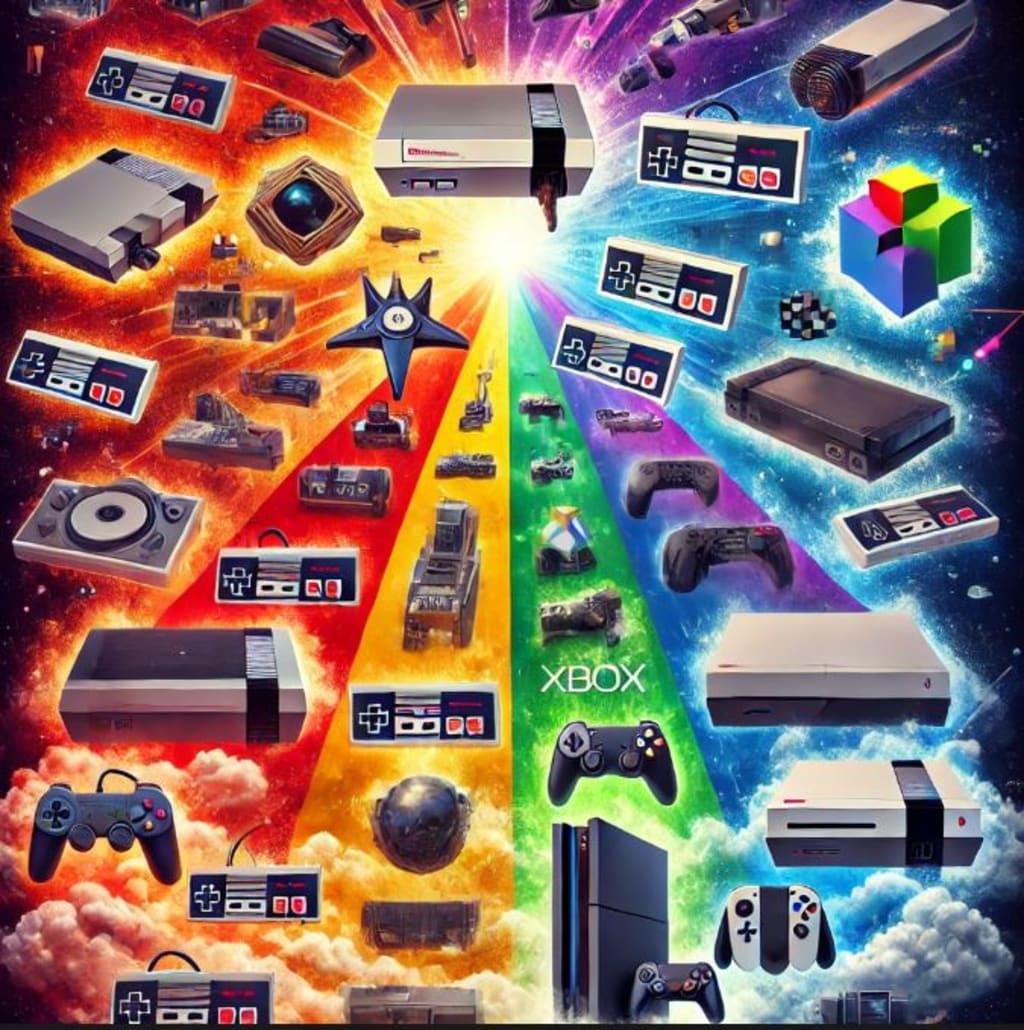
Video gaming has undergone a massive transformation over the last few decades, evolving from humble beginnings to a multi-billion-dollar industry that captivates millions worldwide. The question at the heart of this transformation is: Are gaming consoles still relevant in 2025? With the rise of gaming PCs and the increasingly popular cloud gaming services, it’s a debate that’s still raging, and the passionate responses from gamers add a layer of excitement and buzz to the conversation.
From the very first gaming console, Magnavox Odyssey, to the sophisticated systems of today like the Nintendo Switch and PlayStation 5, the journey of gaming consoles is rich with history, technological advancement, and fervent fan bases. So, let's take a deep dive into the evolution of gaming consoles, the ongoing debate between consoles and PCs, and how cloud gaming is reshaping the landscape.
The Birth of Video Gaming: The Magnavox Odyssey
The gaming revolution began in 1972 with the release of the Magnavox Odyssey, the world’s first home gaming console. Developed by Ralph H. Baer, the Odyssey was a simple device, no graphics, no sound, just black and white dots moving across the screen. But it laid the groundwork for what was to come. Players used dials and buttons to manipulate the action on-screen, which was, at the time, a marvel of entertainment technology. Although the Odyssey was a commercial failure, it is hailed as the father of video gaming consoles, sparking an entire industry that would soon explode.
The 1970s-1980s: The Golden Age of Arcade Games
The late 1970s and early 1980s saw an explosion of arcade games. Consoles like Atari 2600 (1977) and ColecoVision (1982) were released, and home gaming really took off. The Atari 2600 is often credited as the first major success in the console market, introducing home gamers to a world of titles like Space Invaders and Pong. These consoles were big, bulky, and wired, but they brought gaming to the masses. During this time, arcade games also ruled the scene, providing a social aspect to gaming that was often missing in home entertainment at the time.
In this era, gaming was largely a pastime for the young, predominantly boys, and typically between the ages of 10 to 20. Video games were still seen as a novelty, and it was a major cultural shift for those who spent time in arcades. The appeal was simple: the thrill of competing against friends, and the fast-paced action on the screen. But little did people know that this was just the beginning.
The 1990s: The Console Wars Begin
The 1990s are often referred to as the "Golden Age of Consoles" because this was when the console wars truly began. The Super Nintendo Entertainment System (SNES) (1990) and Sega Genesis (1989) kicked off an intense rivalry that would shape the future of gaming. The rivalry between Sega and Nintendo led to some of the most iconic games of all time, including Super Mario World and Sonic the Hedgehog. During this period, video games expanded beyond just kids and teens. The allure of these gaming worlds drew in new demographics, including young adults and even older gamers.
Then came Sony PlayStation (1994), a game-changer. Sony’s entry into the market shattered the traditional console dominance of Nintendo and Sega. It introduced 3D graphics and iconic franchises like Final Fantasy and Metal Gear Solid, which raised the bar for storytelling and cinematic experiences in games. The PlayStation's success marked the beginning of the modern gaming landscape we know today.
Portable Consoles also emerged during this era, with Nintendo Game Boy (1989) leading the charge. The Game Boy took gaming on the go and became one of the best-selling consoles of all time, with hits like Pokémon Red/Blue and The Legend of Zelda: Link’s Awakening.
The 2000s: HD Graphics and Online Multiplayer
The turn of the century marked a major leap forward in terms of technology. Sony PlayStation 2 (2000), Microsoft Xbox (2001), and Nintendo GameCube (2001) were the big players. The Xbox introduced Xbox Live, the first popular online gaming service, connecting players from all over the world for the first time in console gaming. This began the trend of online multiplayer gaming, where playing with friends or strangers online became just as important as the single-player experience.
As consoles evolved, so did the graphics. High-definition (HD) graphics became the standard, leading to an unprecedented realism in games like Halo 2, Grand Theft Auto III, and Final Fantasy X. Gamers could now experience the most lifelike graphics ever, with cinematic cut-scenes and expansive worlds to explore.
Portable gaming also became more sophisticated in the form of the Nintendo DS (2004) and PlayStation Portable (PSP) (2004), with the latter offering an impressive handheld gaming experience with great graphics and media capabilities.
The 2010s: The Rise of the "Next-Gen" Consoles and the Cloud
By the 2010s, the stakes were higher than ever. The PlayStation 3 (2006), Xbox 360 (2005), and Nintendo Wii (2006) dominated the early part of the decade. The Wii brought a revolutionary approach to gaming with motion-controlled gameplay, attracting families and non-gamers into the fold. However, the battle between the Xbox 360 and PlayStation 3 was fierce, as both offered HD graphics, robust online services, and a strong lineup of exclusive titles.
The Xbox One (2013) and PlayStation 4 (2013) ushered in an era of digital gaming. Physical discs were still available, but digital downloads and services like PlayStation Plus and Xbox Live Gold became staples. The PlayStation 4 especially became a favorite for gamers with its impressive exclusives, such as The Last of Us Part II and Spider-Man.
And let’s not forget the rise of cloud gaming, services like Google Stadia (2019) and NVIDIA GeForce NOW paved the way for gamers to stream games without the need for powerful hardware. While Stadia eventually struggled, cloud gaming’s impact on the industry is undeniable, allowing gamers to play on virtually any device.
2020s: The Switch, Next-Gen Power, and Cloud Gaming's Impact
Today, Nintendo Switch (2017) stands as a unique hybrid in the console world. It blends traditional gaming with portability, allowing players to seamlessly switch between a home console and a portable device. Nintendo’s mastery of casual gaming, coupled with its beloved franchises like Zelda, Super Mario, and Animal Crossing, keeps it at the top of many gamers' lists.
Meanwhile, PlayStation 5 (2020) and Xbox Series X (2020) represent the pinnacle of gaming hardware. Offering lightning-fast load times, 4K resolution, and immersive ray tracing graphics, these consoles have redefined the gaming experience. Yet, in 2025, the question remains, are consoles still relevant? With gaming PCs offering superior graphics, faster refresh rates, and an ever-growing library of titles, the competition is fierce.
Moreover, cloud gaming continues to evolve. Services like Xbox Cloud Gaming (formerly Project xCloud), NVIDIA GeForce NOW, and Amazon Luna allow players to stream games without the need for high-end hardware. Cloud gaming may be the future, but will it ever fully replace consoles? That’s the million-dollar question. Gamers are passionate about their preferences, and the debate between PC vs. Console vs. Cloud will continue to generate buzz for years to come.
The Future of Gaming: What’s Next?
So, what does the future hold for gaming? Virtual reality (VR) and augmented reality (AR) are becoming more integrated into the gaming experience. The rise of VR headsets like the Oculus Rift and PlayStation VR is just the beginning of a new immersive era. As technology continues to advance, we may soon see consoles capable of delivering full-scale virtual worlds with enhanced realism.
In terms of portability, cloud gaming might be the key to making gaming more accessible. The future of gaming could revolve around streaming games directly to our devices, without the need for a console or powerful gaming rig. This democratizes gaming, allowing anyone with a decent internet connection to access the best titles.
Conclusion: The Evolution Continues
From the very first Magnavox Odyssey to the powerhouse consoles of today, gaming has come a long way. The ongoing debate between gaming PCs, consoles, and cloud gaming shows just how passionate players are about their preferences. Regardless of which side you’re on, there’s no denying the incredible evolution of video game consoles and the future holds even more exciting possibilities.
Gaming isn’t just about the technology, it’s about the experience, the memories, and the communities that form around it. Whether you're reminiscing about the good old days of retro gaming or enjoying the cutting-edge realism of modern systems, the world of gaming is alive and well, and it’s not going anywhere anytime soon.
About the Creator
Diana Crooks
Storyteller with a knack for turning life’s chaos into compelling reads. Whether it’s quirky, thoughtful, or just plain unexpected, my content is here to entertain and inspire. Come for the words, stay for the vibes!
Keep reading
More stories from Diana Crooks and writers in Geeks and other communities.
The Future of AI and Machine Learning
Artificial Intelligence (AI) is not just a buzzword anymore, it's rapidly transforming the way we live, work, and even think. In fact, AI is one of the hottest topics in tech today, and it’s expected to revolutionize nearly every aspect of our lives by 2030. From healthcare to gaming, finance, and education, the advancements in AI are nothing short of astonishing. But what exactly is AI, and how will it reshape the future? Let’s dive into this exciting journey of transformation and explore the potential of AI and machine learning in the coming decade.
By Diana Crooks12 months ago in Geeks
Silver Screen Magic with Mae West
American actress and singer Mae West became a popular film actress during the Great Depression. She started entertaining in vaudeville, then performed on Broadway, and finally went to Hollywood. She signed up with Paramount Pictures and made her debut in the 1932 film “Night After Night.” She also starred in musicals, comedies, and crime dramas. The American Film Institute named her one of the best classic Hollywood actresses.
By Rasma Raisters6 days ago in Geeks
Book Review: "Madness Explained" by Richard P. Bentall
Some books take longer than others, and for me that means any books where there is a lot of in-depth science terminology. This book took me a while and so, instead of taking it around with me, I left it on my bedside table and read a few chapters here and there if I didn't have a headache. I had to go back and forth to an online dictionary sometimes and yes, there are tables and graphs in this book. BUT atop of all of this, I got through it and now here we are, with more knowledge and more understanding of the history of mental illness, and what that means for humanity.
By Annie Kapur3 days ago in Geeks
Wild Card Weekend Recap: What Happens Now?
I think I figured out why I love Wild Card Weekend so much. It's because it's the first playoff anything of the calendar year. The NFL season starts in the fall, and once upon a time, the champion was crowned either on or slightly before New Year's. The evolution of the NFL schedule has resulted in the playoffs starting just into the New Year, and currently, the final week of the season falls on the first weekend of the New Year, with Wild Card Weekend coming a week after that. So yes, chronologically, the NFL's Wild Card Weekend serves as the first playoff anything of the calendar year.
By Clyde E. Dawkins6 days ago in Unbalanced




Comments
There are no comments for this story
Be the first to respond and start the conversation.