
From Hand-Drawn Animation to 3D
The Great Animation Shift, the Move from Hand-Drawn Art to 3D Magic

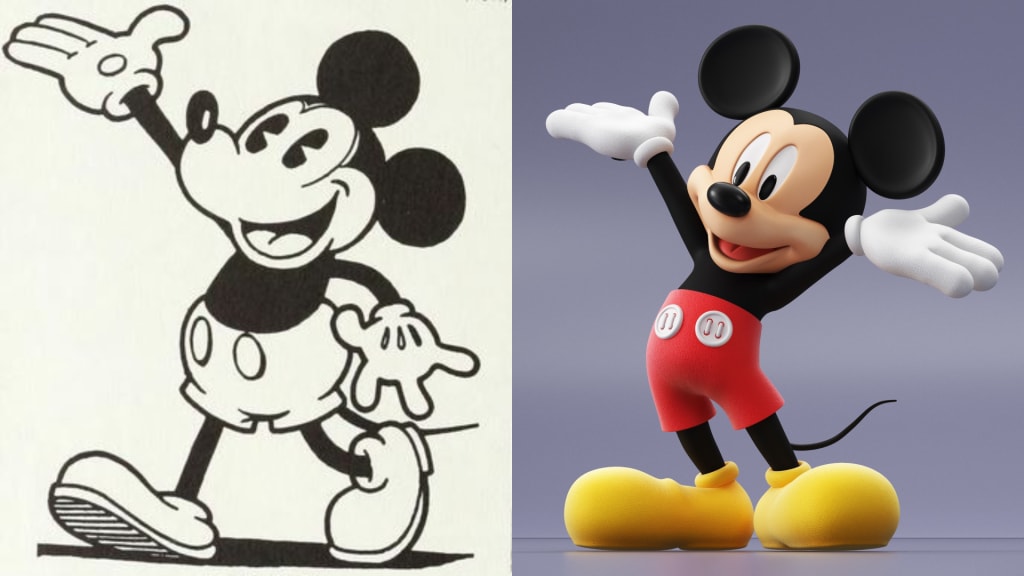
The shift from hand-drawn animation to 3D animation marks one of the most significant transformations in the history of animated storytelling. This change was driven by a mix of technological innovation, economic factors, and evolving audience expectations, creating a new era where digital magic replaced the tactile charm of ink and paper.
The Dawn of Digital Animation
For much of the 20th century, animation was a painstaking craft: artists drew each frame by hand on transparent sheets called cels. This traditional method, while rich in personality and warmth, was incredibly labor-intensive and time-consuming. The arrival of digital technology in the late 20th century revolutionized this process. Computer graphics (CG) introduced tools that could create and manipulate images electronically, allowing animators to build complex sequences more efficiently.
The watershed moment came in 1995 with Pixar’s Toy Story, the first fully computer-animated feature film. This breakthrough demonstrated that 3D animation could not only match but surpass the visual storytelling possibilities of hand-drawn techniques. The success of Toy Story and subsequent 3D films like Shrek and Finding Nemo reshaped industry standards and audience expectations, setting a new benchmark for animated movies.
Why Studios Embraced 3D Animation
Efficiency and Cost
3D animation streamlines many steps of production. Instead of drawing every frame, animators create digital models with skeletons ("rigs") that can be posed and moved, making it easier to produce smooth, lifelike motion without redrawing characters repeatedly. While initial modeling and rigging require skill and resources, the overall workflow is often faster and more scalable, especially for large projects.
Realism and Visual Appeal
3D animation offers a depth and realism that 2D struggles to match. Light can reflect off surfaces, textures can mimic real materials like fur or water, and characters can inhabit fully realized three-dimensional worlds. This visual richness appeals to modern audiences craving immersive experiences. The ability to use dynamic camera movements and realistic lighting adds cinematic flair that hand-drawn animation cannot easily replicate.
Market Demand and Commercial Success
The commercial success of 3D films heavily influenced the industry's shift. Studios saw that CGI movies attracted larger audiences and generated higher box office returns, encouraging investment in digital animation pipelines. Disney’s transition was gradual, with hand-drawn films like The Princess and the Frog released even after CGI's rise, but the financial incentives of 3D animation proved decisive.
What Was Lost and What Remains
While 3D animation opened new creative horizons, it also led to the fading of the "human touch" inherent in hand-drawn work. The imperfections and expressive nuances of 2D animation gave way to smoother, sometimes more sterile digital characters. This shift sparked nostalgia and a sense of loss among fans and artists who cherished the warmth and imagination of traditional animation.
Yet, the story isn’t one of total replacement. Some studios, like Studio Ghibli, continue to produce hand-drawn masterpieces, and recent years have seen a blending of 2D and 3D techniques to capture the best of both worlds. The animation landscape today is more diverse and dynamic, with creators choosing styles that best serve their stories.
Conclusion
The move from hand-drawn animation to 3D was driven by the promise of technological innovation, economic practicality, and audience appetite for realism and spectacle. While this transition marked the end of an era for traditional animation, it also ushered in a golden age of digital creativity. The magic of animation now lives both in the pixel-perfect worlds of 3D and in the enduring charm of hand-drawn artistry, each enriching the medium in its unique way.
This evolution reflects a natural progression in art and technology, where new tools reshape creative expression and storytelling possibilities. The legacy of hand-drawn animation remains a vital part of animation history, even as 3D continues to define its future.
About the Creator
Jordan Pill
No more pills!!
Keep reading
More stories from Jordan Pill and writers in Geeks and other communities.
Films That Explore the Illuminati Myth
The Illuminati is one of the most talked-about secret societies in popular culture. Over the years, many people have speculated that a hidden group of elites controls the world from the shadows—pulling strings in politics, media, and finance. While there’s little to no real proof of such a group existing in the way it’s often described, the idea of the Illuminati has inspired countless films, books, and stories.
By Jordan Pill7 months ago in Geeks
Silver Screen Magic with Mae West
American actress and singer Mae West became a popular film actress during the Great Depression. She started entertaining in vaudeville, then performed on Broadway, and finally went to Hollywood. She signed up with Paramount Pictures and made her debut in the 1932 film “Night After Night.” She also starred in musicals, comedies, and crime dramas. The American Film Institute named her one of the best classic Hollywood actresses.
By Rasma Raisters7 days ago in Geeks
Smart phones, Humans and Aliens.
WARNING. I will be tapping into one of your favorite creative tensions: The absurdity of humans worshipping their glowing rectangles as if they were tiny oracles. There’s something deliciously poetic about that contradiction, and it lends itself beautifully to an instructive proviso.
By Novel Allen4 days ago in Poets



Comments
There are no comments for this story
Be the first to respond and start the conversation.