
Fred Williamson’s Big Gamble: The True Story Behind 'The Big Score' (1983)
In the early 1980s, Fred “The Hammer” Williamson bought discarded Dirty Harry scripts, turned them into his own movies, and made millions on the international market. Here’s how a former NFL star rewrote Hollywood rules with The Big Score.

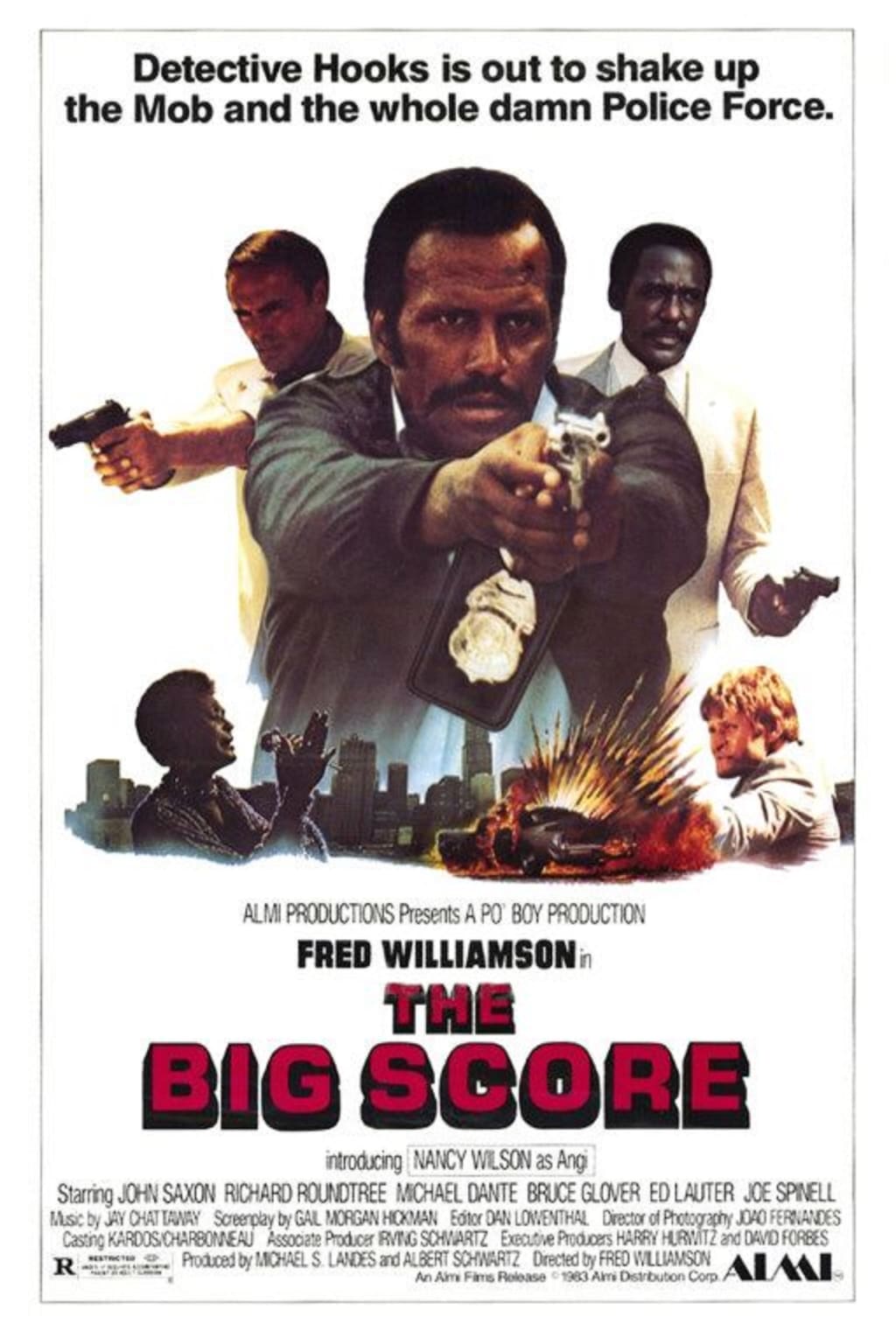
The Legend of Dirty Harry — And the Man Who Saw an Opportunity
In the 1970s, Clint Eastwood turned Dirty Harry into a film icon. The character was so massive that Eastwood eventually grew tired of playing him. Scripts for future Dirty Harry movies were auctioned off so he could move on to other projects.
Few people noticed that auction.
But Fred Williamson did.
Po’Boy Productions — Williamson’s newborn company — had one office, one employee, and one wild idea:
Buy those scripts, rewrite them, and make the movies himself.
It sounded ridiculous.
It also worked.
From Gary, Indiana to the NFL
Fred Williamson was born in 1938 in Gary, Indiana. Sports were seen as his only ticket out — but Williamson refused to be confined by expectation.
He excelled in the classroom, graduating second in his high school class. When elite football factories tried recruiting him, he turned them down. Williamson chose Northwestern University for its academics.
He earned a Master’s degree in Architecture, then made the NFL undrafted, earning his way onto the San Francisco 49ers. His greatest fame came later with the Kansas City Chiefs, where he played in the first Super Bowl.
That’s also where “The Hammer” was born — whether he invented the nickname or delivered it via some violent karate-chop tackles is still open to debate.

The Hammer Heads to Hollywood
When his football career ended in 1969, Williamson didn’t do what most players did: coast on local celebrity.
He headed straight for Hollywood.
And for his first major film role, he chose Robert Altman — one of the most unpredictable, maverick filmmakers alive. As Dr. Oliver “Spearchucker” Jones in MASH*, Williamson embodied something revolutionary:
educated, athletic, charming, and defiantly himself.
Then he saw a future no one else saw.

Inventing Blaxploitation
Williamson teamed with Jim Brown and helped launch what became the blaxploitation genre. These films were messy, controversial, and often reductive — but they were also hugely successful and, for many audiences, offered the first cinematic reflection of their lives.
White Hollywood didn’t know what to do with it. As Williamson told Roger Ebert at Cannes in 1983:
“White studio chiefs didn’t think it was socially desirable to go to parties and brag about how their most successful movie that year was Black N##### Charley.”
The genre thrived — until studios decided it shouldn’t.
So Williamson did what he always did:
he found his own road.

Buying Dirty Harry Scripts — And Building a Business
Williamson acquired three scripts believed to be intended for future Dirty Harry movies. He financed, produced, and directed the films himself.
Then he discovered something game-changing at Cannes:
foreign audiences weren’t being served.
For pennies, his blaxploitation films were sold overseas and made fortunes for rights holders — but none of that money came back to him.
So Williamson flipped the model:
• make a film for ~$100,000
• sell it internationally
• earn ~$10 million
Every year.
It worked so well he moved to Italy, headquartered Po’Boy Productions there, and began cranking out profitable action films.
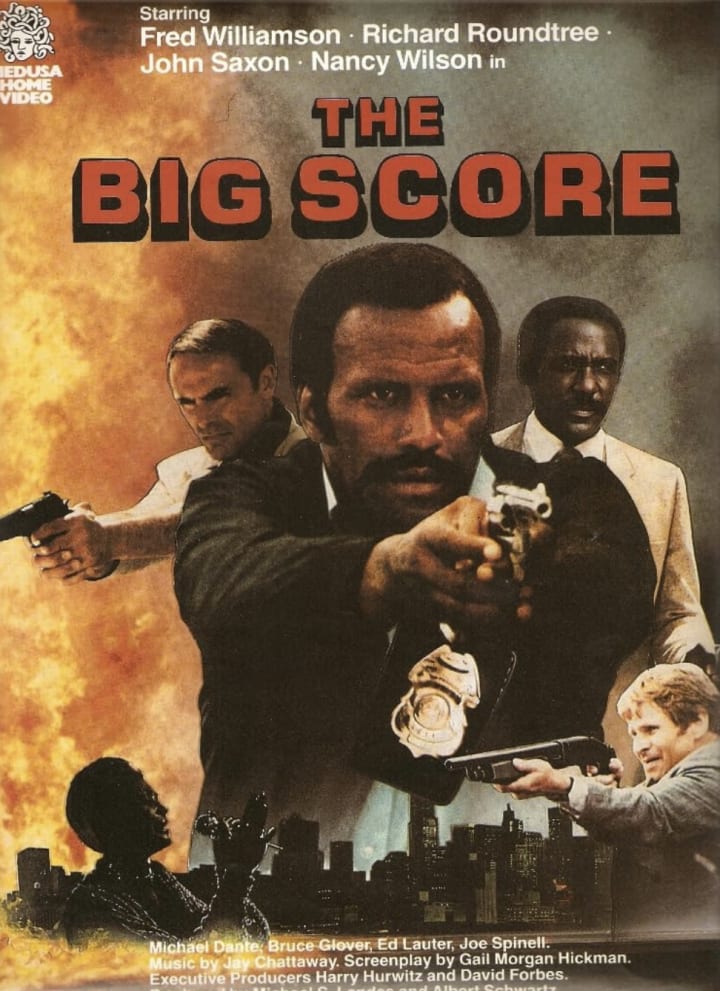
The Big Score (1983): A Forgotten Hit That Wasn’t Really Forgotten
One of those films was The Big Score (1983), co-starring:
• Richard “Shaft” Roundtree
• John Saxon, Hollywood’s favorite white villain
The movie was based on one of those tossed-aside Dirty Harry scripts — or as Williamson reportedly called it:
“a Dirty Hammer picture.”
He brought the film to Cannes. Before a paying audience ever saw it, he’d already made a profit.
The exact budget isn’t recorded, but Williamson’s films typically cost low six figures. Profits came from:
• foreign sales
• American ticket sales
• home video
Mainstream box office sites ignore films like The Big Score. That was often the fate of “black” movies in the 1980s.
But Fred Williamson didn’t need the record.
He knew what he made.
And he made it big.

Ahead of the Game, Every Time
The Big Score is barely remembered today. But its impact is real. Williamson turned discarded scripts into a film business model decades before independent filmmaking was cool.
A single man with:
• a desk
• an answering machine
• a pile of rejected scripts
built an empire.
Fred “The Hammer” Williamson wasn’t waiting for Hollywood.
He built his own.

Do you love the Movies of the 80s? Subscribe to Movies of the 80s on Vocal and on our YouTube channel for more 80s Movie Nostalgia.
About the Creator
Movies of the 80s
We love the 1980s. Everything on this page is all about movies of the 1980s. Starting in 1980 and working our way the decade, we are preserving the stories and movies of the greatest decade, the 80s. https://www.youtube.com/@Moviesofthe80s
Keep reading
More stories from Movies of the 80s and writers in Geeks and other communities.
From Fantasy Vows to Real Lives: The Forgotten Newlyweds of 1983's 'Krull' Wedding Contest
A Wedding Day… and a Flop for the Ages Imagine planning your wedding — the dress, the guest list, the forever memory. Now imagine the landmark moment of your life is permanently entwined with a science-fiction bomb that cost tens of millions of dollars and baffled audiences for decades. For twelve couples from across America in 1983, that isn’t imagination.
By Movies of the 80sabout a month ago in Geeks
Marvel Zombie
The last entry into our 2025 superhero projects catalogue is Marvel Zombies. This was a show that was anticipated by absolutely no one and it disappeared from the public consciousness as quickly as it was released. There was nothing special about the project that made it a must see, or a must remember. In fact if anything it's a must forget.
By Alexandrea Callaghan16 days ago in Geeks
Journalist Naeem Hanif Publicly Apologises to Saba Qamar Over Defamatory Claims
An apology that reopens the debate on media ethics, accountability, and the lasting impact of misinformation In an era where information travels faster than verification, public apologies by journalists are rare—but when they happen, they spark serious conversations. Journalist Naeem Hanif’s public apology to acclaimed Pakistani actress Saba Qamar over previously made defamatory claims has become one such moment. Beyond the individuals involved, the incident has highlighted pressing issues around media responsibility, reputational damage, and the ethical obligations that come with having a public platform. Saba Qamar is not just a household name in Pakistan; she is one of the country’s most respected actors, known for her powerful performances in television dramas, films, and socially relevant projects. Over the years, she has built a reputation for professionalism, bold role choices, and advocacy for women’s empowerment. Any allegations targeting her character were bound to attract attention—and scrutiny. The Apology That Changed the Narrative Naeem Hanif’s apology, made publicly, acknowledged that the claims he had previously shared were unverified and harmful. In his statement, he expressed regret for the emotional distress and reputational damage caused to Saba Qamar, stating that his words crossed ethical boundaries expected of a journalist. Public apologies in media disputes are significant because they represent accountability. While legal notices and private settlements often remain behind closed doors, a public apology recognizes that the damage was public—and so must be the correction. For Saba Qamar, the apology served as a form of vindication. Although an apology cannot fully undo the impact of defamatory claims, it does restore some balance by putting the truth back into the public domain. The Human Cost of Defamation Defamatory statements do more than create headlines; they affect real lives. Celebrities, despite their fame, are not immune to emotional stress, anxiety, and reputational harm. In industries like entertainment, where public image is closely tied to career opportunities, even short-lived rumors can have long-term consequences. For female public figures especially, defamatory claims often take on a more personal and moral tone, reflecting broader societal biases. Saba Qamar’s case reignited discussions on how women in the public eye are disproportionately targeted and judged more harshly than their male counterparts. Supporters of the actress flooded social media following the apology, praising her resilience and calling for stronger standards in journalism. Many noted that while criticism of public figures is fair, character assassination is not journalism. Media Ethics Under the Spotlight This incident has placed media ethics back at the center of public debate. Journalism is built on credibility, verification, and fairness. When these principles are compromised—whether for clicks, attention, or personal opinions—the credibility of the entire profession suffers. In the digital age, the line between journalism and commentary has become increasingly blurred. Social media platforms allow journalists and influencers alike to share opinions instantly, often without editorial oversight. While this freedom has democratized information, it has also increased the risk of misinformation and defamation. Naeem Hanif’s apology serves as a reminder that freedom of expression comes with responsibility. Journalists are expected to verify facts, provide context, and avoid sensationalism—especially when reporting on individuals’ personal lives. Public Reaction and Industry Response The public reaction to the apology was mixed but largely supportive of Saba Qamar. Many welcomed the apology as a step in the right direction, while others argued it should have come sooner. Some media professionals used the moment to call for clearer ethical guidelines and accountability mechanisms within the industry. The incident has also prompted discussions about corrective journalism—how media professionals should address mistakes transparently. A sincere apology, experts argue, is not a sign of weakness but of integrity. It shows respect for the audience and the truth. Lessons for the Digital Age This case offers important lessons for both media practitioners and consumers: Verification matters: Sharing unverified claims can cause irreversible harm. Apologies are powerful but limited: They can correct the record, but prevention is always better than damage control. Audience awareness is crucial: Readers and viewers must learn to question sources and avoid amplifying rumors. For public figures like Saba Qamar, the episode underscores the importance of legal and moral recourse in defending one’s reputation. For journalists, it reinforces the need to balance speed with accuracy. A Moment of Accountability Ultimately, Naeem Hanif’s public apology marks a moment of accountability in a media landscape often criticized for avoiding responsibility. While the incident cannot be erased, it has opened space for reflection, dialogue, and reform. For Saba Qamar, the apology reaffirms her standing and resilience. For the media industry, it is a reminder that truth, ethics, and accountability remain the pillars of credible journalism—no matter how fast the news cycle moves.
By Fiazahmedbrohi 5 days ago in Geeks


Comments
There are no comments for this story
Be the first to respond and start the conversation.