
Dangling Man by Saul Bellow
Why It's a Masterpiece (Week 41)

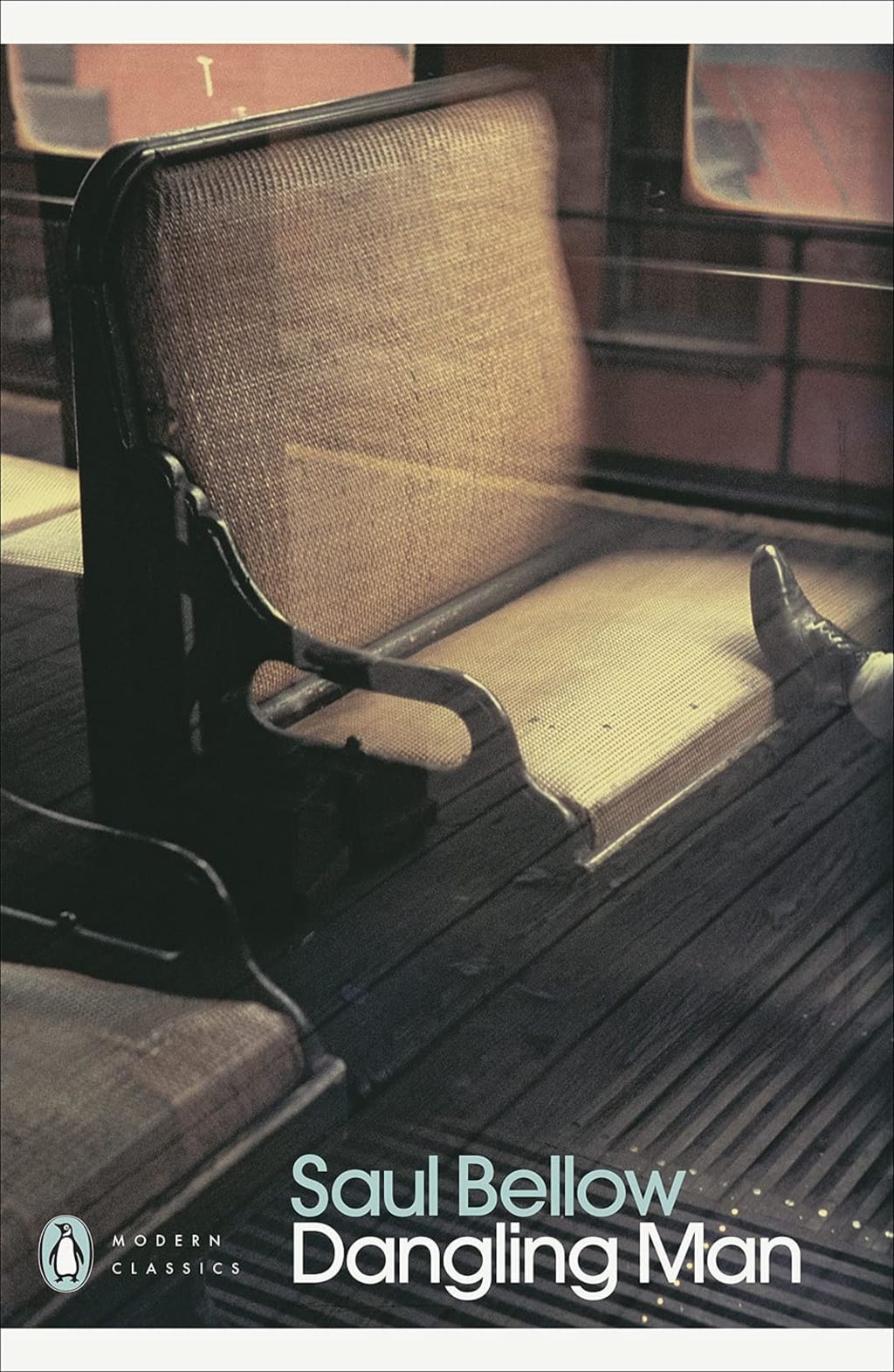
"Dangling Man," the debut novel by Saul Bellow, was published in 1944. The book's publication was significant as it introduced readers to Bellow's introspective style and philosophical inquiries, setting the stage for his later, more celebrated works. "Dangling Man" was praised for its existential exploration and the depth of its protagonist's inner life.
It marked the beginning of Bellow's illustrious career, during which he would receive numerous accolades, including the Nobel Prize in Literature. "Dangling Man" remains a noteworthy work for its bold and unflinching examination of a man's internal conflicts amidst external chaos, establishing Bellow as a master of character-driven narratives and profound introspective exploration.
Plot
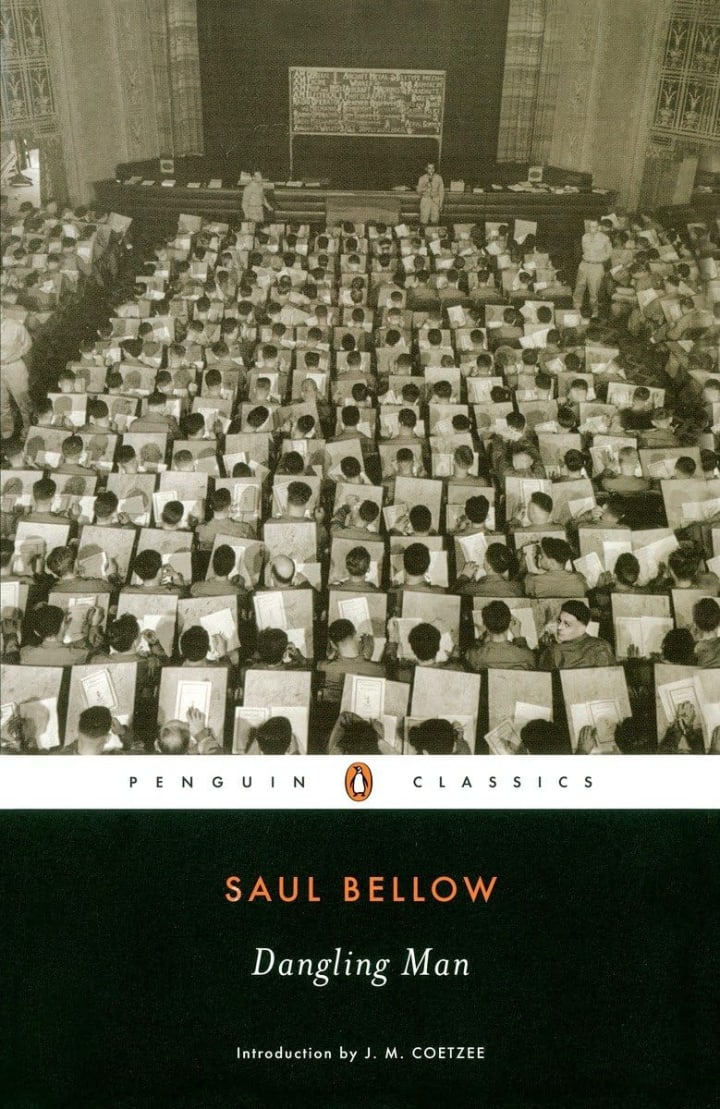
The text centres on Joseph, a young man who finds himself in a state of suspended existence in Chicago, awaiting his induction into the army during World War II. As the days pass without a draft notice, Joseph becomes increasingly disconnected from the world around him, grappling with his sense of identity and purpose. The novel is presented as a series of journal entries, documenting Joseph's thoughts and experiences as he navigates this uncertain period.
Joseph's life becomes a study in inertia and isolation. He is supported by his wife, Iva, who works to provide for them both while he remains at home. The couple's relationship is strained by Joseph's growing sense of inadequacy and frustration. His interactions with friends and family further highlight his internal turmoil. Joseph's friend, Myron, represents a more pragmatic approach to life, contrasting sharply with Joseph's existential angst. The character of Uncle Julius embodies traditional values and offers a critique of Joseph's passive stance.
As time progresses, Joseph's introspection leads him to question the societal expectations placed upon him and the moral implications of the war. His intellectual pursuits and philosophical reflections become both a refuge and a source of deeper discontent. He wrestles with notions of freedom, responsibility, and the authenticity of his existence. The lack of a clear purpose or direction exacerbates his feelings of alienation.
The climax of the novel occurs when Joseph receives his draft notice. Instead of relief, he experiences a complex mix of emotions, realising that his impending induction into the army represents both an end to his limbo and the beginning of a new, uncertain phase. The narrative concludes ambiguously, leaving readers to think upon Joseph's future and the resolution of his internalised conflicts and lack of esteem.
If you have read 'Ravelstein' you'll probably realise that this confoundment of an ending in which nothing is truly resolved is commonplace of Saul Bellow as a writer. Instead of ending the narrative, Bellow leaves readers with an setting of moral conflict and introspective analysis, something where the main character is on the brink of an important choice represented by a singular image.
Into the Book
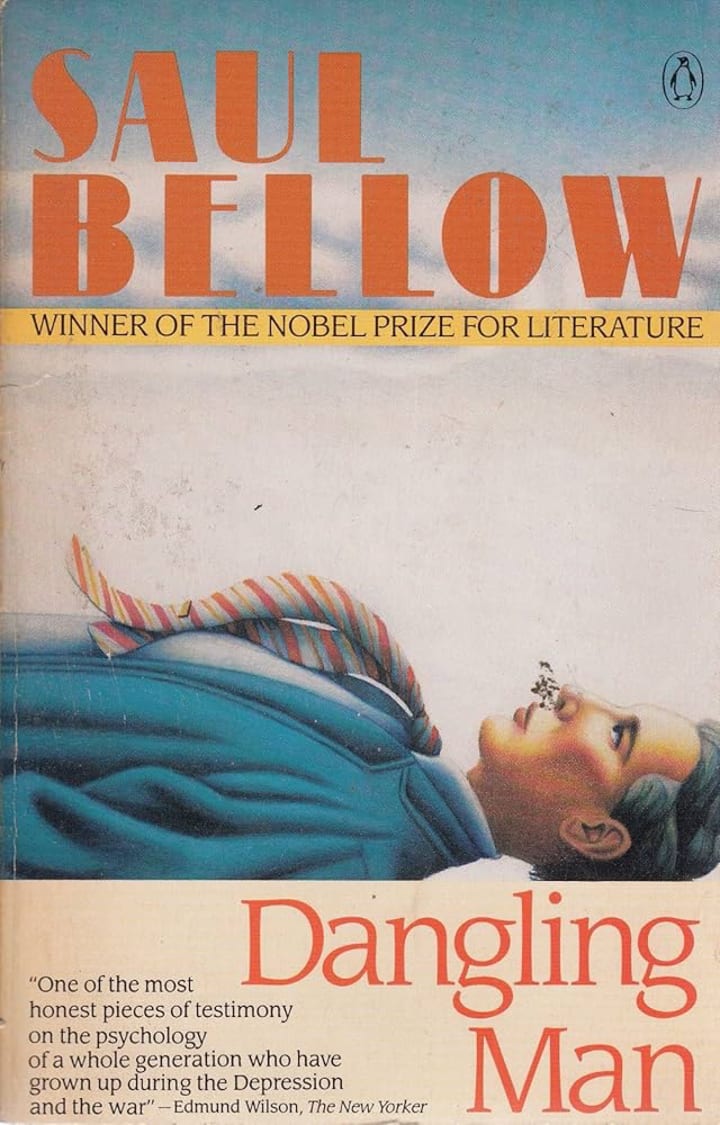
One of the primary themes of "Dangling Man" is existentialism, particularly the individual's struggle to find meaning in a seemingly indifferent world.
Joseph's extended wait for his draft notice leaves him in a state of existential inertia. He questions the purpose of his life and the authenticity of his actions. This theme is exemplified by his journal entries, which delve into deep philosophical musings about the nature of existence and the role of the individual in society. Joseph's inaction and passive resistance to societal norms underscore the novel's existential concerns, reflecting the broader uncertainties of the wartime period.
“The sense in which Goethe was right: Continued life means expectation, Death is the abolition of choice. The more choice is limited, the closer we are to death. The greatest cruelty is to curtail expectations without taking away life completely. A life term in prison is like that. So is citizenship in some countries. The best solution would be to live as if the ordinary expectations had not been removed, not from day to day, blindly. But that requires immense self-mastery.”
- Dangling Man by Saul Bellow
Isolation is an important theme in "Dangling Man." Joseph's physical separation from the workforce and his societal role as a soldier amplify his feelings of alienation. His introspective nature further isolates him from those around him, including his wife, Iva, and his friends. The narrative portrays his struggle to connect meaningfully with others while he grapples with his inner demons. This isolation is symbolised by his solitary journal entries, which serve as his primary means of expression. The novel explores the impact of this isolation on his mental health and relationships, highlighting the human need for connection and purpose.
“We had an enormous sunset, a smashing of gaudy colours, apocalyptic reds and purples such as must have appeared on the punished bodies of great saints, blues heavy and rich. I woke Iva, and we watched it, hand in hand. Her hand was cool and sweet. I had a slight fever.”
- Dangling Man by Saul Bellow
Joseph's conflict with societal expectations is a central theme of the novel. He resists conforming to the roles imposed upon him by society, such as becoming a soldier or adhering to traditional values represented by characters like Uncle Julius. This resistance creates tension between his desire for individuality and the pressures to conform. Joseph's intellectual and philosophical pursuits are his way of asserting his individuality, but they also alienate him from the practical realities of life. The novel examines the cost of this nonconformity and the difficulty of maintaining personal integrity in the face of societal demands.
Of course, we suffer from bottomless avidity. Our lives are so precious to us, we are so watchful of waste. Or perhaps a better name for it would be the Sense of Personal Destiny. Yes, I think that is better than avidity. Shall my life by one-thousandth of an inch fall short of its ultimate possibility? It is a different thing to value oneself, and to prize oneself crazily. And then there are our plans, idealizations. These are dangerous, too. They can consume us like parasites, eat us, drink us, and leave us lifelessly prostrate. And yet we are always inviting the parasite, as if we were eager to be drained and eaten
- Dangling Man by Saul Bellow
Why It's a Masterpiece
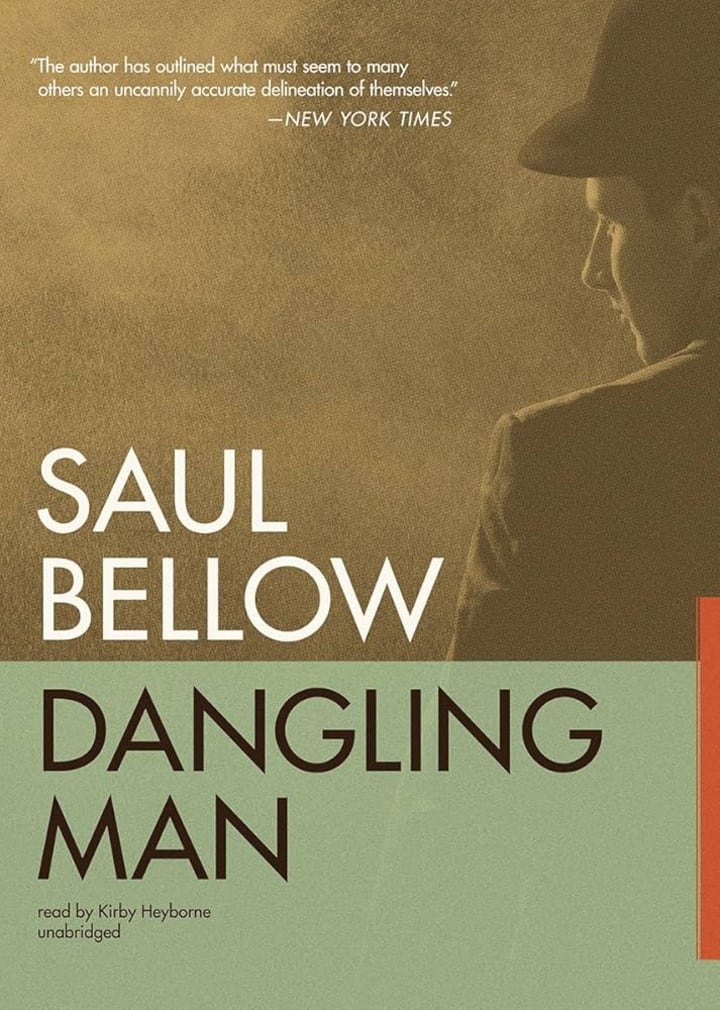
"Dangling Man" is considered a masterpiece for several reasons. Firstly, it introduced readers to Saul Bellow's distinctive voice and narrative style, characterised by its introspective depth and philosophical inquiries. The novel's exploration of existential themes and the human condition resonated with contemporary readers and continues to do so. Bellow's portrayal of Joseph's inner life is both nuanced and profound, offering a compelling study of a man's struggle with identity and purpose.
The novel's structure, presented as a series of journal entries, provides an intimate glimpse into Joseph's thoughts and emotions. This format allows readers to engage deeply with his internal conflicts and the broader existential questions he grapples with. Bellow's ability to capture the psychological complexities of his protagonist set "Dangling Man" apart from other novels of its time.
Conclusion
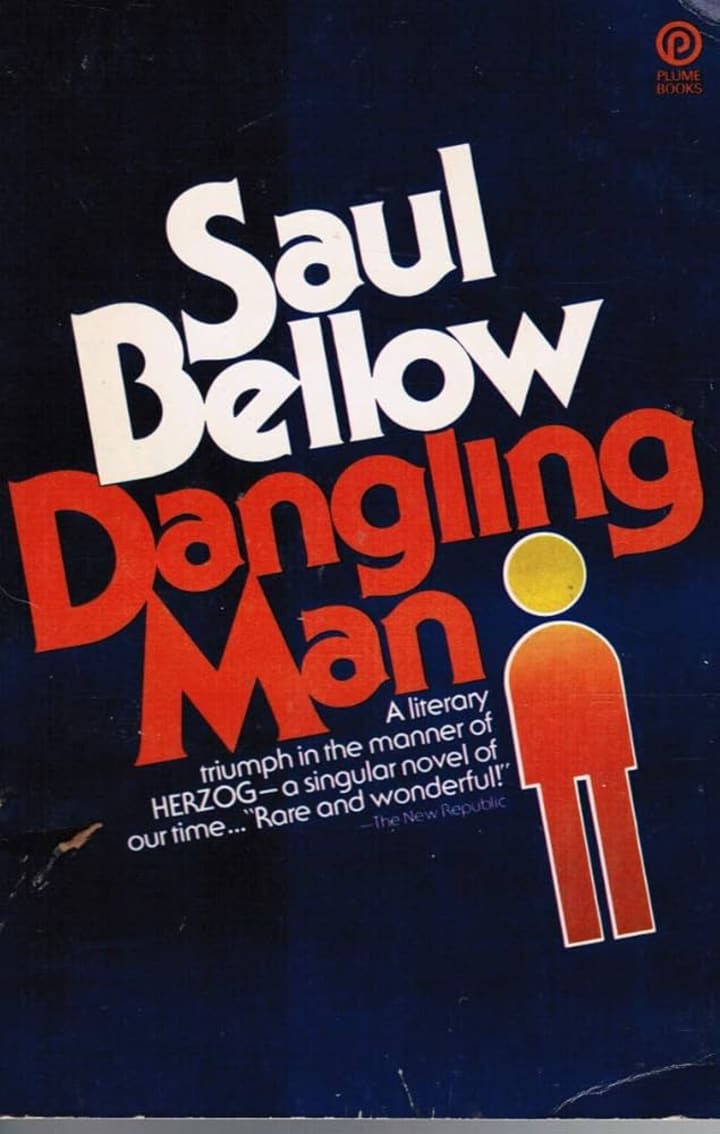
"Dangling Man" remains relevant today because it addresses universal themes of existentialism, isolation, and the conflict between individuality and societal expectations. These issues continue to resonate with modern readers who face similar struggles in their own lives. Bellow's masterful exploration of the human condition, combined with his distinctive narrative style, ensures that "Dangling Man" endures as a compelling and insightful work of literature. Its exploration of the complexities of human existence and the search for meaning makes it a timeless and thought-provoking read.
Hopefully, if you have read "Dangling Man" you have enjoyed it, found it timeless and found it to be one of the more intriguing books of Saul Bellow's career. If you have not read it, I hope that you now choose to because of this in-depth analysis.
Next Week: Moby Dick by Herman Melville
About the Creator
Annie Kapur
I am:
🙋🏽♀️ Annie
📚 Avid Reader
📝 Reviewer and Commentator
🎓 Post-Grad Millennial (M.A)
***
I have:
📖 280K+ reads on Vocal
🫶🏼 Love for reading & research
🦋/X @AnnieWithBooks
***
🏡 UK
Keep reading
More stories from Annie Kapur and writers in Geeks and other communities.
Book Review: "Stone Yard Devotional" by Charlotte Wood
I was trying to read as many of the Booker Prize nominees as I could and now that I've learnt that Orbital has won, I can honestly say...what the hell is going on? It was probably by far, the worst choice out of the whole shortlist and yet, here we are. I was very upset that James by Percival Everett didn't win because it is objectively a much better book. I have a feeling that there have been things further than literary prowess that made the win for Samantha Harvey's pointless novel. Even this book, entitled Stone Yard Devotional, deserved it more.
By Annie Kapurabout a year ago in Geeks
Silver Screen Magic with Mae West
American actress and singer Mae West became a popular film actress during the Great Depression. She started entertaining in vaudeville, then performed on Broadway, and finally went to Hollywood. She signed up with Paramount Pictures and made her debut in the 1932 film “Night After Night.” She also starred in musicals, comedies, and crime dramas. The American Film Institute named her one of the best classic Hollywood actresses.
By Rasma Raisters7 days ago in Geeks




Comments
There are no comments for this story
Be the first to respond and start the conversation.