
Classic Movie Review: 'Bonjour Tristesse'
With a remake of the Otto Preminger-Jean Seberg classic coming soon, I look back on the original Bonjour Tristesse.

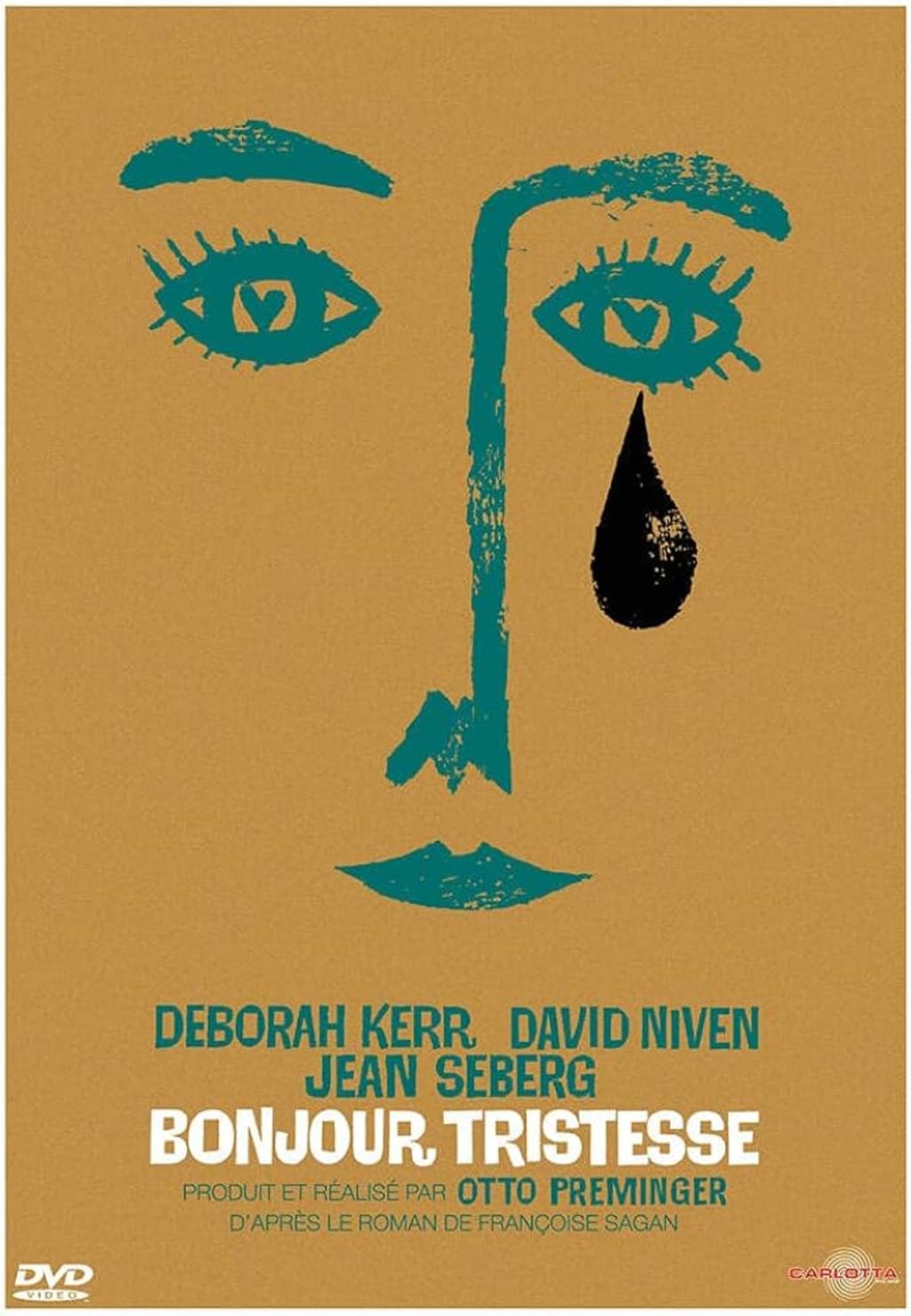
Bonjour Tristesse (1958)
Directed by Otto Preminger
Written by Arthur Laurents, Francoise Sagan
Starring Jean Seberg, Deborah Kerr, David Niven
Release Date February 1st, 1958
Published April 2025
Bonjour Tristesse stars Jean Seberg as Cecile, a coquettish teenager, bored with the life of luxury and seeking only the comfort of her father’s loving gaze. Though she calls him Raymond (David Niven), rather than dad, daddy, or father, it’s clear that their relationship is special to her. Since the death of her mother, Cecile has been the only consistent presence in Raymond’s life which mostly involves one boring, forgettable fling after another as he compensates for what I can only assume is grief.
Bonjour Tristesse unfolds in a flashback, not to the death of Cecile’s mother but a previous summer where it appeared that Cecile may have a new mother with deep emotional ties to her actual mother. From black and white in Paris cafes and nightclubs, the movie turns technicolor as we flashback to the French Riviera in summer. Father and daughter are living in a comfortable idyll in a seaside chateau. Along for the ride is dad’s latest conquest, Elsa, played with blunt charm by Mylene Demongeot.

The plot however, doesn’t arrive until Anne (Deborah Kerr) arrives. Anne was the best friend of Cecile’s mother and has a lengthy history with the family and, perhaps, with Raymond. When Anne finds out that she’s arrived at a time when Raymond has invited another woman to stay with them, her hurt betrays her intentions in joining this vacation. It’s clear she came here with a purpose that becomes immediately clear to Cecile. In short order, Anne wipes away the tears and gets into the swing of things. Before long, she and Raymond are flirting and Elsa is clearly on the way out.
At first, Cecile isn’t sure how she feels. On the one hand, she admires Anne, an independent woman of means and breeding. However, she shortly comes to resent her for seeming to have penetrated her bond with her father. When Cecile feels that she’s not getting enough attention from dear old dad, and that Anne is becoming pushy regarding boys and studying for the upcoming school year, Cecile takes it as a betrayal and sets about a plan to separate Anne from her father.
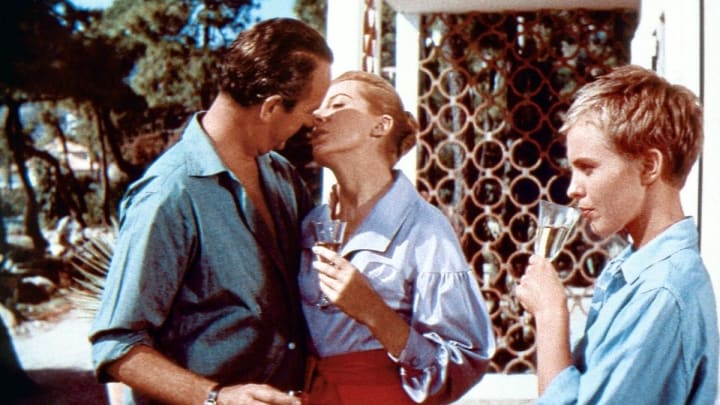
What gives Bonjour Tristesse its subversive vibe is the shameless exploration of the Jungian archetype of the Electra Complex. The Electra Complex is a reverse of Freud’s Oedipus Complex and defines the mother-daughter relationship as a competition for the love of the father. The father becomes the first model for what love is and many daughters will use their father as the measuring stick for what a loving relationship is. In Bonjour Tristesse, this father-daughter bond is fraught with grief. Having grown used to being treated like a substitute wife, minus the more intimate aspects of course, Cecile is deeply hurt and threatened when she believes that she’s been replaced.
This colors her motivations for the final act in which she sets about getting rid of Anne. The dynamic between Jean Seberg and Deborah Kerr throughout the film is a wonderful push and pull between a fully formed woman and a young, struggling girl, self-centered, cruel, but also grieving and vulnerable. She’s aware of her actions but she’s running far ahead of the potential consequences of her actions which will catch up to her, one way or another. Seberg wonderfully captures girlish confusion as well as the unearned confidence of a girl who believes she is already an adult woman.
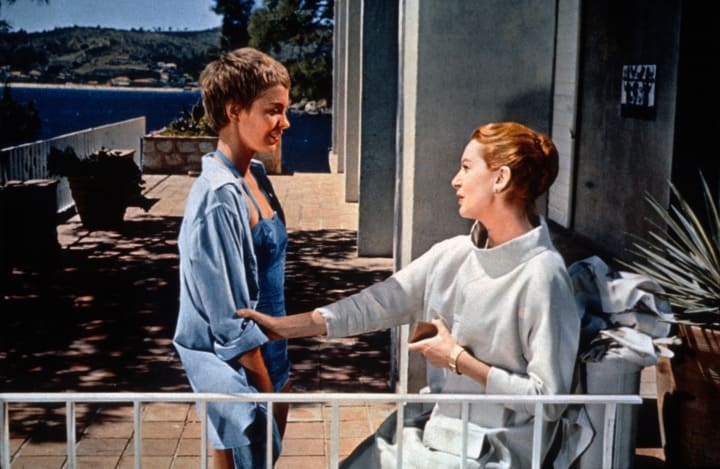
Deborah Kerr is the picture of elegance in Bonjour Tristesse. The costume team of Hope Bryce and May Walding clearly had a ball dressing Ms. Kerr with elegant gowns and other high fashion touches. In a movie set on the French Riviera, few sights are as intriguing or beautiful as Deborah Kerr in full pomp. Kerr’s performance is relaxed though with a well-practiced grace. She’s a fully formed woman, a perfect foil for Seberg’s teenager struggling to develop who she is or wants to be. Their dynamic is at the heart of what makes Bonjour Tristesse a genuine classic.
Find my archive of more than 24 years and more than 2700 movie reviews at SeanattheMovies.blogspot.com. Find my modern review archive on my Vocal Profile, linked here. Follow me on Twitter at PodcastSean. Follow the archive blog on Twitter at SeanattheMovies. Also join me on BlueSky, linked here. Listen to me talk about movies on the I Hate Critics Movie Review Podcast. If you have enjoyed what you have read, consider subscribing to my writing on Vocal. If you’d like to support my writing, you can do so by making a monthly pledge or by leaving a one time tip. Thanks!
About the Creator
Sean Patrick
Hello, my name is Sean Patrick He/Him, and I am a film critic and podcast host for the I Hate Critics Movie Review Podcast I am a voting member of the Critics Choice Association, the group behind the annual Critics Choice Awards.
Keep reading
More stories from Sean Patrick and writers in Geeks and other communities.
Silver Screen Magic with Mae West
American actress and singer Mae West became a popular film actress during the Great Depression. She started entertaining in vaudeville, then performed on Broadway, and finally went to Hollywood. She signed up with Paramount Pictures and made her debut in the 1932 film “Night After Night.” She also starred in musicals, comedies, and crime dramas. The American Film Institute named her one of the best classic Hollywood actresses.
By Rasma Raisters3 days ago in Geeks
Top 7 Oak Island Discoveries the Show Didn’t Air
The Curse of Oak Island has captivated audiences for over a decade, blending historical intrigue with reality TV drama. But what fans see on screen is only part of the story. Behind the edited episodes and dramatic voiceovers lies a treasure trove of discoveries that never made it to air — some due to time constraints, others possibly too speculative or controversial for mainstream broadcast.
By Rukka Novaabout 7 hours ago in Geeks
Wild Card Weekend Recap: What Happens Now?
I think I figured out why I love Wild Card Weekend so much. It's because it's the first playoff anything of the calendar year. The NFL season starts in the fall, and once upon a time, the champion was crowned either on or slightly before New Year's. The evolution of the NFL schedule has resulted in the playoffs starting just into the New Year, and currently, the final week of the season falls on the first weekend of the New Year, with Wild Card Weekend coming a week after that. So yes, chronologically, the NFL's Wild Card Weekend serves as the first playoff anything of the calendar year.
By Clyde E. Dawkins4 days ago in Unbalanced



Comments
There are no comments for this story
Be the first to respond and start the conversation.