
Book Review: "Visions of the Vampire" ed. by Sorcha Ni Fhlainn and Xavier Aldana Reyes
5/5 - another great re-read about literature's most dark and eternal monsters...

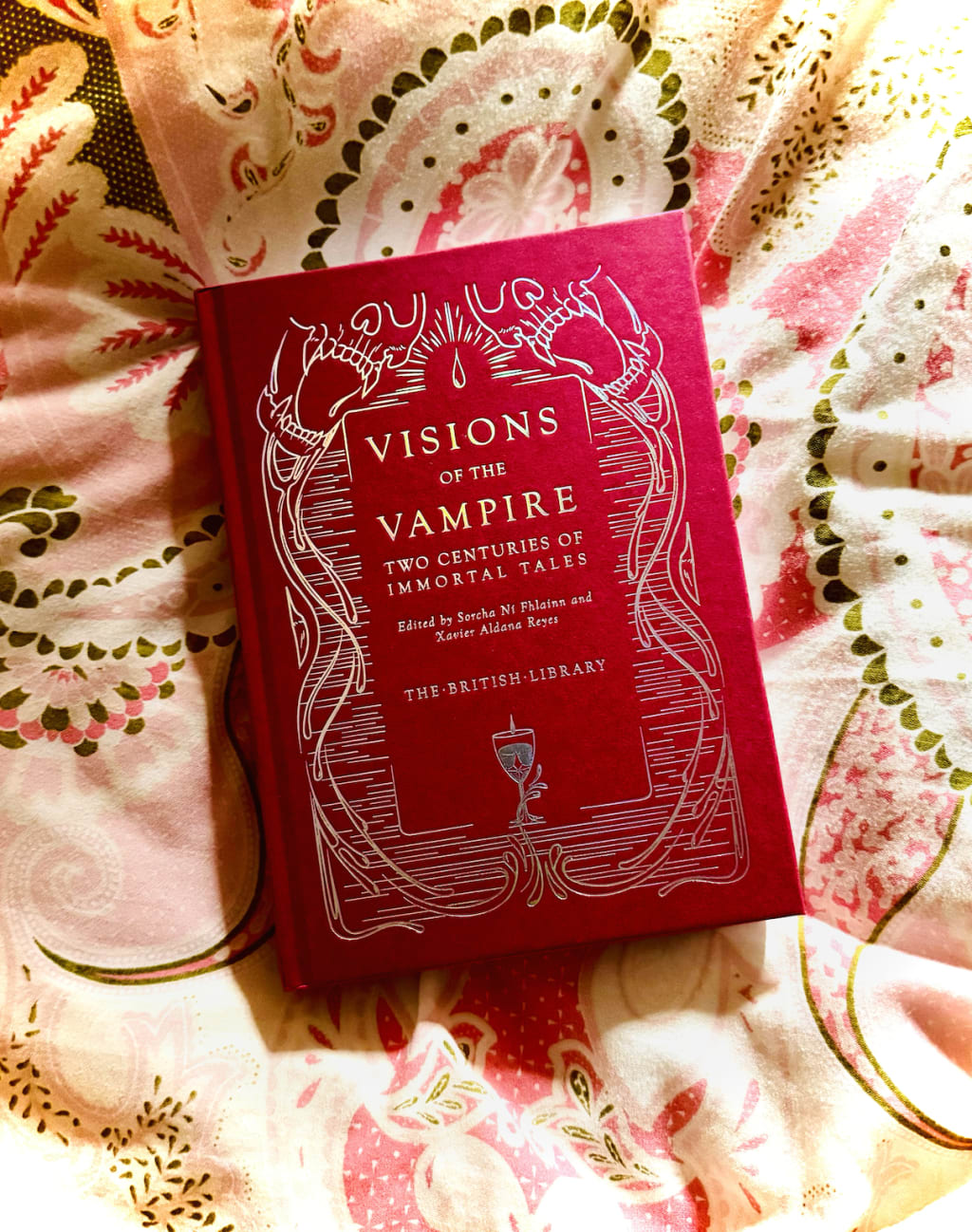
As you know, I love tales of Vampires as long as they aren't Twilight. I mean, Interview with the Vampire is one of my favourite films and books of all time and I adored The Vampire Chronicles books whilst at school. I know there are some people that read my work that are perhaps more sceptical of vampires but honestly, each to their own. I've owned this book for ages and perhaps read it once or twice. I'm really into these collections and re-reading is another thing I'm doing at the moment. So I hope you enjoy me going on about vampires for a bit...
One of the most famed stories about vampires is Polidori's The Vampyre. With a character based on the poet, Lord Byron - this story would serve as one of the most influential on the topic of who vampires are and what they want. The anthology works chronologically from this point, starting in 1819 and observing the way in which the myth of the vampire has been shaped by the cultural anxieties in each period.
Of course, no vampire anthology could be complete without a reference to Bram Stoker. Stoker's Dracula is probably one of the most famed vampiric stories of all time. But another feature within this anthology is Angela Carter with her story The Lady of the House of Love. This story, as in Angela Carter's classic style takes on female subversion and how women are often not respected as they should be. But, the whilst the classic stories show us tales of aristocratic monsters walking around in our day-to-day lives, extended metaphors litter the 20th century, giving us more of a view of what people are really afraid of: and it's not the vampires.
Anne Rice's The Master of Rampling Gate features as well. As we know, Anne Rice is the author of the 'Vampire Chronicles'. Her lush and often very atmosphere-heavy writing is accompanied by a romantic story featuring a vampire who has lived somewhere for centuries. It is a shocking truth to her (but to the reader, obviously it is not that shocking at all). The story is filled with all the allure that Interview with the Vampire contains. It is a wonderful addition to the anthology and probably my favourite story in the whole book.
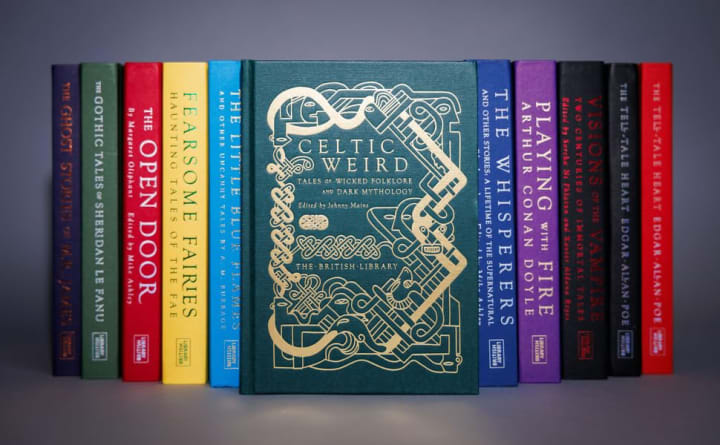
Another story from this anthology that I love is E.F Benson's The Room in the Tower. It tells the story of someone who is haunted by a recurring nightmare in which he visits a man named Jack Stone. He's invited to stay at the family's country house and there is a growing sense of unease around the matriarch, Jack's mother, Mrs. Stone. The story's realisation concerns the idea that Mrs. Stone may be a vampire, but that isn't before things horrifying and ghastly happen throughout. I quite like the stories of EF Benson and more than often, they are fantastically ghoulish. This one is no different and is probably my second favourite after the story by Anne Rice.
The anthology has stories from 1819 all the way to 2011, showcasing how many different types of vampire there really can be. With Angela Carter's more extended-metaphor style stories to Anne Rice's dark romances, from EF Benson's maddening horrors to Mary Braddon's feminism - this book definitely covers all the different aspects of vampirism. I am often surprised by how many different takes there are on the myth when I return to this book. But one thing is for sure, I definitely have my favourites.
Vampires are often in disguises, making themselves appear as aristocrats is probably one of the most typed by the myths. They represent the repressed desires of the dark, normally a comment on the aristocracy itself, sometimes a critique of their own behaviours which are parasitic. The two editors offer an academic depth which is worth reading for anyone interested in the history of horror.
All in all, I enjoyed this re-read. I wanted to go into more depth and remind myself of the stories I had enjoyed in my past readings of this book. It is a brilliantly formed anthology and if you're into vampirism as a metaphor for madness, desire, darkness and everything that is horrifyingly romantic (emphasising the 'horrifyingly') - then this is definitely for you.
About the Creator
Annie Kapur
I am:
🙋🏽♀️ Annie
📚 Avid Reader
📝 Reviewer and Commentator
🎓 Post-Grad Millennial (M.A)
***
I have:
📖 280K+ reads on Vocal
🫶🏼 Love for reading & research
🦋/X @AnnieWithBooks
***
🏡 UK
Keep reading
More stories from Annie Kapur and writers in Geeks and other communities.
Book Review: "Let the Lord Sort Them" by Maurice Chammah
Four years' ago I reviewed a book called Let the Lord Sort Them by Maurice Chammah and I'm back revisiting that text in a bit more detail. It is a fantastic book about the death penalty and teaches the reader about why perhaps it is not the best way of dealing with things. If you would like to know my stance, I am entirely against the death penalty because of a) the cost and b) it basically is the chicken's way out. Someone who has committed a crime should have all their freedoms taken away. The death penalty isn't really justice at all. But let's see what Maurice Chammah has to teach us about why the death penalty is ineffective.
By Annie Kapur5 months ago in Geeks
Marvel Zombie
The last entry into our 2025 superhero projects catalogue is Marvel Zombies. This was a show that was anticipated by absolutely no one and it disappeared from the public consciousness as quickly as it was released. There was nothing special about the project that made it a must see, or a must remember. In fact if anything it's a must forget.
By Alexandrea Callaghan15 days ago in Geeks
Best VPN for Peacock TV
Peacock TV is NBCUniversal's, a subscription streaming service offering movies, TV shows (including NBC/Bravo hits, Originals, Universal films), live sports (like Premier League, WWE), news, and 24/7 channels, with both ad-supported (Premium) and ad-free (Premium Plus) options available for streaming on various devices.
By David Cook4 days ago in Geeks


Comments (3)
Great review, Annie! So many years ago, I read Anne Rice, and then, at some point, it became too, too dark, and I stopped. I also hated the movie with Brad Pitt and Cruise, LOL.
Hi, I have recommended this for a Top Story on the Raise Your Voice Thread here https://shopping-feedback.today/resources/raise-your-voice-thread-08-14-2025%3C/span%3E%3C/span%3E%3C/span%3E%3C/a%3E%3C/p%3E%3C/div%3E%3C/div%3E%3C/div%3E%3Cdiv class="css-w4qknv-Replies">
That looks really interesting, thank you for sharing your thoughts, another for my list