
Book Review: "The Voyage Out" by Virginia Woolf
5/5 - Proof that Woolf was great from the beginning...

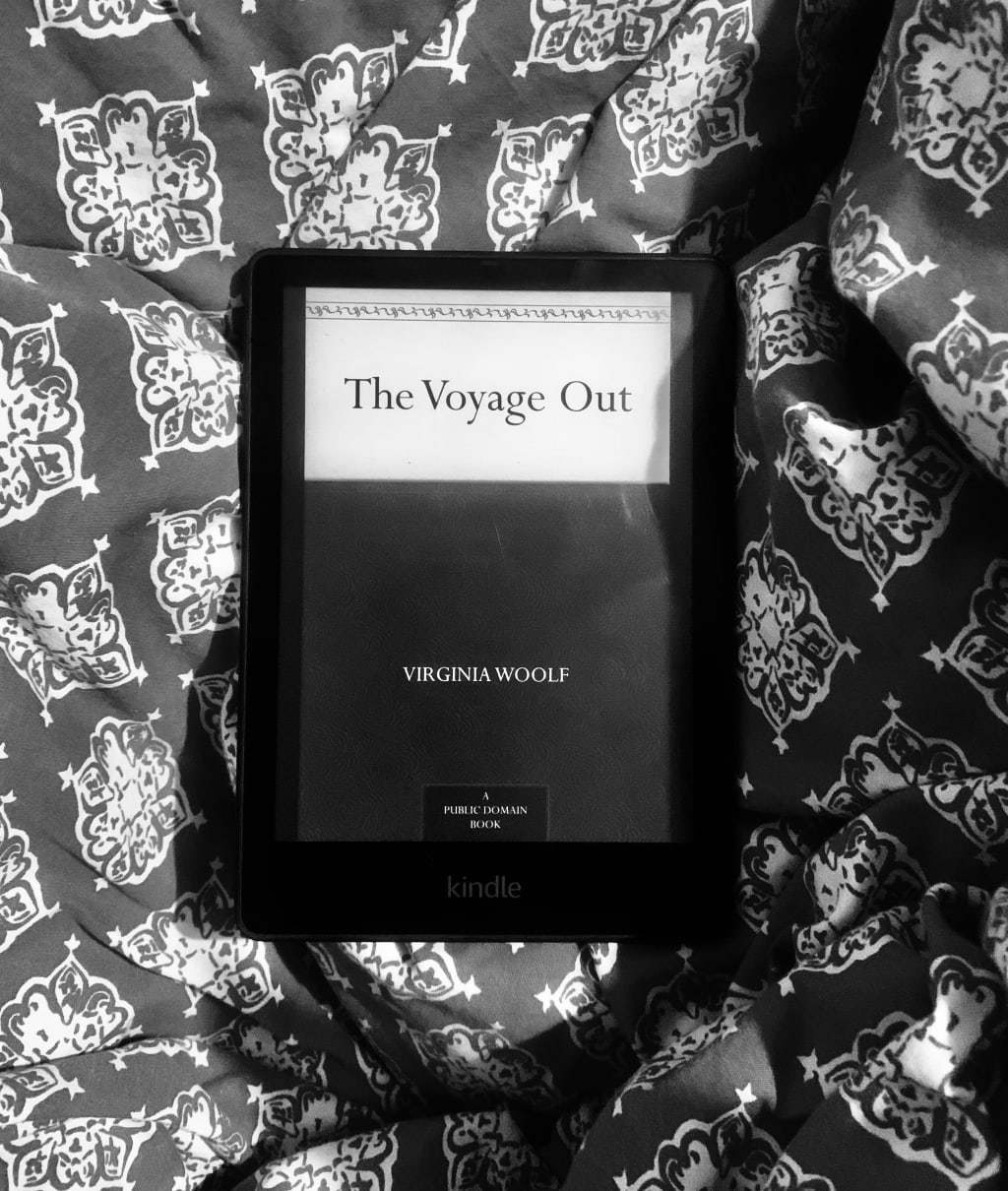
"That is what one means by an adventure; that one doesn't go by road; that one makes the road by going, and that one faces the road in the knowledge that one is foolish, and that one is going to suffer and be happy."
The Voyage Out by Virginia Woolf
I have read many books by Virginia Woolf over my lifetime and I even studied Mrs Dalloway for some time whilst at university. My personal favourite novel by Virginia Woolf though has to be Jacob's Room as she deals with darker themes that unravel almost madly in her poetic, realistic prose style. Woolf is known as one of the great novelists of the modernist era, her realistic take on situations paving the way for many others.
Novels like The Hours by Michael Cunningham base themselves on Woolf's prose style even borrowing characters. Her books have been made into films and her work though it was also widely respected in her life, is a testament to the ferocity of the modern era. As of last night, The Voyage Out was the only novel I had not read by her and regrettably, I had not even heard much about it. It was, in fact, the very first novel she ever wrote.
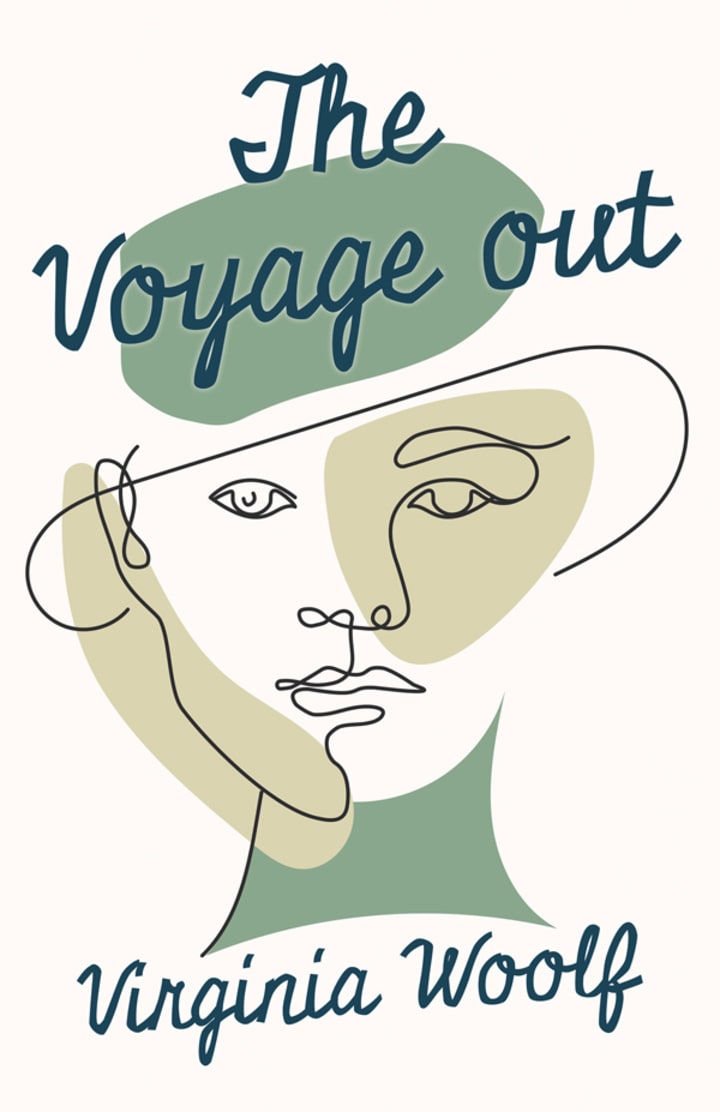
Published in 1915, Virginia Woolf began her work on The Voyage Out in 1910 and had finished writing her first draft by 1912. Meaning that when it came out, Virginia Woolf was approximately 33 years' old and going through quite a bit psychologically. The main character is reflective of this. Her name is Rachel and she is going on a journey with her aunt and her uncle to South America. As she explores more of the world, it is evident to the reader that she is going through a period of self-discovery with a want for adventure but the strict normalities of Edwardian life are certainly holding her back.
Throughout the book there are strange things taking place to Rachel, such as the want for romance and friends and adventures. Things that she cannot have or needs permission to. A man named Terence Hewet is a key character for a while, developed on as a half-love-interest. But I think that the most important character besides Rachel is the character of Clarissa Dalloway. Yes, you heard that correctly. The Virginia Woolf Universe opens its chambers as Mrs Dalloway is introduced in a novel before her time.
This is a novel that is key to understanding the constraints of Edwardian life during Virginia Woolf's own lifetime. Here, at the writing of the novel, she is a young woman with ambitions and hopes and dreams. But, due to the societal rubbish that comes in between, she must quench those quietly and without disturbing the order of things. Frustration, ambition and quiet revolution burn on the page as Woolf decides that enough is enough. Women were never meant to be seen and not heard. They were meant to be felt in the core.

However, we can also see a dull point in Woolf's mental health too. Habitually, the depiction of Edwardian life is satirised to the point that it is almost depressing. Like in Mrs Dalloway, nothing exciting seems to have happened in Rachel's life until right at the point of the book. The older characters respect the social order so much that they are willing to sacrifice any fun they could possibly have in their lives for it. There is a staunch difference between what Edwardian England looks like and what South America looks like. It is a festival of satires which work to mock the middle class life of the English in this period and their culture of manners.
E.M Forster had much to say about the novel. According to the quotation in Virginia Woolf: The Critical Heritage, the novel is:
"... a strange, tragic, inspired book whose scene is a South America not found on any map and reached by a boat which would not float on any sea, an America whose spiritual boundaries touch Xanadu and Atlantis".
I think that this sums up most of Virginia Woolf's writing. Though it is set in realism, though it satirises her own society and though she writes with such full flavours of modernism - her writing cannot be pinpointed - she, like her setting, has no spiritual boundary in the real world.
About the Creator
Annie Kapur
I am:
🙋🏽♀️ Annie
📚 Avid Reader
📝 Reviewer and Commentator
🎓 Post-Grad Millennial (M.A)
***
I have:
📖 280K+ reads on Vocal
🫶🏼 Love for reading & research
🦋/X @AnnieWithBooks
***
🏡 UK
Keep reading
More stories from Annie Kapur and writers in Geeks and other communities.
Silver Screen Magic with Mae West
American actress and singer Mae West became a popular film actress during the Great Depression. She started entertaining in vaudeville, then performed on Broadway, and finally went to Hollywood. She signed up with Paramount Pictures and made her debut in the 1932 film “Night After Night.” She also starred in musicals, comedies, and crime dramas. The American Film Institute named her one of the best classic Hollywood actresses.
By Rasma Raisters9 days ago in Geeks
Jan-Willem Breure Joins the Joburg Film Festival Jury (JFF) - Septimius Awards Director becomes Judge at South Africa Oscar Qualifying Film Festival in Johannesburg
The golden horizon of South African cinema continues to expand, and the 2026 Joburg Film Festival marks a significant moment in this evolution with the appointment of Jan-Willem Breure (Director & Founder of the Septimius Awards) to its international jury. Breure, an acclaimed filmmaker and entrepreneur, brings a perspective forged through a life of global transitions. Born in Rwanda and later adopted by Dutch missionaries, his journey took him through the landscapes of Kenya and Namibia before he eventually settled in the Netherlands. This cross-continental upbringing gave him a rare understanding of the nuances inherent in African storytelling, a trait that has defined his professional career.
By postworldviewa day ago in Geeks
So You Decided To Become a Nurse Practitioner:
So you decided to become an "Advanced Practice" nurse. Congratulations!... is what I would say if this was a good idea. Grad school? In this economy? What were you thinking? Likely it was something along the lines of either 1) “I've seen these other chucklefucks do it— Why can't I?” or even 2) “I've got a nice career, I should shake it up. I miss feeling like I have no clue what I'm doing.”
By Sandor Szabo6 days ago in Fiction


Comments
There are no comments for this story
Be the first to respond and start the conversation.