
Book Review: "The Sleepwalkers" by Arthur Koestler
5/5 - an analysis of human knowledge...

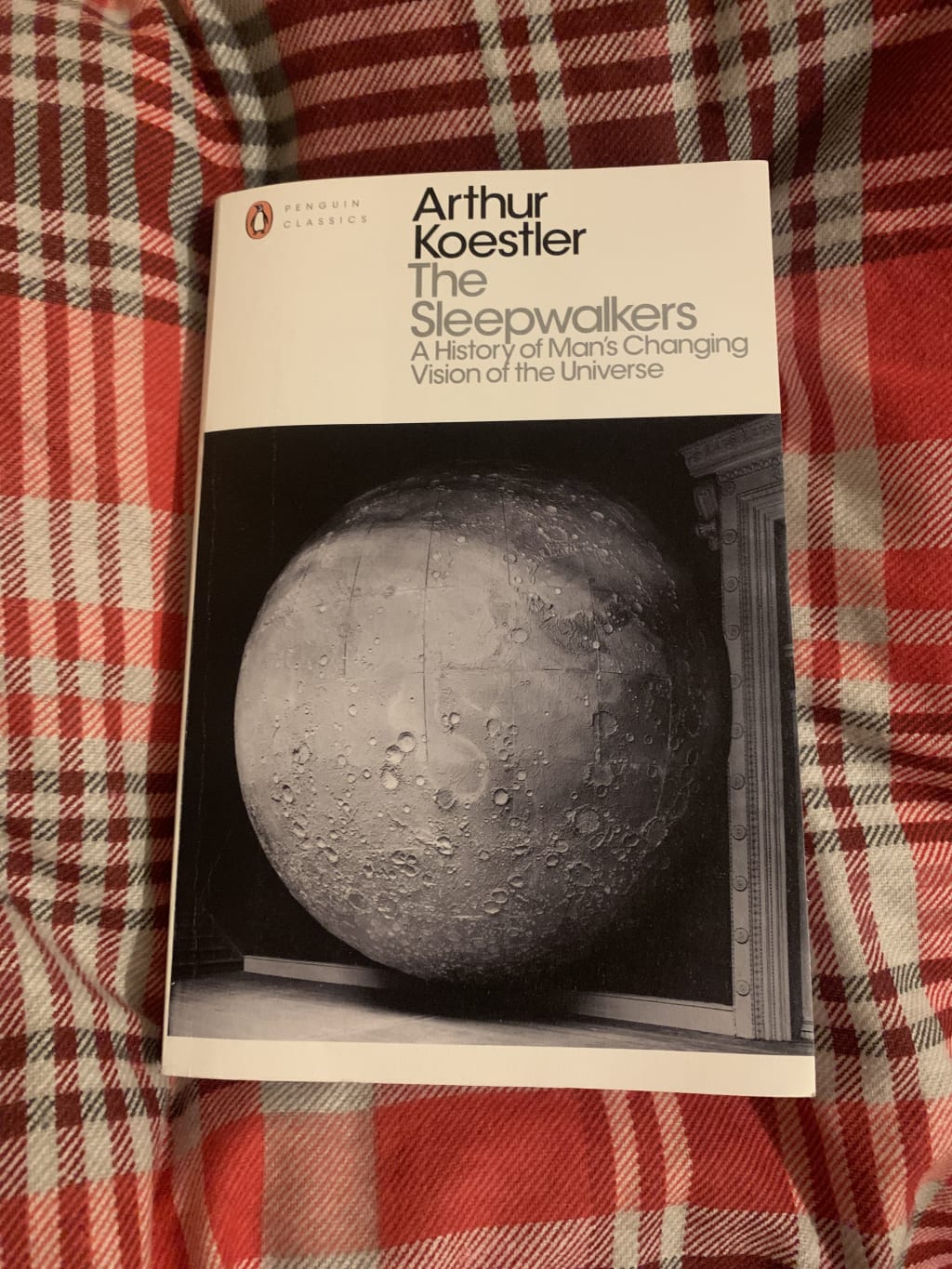
Science was never my strong suit at school. I didn't really like studying chemistry, physics or biology and found them increasingly boring. Various Sci-Fi books then, have failed to catch me. I only got part way through the second Dune book about a decade ago before I gave up on the series because it bored me, I didn't enjoy my very first reading experience of the tales of Isaac Asimov and I was pretty much put off by Arthur C. Clarke after I learned that there was a lot of space stuff in his books. But, over time, I have come to appreciate Sci-Fi in different forms. For example: the dystopia. Books such as 1984 by George Orwell don't have a science base, but they are still considered Sci-Fi because of their presentations of the modern world (well, it's more like realism now, if you get what I mean). When I first picked up The Sleepwalkers therefore, I thought I was going to really dislike it. It turns out I was wrong.
The changing meaning of the word 'reason' comes with the changing nature of what we know. One of the most famous quotations from the book is that 'we can add to our knowledge, but not subtract from it'. I was thriller to find that there wasn't too much science in here, instead it was more of a history of cosmology instead that ran from the ancient era all the way to the days of Isaac Newton.
He starts off with Pythagoras and the Pythagorean School in description. He looks at how they understood reason whilst building on the knowledge of astronomy, changing the meaning of the very idea of intelligence and what it is to know something. This looks at their achievements as well, such as understanding that the earth is round and spins and the legacy of this theory. Especially after the deaths of teacher and students.
When Plato and Aristotle come along, there is a theory in which the earth is at the centre of the universe and they therefore do what is in their power to make sure this stays true instead of the heliocentric theory put forward by the pythagorean school. This meant that we go backwards, but we do not subtract from the knowledge. We haven't lost the knowledge, we have just countered it and to counter knowledge and challenge it is well within our human nature.
Throughout the book we get far more than we bargained for and this back and forth of human knowledge proves to us that we are always trying to gain new knowledge whilst also trying to challenge the knowledge we have. From Coppernicus to Gallileo, we have to see that there is far more knowledge still out there and I'm sure that in there own times they too thought that human knowledge was at its pinnacle and nothing new could be found.
In the last fifteen years or so, I have seen the world change. I have come into contact with things that my ten-year-old self could only dream of. Laptops, iPads, smart phones, virtual reality headsets and so much more and I think that if there is one thing that this book has taught me, it is that human knowledge is continuing to expand as long as we keep asking the questions, challenging the knowledge that is already there and building on what we have already got. If we cannot subtract from human knowledge, we are definitely at risk of losing it, like we lost the knowledge as to how the pyramids of Giza were built. But the knowledge is still out there and hopefully, we will find it all out someday.
About the Creator
Annie Kapur
I am:
🙋🏽♀️ Annie
📚 Avid Reader
📝 Reviewer and Commentator
🎓 Post-Grad Millennial (M.A)
***
I have:
📖 280K+ reads on Vocal
🫶🏼 Love for reading & research
🦋/X @AnnieWithBooks
***
🏡 UK
Keep reading
More stories from Annie Kapur and writers in Geeks and other communities.
"Frankenstein" by Mary Shelley
“Frankenstein” by Mary Shelley is regularly called the world’s first Sci-Fi novel and for years it has been the marker from which body horror has been created. About a man called Victor Frankenstein who sets his entire life upon making a creature so close to a living man that when it happens, he regrets the whole thing - this book has enthralled audiences for over two hundred years.
By Annie Kapur4 years ago in Geeks
Silver Screen Magic with Mae West
American actress and singer Mae West became a popular film actress during the Great Depression. She started entertaining in vaudeville, then performed on Broadway, and finally went to Hollywood. She signed up with Paramount Pictures and made her debut in the 1932 film “Night After Night.” She also starred in musicals, comedies, and crime dramas. The American Film Institute named her one of the best classic Hollywood actresses.
By Rasma Raisters8 days ago in Geeks
What is Baddie Hub?
What It Is and Where It Came From The term “baddie” used to describe a person with bold style and confidence has moved from social media slang into a broader online space focused on fashion and lifestyle inspiration. Originally popularized by creators on Instagram and TikTok, this trend soon grew into online communities and platforms dedicated to sharing looks, beauty tips, and ways to stand out confidently in both appearance and attitude.
By Dena Falken Esq2 days ago in Geeks


Comments
There are no comments for this story
Be the first to respond and start the conversation.