
Book Review: "The Salt Eaters" by Toni Cade Bambara
5/5 - a new kind of Civil Rights' Movement novel...

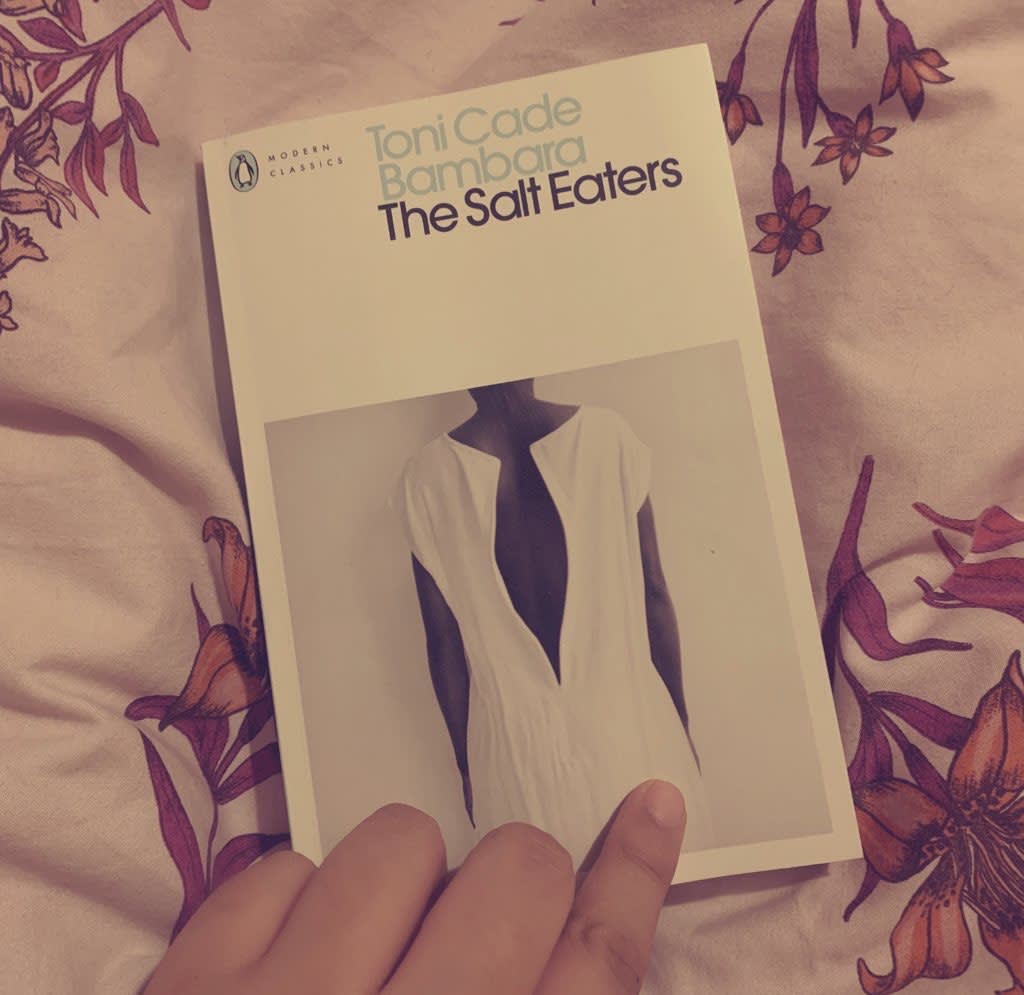
Books about depression never go unnoticed in the world of the literary novel. Books with undertones of depression including works such as: “Absalom, Absalom!” By William Faulkner, “Mrs. Dalloway” by Virginia Woolf, “The Bluest Eye” by Toni Morrison and even parts of various Stephen King novels have managed to grasp the hearts and minds of literary critics for over hundreds of years starting with “The Anatomy of Melancholy” by John Burton. To be able to mix the heightened realms of the psychological novel that depicts depression with something as monumental as a historical event in the 20th century means that the author has succeeded in creating a heavily realistic and relative backdrop for their book. In the novel “The Salt Eaters” by Toni Cade Bambara, we get various instances of the political narrative blended with the ideas and researchers related to the depression of the main character - this creates a more experimental tone and sets the novel apart from many other of its counterparts in the same era.
Set in a fictional town within the state of Georgia, this book opens in the 1970s, some years after the Civil Rights’ Movement in the USA and our main character, a veteran of that movement, is suffering extreme amounts of depression. An alienation from the newer versions of the movement, she has come to feel like she is useless and has no purpose, and so before the events of the novel open up, she has slit her wrists and tried to gas herself to death. When the novel opens, she is being ‘healed’ by a woman called Minnie Ransom. Our main character, who is named Velma, has a failing marriage that is slowly deteriorating. Her husband, Obie was an activist as well, also becoming strained with the new factions of the movement.
When Minnie calls on a woman called ‘Old Wife’ there is a moral resistance by Velma against this more apt healer. Old Wife is described as a woman who puts people back on the straight and narrow of their lives, healing them to the best versions of themselves. There is much talk about folkloric ideas of the African American sub-cultures and, as super interesting as they are, they also fit perfectly into the next pieces of the story. The long dialogues, the strange descriptions and the psychological nature of the novel has made this very clearly more than just a novel. It is a slice of history - though it is fiction, it is still something historical.
One of the themes I really enjoyed (as you all already know) was the theme of folklore. There is a great amount of concentration on the folklore of the sub-cultures, but there is also a great amount of almost implicit dialogue about them. This dialogue is normally between the Old Wife and Minnie - one of which is refusing to accept that an idea from the folklore world may be applicable in this situation. An amazing book about the healing process, long and gruelling and yet, even more difficult when the character involved was so involved with what was the greatest, most incredible period of activism of the 20th century.
In conclusion, I would like to tell everyone to make sure that they read this book at least once in their life. It is a brilliantly formed novel which involved every aspect of the experience of the healing process, and everyone who is involved with it as well. I am honestly still in awe about the whole thing, there is a clear blend between what has already happened and what is about to happen which leaves you hoping, holding your breath and crossing your fingers that one day, things will get better.
About the Creator
Annie Kapur
I am:
🙋🏽♀️ Annie
📚 Avid Reader
📝 Reviewer and Commentator
🎓 Post-Grad Millennial (M.A)
***
I have:
📖 280K+ reads on Vocal
🫶🏼 Love for reading & research
🦋/X @AnnieWithBooks
***
🏡 UK
Keep reading
More stories from Annie Kapur and writers in Geeks and other communities.
Book Review: "The Luminaries" by Eleanor Catton
Yes, I know - I’m only reading “The Luminaries” by Eleanor Catton now. So where was I in 2013 when it was first released? Well, I was probably crying on my bedroom floor about how hard all my work was and having various nervous breakdowns. The last thing I needed was an almost 850 page novel on top of everything I was already reading and re-reading and analysing and preparing for. It was all a little bit touchy in that year and I hate to say it, but I knew that the novel existed well enough to know that it was probably not the best time to read it. After that, I was completely bogged down by everything else that “The Luminaries” fell into the black hole of the ‘to be read’ list and never really seemed to surface again. I am not going to lie to you, I have no real reason for that and I have even seen other people reading it over the course of my periods at university. Last week, I finally gave up and bought myself a copy, sitting down every morning with a cafetière of “Skull Crusher” coffee and began to read this intense, oversized and incredible novel. I was completely immersed in it every morning of that week.
By Annie Kapur4 years ago in Geeks
Silver Screen Magic with Mae West
American actress and singer Mae West became a popular film actress during the Great Depression. She started entertaining in vaudeville, then performed on Broadway, and finally went to Hollywood. She signed up with Paramount Pictures and made her debut in the 1932 film “Night After Night.” She also starred in musicals, comedies, and crime dramas. The American Film Institute named her one of the best classic Hollywood actresses.
By Rasma Raisters4 days ago in Geeks
Coolie vs War 2 box office collection till now: Rajinikanth film inches closer to Rs 200 crore, races ahead of Hrithik Roshan-Jr NTR starrer
The Independence Day weekend turned into a blockbuster battleground as Rajinikanth’s Coolie and Hrithik Roshan–Jr NTR starrer War 2 clashed at the cinemas. Both films leveraged the August 15 holiday to draw huge crowds, but Rajinikanth’s action entertainer is emerging as the clear frontrunner.
By Dena Falken Esq5 days ago in Geeks



Comments
There are no comments for this story
Be the first to respond and start the conversation.