
Book Review: "The Sacrifice" by Joyce Carol Oates
5/5 - one of her best books reflecting our own divided times...

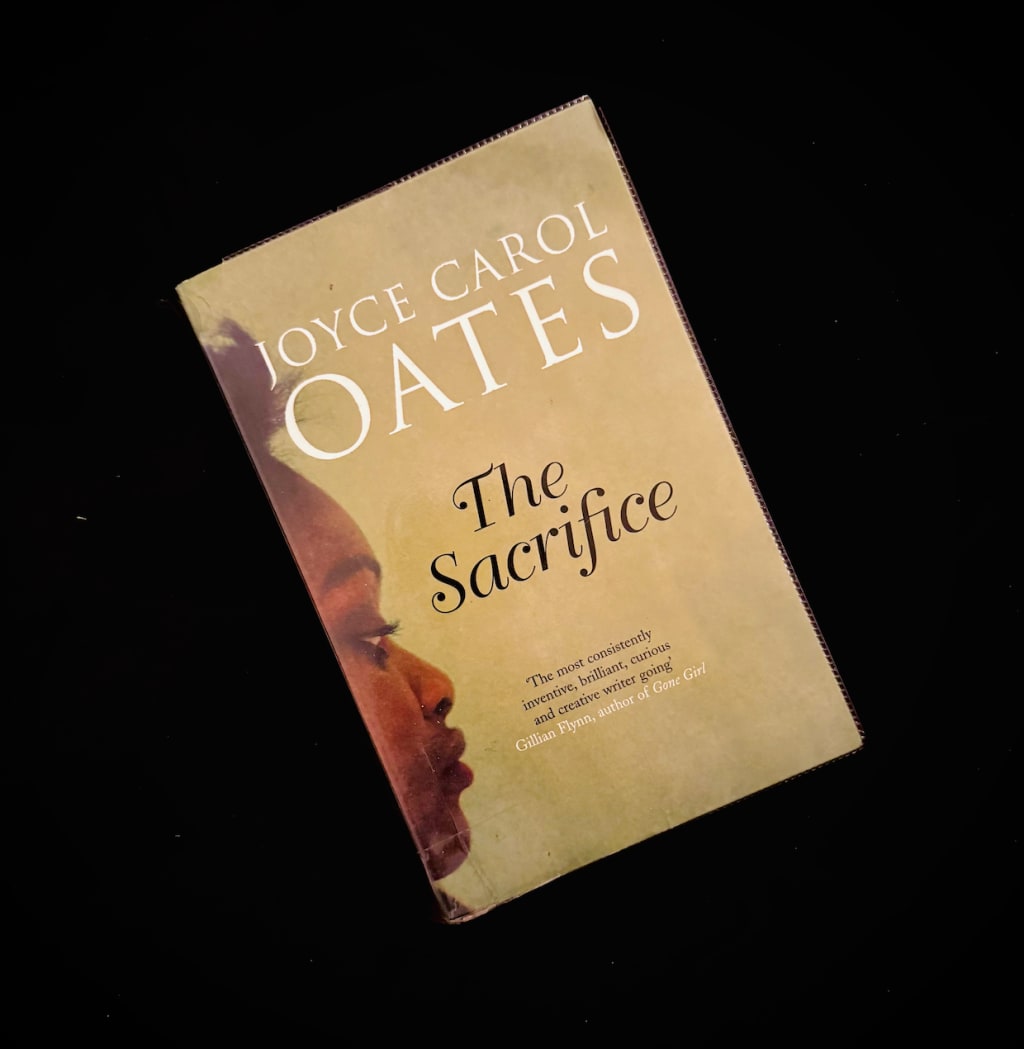
Joyce Carol Oates is known for her morally ambiguous literature. When I first read The Book of American Martyrs in the last year or so, I was astounded - it was simply fantastic. Since then, I've been trying to get more into her works that aren't just her horror writings. I've read books like Carthage and My Life as a Rat as well, all three of these books involve women and girls at the centre of emotional and moral turmoil. Questions are asked inside their heads of what the right thing to do is and Joyce Carol Oates shows us that though the truth is there - the answer to all these questions is not so simple. Sometimes, the truth can change your life and not always for the better. Anyways, if you ever get the chance to read The Book of American Martyrs then please, go ahead. It is wonderful. On to the review...
Sybilla Frye is found in a neglected, rat-infested basement, her body covered in excrement, racial slurs scrawled on her flesh. She is barely conscious, her wrists bound with wire, her face swollen and bruised beyond recognition. When she is taken to the hospital, she refuses to speak about what happened, her silence thick with trauma and terror. The local community is horrified by the apparent racial violence, and before Sybilla can fully comprehend the implications of her silence, her story begins to take on a life of its own. This is quite something because we actually meet her mother first and the book definitely looks like it is going in a certain direction. There are only small hints as of yet that it is not going that way at all. This is a place where the author absolutely excels at her craft. She drops hints instead of revealing everything straight away.
Ednetta Frye, Sybilla’s mother, is a deeply embittered woman who has long viewed herself as a victim of systemic racism and male oppression. She quickly assumes control of the narrative, painting Sybilla as an innocent Black girl brutalised by white men in power. Her anger is righteous, but it is also opportunistic, she sees in her daughter’s suffering a chance to gain the attention and financial support she has always believed she deserves. As Sybilla remains silent, Ednetta’s version of events hardens into fact. This is something we see a lot in media: someone else’s facts become the narrative and that can water down what actually happened. This is a similar thing to what happens in her other books, where the people actually involved have their voices cut off by divisive medias or interested parties - especially in the book “Carthage”.
News of Sybilla’s alleged assault spreads like wildfire. The media descends upon Pascayne, eager for a racially charged story that will grip the nation. Reporters circle like vultures, eager for interviews and dramatic soundbites. Pundits argue about whether Sybilla is a tragic victim or a liar. The pressure on the Frye family intensifies as their once-insular world becomes a public battleground for competing narratives about race, gender, and justice. In step Marus and Byron Ingram, two influential Black activists with a history of radical rhetoric and media-savvy tactics. Marus, a charismatic preacher-turned-revolutionary, sees Sybilla’s case as an opportunity to further his own cause, using her suffering as a symbol of America’s deep-seated racial injustices. His half-brother, Byron, a smooth-talking legal strategist, works behind the scenes to shape the public perception of the case, ensuring that Sybilla’s alleged attackers are vilified before any concrete evidence can emerge. Again, I link this back to the book “Carthage” because we have a young woman who has been the centre of a campaign to vilify someone before evidence. It is though, happening on a larger scale. These two books have been fantastic to read together.
Joyce Carol Oates may be a bit elitist as her social media has shown us, but one thing she does understand is the way in which the media and its narratives can divide a nation and bring it to the point where nobody knows what to believe or who to agree with. The different aspects of the media pushing different ideas, purposefully either lying by omission or flat out not telling the truth at all - there are also interested parties who do this. Joyce Carol Oates does not hold back with her criticism of our times through those of the past.
About the Creator
Annie Kapur
I am:
🙋🏽♀️ Annie
📚 Avid Reader
📝 Reviewer and Commentator
🎓 Post-Grad Millennial (M.A)
***
I have:
📖 280K+ reads on Vocal
🫶🏼 Love for reading & research
🦋/X @AnnieWithBooks
***
🏡 UK
Keep reading
More stories from Annie Kapur and writers in Geeks and other communities.
Mr Norris Changes Trains by Christopher Isherwood
Mr Norris Changes Trains, written by Christopher Isherwood, was published in 1935 by The Hogarth Press, marking a significant point in Isherwood’s career and the development of British literature. This novel, based on his experiences in Weimar Berlin during the early 1930s, was the first of two books Isherwood wrote about Berlin’s turbulent political and social scene. Together with his later work, Goodbye to Berlin, it forms The Berlin Stories, a series that documents the decadence, desperation, and danger present in pre-World War II Germany.
By Annie Kapur9 months ago in Geeks
Silver Screen Magic with Mae West
American actress and singer Mae West became a popular film actress during the Great Depression. She started entertaining in vaudeville, then performed on Broadway, and finally went to Hollywood. She signed up with Paramount Pictures and made her debut in the 1932 film “Night After Night.” She also starred in musicals, comedies, and crime dramas. The American Film Institute named her one of the best classic Hollywood actresses.
By Rasma Raisters7 days ago in Geeks
The Devil's Cut
“Comrade, finally you’re awake.” The voice was smooth, sensual. A flickering incandescent bar was all that lit the white, sterile room. All Vladimir remembered was everything going black. He tried to move his arms and found them strapped to the gurney.
By Matthew J. Fromm6 days ago in Fiction


Comments
There are no comments for this story
Be the first to respond and start the conversation.