
Book Review: "The Road to San Giovanni" by Italo Calvino
5/5 - yet another great text by Italo Calvino...

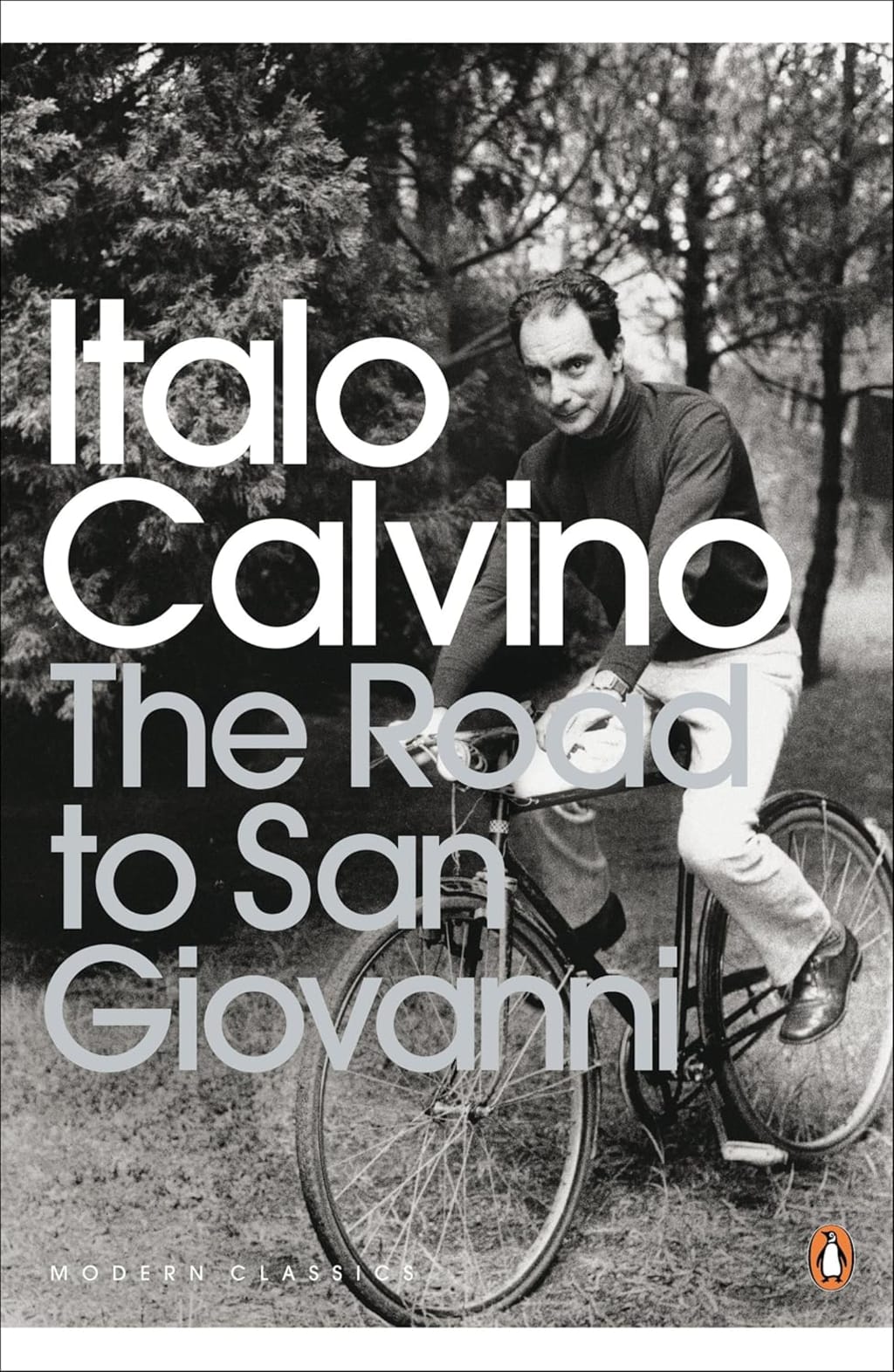
Italo Calvino is one of the greats of 20th century literature and that I think, we can all agree on. With his books such as Path to the Spiders' Nest and possibly my favourite book of his: The Written World and the Unwritten World - Italo Calvino wrote in both fiction and nonfiction throughout the course of his life. His book The Road to San Giovanni was a collection of autobiographical and nonfiction writings that was published after he died. It is yet another piece of proof that Italo Calvino was, and still is, one of the most articulate voices of 20th century literature. Let's take a look at the book...
The Road to San Giovanni is a collection of five essays that represent Italo Calvino's reflections on various stages of his life. It is highly personal, as Calvino explores his relationship with his family, particularly his father, and meditates on his experiences growing up in rural Italy. Each essay blends memoir with philosophical insights, offering readers a glimpse into how his early life influenced his worldview and literary imagination. I do not think that at any time in reading Italo Calvino, I have ever got this close to his personal life. His opinions, yes, but not his life. It was a very exciting thing to read about.
The first essay, which gives the book its title, recounts Calvino’s ritualistic walks with his father to their family garden in the early mornings. The essay explores their differing views of nature, his father, a scientist, sees the world through a rational lens, while the author, as a child, views it through the eyes of wonder and imagination. The essay becomes a metaphor for the journey of life, growth, and the tension between tradition and modernity. Calvino also uses the walk as a means to reflect on the passage of time and the fading connection to his childhood. There is a definite affection he has for his father, but this is also fraught with disagreements with worldviews and so, it becomes an interesting tug within the author.
In The House of the Commandant, Calvino reflects on his experience during World War II, particularly his time as a partisan fighting against Fascist forces in Italy. The essay delves into the ideological struggles of the time, offering insights into the political atmosphere of Italy during the war. Calvino contrasts his youthful idealism with the harsh realities of conflict and explores the moral ambiguities of resistance and warfare. His reflections are not only personal but also serve as a commentary on the broader ideological shifts in post-war Europe. I think this is what shapes the often ethical arguments we see in his works, especially the one regarding the gun in Path to the Spiders' Nest.
There is also an essay in which Calvino reminisces about his childhood obsession with cinema. He reflects on how films became a form of escape and a way of processing the world around him. Calvino’s love for cinema was not just an infatuation with storytelling, but also a means of framing reality, often blurring the lines between fiction and life. He discusses how the medium of film shaped his imagination and worldview, intertwining film plots with personal memories. The essay highlights the role of art in shaping identity and perceptions of reality. I loved this essay in particular because of the fact in blends the genius of Calvino with the cinema and I keep thinking about how the same escapism that colours his cosmic-themed novels for us were probably based within the escapist strategies fed to him by the cinema of the developing west.
Despite the deeply personal nature of these essays, they resonate with universal themes of change, loss, and the search for meaning. Calvino’s reflections on his own life become a mirror through which readers can examine their own memories, relationships, and sense of self. He touches on the timeless human experience of growing older, grappling with change, and the desire to find coherence in the often disjointed narratives of our lives. It really does prove something about Italo Calvino to us: he is someone who is deeply in touch with his past and when he writes it in, he tries to help us understand him through this idea of universal experience.
About the Creator
Annie Kapur
I am:
🙋🏽♀️ Annie
📚 Avid Reader
📝 Reviewer and Commentator
🎓 Post-Grad Millennial (M.A)
***
I have:
📖 280K+ reads on Vocal
🫶🏼 Love for reading & research
🦋/X @AnnieWithBooks
***
🏡 UK
Keep reading
More stories from Annie Kapur and writers in Geeks and other communities.
Book Review: "Sweet Caress" by William Boyd
My favourite book this year has been “The Romantic” by William Boyd and so, since then, I have tried to get my hands on everything he has written that I have not read. William Boyd’s writing is something special: descriptive, atmospheric with dialogue which is just enough for the reader to imagine what is going on - nothing is ever overdone but nothing is ever underdone either. He tends to get this beautiful mix between the dialogue and the body language of each character, letting us imagine how they would be if they were really alive. Obviously, this current book is no different. It is a beautiful book and I have to say that it is probably a great example of said body language.
By Annie Kapurabout a year ago in Geeks
Silver Screen Magic with Mae West
American actress and singer Mae West became a popular film actress during the Great Depression. She started entertaining in vaudeville, then performed on Broadway, and finally went to Hollywood. She signed up with Paramount Pictures and made her debut in the 1932 film “Night After Night.” She also starred in musicals, comedies, and crime dramas. The American Film Institute named her one of the best classic Hollywood actresses.
By Rasma Raisters6 days ago in Geeks
"Beyond the Gates" Weeks 38-44 Recap
It's been a minute since I delivered a Beyond the Gates recap, but I want to start with this. If you had told me that in 2025 and now into 2026 that I'd be religiously watching any soap opera, I would have looked at you like you had three heads or something. My feelings about soaps had always been complicated. I had peeped into some of the classics at times, but I was never a religious viewer. A question I never asked myself was this: "What would it take for me to actually watch a soap every day?"
By Clyde E. Dawkins7 days ago in Geeks


Comments (2)
Claps
Now, this I have not read! Thank you for the introduction (Penguin is really a great source for this type of work)!