
"The Written World and the Unwritten World" by Italo Calvino
An Article

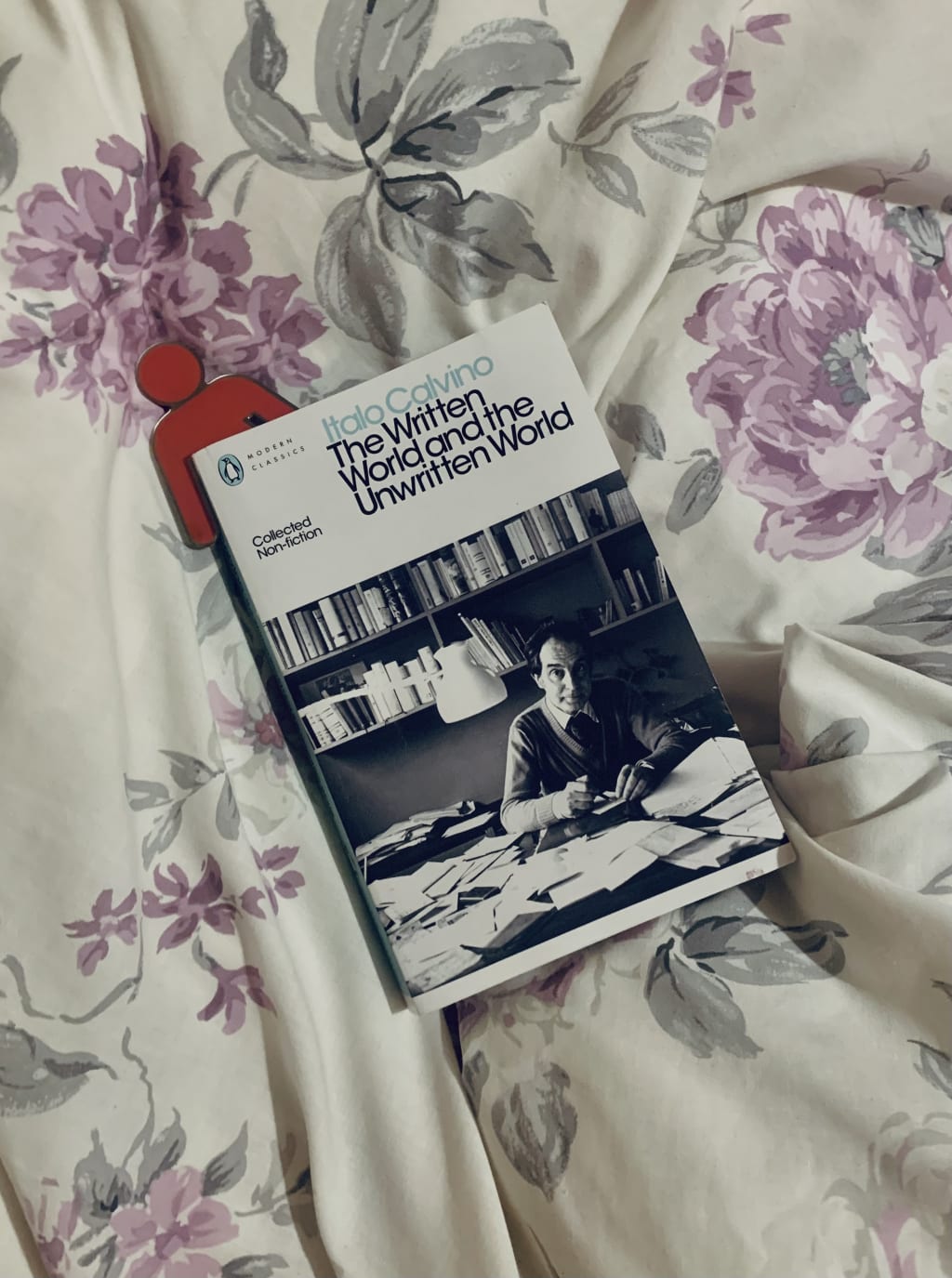
Mostly written between the 1960s and the 1980s and published by Penguin Modern Classics in 2023, the collected nonfiction of Italo Calvino is a wonderful read filled with insights into avant-garde literature, branches of Italian reading culture and the way in which book marketing works and does not work depending on the book sales overall during that particular week the newspaper is reporting on. Throughout the course of this book we get insights through essays, reviews, interviews, articles, notes on translation, analyses of the human mind and much more. It is not only a collection of Italo Calvino's nonfiction writings, but perhaps the most meticulously curated anthology of his best-known and respected philosophies on writing, life and humanity.
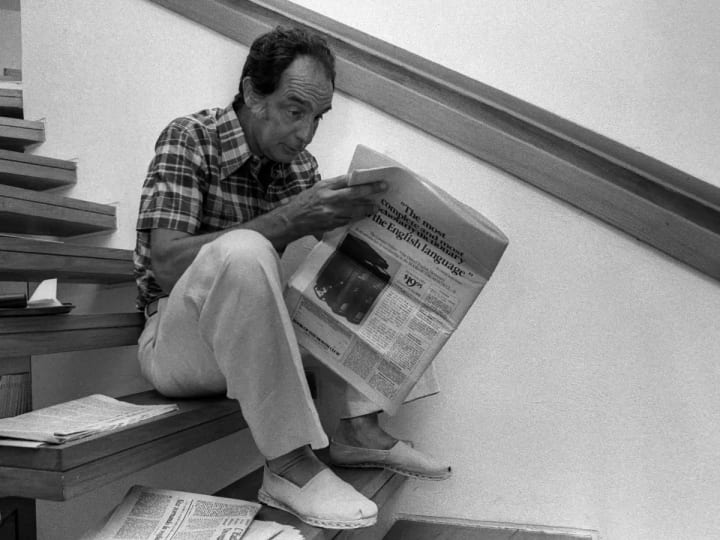
As you are probably aware, I have read many of Italo Calvino's books and respect him greatly as a writer for being able to see into the depths of the mind and heart in ways that I myself couldn't possibly imagine. Salman Rushdie is quoted as stating that Calvino is:
'An indispensable writer ... [he], possesses the power of seeing into the deepest recesses of human minds and then bringing their dreams to life'
This is something I agree with wholeheartedly and is possibly the best wording for the respect I hold for the author. Italo Calvino is probably best known for his ability to write upon the fantastical woven careful into humanity. As he was an avid fan of The Jungle Book by Rudyard Kipling, I can see why this blend would interest him so much. But, less like his novels such as Path to the Spider's Nest or If On a Winter's Night a Traveller, this collected nonfiction anthology is written in Calvino's own and authentic voice with all of its complexities, metaphors and most unforgettably, its criticisms.
My 5 Personal Favourites
1: Good Intentions
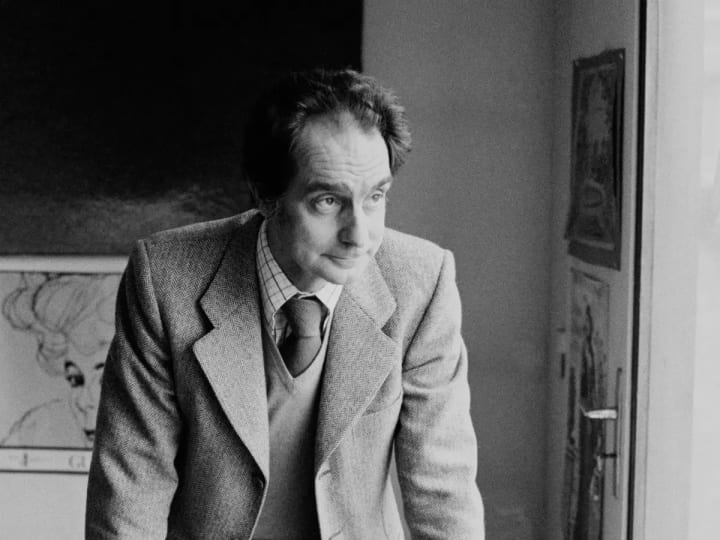
Good Intentions is how the book begins and it is entirely about a person who goes on holiday with books and the intention of reading them, but comes back without much reading actually completed. The whole point is that the good reader had good intentions. Now, if you love reading then you can definitely relate - like myself. I have now come to the conclusion that I will take just one book and, if I require anything else to read then I will attend the library or bookshop of wherever I am going. I tend to do most of my reading though, whilst travelling. Personally, I have found that the best transportation on which to read is a train.
However, to start off the book with the intentions of reading edges us into Italo Calvino's observant nature on humanity, his understanding of how and why people read and ultimately, his brilliant sense of humour.
2: Sitting-Down Literature
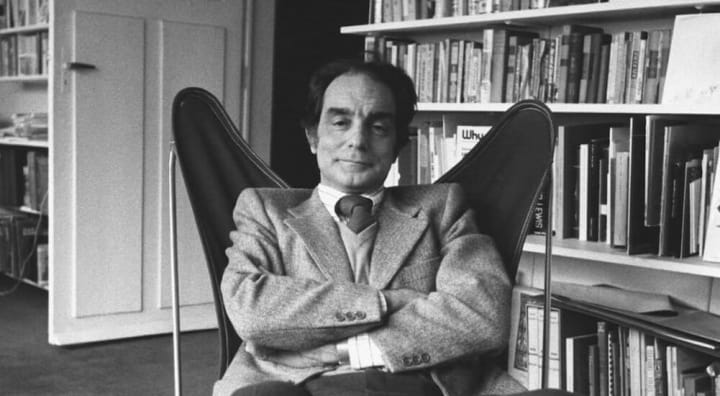
I have never really seen writing a book compared to riding on horseback before and I can honestly say that it made me think quite a bit about the way in which Calvino himself wrote his books. He moves around the various positions in which humans and animals can experience movement and what perfect movement actually is. He goes back upon the nature of living in trees and grabbing things and then towards living like an octopus or a squid. Calvino's position on his own writing remaining pretty strange but with good excuse.
I believe that this is one of those pieces I'm not supposed to fully understand but instead I'm supposed to appreciate for its ingenuiety. I do appreciate it, but I also find it a satire of the animal and human relations and a comment on the fact that humans are not built in the most perfect form imaginable but rather an amalgamation of average forms. Calvino makes this clear in the final paragraph of the text.
3: Translating a Text is the True Way of Reading It
Starting with a comparison between novels and wine, Calvino argues that the one thing that matters about a novel is its language. He discusses how the Italian novel was once famous with foreigners for its idyllic settings and cultural persuasions that made everything feel very European. He also talks of the way in which the translator and the writer must work together in order to keep the 'language' of the novel - as he states in Italian (as it is a 'minority' language) that things can be lost between the writing and the translation such as intricacies, metaphors and descriptors. But, he also states that this loss on some scale is inevitable.
Calvino states that the spirit of the language is important and that the translator must know the spirit of the language they are translating from and the spirit of the language they are translating to in order to translate as accurately as physically possible. Then there's the function of the publisher that is also at the end of the translated work - the main issue that is being discussed by Calvino here is that though there are many people working on this translation to make it perfect and accurate, there will always be loss. He argues that no matter what, people will always have an issue in their own language and expressions. The translator therefore, knows the text in two ways.
4: The Written World and the Unwritten World
This is obviously where the book gets its name but what is more important is why the book is named after this singular essay in a whole bunch of essays, reviews, articles, interviews and so on. The answer is simply this: it goes over and covers all the philosophies that Italo Calvino tries to put forward in his books about his own life and writing technique. It is possibly the most concise and succint explanation to how Calvino writes and expresses his own ideas by Calvino himself.
First of all he discusses the difference between these two worlds and why literature understands more about everything that the other disciplines claim to. One thing I came across that I really enjoyed is that literature is expressed by admitting that you cannot predict or know anything truly and the other disciplines are about pretending to be able to do so without ever really admitting it.
Calvino explains that it is a fault to assume that the written world illuminates the unwritten world or the other way around - but instead that writing is about what we do not know rather than what we do. He discusses how people are wrong for reading only the newspapers or only watching the television and how we should, but cannot be, blank slates from which stories can be read. That the truth is, our stories are always influenced by other stories and our voices corrupted by other voices, what we know and do not know are an amalgamation of the written and unwritten worlds we inhabit.
"So the stories we can tell are marked on the one hand by a sense of the unknown and on the other by a need for structure, for carefully drawn lines, for harmony and geometry; this is our way of reacting to the shifting sands we feel under our feet."
Italo Calvino is pretty clear about how he believes 'that we always write about something we don't know...' and that we are constantly searching in order to try to explain ourselves. He finishes the pieces with a simile about tapping on a prison wall and might I add that it sums the entire chapter up brilliantly.
5: The Knights of the Grail
Now, I am a huge fan of Arthurian Legends and I think Italo Calvino investigates them very well, beginning with the tossing of Excalibur into the lake. He covers the end of the grail myth brilliantly and how it presents not a closing, but an opening on to many Arthurian tales to come. His summary of the myth of Percival by Chretien is a brilliant testament to the differences we have in grail legends across the world and how Percival is a character of many different personalities though, only of one main function.
This might be a short one, but it really does cover the Knights of the Grail in some real terse details that ask the more important questions about how they were written by different authors.
Conclusion
On the whole, I knew that writing a review of this book would miss out some details I wanted to talk about. It might take some time to actually understand the philosophies laid out in this book, but they have been brilliantly organised so that we aren't left in the dark about anything. Italo Calvino is one of literature's most brilliant minds and this book has only exemplified the amount of proof we have for that.
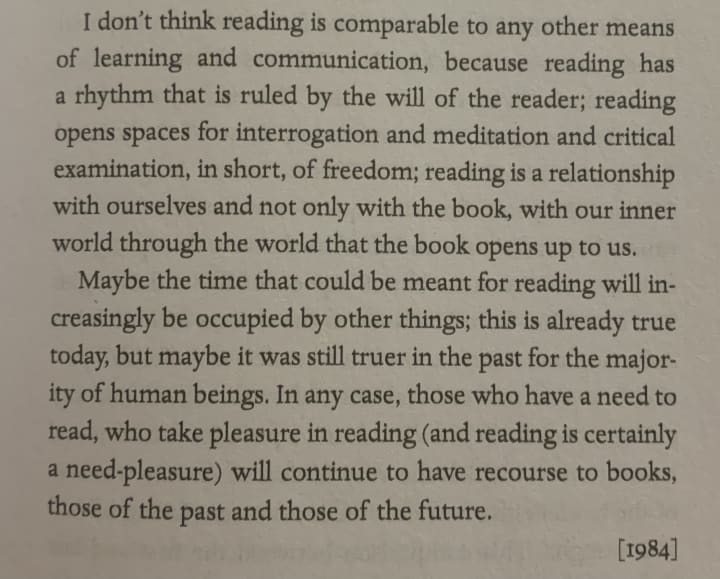
If you still don't believe me, then take a look at this passage from the book where Italo Calvino discusses books, reading and the reasons we read. Reading for pleasure seems to be the most endearing act:
About the Creator
Annie Kapur
I am:
🙋🏽♀️ Annie
📚 Avid Reader
📝 Reviewer and Commentator
🎓 Post-Grad Millennial (M.A)
***
I have:
📖 280K+ reads on Vocal
🫶🏼 Love for reading & research
🦋/X @AnnieWithBooks
***
🏡 UK
Keep reading
More stories from Annie Kapur and writers in Geeks and other communities.
Book Review: "The Trip to Echo Spring" by Olivia Laing
I was reading this a few weeks ago and honestly, it is still making its impression on me. A book about the pros and cons (but mainly the cons) of drinking is, as you may or may not know, probably not the best book for me to be reading. Especially if there are advantages in there - I will use them as a weapon. With people like Hemingway and Fitzgerald covered, this book has a brilliant case for geniuses who destroyed themselves with alcohol probably not being the best literary role models.
By Annie Kapur2 years ago in Geeks
Silver Screen Magic with Mae West
American actress and singer Mae West became a popular film actress during the Great Depression. She started entertaining in vaudeville, then performed on Broadway, and finally went to Hollywood. She signed up with Paramount Pictures and made her debut in the 1932 film “Night After Night.” She also starred in musicals, comedies, and crime dramas. The American Film Institute named her one of the best classic Hollywood actresses.
By Rasma Raisters6 days ago in Geeks


Comments
There are no comments for this story
Be the first to respond and start the conversation.