
Book Review: "The Last Tycoon" by F. Scott Fitzgerald
3.5/5 - one of the better Fitzgerald novels in my opinion...

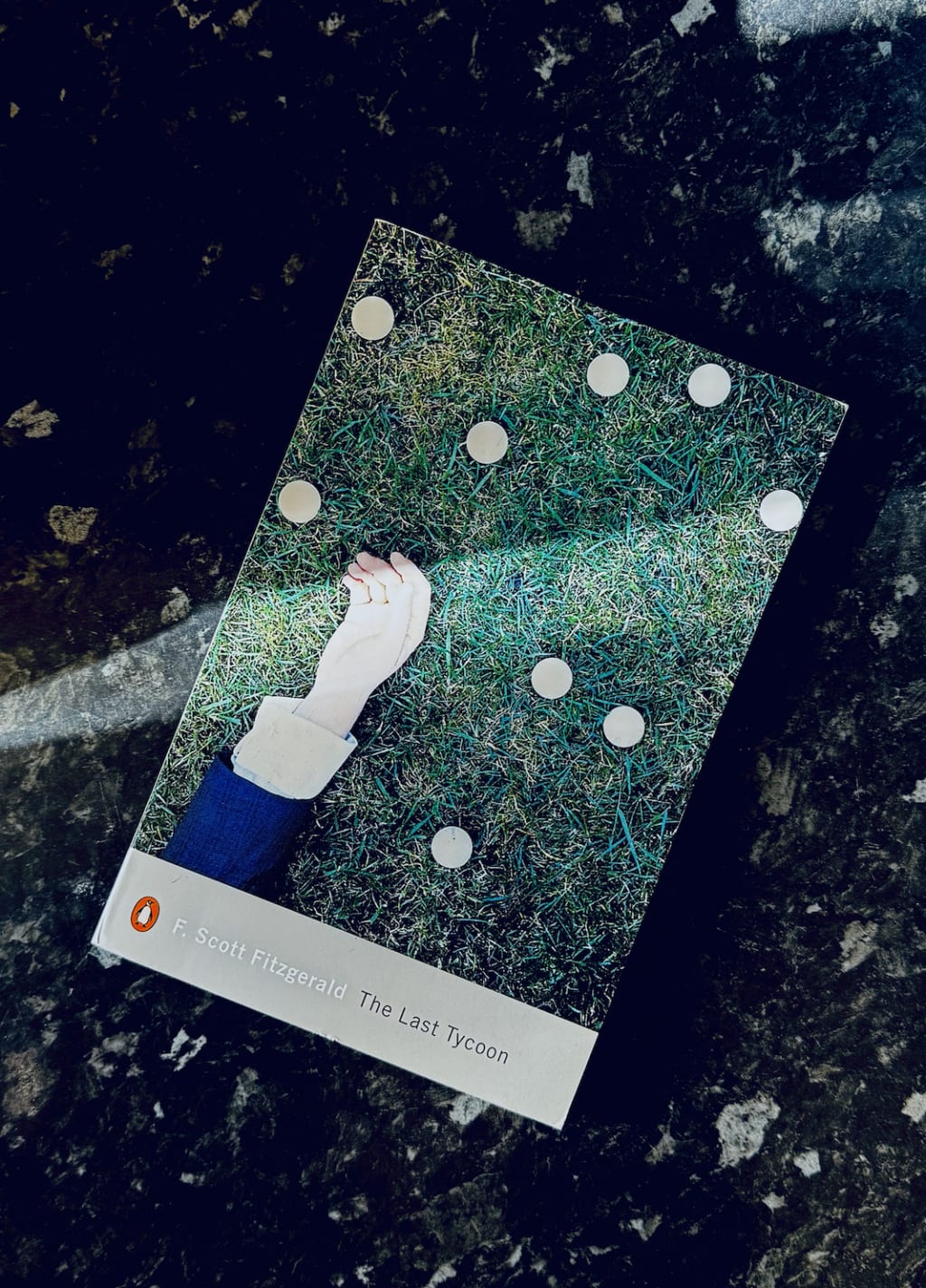
“Even that afternoon, I could still see the remains of the atmosphere of failure hanging over from the Depression”
- "The Last Tycoon" by F. Scott Fitzgerald
F. Scott Fitzgerald is probably a lot of people's either favourite author or someone who is in their top five. Honestly, I don't like his books that much. The Great Gatsby to this day, is probably on my least favourite books of all time list. I appreciate that it is a technically good book, but it's so short and feels so empty and underdone that I can't sink into it. I've read quite a few books by him and yet, the one achievement he has for me is that he wrote my favourite short story of all time: The Diamond as Big as the Ritz. His other novels though, are either technically very good, or they are rather sloppy. I definitely think Fitzgerald was far better at the short story than he was at the novel. Let's see if this novella changes my mind...
The narrative is framed through the perspective of Cecilia, a perceptive young woman from a privileged Hollywood background. Cecilia is in love with Monroe Stahr, the studio’s brilliant and overworked producer, and her narration often blends admiration, nostalgia, and heartbreak. I can't lie - this is probably the perfect book for someone who loves Hollywood but, as someone who is a bit more indifferent to everything that happens over there, I can say that the idea of Cecilia narrating this landscape seemed kind of boring to begin with. It sort of reminded me of Nick narrating The Great Gatsby. You do have to sit and wonder why they care about these people so much. They are fleeting.
Then there's Monroe Stahr, modelled partly on the legendary MGM producer Irving Thalberg. Stahr is portrayed as an almost mythic figure, an artist-businessman whose perfectionism and dedication to his craft embody both the glory and tragedy of creative ambition. He is the last “tycoon” in the sense that he stands for a vanishing breed of visionary control in an increasingly commercialised world. I do like the era that Fitzgerald is writing about because of this. This novel was left unfinished before his death at the beginning of the 40s and so, Fitzgerald would've existed on the cusp of American falling into commercialism. He definitely reflects that through the character of Monroe Stahr.
One evening, after an earthquake, Stahr encounters a mysterious young woman named Kathleen Moore, whose face eerily resembles that of his deceased wife, Minna Davis, a beloved movie star. The meeting ignites in him both passion and nostalgia. Their relationship is the emotional heart of the novel and attempts to recapture the lost loves that the new and mechanised world has killed. Kathleen’s youth and simplicity contrast with Stahr’s burdened brilliance; their affair is doomed by circumstance. I normally don't think much of romances in novels but this one was actually more symbolic than it was romantic. It was definitely representing this pressure cooker which was slowly about to burst - a dying world that just exploded and faded away. New Hollywood was slowly creeping up behind it and these characters wouldn't survive it.
Next to Stahr's tragedy runs Cecilia's story. As she observes Stahr’s decline and her father’s manipulative power, Cecilia begins to perceive the rot beneath Hollywood’s elegance. As we approach the second half of the novel, we see how Stahr is in constant competition with Hollywood executives and thus, Fitzgerald presents us with his dying breed. Cecilia is definitely observant but she is also just out to the side, again in the same way Nick is in The Great Gatsby - just as privileged but always left a little bit on the outside. This is probably written far better than Gatsby but it takes too much from the story to be the most enjoyable thing I've read.
All in all, this book was actually pretty good and is definitely the better of Fitzgerald's novels. The unfinished and raw nature of it not only shows us how Hollywood changed and people often faded out with the old, but it also showed us the last words of a man who eventually couldn't survive in a world slowly being packed with commercialism. An America on the tipping point of oblivion.
About the Creator
Annie Kapur
I am:
🙋🏽♀️ Annie
📚 Avid Reader
📝 Reviewer and Commentator
🎓 Post-Grad Millennial (M.A)
***
I have:
📖 280K+ reads on Vocal
🫶🏼 Love for reading & research
🦋/X @AnnieWithBooks
***
🏡 UK
Keep reading
More stories from Annie Kapur and writers in Geeks and other communities.
Book Review: "Loitering with Intent" by Muriel Spark
Muriel Spark is a wonderful author. One of my most recent reads by her before this one was The Driver's Seat and it was so dark and delicious that I was captivated from start to finish. The philosophy that drives the novel is often quite flexible, and therefore not very strong - and that's the whole point. The character is painted as floundering, barely keeping their head above the surface of the proverbial water and once they drop, they end up somewhere they didn't intend to with someone they didn't intend to be with. The Driver's Seat, unfortunately for this book, is still my favourite Muriel Spark novel. But that doesn't mean that this one wasn't worth the read. It definitely was...
By Annie Kapur3 months ago in Geeks
Silver Screen Magic with Mae West
American actress and singer Mae West became a popular film actress during the Great Depression. She started entertaining in vaudeville, then performed on Broadway, and finally went to Hollywood. She signed up with Paramount Pictures and made her debut in the 1932 film “Night After Night.” She also starred in musicals, comedies, and crime dramas. The American Film Institute named her one of the best classic Hollywood actresses.
By Rasma Raisters4 days ago in Geeks


Comments (1)
I've read Gatsby and liked the film better than the book, though I won't be revisiting either. This might make my list though. Another excellent review