
Book Review: "The Director" by Daniel Kehlmann
5/5 - a gripping story about one of the most powerful German directors faltering in their one skill...

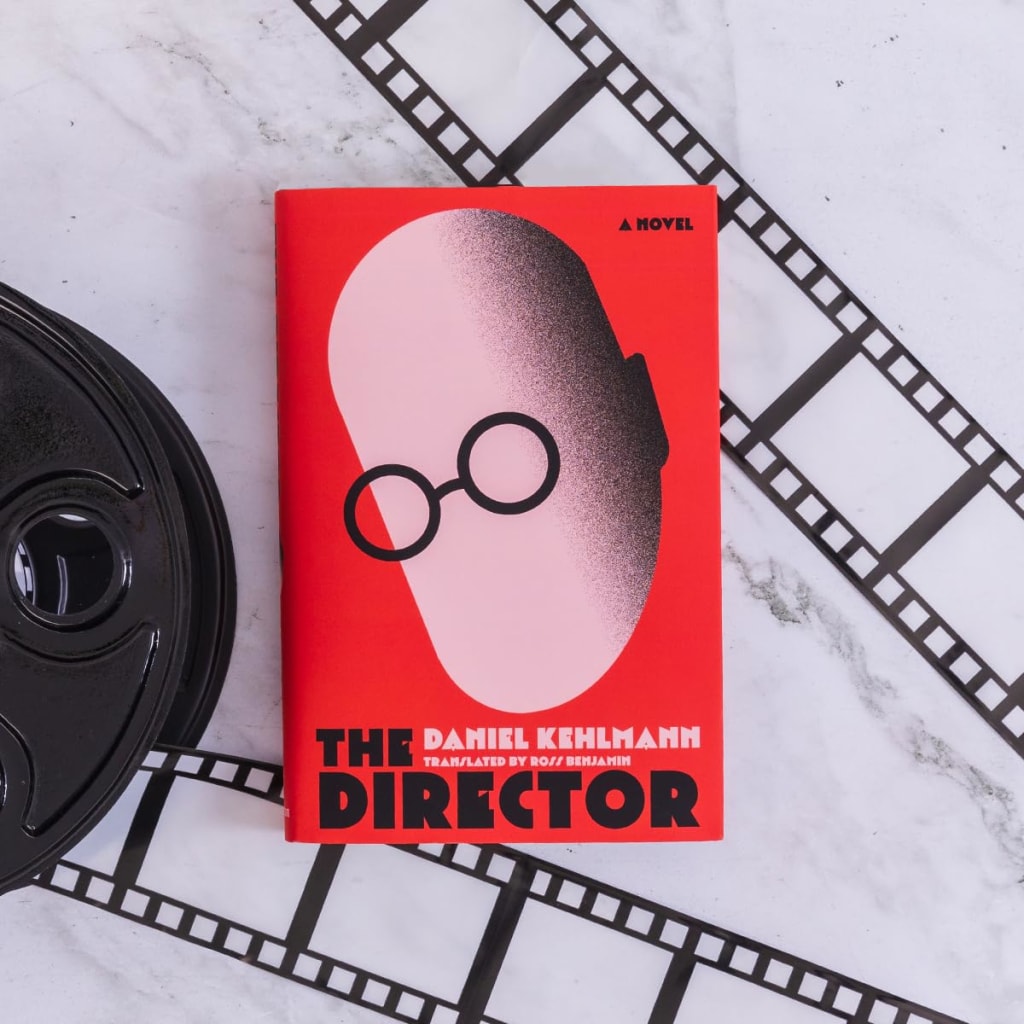
This is a novel by the same man who wrote Tyll: A Novel so of course I was interested. Two years' ago, I included Tyll on my list of five great folk horror novels and yet, I'm still in the midst of thinking about whether it is classed as a folk horror, but I stand by my decision. I was recently reading the London Review of Books and came across another article about the author and so, gave it a read. The Director is a novel about GW Pabst and the unreliability of one's own memory. For those of you who have never encountered the works of Pabst before, this could be something to get you into them. For those of you who have, well I hope you enjoy this book as much as I did...
Franz Wilzek is a fictional character but his story is one of decline. He has dementia and denies the existence of a film he worked on in 1945. But because he has dementia and requires so much help through life, there is a real strange unreliability here because you want to be sympathetic to the character, but you're also left thinking about what really happened back then. Kehlmann has always been fantastic at writing memory and how it can be fragmented and unreliable - it is a theme that appears in Tyll as well.
Back in the past, GW Pabst - a very real and very famous Weimar-era director, has fled Nazi Germany for Hollywood. But Hollywood is not like Germany, there is far more red tape and Pabst begins to suffer under the weight of it all. Kehlmann writes Pabst's frustrations as something that all readers can sympathise with at some point. Ultimately, Pabst's film doesn't do so well and it leaves him feeling more like a migrant than before. He becomes disillusioned with the whole scene and despondent with filmmaking ever so slightly. Other characters will encourage him to adapt to the way of life in America, but there are some hints that Pabst is having none of it.
The horrible thing is that Pabst moved to get away from Nazi Germany only to return to Austria to care for his mother when she got sick. This is in 1939 and so, Pabst finds himself stuck in the middle of the war, unable to move. Aside from this, we see Nazis take control of his family and his estate, showing the amount of control they can extract over them. What we see as readers is the very thing that Pabst was running from coming back for him. It is a horrid sight but the reader understands how Kehlmann is painting this portrait of Pabst which is filled with sympathy. You kind of feel sorry for his failure and his requirement to move back to Austria - it was probably the last thing he wanted.
There's a scene in this book where he goes to meet Greta Garbo and she is known as the most beautiful woman in the world. She is seen thinking about what it would be like to do laundry or go to a laundrette. She thinks that they fill out forms to do laundry and the reader realises that this woman cannot possibly live as a normal person. Imagine being Greta Garbo. Back when she retired and would take long walks, there was a spectator sport called 'Garbo-watching' which I learned about recently. It would be where members of the public would watch for Greta Garbo on her walks and snap a photograph of her in her large sunglasses. The book's Greta Garbo definitely reflects the one that is being watched by the world.
The chapters of this book take different viewpoints. Sometimes we see Greta Garbo, sometimes GW Pabst, sometimes we eve see Pabst's wife - Trude. But one thing we see the most of is how what wants to be believed mingles with what actually happened and it really begins with that film in 1945. Daniel Kehlmann is probably one of the most interesting modern writers and honestly, I couldn't tell you how excited I was to read this novel. It is a brilliant production and feels like a Weimar-era movie with the deep themes concerning the way society is changing and often, not for the better. If you want a book that takes you on the journey through the turning points of German cinema from Weimar-era to Hitler's Hollywood then this is it.
About the Creator
Annie Kapur
I am:
🙋🏽♀️ Annie
📚 Avid Reader
📝 Reviewer and Commentator
🎓 Post-Grad Millennial (M.A)
***
I have:
📖 280K+ reads on Vocal
🫶🏼 Love for reading & research
🦋/X @AnnieWithBooks
***
🏡 UK
Keep reading
More stories from Annie Kapur and writers in Geeks and other communities.
Book Review: "Alice, or The Wild Girl" by Michael Robert Liska
I get sent books that have yet to published often and honestly, I'm kind of ashamed at how long it takes me if I'm also working through a reading list of Kindle Unlimited books. But if you want to get excited about a book then now is the time to get excited. Alice, or The Wild Girl is one of those books that when you've heard about it, you cannot help yourself. When I finally did get around to reading it, I read the whole book in one day. The deep, intense exploration of power dynamics, the critique of colonialism and perhaps my favourite thing about the book - the language and atmosphere - all of it goes into making this novel absolutely incredible.
By Annie Kapur6 months ago in Geeks
Silver Screen Magic with Mae West
American actress and singer Mae West became a popular film actress during the Great Depression. She started entertaining in vaudeville, then performed on Broadway, and finally went to Hollywood. She signed up with Paramount Pictures and made her debut in the 1932 film “Night After Night.” She also starred in musicals, comedies, and crime dramas. The American Film Institute named her one of the best classic Hollywood actresses.
By Rasma Raisters3 days ago in Geeks
Grant Gustin's Chances Of Returning As The DC Universe's Flash Have Just Increased After New Update
The Flash has yet to be cast for the new DC Universe, and after a new update, the rumors of Grant Gustin's return as Barry Allen in the new franchise have gained strength once again. Gustin made history by playing Barry for The Flash's nine seasons. The actor also starred in multiple Arrowverse crossovers, becoming one of the franchise's fan-favorites.
By Dena Falken Esqa day ago in Geeks



Comments (1)
I just finished 'Lisey's Story' by Stephen King, and I think that I need another ride...