
Book Review: "Alice, or The Wild Girl" by Michael Robert Liska
5/5 - a fascinating story of power dynamics, the more you look at it - the more abusive it gets...

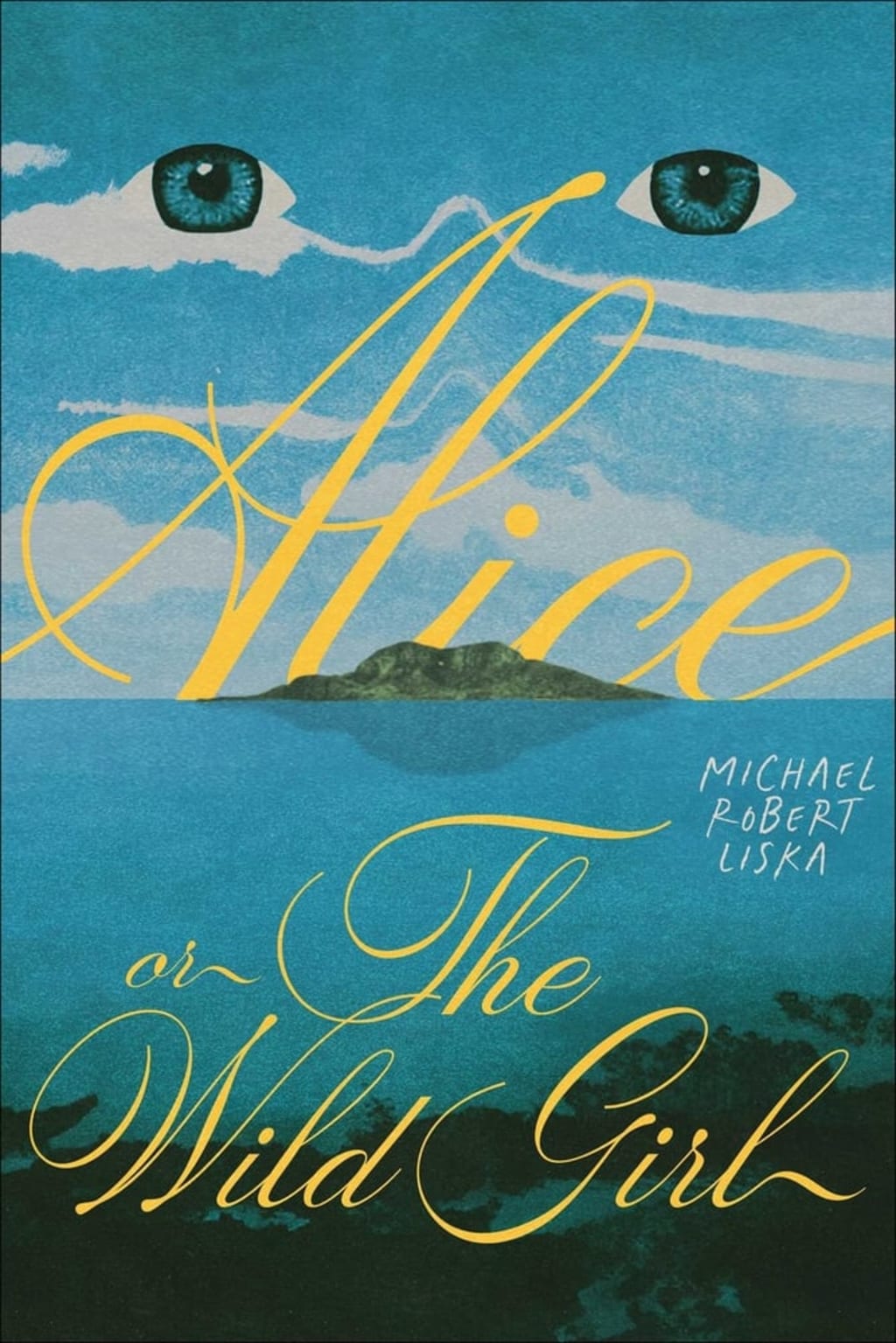
I get sent books that have yet to published often and honestly, I'm kind of ashamed at how long it takes me if I'm also working through a reading list of Kindle Unlimited books. But if you want to get excited about a book then now is the time to get excited. Alice, or The Wild Girl is one of those books that when you've heard about it, you cannot help yourself. When I finally did get around to reading it, I read the whole book in one day. The deep, intense exploration of power dynamics, the critique of colonialism and perhaps my favourite thing about the book - the language and atmosphere - all of it goes into making this novel absolutely incredible.
The novel opens with Lieutenant Bird who, upon the Fredonia, comes to an island and, wanting to cement himself as one of the powers of the United States Navy, seeks to be the first to explore this uninhabited land. However, it is not entirely empty. A girl who was assumed to be "no more than ten years old" was found wandering about. Barely skin and bones, Bird believes that she probably hasn't eaten in a long time and yet, she doesn't eat when first provided with food. Since graves are discovered on the island, there are suggestions of an extinct group of people, but how this young girl has survived like this is a mystery.
Confirming that she doesn't speak, she is witnessed growling at people, refusing to eat, scratching people like an animal and acting in a way that would be considered inappropriate to the other people around. On the surface, this can look caring but the manner in which these men speak definitely shows they think of this child as more of an animal than a human being. The naming of the girl, changing between Lucy and Ruby etc. feels like someone naming a pet. The author definitely lays down the power dynamics in a way that lets the reader know the intentions of the people around the later-named (and might we add, self-named) 'Alice'.
I have to say that since she was captured, I felt sorry for Alice. There is one part of the book where Bird gets Alice a piglet and only allows her to keep it as a pet if she behaves at the Easter Sunday church service. This is a horrible way of treating a child you have ripped from her home. She's being held captive in an unfamiliar place and the only friend he can offer her is a piglet. Even that friend is conditional. He often 'permits' her to do things like walk above-deck. Honestly, I just feel terrible for this "child". She's a victim of such horrid kidnapping and other characters seem to recognise it too. The author definitely makes the book swell with injustice and anger.
In Part 2, they group get off the ship and we meet Bird at his home. When letters come to his home addressed to Alice, it is clear that Bird will be opening all of her mail. The 'tour' is simply Bird showing her off, exploiting her to the upper class like a wild animal - hence the name, I believe of 'the Wild Girl'. Bird wants her to be proof and evidence of his times at sea and how he encountered savagery in a heroic fashion, almost making it out like he saved the girl and is willing to civilise her. Honestly, the reader sees straight through him but this is something that the 19th and early 20th centuries would have been accustomed to.
One of the most disturbing motifs in the book is that Bird allows (sometimes doing it himself) Alice to be dosed with quite a lot of laudanum. If drugging someone against their will was not enough, drugging someone without their knowledge is even worse. On top of this, keeping her a prisoner and a side-show whilst doing the drugging is absolutely detestable. The author definitely lets us know that Bird is a man of moral pretence. He may be religious, but he has a definite superiority complex, a god delusion that makes sure Alice is treated in the worst way possible.
As the book goes on, there are hints the author gives us that let us into the real nature of Bird's character. For example: the way he speaks to the conductor about helping with his bags, the fact that his tickets aboard the second ship were useless even though he is a member of the Navy and the way he pulls Alice through cities she has never heard of like Panama. Her mannerisms become a bit more "refined" with careful "training" but Bird's treatment of her doesn't change by much.
The book moves further into story and critique and we get an intense (And foten damning) gaze at the world of the time. The way in which people treated the different or those who were unique in some ways is seen to be horrid and the author offer this realistically and carefully. Alice may speak and walk, but she still does not enjoy the evil side of culture - one which Bird often resorts to. It is only later in the book where, when Alice begins to challenge her status as 'Wild', that there is some sort of reclamation.
The more this book goes on, the more we learn about the true character of Alice; her wants and needs, her health and sickness, the way in which she speaks and moves. It is also the second half where (though I don't want to reveal too much) the writer really gets underway with telling us more on the way Alice speaks. Her language patterns are often distinct, the pacing is far more distinct. The first half is atmospheric yes, but the second half definitely feels like there is a confidence in Alice now that there perhaps was not before.
I can honestly say this book was a wonderful experience and a great critique of the nature of 'moral' (however questionable the morals may actually be) and how sometimes the people of the time would think it meant 'superior'.
About the Creator
Annie Kapur
I am:
🙋🏽♀️ Annie
📚 Avid Reader
📝 Reviewer and Commentator
🎓 Post-Grad Millennial (M.A)
***
I have:
📖 280K+ reads on Vocal
🫶🏼 Love for reading & research
🦋/X @AnnieWithBooks
***
🏡 UK
Keep reading
More stories from Annie Kapur and writers in Geeks and other communities.
Book Review: "Who is the Liar" by Laura Lee Bahr
Well, I'm back on the Kindle Store and there are so many amazing books to choose from if you simply click on the horror fiction tab. I quite like folk horror yes, and I'm quite a fan of occult-based horror yes, but this time I wanted to try my hand at something else. What do we call this sub-genre though? I would call it domestic horror, or rather even contemporary religious horror. I didn't think I was going to enjoy exploring this new sub-genre nearly as much as I did and the book itself is something I just flew through. One sitting is all it took. Let's take a look at it...
By Annie Kapur6 months ago in Geeks
Silver Screen Magic with Mae West
American actress and singer Mae West became a popular film actress during the Great Depression. She started entertaining in vaudeville, then performed on Broadway, and finally went to Hollywood. She signed up with Paramount Pictures and made her debut in the 1932 film “Night After Night.” She also starred in musicals, comedies, and crime dramas. The American Film Institute named her one of the best classic Hollywood actresses.
By Rasma Raisters5 days ago in Geeks
Nothing Has Hurt Movies More In 50 Years Than the Snyder Cut
Zack Snyder’s Justice League, better known as the Snyder Cut, has left an unexpected effect on the movie and TV show industry. The Snyder Cut is an unprecedented movie event. What began as a director’s unfinished vision, shelved after Snyder’s departure from Justice League, transformed into a full-scale, four-hour release following years of fervent fan campaigns.
By Dena Falken Esq7 days ago in Geeks


Comments (1)
Omgggg, my heart broke so much for Alice! 😭😭😭😭😭😭 Loved your review!