
Book Review: "The Blue Afternoon" by William Boyd
5/5 - a vast exploration of identity with all the marks of a typical William Boyd novel...

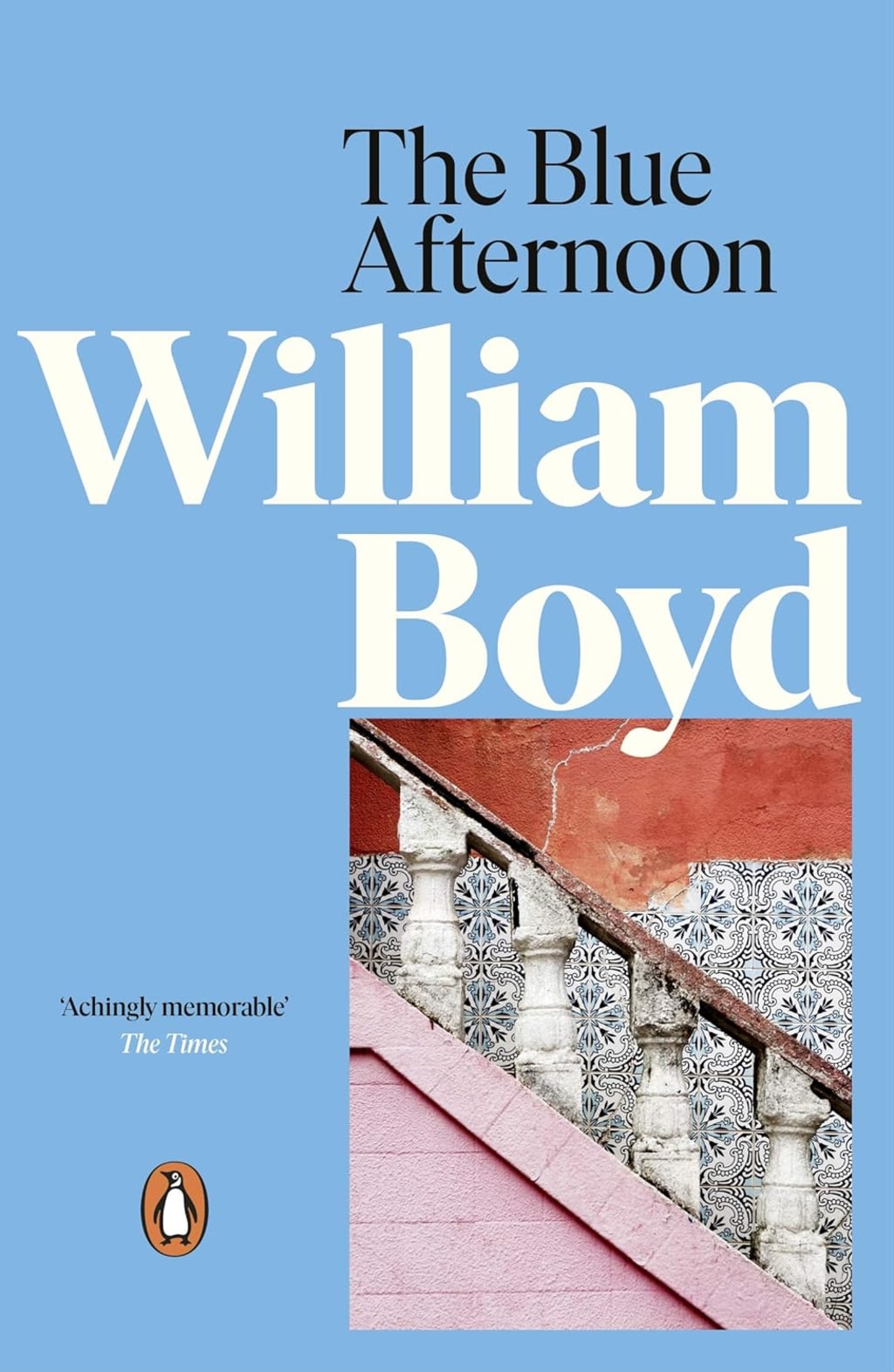
William Boyd's novels are quite amazing and so far, his novel The Romantic, is still my favourite book of this year. I thought that after this reading, I would seek out other books I had not read by him yet. Of course, I was already familiar with Any Human Heart and a couple of others, but there were many I had never even heard of. The book The Blue Afternoon was one of these and yet, most of the people I had seen review it had absolutely loved the novel. Of course, I was hoping that I too, would love the book. In the classic atmospheric, descriptive and slow burn style of William Boyd's writing is always a treat to read on a lazy Saturday when all you have to do is sweep your apartment and then chill out.
The protagonist, Kay Fischer, is an architect living in 1930s Los Angeles. She is struggling with her personal life, especially following the end of her marriage. Kay is fiercely independent and focused on her work, but her life takes an unexpected turn when an elderly man named Salvador Carriscant approaches her, claiming to be her long-lost father. This stranger upends her world and initiates a journey into his mysterious past. The opening of the book happens fairly quickly for a Boyd novel and we are quickly pushed into this new and twisting world of Kay's past of which, she has no memory because she had always thought her father to be dead.

Salvador Carriscant tells Kay an extraordinary story about his life as a surgeon in the Philippines in the early 1900s during the American colonial era. At the time, he was an exceptionally skilled doctor and renowned for his innovative surgical techniques. Carriscant claims that the true story of his life has been hidden from Kay for years, and he wants her to listen as he unravels his complex history. Complex is hardly a word I would use to describe it. There are so many twists and turns around his stories that even the reader is pretty unsure about the story he is telling. There's murder, there's lost plane prototypes, there is an affair with a married woman and there's also missing people involved. We can see why he would have hidden from Kay all of her life, but we also see some reason to not fully believe it all at first.
The novel alternates between two primary settings: 1930s Los Angeles and turn-of-the-century Manila. Manila, under American colonial rule, is depicted as a place of political tension, cultural clashes, and medical advancements. This historical backdrop enriches the narrative and reflects the wider context of imperialism, modernization, and the upheavals of the time. The blend of these two eras allows the reader to contrast Carriscant's past with Kay's present, creating a complex narrative structure. It's a great way to become heavily invested with the story because of the fact we keep getting to draw similarities between Kay and her probable real father. Once you start reading, you can see that there is a fierce independence in both of them and a want to be revolutionary.

In the present-day storyline (the 1930s), Kay struggles with the revelations about her parentage. As she listens to Carriscant’s confessions, she is forced to confront the possibility that the man she thought was her father may not be. The process of uncovering her real origins causes Kay to reexamine her identity, family history, and her current life choices. Her relationship with Carriscant evolves as she tries to verify the truth of his extraordinary claims. This is something the reader struggles with as well. William Boyd purposefully lets the reader make up their own mind about whether Kay's 'father' is telling the truth or not. There's a lot to unpack and the reader will go back and forth in their own head to see whether it is true or not.
In conclusion, Boyd has created yet another great novel where the reader is invited to make choices alongside the main character, looking into the depths of their lives in a new and exciting way each time the page turns. The writing is beautiful, descriptive and has philosophical depth in the simplistic way of exploring identities at turbulent historical times. I thoroughly enjoyed this book and I think you will too.
About the Creator
Annie Kapur
I am:
🙋🏽♀️ Annie
📚 Avid Reader
📝 Reviewer and Commentator
🎓 Post-Grad Millennial (M.A)
***
I have:
📖 280K+ reads on Vocal
🫶🏼 Love for reading & research
🦋/X @AnnieWithBooks
***
🏡 UK
Keep reading
More stories from Annie Kapur and writers in Geeks and other communities.
Book Review: "Rub Out the Words" by William S Burroughs, ed. by Bill Morgan
William S Burroughs is back and it is a love-hate relationship. Sometimes, he can write some stuff that is actually readable and other times, he can write things that make me want to throw the book against the wall. In a book I read previously by him (and on a train by the way) called Queer I remember having mixed feelings, more negative than positive, and then swearing off the author as I'd given him too many chances but still here we are. Something keeps pulling me back to reading Burroughs and I think it might be for the fact (and only the fact), I want to know exactly what was going through his head when he shot his wife dead in a 'game of William Tell'. I guess you could call it morbid curiosity to some extent. However, this is a book of letters which lets us into his conscience - though it does start nearly a decade after his wife's death, it is still somewhat interesting.
By Annie Kapurabout a year ago in Geeks
Silver Screen Magic with Mae West
American actress and singer Mae West became a popular film actress during the Great Depression. She started entertaining in vaudeville, then performed on Broadway, and finally went to Hollywood. She signed up with Paramount Pictures and made her debut in the 1932 film “Night After Night.” She also starred in musicals, comedies, and crime dramas. The American Film Institute named her one of the best classic Hollywood actresses.
By Rasma Raisters10 days ago in Geeks
Jeff Bezos’ ex‑wife MacKenzie Scott who sold half of her Amazon stake to donate may have sent millions to organisations under FBI investigation
Amazon founder Jeff Bezos’ ex‑wife MacKenzie Scott recently cut down her stake at the company by nearly 50% to donate to charities. A report claims that the billionaire philanthropist donated millions of dollars to a funding network that supports organisations now facing FBI and congressional investigations over alleged ties to Hamas. In 2025, Scott reportedly donated $5 million, and in 2021, $10 million, to the Solidaire Network through her charity, Yield Giving. The network describes itself as connecting social movements with donors to build systems based on love and justice.
By Dena Falken Esq5 days ago in Geeks
The Path to Salvation
The late autumn evening air filled the monk's lungs, but it wasn't the season that chilled his bones. The heavy-handed presence of evil he had sensed upon entering the woods surrounding this mountain village had not bothered to conceal itself from him.
By Made in DNA2 days ago in Fiction


Comments
There are no comments for this story
Be the first to respond and start the conversation.