
Book Review: "Southern Mail/Night Flight" by Antoine de Saint-Exupéry
5/5 - another masterpiece by the writer of "The Little Prince"...

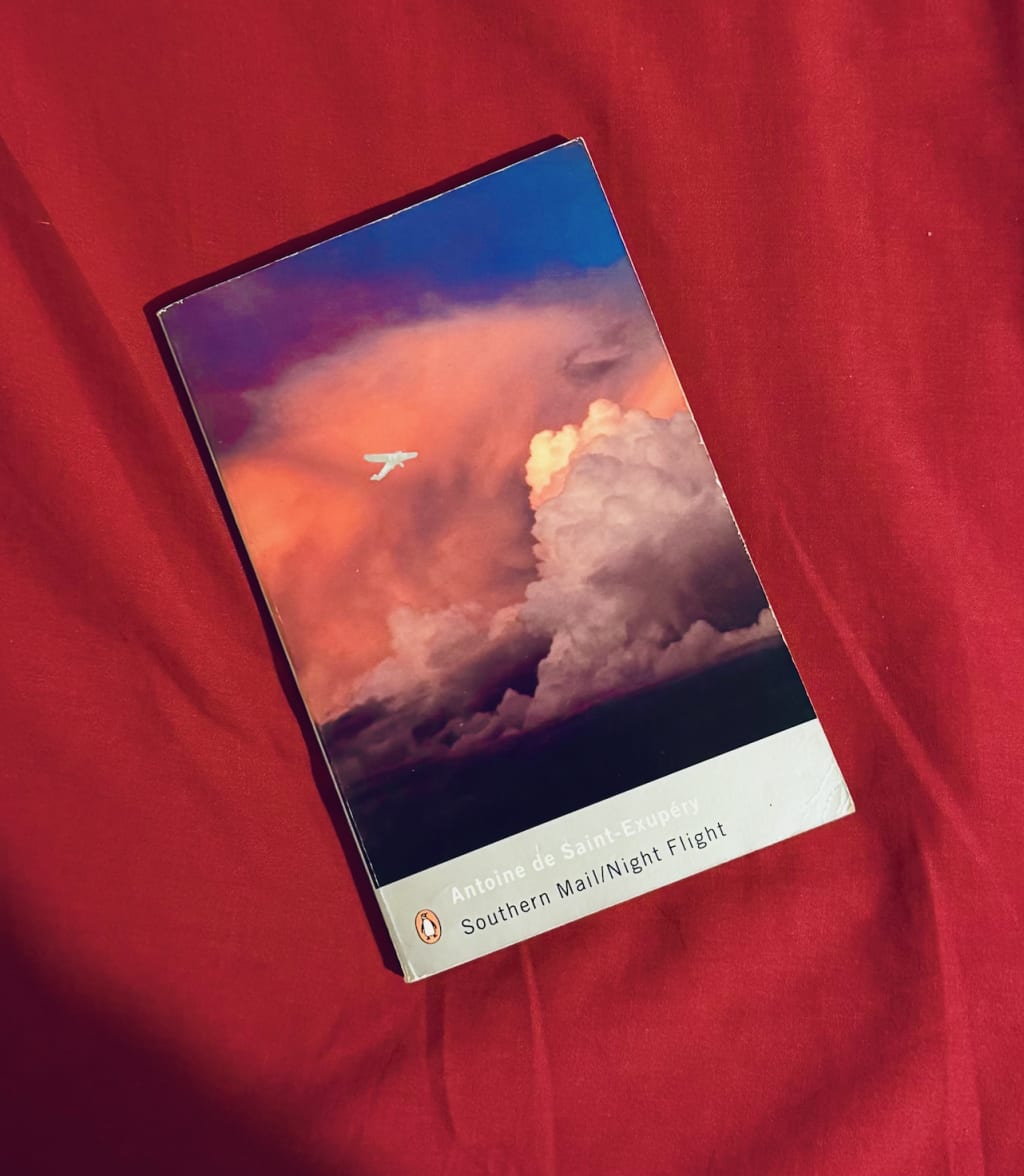
You've probably read my review of Flight to Arras by Saint-Exupéry and if you haven't then I suggest you check it out. I'm making it my business to read his other books and not just The Little Prince, no matter how legendary The Little Prince may be. There's something incredibly moving about his words, the way he writes is constantly embued with atmosphere and philosophy. When I read Flight to Arras there was that extract about the clocks which I have to say, once I finished the book, I went back and reread. His books are all so well written, so why limit yourself to just one? Let's take a look at his book Southern Mail/Night Flight which was just as fantastic...
If you would like to explore the past, The Little Prince featured on Week 9 of Why It's a Masterpiece - my series exploring why certain books are considered masterpieces...
Book Review: "Southern Mail/Night Flight" by Antoine de Saint-Exupéry
“From up there the earth had looked bare and dead; but as the plane loses altitude, it robes itself in colours. The woods spread out their quilts, the hills and valleys rise and fall in waves, like someone breathing. A mountain over which he flies swells like some recumbent giant’s breast, almost grazing his wing-tip.”
- Southern Mail by Antoine de Saint-Exupéry
Two books in one which both embody the 1920s flight culture experienced by the author himself, this text covers two stories - one fo which is entitled Southern Mail and features a dangerous and isolating route over the Sahara Desert. The character, Jacques Bernis, knows his work is repetitive but is also aware of its dangers. There's a ton of introspective stuff and even though there isn't a lot of action, we definitely become more in-tune with the author's own philosophies about flight and adventure.
On the ground, Bernis’s relationship with Geneviève contrasts sharply with his clarity in the air. Her emotional needs and domestic entanglements seem trivial to him compared with the stark purity of flight. He definitely cares a little more (even just a slither more) for the flight than he does for the woman. Yet Saint-Exupéry does not condemn this love, he presents it as another form of human striving, one that Bernis tragically cannot reconcile with his vocation.
The text ends in the nightmare that you think it does. The philosophy of flight is left hanging in the air as the reader ponders whether this is what Bernis wanted after all. It is written with such beauty that even the tragedy is something picturesque.
“If only he could make it through to dawn! Fabien thought of the dawn as of a golden strand on to which they would have been cast up after this rough night. Beneath the threatened craft the plains would spread their crib. The tranquil earth would heave into view, carrying its sleeping farms and the flocks upon its hills. Night dispelled, the storm-tossed derelicts would no longer threaten rack and ruin. If he could have done so, how he would have swum towards the daylight.”
- Night Flight by Antoine de Saint-Exupéry
On the same sort of topic, where Southern Mail focused on one man’s interior solitude, Night Flight portrays an entire system: a network of pilots, engineers, and managers, united by discipline and courage. The novel moves from introspection to allegory which serves as a reflection on leadership, sacrifice, and the price of progress. The prose remains poetic, but the scope is grander, the tone darker and more philosophical. I didn't think I would read something so dark and introspective by this author who always seemed so dreamy. But then I think back to the clocks in Flight to Arras and thus I know, he can definitely write something philosophically more existential than we read in The Little Prince.
At the centre of Night Flight is Rivière, the stern, idealistic director of the Patagonia airmail line. Under his command, pilots fly across the Andes and the Pampas at night which is a new, perilous innovation meant to make air mail faster and more reliable. The emotion lies in the story of Fabien, a young pilot flying from Patagonia to Buenos Aires in a thunderstorm. As he loses contact with the ground and his instruments fail, Fabien becomes a kind of martyr of aviation. His death (which is alone, enveloped by storm and darkness), becomes a spiritual experience where the author comments on whether the price was worth the cost.
Back at headquarters, Rivière receives news of Fabien’s disappearance with outward calm but inner turmoil. He must choose between compassion for the dead pilot’s wife and his duty to maintain discipline and courage among the surviving men. Through this character and this particular part of the plot, Saint-Exupéry explores the paradox of greatness: that moral progress often requires personal suffering.
As dawn breaks and the mail planes continue their routes, Rivière feels both grief and serenity. Fabien’s death, like Bernis’s before him, affirms rather than negates the purpose of flight: it is through the acceptance of risk and loss that humanity transcends fear. Each pilot must accept that it might happen, each pilot must look forward to the fact instead of turning around and walking away. And that progress for humanity often lies in the sacrifices we make now rather than the risks we avoid.
This book was dark, there's no doubt about that. But I think that all of Saint-Exupéry's books definitely foreshadow what happens to the man himself. I often read these books and wonder what he could have been thinking as his plane went down over the ocean.
About the Creator
Annie Kapur
I am:
🙋🏽♀️ Annie
📚 Avid Reader
📝 Reviewer and Commentator
🎓 Post-Grad Millennial (M.A)
***
I have:
📖 280K+ reads on Vocal
🫶🏼 Love for reading & research
🦋/X @AnnieWithBooks
***
🏡 UK
Keep reading
More stories from Annie Kapur and writers in Geeks and other communities.
Book Review: "My Oedipus Complex and Other Stories" by Frank O'Connor
I'm going to admit it: I've never read any Frank O'Connor before and I'm not really sure what to think of him. I was kind of avoiding it because of the title - not sure I wanted to read more of this stuff after having recently encountered The Holy Sinner by Thomas Mann. Anyways, at least this book was remotely funny which is more than could be said for the Thomas Mann text I read. I wasn't really looking for a short story anthology and to be honest, I'm biding my time until Tim Curry's autobiography comes out. I'm writing this on the 9th of October 2025 and so, there's not long to wait now. Oh fine, back to Frank O'Connor.
By Annie Kapur3 months ago in Geeks
Silver Screen Magic with Mae West
American actress and singer Mae West became a popular film actress during the Great Depression. She started entertaining in vaudeville, then performed on Broadway, and finally went to Hollywood. She signed up with Paramount Pictures and made her debut in the 1932 film “Night After Night.” She also starred in musicals, comedies, and crime dramas. The American Film Institute named her one of the best classic Hollywood actresses.
By Rasma Raisters4 days ago in Geeks


Comments (2)
This would be a fine read. Will check these out...The Little Prince, of course, is a classic, Annie.
An author I don't know, but this looks very interesting, both books, I will check further