
Book Review: "Small Rain" by Garth Greenwell
5/5 - gorgeously written in a modernist stream-of-consciousness style...


It's currently May 2025 at the time of writing and I am glad to say that not a lot of interesting things are going on right now. I'm not really sleeping well but what's new? I spent the last day or so mulling over this book because it is dripping with raw emotion. Have you ever just read a book where you've finished it and thought 'woah, that was a bit of a trip', have you!? Well, that's exactly what I thought when I finished this book I'm going to review today: Small Rain by Garth Greenwell is a beautifully written book that I find not enough people talking about...
We've got a narrator who is probably having the worst pain of their life. A poet and a teacher, the narrator's pain seems to defy language itself. I happen to love it when writers almost run out of language to describe something and then get really abstract about it. The writer does it through describing the violent feeling associated with the pain of being 'turned inside out' and failing to do it over and over again. Even though he doesn't particularly like seeking medical attention, he's ultimately diagnosed with and infrarenal aortic dissection. This is where we get a character who has their life turned upside down by medical uncertainty. It sort of reminded me of the book When Breath Becomes Air about that doctor who got a life-threatening illness.
Ah yes, we have yet another book about the horrors of the medical world. As I read in A Very Easy Death by Simone de Beauvoir in which this isolation was happening to her mother, the narrator here experiences depersonalisation of themselves in the hospital environment. It's the height of COVID-19 and they are isolated, ruminating constantly, and noting the systems lack of compassion towards the patients. I have to say that is what often stops me from seeking medical attention - often egotistical and unsympathetic doctors who literally do not care whether you are alive or dead. To them, you are just a statistic. But more than anything, this book reveals how broken the healthcare system really is - and that's not sad, that's scary.

The narrator reflects on his relationship with L. and how it has been interrupted by hospital restrictions during the pandemic. This is happening whilst he remembers and contemplates poems he remembers and how well their can articulate his experience. Obviously, one thing that the writer is trying to tell us here is something I've been telling people for a very long time: when the chips are down who did you turn to for compassion and solace? It is basically asking these people who think studying the arts and humanities is pointless about who was entertaining them during the pandemic - I can tell you it wasn't the mathematicians.
Long sentences, stream-of-consciousness paragraphs and a lack of straightforward plot are three things that make me feel that there is definitely something more Virginia Woolf about this novel than we are investigating. This modernist style is often interspersed with introspection, bending at the whims of memory ad nauseum and completing the cycle of imitating the actual human experience. We remember random things at times of great distress, some that comfort us and some that don't.
The healthcare system across the western world is something to behold. I think everywhere we can admit that it isn't exactly great and yet, it is probably the best it's going to be for a while. The emotional toll of being treated as a case study rather than a person is one that is universal and divisive. There's something to be argued for compassion in healthcare and I don't think we will have that if healthcare as a system is increasingly as overwhelmed as it is - not forgetting how overwhelmed it was during the pandemic. It is something being attacked from both sides and the narrator of this book definitely shows us how that disadvantages us all from the patient, to the nurse, to the doctor.
All in all, I thought that this was a fantastic book filled with back and forths about memory and art, a brilliant and intense look at a man trapped in the healthcare system's worst nightmare: the pandemic. It was a wonderful read.
About the Creator
Annie Kapur
I am:
🙋🏽♀️ Annie
📚 Avid Reader
📝 Reviewer and Commentator
🎓 Post-Grad Millennial (M.A)
***
I have:
📖 280K+ reads on Vocal
🫶🏼 Love for reading & research
🦋/X @AnnieWithBooks
***
🏡 UK
Keep reading
More stories from Annie Kapur and writers in Geeks and other communities.
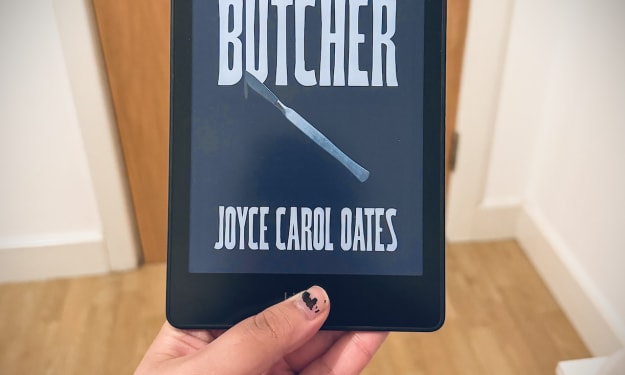
Book Review: "Butcher" by Joyce Carol Oates
It’s getting later into April 2025 and I’m currently sitting in a coffee shop listening to a new episode of a great podcast. I’ve just drank an Americano and now, you’re going to be subjected to another review. Joyce Carol Oates is a great writer. Her novel “The Book of American Martyrs” is probably one of the most moving books I’ve ever read. Another book by her I loved was called “The Sacrifice” which is relative to that last one.
By Annie Kapur8 months ago in Geeks
Silver Screen Magic with Mae West
American actress and singer Mae West became a popular film actress during the Great Depression. She started entertaining in vaudeville, then performed on Broadway, and finally went to Hollywood. She signed up with Paramount Pictures and made her debut in the 1932 film “Night After Night.” She also starred in musicals, comedies, and crime dramas. The American Film Institute named her one of the best classic Hollywood actresses.
By Rasma Raisters9 days ago in Geeks
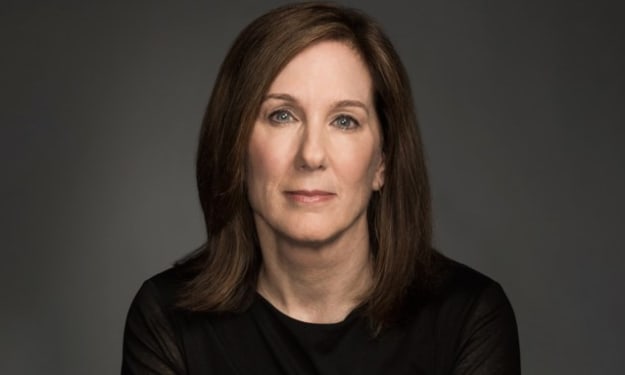
Kathleen Kennedy
Few figures in modern Hollywood have shaped blockbuster storytelling as profoundly as Kathleen Kennedy. With a career spanning over four decades, Kennedy has been instrumental in producing some of the most influential films of all time. From her early collaborations with Steven Spielberg and George Lucas to her leadership role at Lucasfilm, she has become a central figure in contemporary cinema. Today, discussions around Star Wars, creative leadership, and franchise evolution are rarely complete without mentioning Star Wars Kathleen Kennedy. From Storyteller to Studio Leader Kathleen Kennedy’s journey began long before she became president of Lucasfilm. As a producer, she worked on classics such as E.T. the Extra-Terrestrial, Jurassic Park, and Indiana Jones. These projects established her reputation as someone who understood both creative storytelling and large-scale production. This balance would later define her tenure at Lucasfilm. When George Lucas selected Kennedy as his successor in 2012, it marked a turning point. Her appointment wasn’t just symbolic—it signaled continuity and transformation. As Kathleen Kennedy Lucasfilm took shape, she inherited one of the most beloved franchises in history, along with the immense expectations that came with it. Steering Star Wars into a New Era Under Kennedy’s leadership, Star Wars entered a new chapter. The sequel trilogy reignited global interest in the saga, introducing a new generation of fans while reconnecting longtime audiences. Films like The Force Awakens achieved remarkable commercial success, demonstrating Kennedy’s ability to blend nostalgia with contemporary storytelling. However, steering Star Wars was never going to be simple. The franchise carries deep emotional weight for fans, and creative decisions often spark intense debate. Kennedy’s approach emphasized diversity of voices and experimentation, opening the door to new directors, writers, and storytelling styles. This philosophy reshaped how Star Wars stories could be told across film and television. Collaboration with Dave Filoni One of the most significant creative partnerships during Kennedy’s tenure has been with Dave Filoni. Known for his deep understanding of Star Wars lore, Filoni emerged as a key creative force through animated series like The Clone Wars and Rebels. As Dave Filoni Lucasfilm expanded into live-action storytelling, the franchise found a renewed sense of continuity and character-driven narratives. Kennedy’s decision to elevate Filoni was strategic. By pairing her executive vision with Filoni’s lore expertise, Lucasfilm strengthened its creative foundation. Today, Lucasfilm Dave Filoni is often credited with bridging the gap between classic Star Wars themes and modern television storytelling. Their collaboration highlights Kennedy’s leadership style—empowering creatives while maintaining a cohesive vision. Expanding Beyond the Big Screen Another hallmark of Kennedy’s leadership has been expanding Star Wars beyond theatrical releases. Streaming series transformed how audiences engage with the galaxy far, far away. These shows allowed deeper character exploration and long-form storytelling that films couldn’t always provide. Behind the scenes, executives like Lynwen Brennan, Lucasfilm’s Chief Financial Officer, played a crucial role in managing this expansion. While Kennedy focused on creative direction, Brennan helped ensure the studio’s financial sustainability. This balance between creativity and business is often overlooked, yet it’s essential to maintaining a franchise of Star Wars’ scale. Facing Criticism and Cultural Debate No discussion of Kennedy and Star Wars is complete without acknowledging controversy. Creative changes, shifting release schedules, and bold narrative choices have drawn criticism from some fans. Kennedy has often found herself at the center of cultural debates about representation, legacy, and creative ownership. Yet, leadership at this level requires resilience. Kennedy has consistently defended the idea that Star Wars must evolve to remain relevant. Rather than viewing criticism as a failure, she has framed it as part of stewarding a living mythology—one that reflects changing audiences and values. A Legacy Still in Progress What makes Kathleen Kennedy’s story compelling is that it’s still unfolding. Unlike many producers whose legacies are defined in retrospect, Kennedy continues to shape one of the most influential franchises in real time. Her impact isn’t limited to box office numbers; it’s reflected in how Star Wars exists across generations, platforms, and cultures. Her leadership has also paved the way for broader conversations about women in Hollywood power roles. In an industry historically dominated by men, Kennedy’s success challenges outdated norms. She has demonstrated that creative authority and executive leadership can coexist without compromise. Looking Ahead As Lucasfilm looks to the future, the foundation Kennedy built remains central. New films, evolving series, and emerging storytellers all operate within a framework she helped establish. With creative figures like Dave Filoni continuing to grow in influence and executives like Lynwen Brennan supporting the studio’s structure, Lucasfilm is positioned for long-term storytelling. Kathleen Kennedy may not always be a visible presence on screen, but her influence is embedded in every frame of modern Star Wars. Whether praised or criticized, her role as a steward of one of cinema’s greatest legacies is undeniable. In the end, Kathleen Kennedy’s career is a reminder that storytelling isn’t just about heroes and villains—it’s also about the leaders behind the scenes who shape the worlds we escape into. And in that sense, her impact on Star Wars will be felt for years to come.
By Saboor Brohi 6 days ago in Geeks
Rachel Reviews: The Spiral Archive by Pieter Hendrik
It's difficult for me to know where to start with a review of this book as it was, for me, an entirely unique experience and one that I'll probably never have again. I don't want that to be interpreted as unenjoyable but it has left me scratching my head a little and ruminating on its content, its themes and its characters.
By Rachel Deeming4 days ago in BookClub


Comments (1)
Your review really sells the book ...and the almonds too 😀