
Book Review: "Printer's Devil Court" by Susan Hill
5/5 - an linguistic achievement of the ghost story...

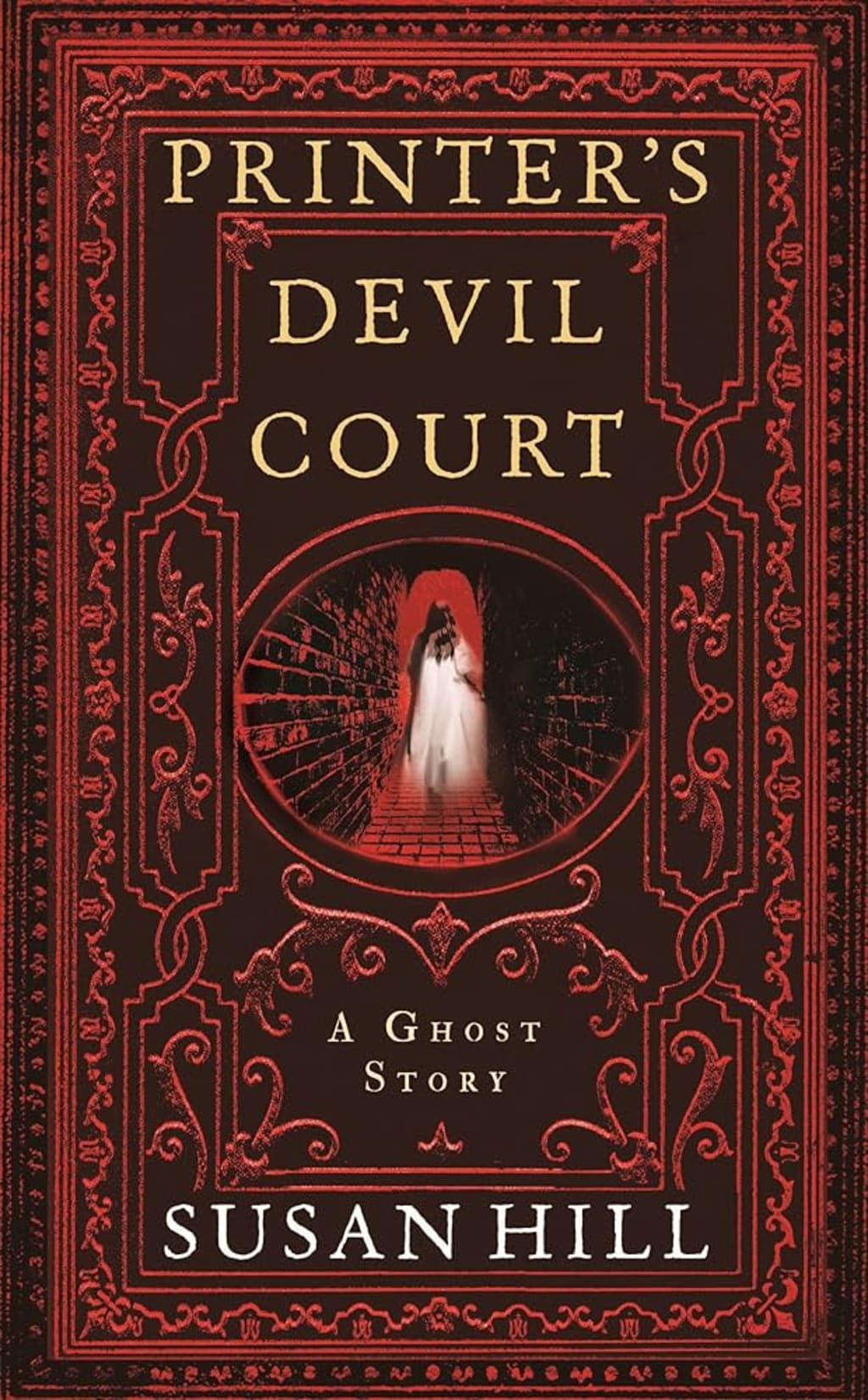
I have read quite a bit by Susan Hill in the past with my favourites being The Woman in Black (obviously) and The Man in the Picture. She is, as we know, a keen writer of ghost and horror stories and Printer's Devil Court is no exception. Born in 1942 in England, she was raised in a convent school and eventually studied English at King's College, London. The Woman in Black is probably her most well-known work which was published in 1983 and then adapted for film, television and a stage play at Covent Garden. In 2012, Susan Hill received a CBE for her services to literature and continues to write. Her writing is often characterised by atmospheres of ominous darkness and characters that are in denial, confused or confounded by the supernatural realities they are faced with. Beyond the ghost story though, Susan Hill has also authored many works for children, many works of nonfiction and much more than just horror in the literary stratosphere.
Four men who work in the medical field are discussing the story of Lazarus from the Bible who was famously raised from the dead. After much studying over the biblical language of whether one is dead or sleeping, the four men begin discussing something far darker, making each other promises about something to do with a new practice that two of the group had already been talking about long before the Bible discussion.

Susan Hill creates a horrifyingly ominous atmosphere through the dark rooms where hushed tones discuss secrets and drink port. The landscape where the hospital transports the dead and yet, it is the living that scares the most. The gothic language that sets the senses on edge as the idea of being buried alive is thrown around through the Biblical discussions. Bodies are pushed and pulled around and a man is dying slowly, but calmly. The death scenes are drawn out and tensed up by one of the men becoming frantic due to the weirdness of the others of whom he is no longer so sure. Susan Hill teaches us that the living are not really the ones to fear the most, and it is not even the dead. But it is what happens to the living when the dead wake up.
The strangeness of the language and the terseness of the dialogue really captures the tense and defiant atmosphere of the text and Susan Hill's greatest achievement is probably her characterisation within all of this. Characters can only exist as a result of their landscapes, for example the medical practitioners are only where they are in the dark and ominous rooms because they are medical practitioners who also read the Bible. The weirdness of describing rooms as having feelings rather than the rooms setting the mood for the feelings to creep in has always been a great feature of Susan Hill's writing as well. There is an overarching mood in the text and it is not pathetic fallacy - instead the room simply has a feeling. The rooms feel.
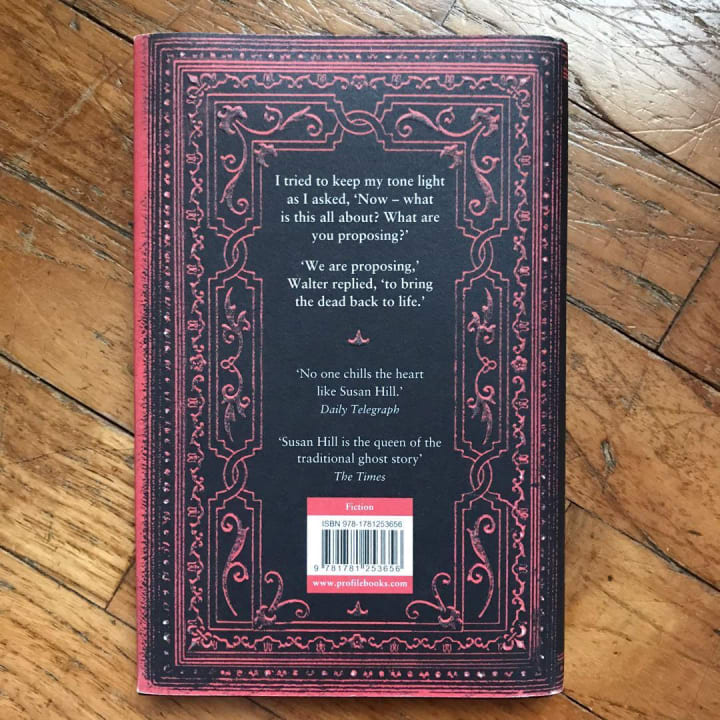
As I have said, there is something about the history of streets, feelings of rooms and personalities of places that I love about Susan Hill's novels. Just take a look at this quotation about Fleet Street:
Fleet Street no longer housed the hot-metal presses and many of the old alleys and courts had long gone, most of them bombed to smithereens by the Blitz.
It is never what is on the street, but what is not there anymore. The street becomes therefore, a place of negativity - and this is all suggestion. Susan Hill gives us negatives of everything so that when the true horror comes out, we are already waiting for it because we know, as the negatives suggest, they are not supposed to be there at all. They are there regardless of everything about the history of the place that is no longer in existence. They have taken over. And then they quite literally take over...
All in all, it may not be the greatest horror of all time but the language of Susan Hill's books are excellent studies in how to write gothic in the 20th and 21st centuries and how to incorporate amazing literary techniques into an atmospheric ghost story. It is so simplistic, but it really does lift my spirits when I'm down.
About the Creator
Annie Kapur
I am:
🙋🏽♀️ Annie
📚 Avid Reader
📝 Reviewer and Commentator
🎓 Post-Grad Millennial (M.A)
***
I have:
📖 280K+ reads on Vocal
🫶🏼 Love for reading & research
🦋/X @AnnieWithBooks
***
🏡 UK
Keep reading
More stories from Annie Kapur and writers in Geeks and other communities.
Book Review: "Study for Obedience" by Sarah Bernstein
This book was nominated for the Booker Prize in 2023 and so, I am astonished at the lack of people who have actually read it. It's a poetic book with prose written in lengthy paragraphs relating to all sorts of things from paintings and artists to the notion of obedience in following orders. Bernstein creates great landscapes and pictures through her words and manages to interpret and gather the landscape as a means of freedom and yet, it is still an isolating atmosphere. The pervading and impending doom underneath the storyline gets slowly louder and quieter as we hit different parts of the story, from the present to the past - the unnamed (and rather unreliable) narrator takes us back and forth. The text is constantly emotionally jarring the reader but maintains the pace of a jittering train travelling constantly against its will, begging to be repaired before it bursts open.
By Annie Kapur2 years ago in Geeks
Silver Screen Magic with Mae West
American actress and singer Mae West became a popular film actress during the Great Depression. She started entertaining in vaudeville, then performed on Broadway, and finally went to Hollywood. She signed up with Paramount Pictures and made her debut in the 1932 film “Night After Night.” She also starred in musicals, comedies, and crime dramas. The American Film Institute named her one of the best classic Hollywood actresses.
By Rasma Raisters11 days ago in Geeks
Kangana Ranaut Hints At Hrithik Roshan's ‘Controversial Legal Notice’ From 2016: Life Became A Living Hell
Summary of this article Kangana Ranaut has joined the ‘2026 Is The New 2016’ trend and recalled the 'miserable' phase of her life. Without naming Hrithik Roshan directly, Ranaut referred to receiving a controversial legal notice from a "colleague". She also called 2016 the best phase of her career.
By Dena Falken Esq6 days ago in Geeks


Comments
There are no comments for this story
Be the first to respond and start the conversation.