
Book Review: "Study for Obedience" by Sarah Bernstein
5/5 - a complex investigation into language...

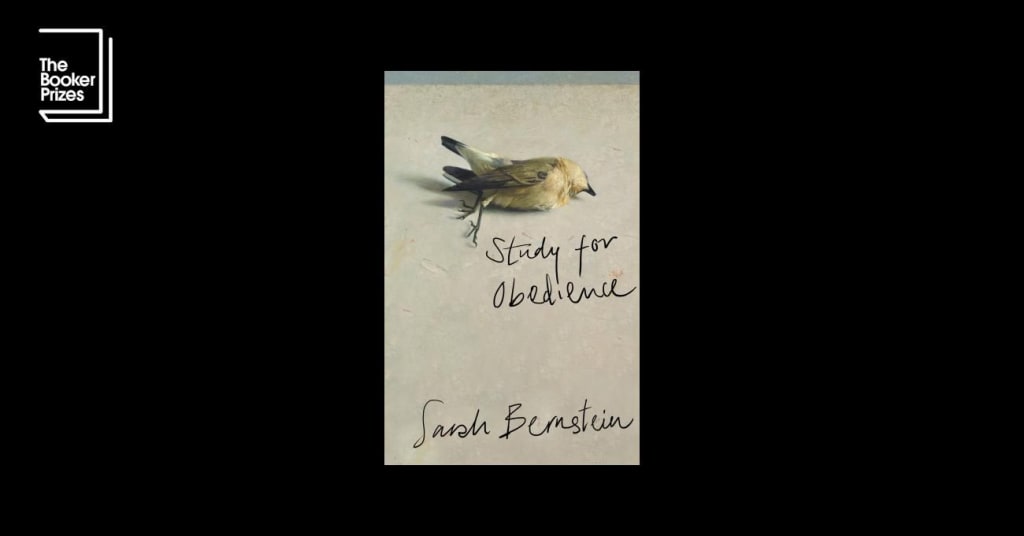
This book was nominated for the Booker Prize in 2023 and so, I am astonished at the lack of people who have actually read it. It's a poetic book with prose written in lengthy paragraphs relating to all sorts of things from paintings and artists to the notion of obedience in following orders. Bernstein creates great landscapes and pictures through her words and manages to interpret and gather the landscape as a means of freedom and yet, it is still an isolating atmosphere. The pervading and impending doom underneath the storyline gets slowly louder and quieter as we hit different parts of the story, from the present to the past - the unnamed (and rather unreliable) narrator takes us back and forth. The text is constantly emotionally jarring the reader but maintains the pace of a jittering train travelling constantly against its will, begging to be repaired before it bursts open.
The unnamed narrator must travel north to a place where she does not really understand life or language to look after her eldest brother who has no family and no friends as his wife and children left him. She is to be his housekeeper and the jobs she has to do makes you wonder how his wife leaving him only happened right now. Her brother has been ostracised by the entire community though it is not exactly clear as to why - there are hints of it here and there, but I will not say out of fear of giving the game away. Long story short, for the beginning, our narrator feels out of place - only learning her place more when she analyses nature. Birds, rabbits, frogs etc. come about in this strange and bewildering story and are painted with metaphorical devices for new and impressive meanings.
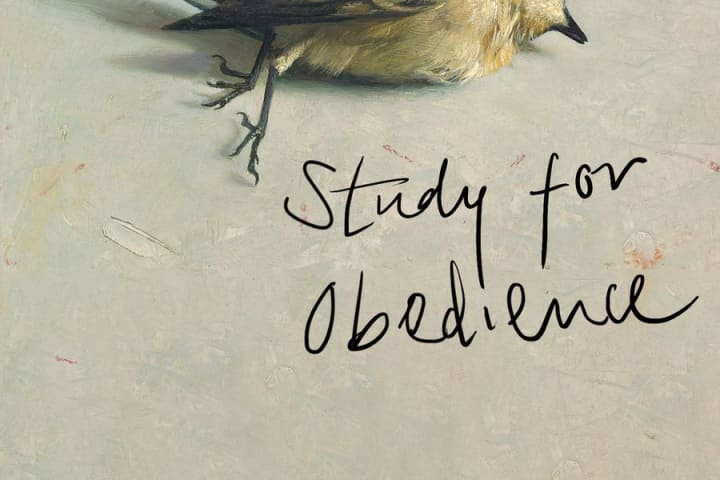
The more she tries to integrate into the town the more things start to go awry. It becomes weirder and weirder, the pervading sense of dread increasing and the impending doom becoming forever louder. The language barrier is a great metaphor for the entire 'study' of obedience. The study is about humans and their uses of language, how different uses of language can create friendships and others can create these boundaries that make things more difficult for everyone. The folkish atmosphere adds to that dread of the 'other' as our unnamed narrator actually comes from the city - the countryside she travels to is just the first of many odd and entangled barriers that she must try to make sense of.
The depictions of beauty and the grotesque are brilliant in their dichotomy. Sarah Bernstein's use of language to help us to understand this binary opposition as occuring naturally is a great way of reinforcing this sense of pervading dread that is cemented from the very beginning of the book. From the 'other' to the 'normal' and back to the 'other' again, this book has a grand stage for our unnamed narrator to start going a bit 'stir crazy' in wide outdoors - a masterpiece of otherness.
Here is a quotation that I love:
“I had never been able to live in my life.”
This quotation hit me quite hard because from the very beginning of the book, the unnamed narrator seemed so liberated and yet, we still get the sense that she is drawn back by listening to the rules. She does things she is supposed to do purely because she is supposed to do them. She has no freedom of choice in what she might do and she has no choice about where she might go. She is just constantly drawn back by others who request her assistance for the dumbest reasons.
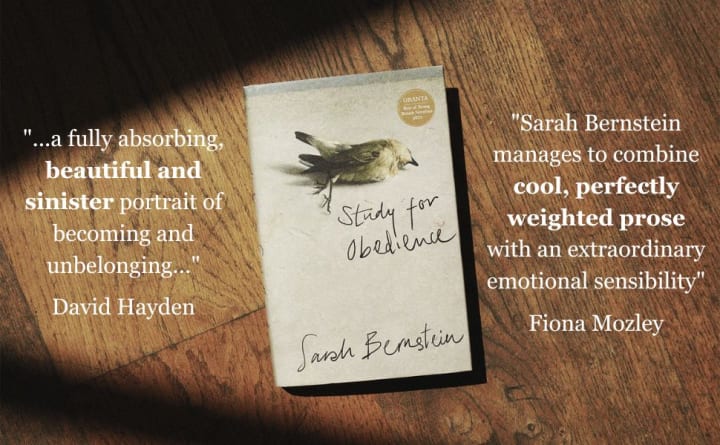
In conclusion, this is a story about the minimisation of a woman's own needs in order to be obedient to her eldest brother who is orderly but useless. I believe that more people need to read this book but I do warn you for this book cannot be read once and understood. It is a complex painting of language into a landscape of differing, doom and sadness as the othering becomes larger, so does the complexity of the language.
To end, here is one more quotation:
“I tended to be deferential, basically meek, tugging at the proverbial forelock until all my hair fell out. This attitude presented its own set of problems – namely, that meekness brings out the sadist in people, the atavistic desire to bite at the heels of the runt of the litter.”
About the Creator
Annie Kapur
I am:
🙋🏽♀️ Annie
📚 Avid Reader
📝 Reviewer and Commentator
🎓 Post-Grad Millennial (M.A)
***
I have:
📖 280K+ reads on Vocal
🫶🏼 Love for reading & research
🦋/X @AnnieWithBooks
***
🏡 UK
Keep reading
More stories from Annie Kapur and writers in Geeks and other communities.
Book Review: "A Gate at the Stairs" by Lorrie Moore
From the start of this book I was cautious. This is not my kind of writing at all because of the way it is written. The character often comes off as abrupt and more than often, pretentious. Lorrie Moore is not particularly my favourite writer and probably is nowhere near my top 50. Her writing can often feel emotionless and bland with no colour or air to it. However, the storyline to this book is its saving grace as it winds around the college life of probably one of the most insufferable female protagonists I have read in a while. Why? There is always some 'great drama' happening in her life which seems to me a completely and utterly inaccurate way to present the lives of college students who are simply trying their best. Be that as it may, many of the characters of this book are completely insufferable and so, I cannot take too many points away as that might be the whole point of the book. As far as I know, this book is just a collection of bad people.
By Annie Kapur2 years ago in Geeks
Silver Screen Magic with Mae West
American actress and singer Mae West became a popular film actress during the Great Depression. She started entertaining in vaudeville, then performed on Broadway, and finally went to Hollywood. She signed up with Paramount Pictures and made her debut in the 1932 film “Night After Night.” She also starred in musicals, comedies, and crime dramas. The American Film Institute named her one of the best classic Hollywood actresses.
By Rasma Raisters11 days ago in Geeks
What is Baddie Hub?
What It Is and Where It Came From The term “baddie” used to describe a person with bold style and confidence has moved from social media slang into a broader online space focused on fashion and lifestyle inspiration. Originally popularized by creators on Instagram and TikTok, this trend soon grew into online communities and platforms dedicated to sharing looks, beauty tips, and ways to stand out confidently in both appearance and attitude.
By Dena Falken Esq6 days ago in Geeks
Rachel Reviews: The Spiral Archive by Pieter Hendrik
It's difficult for me to know where to start with a review of this book as it was, for me, an entirely unique experience and one that I'll probably never have again. I don't want that to be interpreted as unenjoyable but it has left me scratching my head a little and ruminating on its content, its themes and its characters.
By Rachel Deeming7 days ago in BookClub


Comments
There are no comments for this story
Be the first to respond and start the conversation.