
Book Review: "Poverty Safari" by Darren McGarvey
5/5 - an raw and eye-opening book of the true impact of poverty...

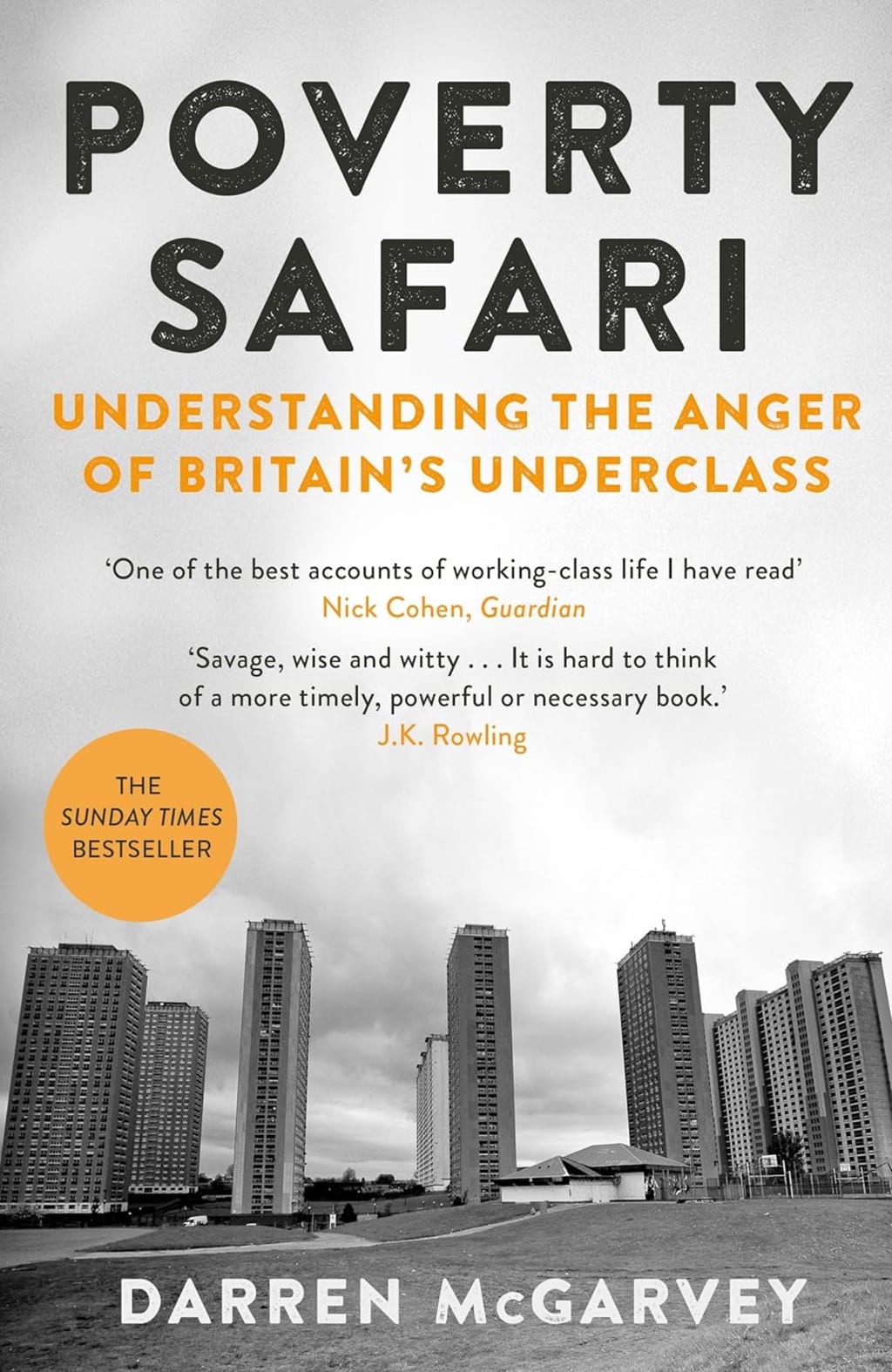
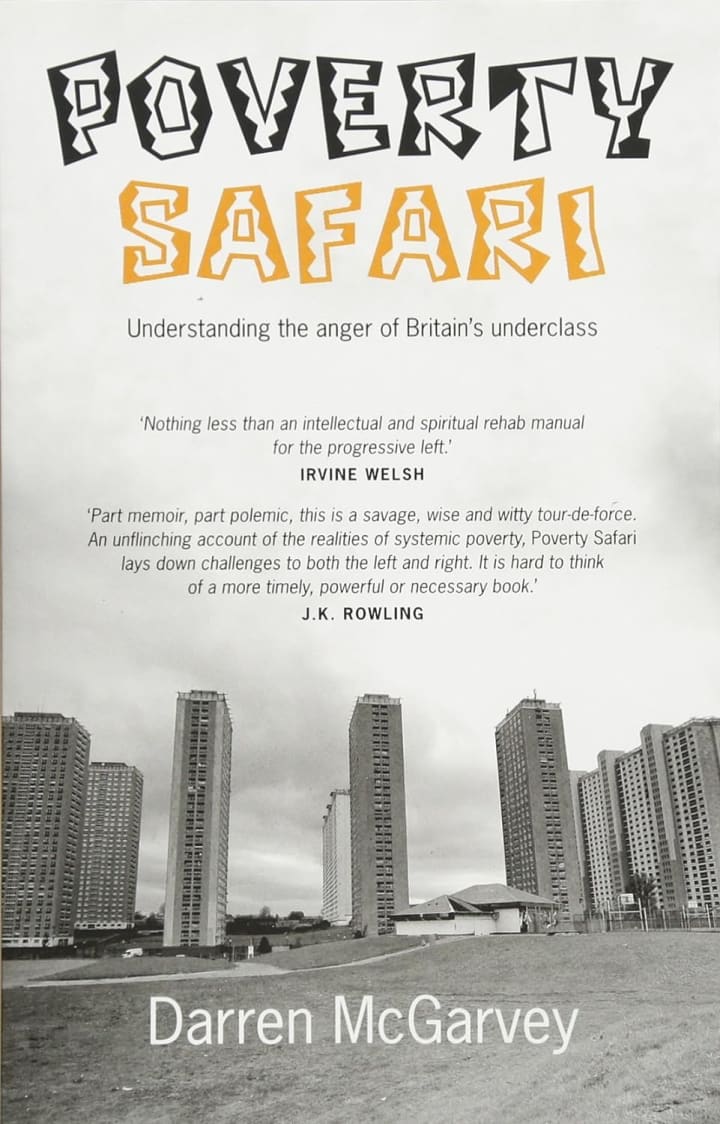
When I read this man's newer book entitled The Social Distance Between Us, I was absolutely captivated with not only his writing style but the arguments he was making about why we should be paying far more attention than we have been. From social inequality and mental health to the Grenfell Tower Fire and many other pieces of poverty in Britain, Darren McGarvey discusses addiction, crime and the broken education system in all different ways to show us how social inequality is bad for everyone - but worse for those at the bottom of the social ladder. In Poverty Safari we get more of that in a different light. His arguments and his words are eye-opening, painting a picture of a whole world out there that is simply swept under the rug by our politicians and leaders who claim to be working for the interest of everyone and how it impacts the people directly involved.
He starts the book by stating that he is not much of a reader and once could not imagine people like himself becoming writers. I think that this is an interesting topic as a teacher as, when working with children from similar households we can definitely see the same thing being said and the challenge of getting these children reading and writing is not the only issue. The issue is making them feel as though there is some success there. Darren McGarvey admits that there was a constant feeling of failure that underlined his inability to read books. This is something I have also heard before and every single time, it is absolutely heartbreaking. But, as a writer I think that he is important and we would be worse off without him - especially regarding his empathetic nature of looking at people who have been marginalised in every aspect of society.
He talks about his mother and his own experiences of feeling abandonment but before this, he discusses how he feels for the people who died in the Grenfell Fire. These people were not only marginalised but they were practically forgotten about. Darren McGarvey states that this abandonment by practically everyone makes everything from socialising and learning very difficult and almost impossible. This starts a vicious cycle of isolation and abandonment fears that keep going and going with no end.
He also talks about his school and how it was built and how it became part of a dialect of dereliction after a time almost as though it was a joke. But it comes from a very real sense that is often discussed in books about social inequality: aesthetic depression. This has much more of an impact than many people think it does. When Darren McGarvey ventures out into the city as a teenager, he acknowledges the multicultural setting of the city with all its vibrancy, aspects of safety and its technicolour atmosphere. Though he does not say aesthetic depression, it is something we can see if we simply go into these towns which the government has simply forgotten about. They fall into disrepair and the transport links are no good but more importantly, the children and teenagers live in fear of violence due to their collective removal from having any agency.
He talks about the classification of British people by the media, especially by the Sunday Times Newspaper. This is where the newspaper may know its audience, but causes other newspapers who have a more working class audience to lessen their usage of long words or current affairs issues concerning government and politics. This has a ripple effect on to our entire society in which poorer people receive less respect by the justice system for being perceived as not being as intelligent as those in the middle class. Honestly, it is something that has always baffled me: 'you're poor so you must be dumb too...' how those two things are even remotely connected is a weird form of cognitive dissonance. This was reflected in the COVID pandemic in which 'low-skilled' workers were labelled 'key workers' instead and we got to see how much the country really needs these people showing up and using their brains every single day while the middle class sits at home doing nothing but badly baking banana bread.
One of the things I really enjoyed was where he discusses the population boom of the post-World War One era and how it played into the hand of social inequality. These included the rise of soical housing and overcrowded tenaments and when there was a solution given, it was interrupted by the second World War. High rise social housing then became the next big thing for architecture and getting people homes. However, the positives that they intended it to have did not happen due to structural issues and criminal behaviour being ignored. As unemployment rose, there was an essential failure of these housing systems that seemed to stop whoever wanted to raise their standard of living from doing so because of all the issues mentioned in the text.
The heartbreaking story of his own childhood in which his father is attacked by drug dealers looking for the mother's payment, moving social housing due to payment issues and his mother basically abandoning him adds to the atmosphere that surrounds the social inequality that the author is showing us. It is happening right before our eyes and nobody is doing anything about it. The worst thing is that at the centre of all this is the children who are growing up with this as the backdrop to their lives.
Downplaying stress is something that I found really interesting in the book as Darren McGarvey makes a great point: society should not downplay the stresses of these people. It is these stresses that lead directly to these bad choices in life from smoking and drinking, to drugs and gambling, comfort eating and binge-watching. Not all of them are life-threatening, but in the long term they are all bad for you in different ways.
These habits are horribly destructive in the long run and are caused by the amount of stress everyday life gives. For those who are poorer, stresses can be higher in the everyday and therefore, the chances of these destructive behaviours being engaged in are much higher. The hyper-vigilance of everyday life becomes an illness with horrifying consequences. Darren McGarvey backs this up with his own terrifying experiences with addictions of varying degrees but all deadly. Thankfully, he lives without such addictions now - but the thought that anyone lives with this constantly swimming in their brains every single day would be maddening for me.
Amongst all of this, there are talks about how proximity is failing people in poverty as those trying to solve the problem are too far removed from it to understand what is truly going on. There's an argument of a lack of empathy for these people as well, in which those dealing with the problem seem to want to put a sticking plaster over it and not spend too much money on something they do not see as viable to spend money on. In reality, the social inequality aspects of the economy will only begin to recover if we address the needs of the people living in these deprived spaces. It is horrible how these people are treated.
With each chapter named after a novel (each with a running theme), this book teaches its reading public about social inequality through the eyes of empathy and reason. It does not ask the reader to understand as much as it tells them to pay attention and then you can get on the road to understanding. A whole bunch of people who have been forgotten by governing bodies, other people of different walks of life, institutions of work and education and so much more - this book is a grand account of real problems that some people in our society are not privileged enough to ignore. It is very real to them. Every day is for survival and preservation.
About the Creator
Annie Kapur
I am:
🙋🏽♀️ Annie
📚 Avid Reader
📝 Reviewer and Commentator
🎓 Post-Grad Millennial (M.A)
***
I have:
📖 280K+ reads on Vocal
🫶🏼 Love for reading & research
🦋/X @AnnieWithBooks
***
🏡 UK
Keep reading
More stories from Annie Kapur and writers in Geeks and other communities.
Book Review: "The New Life" by Tom Crewe
I have to be perfectly honest, when I read the words 'Oscar Wilde' on the blurb, I was immediately sold. I found this book in a 'buy one get one free' offer at my local bookstore and the fact that it had won some awards was just a plus to everything else. By 'everything else' I mean the great storyline I had read on the blurb, the great smell of the book which reminded me of the books that sit on the shelf at the Café Nero. When I started reading the book I was honestly surprised at how engrossed I was and ended up finishing it within only some short hours of the night. The writing is absolutely beautiful and the story is immersive as hell. I have to say, whatever this book has won in terms of literary prizes, it truly deserves all of them. It is fantastic.
By Annie Kapur2 years ago in Geeks
Silver Screen Magic with Mae West
American actress and singer Mae West became a popular film actress during the Great Depression. She started entertaining in vaudeville, then performed on Broadway, and finally went to Hollywood. She signed up with Paramount Pictures and made her debut in the 1932 film “Night After Night.” She also starred in musicals, comedies, and crime dramas. The American Film Institute named her one of the best classic Hollywood actresses.
By Rasma Raisters7 days ago in Geeks
Kim Kardashian Wears Sheer Leggings as Pants With a $22,000 Jacket and a Polarizing Shoe
The Gist Kim Kardashian stepped out in Los Angeles last week wearing new NikeSkims footwear. The split-toe shoe is based on Nike's Air Rift, which came out in 1996. The NikeSkims Rift Mesh drops on January 26, 2026.
By Dena Falken Esqabout 22 hours ago in Geeks
So You Decided To Become a Nurse Practitioner:
So you decided to become an "Advanced Practice" nurse. Congratulations!... is what I would say if this was a good idea. Grad school? In this economy? What were you thinking? Likely it was something along the lines of either 1) “I've seen these other chucklefucks do it— Why can't I?” or even 2) “I've got a nice career, I should shake it up. I miss feeling like I have no clue what I'm doing.”
By Sandor Szabo4 days ago in Fiction


Comments
There are no comments for this story
Be the first to respond and start the conversation.