
Book Review: "New York Stories" ed. by Diana Secker Tesdell
5/5 - an anthology where a 'New Yorker' isn't truly one thing...

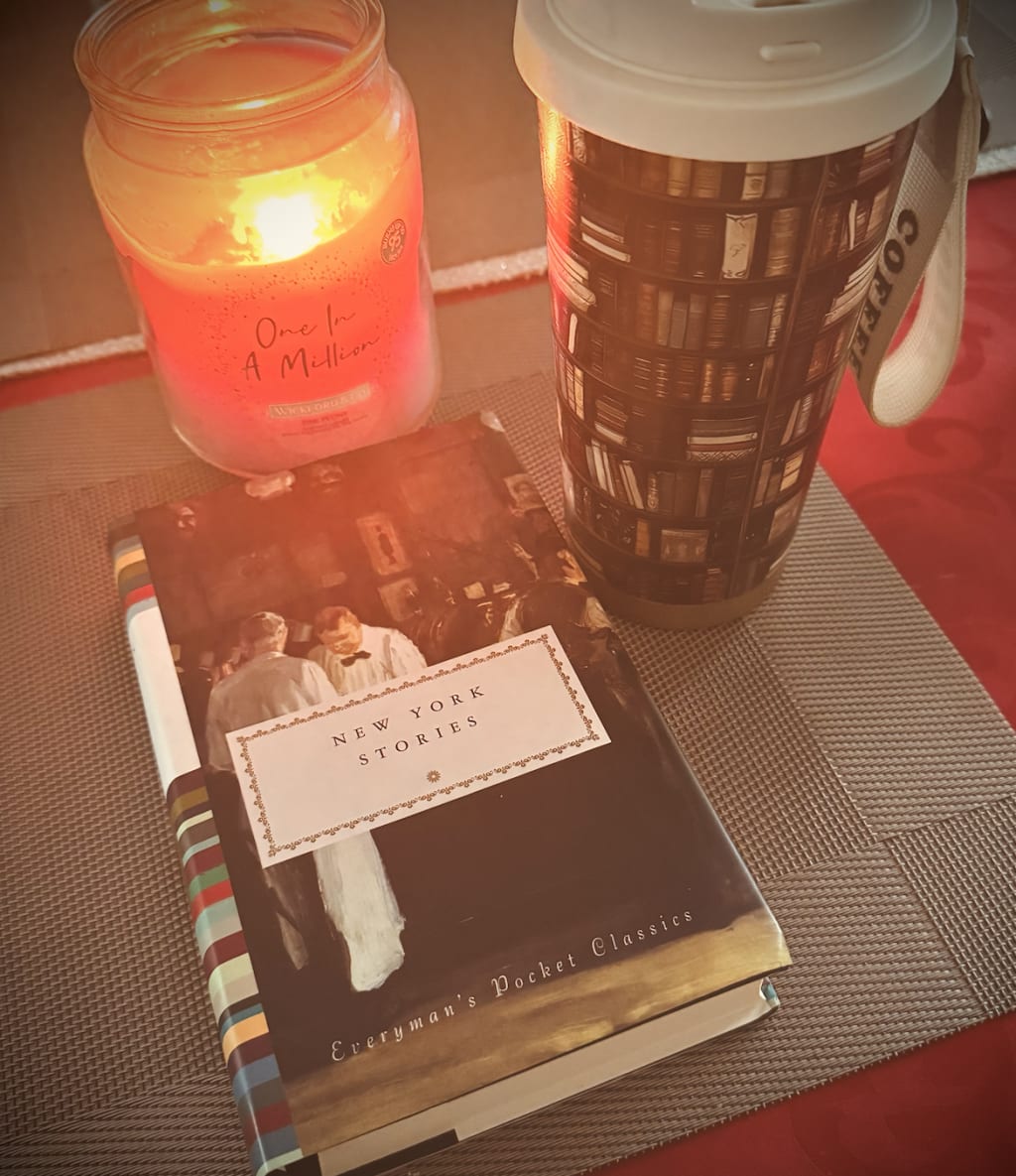
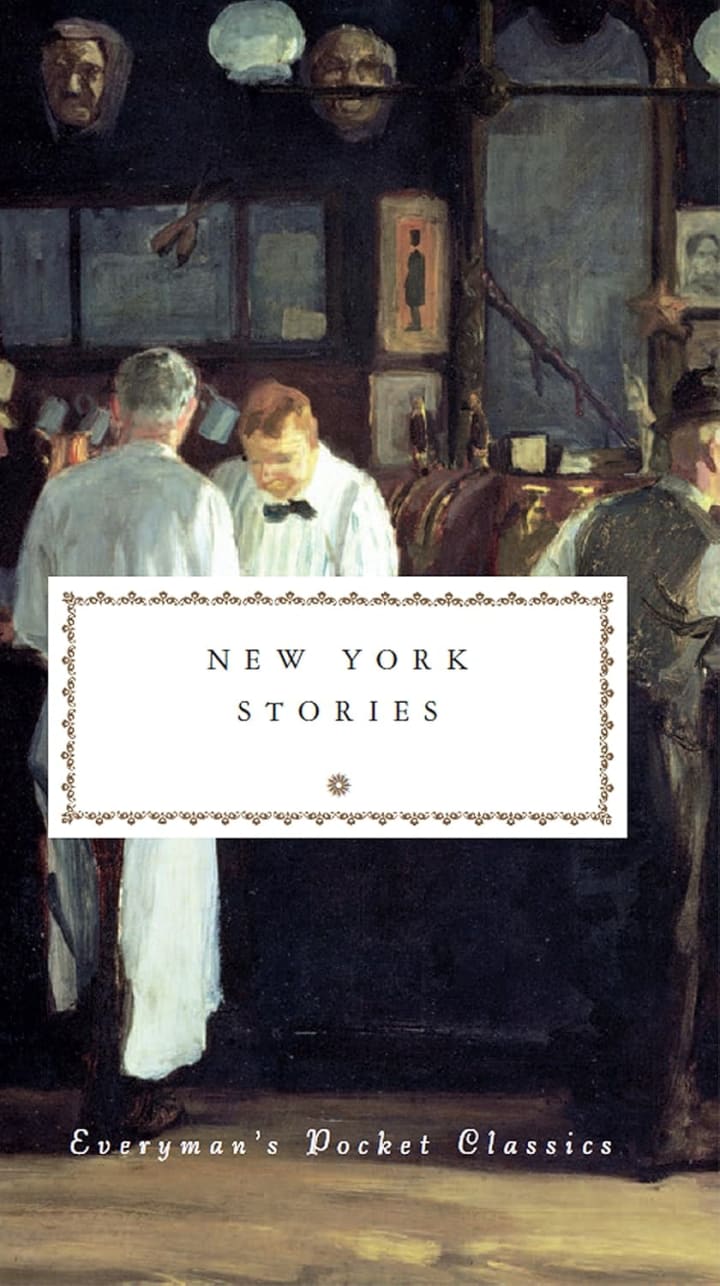
You probably remember my lengthy review of the Paris Stories publication edited by Shaun Whiteside. I have since moved on to rereading my book of New York Stories which, like the former book, is meant to show us several dimensions to the city that never sleeps. From when it starts to when it closes, this book definitely never sleeps, never rests and never takes a sidestory forgranted. Diana Secker Tesdell has done a fantastic job at bringing together some of the most atmospheric and brilliant pieces of work on the Big Apple, some of the most incredible works of fiction and nonfiction and ultimately, she has shown us New York in a way we never thought was possible until now.
The book opens with a story, or rather an account, by the king of the beats himself: Jack Kerouac. The account talks of the way in which New York 'moves'. There's a club where inside are people in suits and evening dresses, there's a man about to play the trumpet and the tension rises ever so slightly because you don't think he will and then the story ends with the music finally dropping - the atmosphere is complete. Kerouac's writing is always fascinating to me but there is something about this short story as the opening to a world where the only thing we see is New York that really peaked my interest. I believe the writer opened the anthology this way in order to show us the first, and probably the most well-recognised, image of New York - the parties, the scenery and the music. Now, we are well prepared to make our way into other territories.
But what would an anthology of New York works be if Truman Capote did not feature? Well, it wouldn't really be New York would it? No, I don't think so. Master Misery is a story I've read before but have often found it strange that this is the one that was chosen to be put in the book. However, because of how she's structured this anthology so carefully, I put a lot of faith into Tesdell's choices and so, we continue on. Sylvia has moved to New York in order to assert her independence. She lives with a married couple who are rigid with convention and though they are alright, she finds them too rigid and too stifling. She meets a man called Mr Revercomb who literally pays for people's dreams but, as her life starts to unravel after this encounter - she isn't too sure anymore about what she really wants. Finding out that she has surrendered her inner life to the city and its almost folkloric sadness, she remains isolated and miserable. This is an entirely different look at the city pronounced by Jack Kerouac and yet, we still see it as a 'New York' story. A city where, like London, dreams are 'meant' to come true - people actually end up sacrificing themselves on the altar of stupidity in order to fit in with the culture and hopefully get a slice of the 'good life'. In reality, they don't achieve it at all.
Of course, I think that the novel Bright Lights, Big City by Jay McInerney is a fantastic attempt at a second-person perspective text and this book of 'New York' features the opening chapter to the book entitled: It's Six Am, Do You Know Where You Are? In the early hours of the morning, our protagonist is in a nightclub in New York - a place he wouldn't normally want to be, and we see that through the famed line: “You are not the kind of guy who would be at a place like this at this time of the morning. But here you are…” There's lots of drug use and partying which features to create the scene of the decade being portrayed, and yet one of the big themes I've always seen in this novel (that seems to begin here as well) is anonymity. There's an anonymous nature about the city that comes through here more than, I think, any other story in this anthology. The detachment at around six in the morning makes it all the more strange to read about. There's something about the city which definitely makes you feel like this happens to a lot of people. It is a reflection of the city's very own crisis of identity.
All in all, there is something incredible about the way this book portrays New York. From the beginning, we get the big overview from what we on the outside already understand about the city. But, as we zoom into different bits and pieces we get the lives of the people within it. It becomes a mash of a population who are constantly searching for themselves: but whether they find themselves is a whole different story. More than often, people come to New York to find themselves and then, in their crisis, end up getting swallowed by the city and spat back out as wholly different people.
About the Creator
Annie Kapur
I am:
🙋🏽♀️ Annie
📚 Avid Reader
📝 Reviewer and Commentator
🎓 Post-Grad Millennial (M.A)
***
I have:
📖 280K+ reads on Vocal
🫶🏼 Love for reading & research
🦋/X @AnnieWithBooks
***
🏡 UK
Keep reading
More stories from Annie Kapur and writers in Geeks and other communities.
Bastard Out of Carolina by Dorothy Allison
Dorothy Allison’s debut novel, Bastard Out of Carolina, was published in 1992 and quickly became one of the most controversial and celebrated works of contemporary Southern literature. Deeply autobiographical, the novel is a harrowing coming-of-age story about poverty, abuse, and the complexities of family loyalty.
By Annie Kapur3 months ago in Geeks
Silver Screen Magic with Mae West
American actress and singer Mae West became a popular film actress during the Great Depression. She started entertaining in vaudeville, then performed on Broadway, and finally went to Hollywood. She signed up with Paramount Pictures and made her debut in the 1932 film “Night After Night.” She also starred in musicals, comedies, and crime dramas. The American Film Institute named her one of the best classic Hollywood actresses.
By Rasma Raisters5 days ago in Geeks
Ludacris and Nelly draw backlash over bookings at MAGA-coded music festival
Ludacris and Nelly headlining a mostly right-wing event is good for them. It’s also great for the genre of hip hop. The two rap veterans have showcased their talents on other stages. Why can’t they perform for mostly MAGA folks and grab that bag?
By Skyler Saunders3 days ago in Beat


Comments
There are no comments for this story
Be the first to respond and start the conversation.