
Bastard Out of Carolina by Dorothy Allison
Why It's a Masterpiece (Week 88)

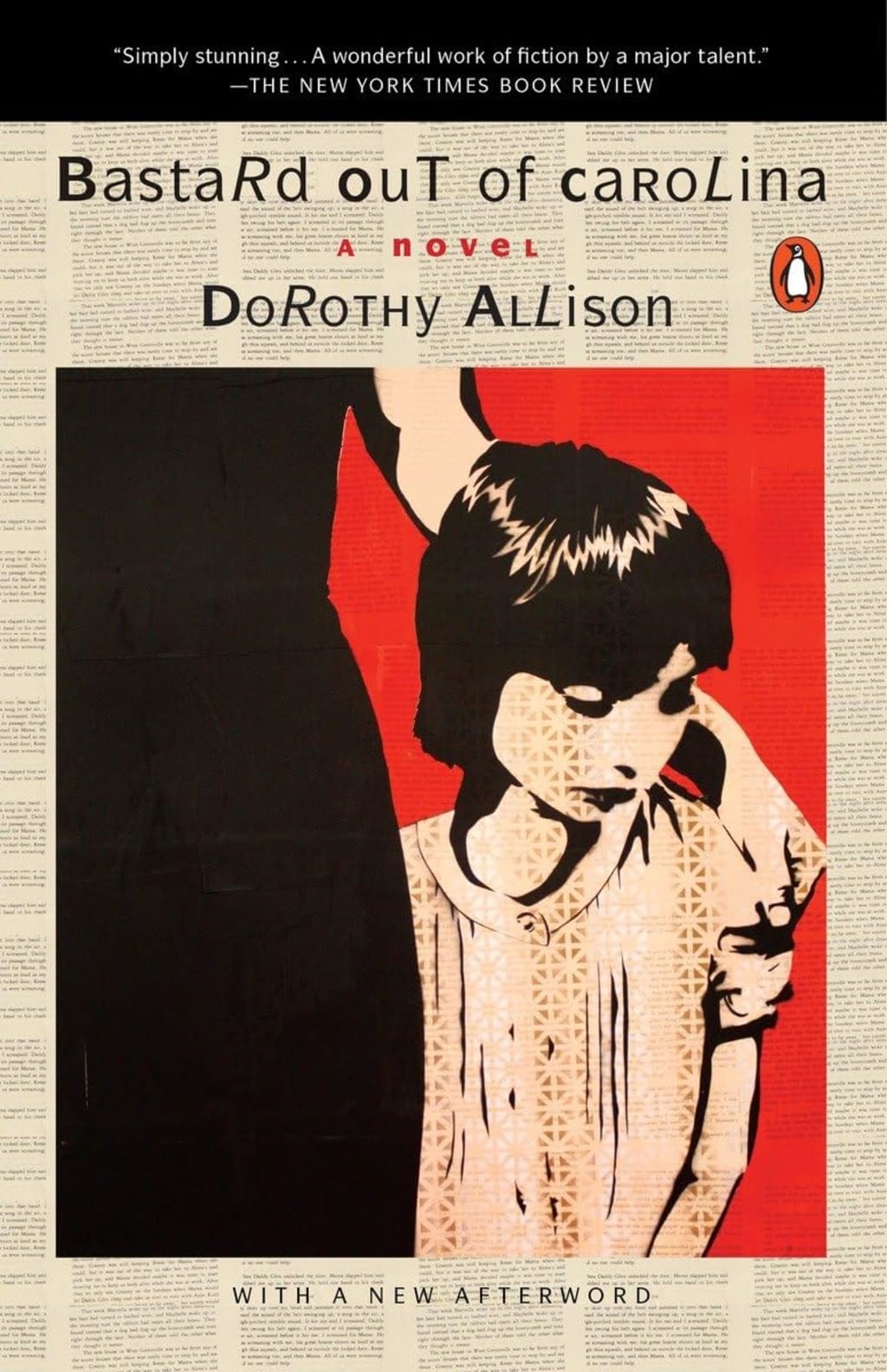
Dorothy Allison’s debut novel, Bastard Out of Carolina, was published in 1992 and quickly became one of the most controversial and celebrated works of contemporary Southern literature. Deeply autobiographical, the novel is a harrowing coming-of-age story about poverty, abuse, and the complexities of family loyalty.
Allison, born in South Carolina in 1949, drew upon her own experiences growing up in a working-class family marked by domestic violence and sexual abuse. A committed feminist and LGBTQ+ activist, she encompassed her novel with themes of marginalisation, resilience, and survival.
The novel’s brutal honesty led to both acclaim and censorship. It was a finalist for the National Book Award, praised for its great prose and emotional depth, yet also banned in some schools and libraries due to its explicit depiction of child abuse and sexual violence.
Allison was heavily influenced by Southern Gothic literature, particularly writers like Flannery O’Connor and William Faulkner, whose works similarly explore dysfunctional families, social decay, and moral ambiguity - she brought her own feminist perspective to the genre as well, which was definitely something new for the majority of American literature at the time.
Plot
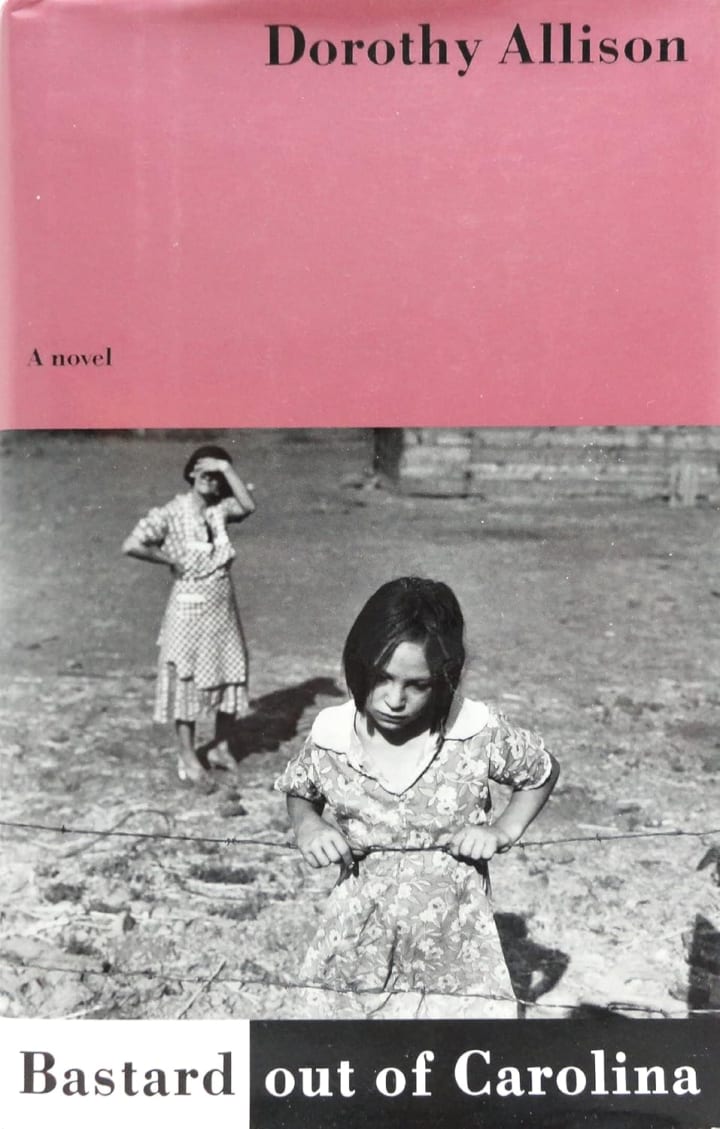
Set in 1950s South Carolina, Bastard Out of Carolina follows Ruth Anne "Bone" Boatwright, a young girl born to Anney Boatwright, an impoverished but fiercely loving single mother. Due to Anney’s youth and unmarried status at the time of Bone’s birth, the word "bastard" is stamped on Bone’s birth certificate. This is a label that will haunt her throughout her childhood.
Anney, desperate for stability, marries Glen Waddell, a man who appears kind but soon reveals his violent and sadistic nature. As Bone grows older, Glen’s physical and sexual abuse escalates, while Anney, torn between her love for her daughter and her dependence on Glen, refuses to fully acknowledge the extent of his cruelty.
Bone finds solace in her extended Boatwright family, a rowdy, fiercely loyal clan of working-class Southerners. Her aunts and uncles, though often reckless and prone to violence themselves, represent an alternative form of strength and love, which is one based on survival and kinship rather than societal respectability.
As Bone’s suffering grows, she develops a deep, simmering rage, refusing to accept the passivity expected of her as a poor, Southern girl. When Glen’s attacks reach their breaking point, her mother finally intervenes but instead of choosing Bone, she abandons her to stay with Glen, an act of betrayal that solidifies Bone’s transformation from innocence to hardened defiance.
The novel ends with Bone, alone but unbroken, staring into an uncertain future, carrying the scars of her past but refusing to be destroyed by them.
Into the Book
Poverty and Shame:
One of the novel’s most powerful themes is the invisibility and shame of poverty. The Boatwrights are viewed as “white trash”, a label that follows Bone from birth: “I was born in the county hospital with no father, no name, and no future they could see.”
This reflects the systemic dehumanisation of the poor, where identity is reduced to economic status. Bone internalises this stigma, understanding that society sees her as worthless before she even has a chance to define herself. However, the novel also challenges these same stereotypes. The Boatwrights, though violent and flawed, possess a ferocious loyalty and strength. The author refuses to romanticise poverty but also refuses to portray the working class as helpless victims, instead highlighting their complex humanity.
“Everything that comes to us is a blessing or a test. That’s all you need to know in this life…just the certainty that God’s got His eye on you, that He knows what you are made of, what you need to grow on. Why,questioning’s a sin, it’s pointless. He will show you your path in His own good time. And long as I remember that, I’m fine.”
- Bastard Out of Carolina by Dorothy Allison
Love and Violence:
Perhaps the most painful theme in the novel is the intersection of love and violence, particularly within families. Glen’s abuse is horrifying, but even more devastating is Anney’s complicity. Bone adores her mother, yet she also recognises Anney’s failure to protect her: “I wanted her to love me enough to stop him, to see me, to know what was happening to me.”
Anney’s refusal to leave Glen exposes the generational trauma and cycles of dependency that keep women trapped in abusive relationships. Yet Allison refuses to make Anney a villain as instead, she is a victim of social and economic forces that limit her choices. Bone’s ultimate rejection of her mother is not just an act of self-preservation but a painful severing of her last tether to childhood innocence.
“It ain't that you get religion. Religion gets you and then milks you dry. Won't let you drink a little whiskey. Won't let you make no fat-assed girls grin and giggle. Won't let you do a damn thing except work for what you'll get in the hearafter. I live in the here and now.”
- Bastard Out of Carolina by Dorothy Allison
The Lack of Passivity:
Unlike many narratives of abuse, Bastard Out of Carolina does not present its protagonist as a passive victim. Bone, despite her suffering, fights back: emotionally, psychologically, and eventually, physically. Her rage simmers throughout the novel, culminating in moments of violent defiance. After one of Glen’s assaults, she declares: “I wanted to kill him. I wanted to watch him bleed and burn.”
This unapologetic anger challenges traditional depictions of female suffering as silent and noble. Allison’s portrayal of Bone as furious, vengeful, and determined to survive is radical, offering a vision of trauma that does not end in defeat but in resistance.
“My heart broke all over again. I wanted my life back, my mama, but I knew I would never have that. The child I had been was gone with the child she had been. We were new people, and we didn't know each other anymore. I shook my head desperately.”
- Bastard Out of Carolina by Dorothy Allison
Why It's a Masterpiece
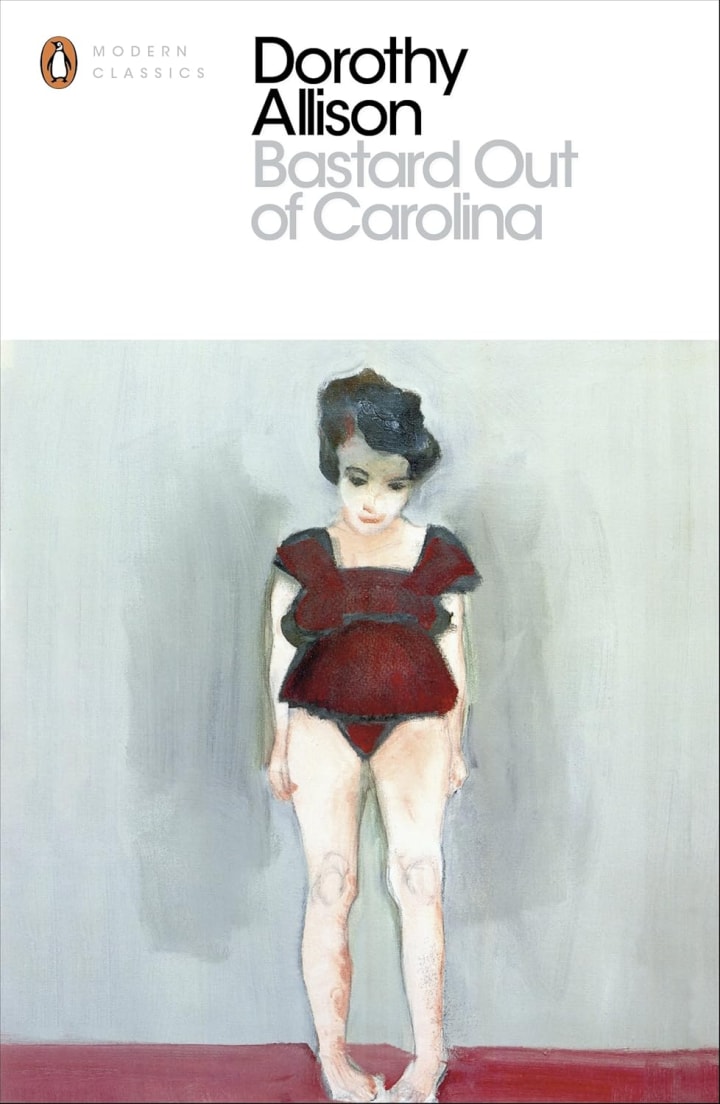
Bastard Out of Carolina is a masterpiece because of Dorothy Allison’s storytelling of true working class womanhood, raw and angry prose, and realistic depiction of trauma. The novel refuses to sanitise or romanticise its subject matter, offering instead a brutal yet deeply compassionate exploration of poverty and abuse.
The novel’s exploration of class, gender, and family dynamics also makes it a political work. It exposes the systemic forces that keep poor women and children trapped in cycles of violence, while also celebrating the personalities of those who refuse to be broken.
Though controversial, Bastard Out of Carolina remains one of the most important Southern female novels of the 20th century, standing alongside Harper Lee’s To Kill a Mockingbird and Toni Morrison’s The Bluest Eye as a defining exploration of girlhood, violence, and survival.
Conclusion
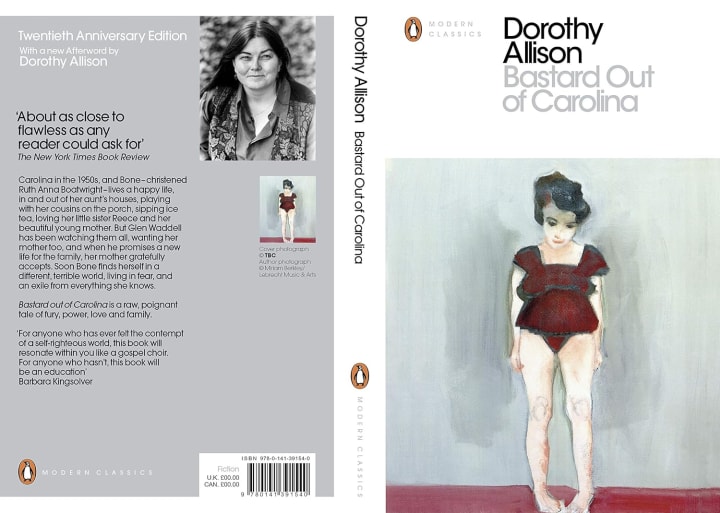
Six years' ago, when I first encountered this novel and was perhaps writing more about experiences of reading than the actual book, I wrote this about Bastard Out of Carolina and how it drew me in:
I don’t think words can describe how much I loved this book-but situations sure can. I loved this book so much I refused to put it down, even in the queue at the chippy. I was literally reading it in a line of people, a car crash had happened outside, and I didn’t even lift my head until they’d started clearing the mess. The book made me quite introspective, because, I do warn you, it is very sad in some places-dealing with cases of abuse both physical and mental, it can be quite heavy. The vast and coarse descriptions draw you in, and afterwards you just need a deep, full sigh and exhalation of fresh air.
Next Week: The Magic Mountain by Thomas Mann
About the Creator
Annie Kapur
I am:
🙋🏽♀️ Annie
📚 Avid Reader
📝 Reviewer and Commentator
🎓 Post-Grad Millennial (M.A)
***
I have:
📖 280K+ reads on Vocal
🫶🏼 Love for reading & research
🦋/X @AnnieWithBooks
***
🏡 UK
Keep reading
More stories from Annie Kapur and writers in Geeks and other communities.
My 5 Favourite Horror Movies
Halloween is upon us and I wanted to share with you my five favourite horror films. I am a huge horror fan. Horror books, horror movies, horror everything - I just love it. It has to be well done though - no medium rare horror here. I've already shared my list of books for this year in which we tackle five recent books and check out why they are so great - but I don't think I've shared my five favourite horror films.
By Annie Kapur3 months ago in Geeks
Silver Screen Magic with Mae West
American actress and singer Mae West became a popular film actress during the Great Depression. She started entertaining in vaudeville, then performed on Broadway, and finally went to Hollywood. She signed up with Paramount Pictures and made her debut in the 1932 film “Night After Night.” She also starred in musicals, comedies, and crime dramas. The American Film Institute named her one of the best classic Hollywood actresses.
By Rasma Raisters4 days ago in Geeks
Twitter Outage
For millions of users around the world, Twitter—now known as X—is more than just a social media platform. It’s a real-time news source, a communication tool, and a digital town square. So when a Twitter outage occurs, confusion spreads quickly. Users rush to search questions like “is Twitter down?”, “is X down right now?”, or “why is X not working?” hoping for clarity. In recent years, X outages have become highly visible events, often trending across other platforms within minutes. Whether the issue lasts a few minutes or several hours, a Twitter down situation highlights how deeply embedded the platform is in daily online life. When Twitter Goes Down: What Users Experience During a typical Twitter down incident, users may encounter several problems at once. Timelines stop refreshing, posts fail to load, and notifications disappear. Some users can open the app but see blank feeds, while others are completely locked out. These moments spark a flood of searches like “is Twitter down right now?” and “Twitter not working.” As branding has shifted, the same frustration now appears under newer searches such as “is X down?”, “X down?”, or “X is down.” The name may have changed, but user expectations remain the same: instant access and real-time updates. The Role of X Down Detectors and Status Tools When users suspect an outage, many turn to tools like X down detector or Twitter down detector websites. These platforms collect real-time reports from users and visualize spikes in complaints. A sudden surge often confirms that the issue isn’t isolated. People also search for Twitter status updates, hoping for official confirmation. While X occasionally posts updates during major outages, users often rely on external sources first—especially when the platform itself isn’t accessible. Is X.com Down or Something Else? One of the most common questions during an outage is “is x.com down?” While it may appear that the entire platform is unavailable, the underlying cause can vary. Sometimes the issue affects only certain regions, mobile apps, or specific features like posting or direct messages. In other cases, users notice that third-party integrations fail. This leads to additional searches such as “X not working” or “is X down?” as people try to determine whether the problem lies with their device, internet connection, or the platform itself. Cloudflare and Large-Scale Outages Occasionally, outages are linked to infrastructure providers rather than X directly. Cloudflare, a major content delivery and security service used by many large websites, has been associated with widespread disruptions across the internet. During a Cloudflare outage, multiple platforms can experience downtime simultaneously. When this happens, searches for “Cloudflare outage” often rise alongside “Twitter is down.” These events show how interconnected modern platforms are and how a single failure point can affect millions of users at once. Grok Down: A New Kind of Concern With the introduction of AI-powered features, outages now extend beyond basic posting and browsing. Some users have reported instances of Grok down during broader X outages. When Grok, the platform’s AI assistant, stops responding, it adds another layer of frustration—especially for users who rely on it for research, summaries, or creative tasks. As X continues to expand its feature set, future outages may impact different services independently, making it harder to quickly understand what exactly is broken. Why Twitter Outages Feel So Disruptive Unlike many platforms, X thrives on immediacy. It’s often the first place people go during breaking news, global events, or emergencies. When Twitter is down, users lose access to real-time conversations and firsthand updates. This is why even short outages trigger widespread concern. Questions like “is Twitter down?” or “is X down right now?” aren’t just about inconvenience—they reflect a sudden loss of connection to the global conversation. How Users Cope When X Is Down When an X outage occurs, users often migrate temporarily to other platforms to confirm the issue or share updates. Ironically, people frequently use those platforms to say that Twitter is unavailable. In the meantime, down-detector sites, tech forums, and news outlets become the primary sources of information. For creators, journalists, and businesses, downtime can disrupt workflows and audience engagement. Scheduling posts, responding to trending topics, or managing customer communication becomes impossible until service is restored. What Outages Reveal About Digital Dependence Every major Twitter outage serves as a reminder of how dependent modern communication has become on a few centralized platforms. Whether the search term is “Twitter down?” or “X down?”, the concern is universal. While most outages are resolved relatively quickly, their impact lingers. They raise questions about platform stability, transparency, and the importance of having alternative channels for communication. Final Thoughts A Twitter outage—or X outage—is rarely just a technical hiccup. It’s a moment that exposes how essential the platform has become for news, discussion, and connection. From searches like “is Twitter down right now?” to monitoring X down detector reports, users instinctively seek reassurance and answers.
By Saboor Brohi about 22 hours ago in Geeks


Comments
There are no comments for this story
Be the first to respond and start the conversation.