
Book Review: "My First Wife" by Jakob Wassermann
3/5 - Great concept with an execution that could have been a bit better...

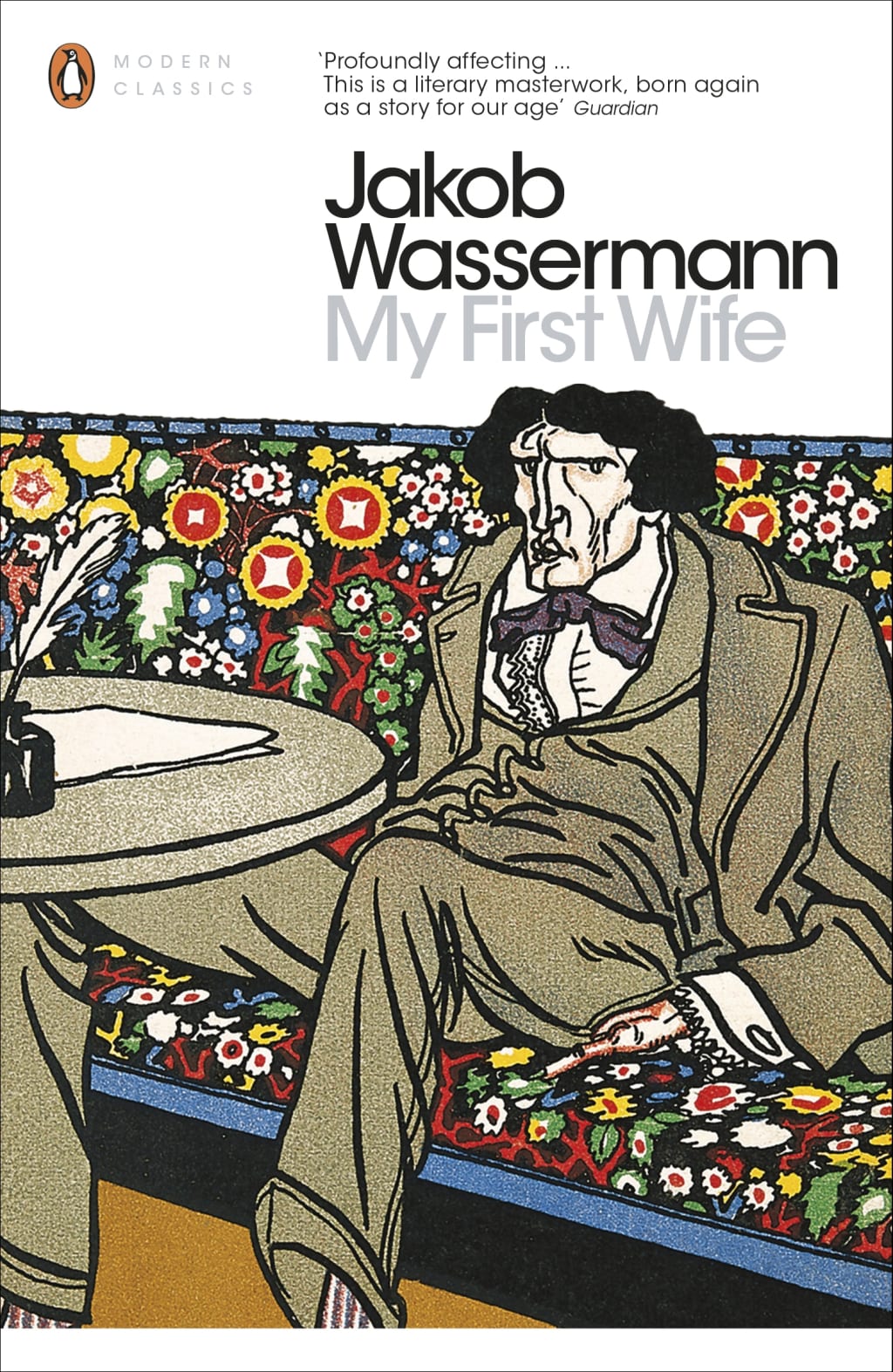
“My First Wife” by Jakob Wassermann is a novel about a man who marries a woman after falling in love with the idea of her, her presentation etc. only to find out that she is entirely different in reality. This is something that I think people experience often and, in reality, it can lead to people just flat out hating each other. Jakob Wassermann expresses this as a very real problem for the protagonist and yet, there is nothing really wrong with the woman he is in love with - it is the idea of her which is simply very different to the reality of her. When you really think about it, both of them seem like they married for a reason that was not really loving each other but the protagonist marries for the fact that he likes the idea of the woman and the woman (Ganna) marries for the fact that she likes the idea of marriage. Both of them are completely dissatisfied since Ganna still wants her chaotic life to go ahead, but then again the idea of her that the protagonist had in mind was a mild-mannered wife-like woman who was both shy and intelligent. In reality, her life is in fact, very different. Besides this incredible storyline, the book is told in snippets and anecdotes that represent situations and times in the romantic relationship and during the marriage. The writing style, though sometimes tedious and a little repetitive, is actually pretty telling in some places about the difference between expectation and reality.
“Punctuality was enjoined in the Mevis household. The paternal rule decreed that lunch was on the dot of one. Time and again, there they all were sitting at table: Lydia, Berta, Justine, Irmgard, Traude, the Professor, Frau Mevis, their old nurse, Frau Kummelmann - only Ganna’s chair was unoccupied. Ganna’s deeply ingrained objection to time-keeping was another of the family’s traditions. Professor Mevis pretends not to notice Ganna’s absence but his brow is twitching ominously. Frau Mevis keeps looking anxiously at the door; she’s suffering agonie. Finally, a creature bursts into the room in a mad rush, her face puce, her eyes wide with dread and her hair a tangled mess, and while her wrathful father, strangling his red beard in his fist, glowers at her, the sisters, five models of virtue, titter quietly to themselves because there can be no doubt that Ganna is about to tell one of her famous stories that don’t have a shred of truth in them, however masterfully she tells them. Poor Ganna. Don’t you feel sorry for her…”
The chapter entitled “They Want You to Lie” makes for excellent analysis of the romantic relationship. He still thinks that even though she is different to his ideal, that he can save her from herself and make her into more of a model citizen. This obviously, does not happen as she proves harder and harder to handle in the book. Though she isn’t a forthright girl, she is quite a messy woman and he sees something fundamentally wrong with that.
“She did not know the meaning of obedience. Whatever she wasn’t allowed to have, she would purloin for herself secretly. She was full of cunning. If asking isn’t enough, and a person is driven to plead for something, it will tend to make them devious. She even used her absent-mindedness as a way of securing small advantages for herself. If you can make people laugh, they will be more lenient in their judgement of you. I know fools who are so diligent in their folly that they can quite comfortably live by it. The confusion that Ganna wrought kept her family and friends continually amused.”
This chapter entitled “Ganna Lives in a World of her Own” is somethingt o be admired because different to the last one we looked at in which she is made to look rather silly and a bit stupid, this chapter shows her as wise and cunning and be able to manipulate people’s opinions of her to get what she wants.
A brilliant concept for a novel executed with some amount of caution but mostly was pretty well written, Wassermann’s book about a bad marriage is more than just a character analysis - it is an observation about how people on either side of the argument can be completely oblivious to what is really going on.
About the Creator
Annie Kapur
I am:
🙋🏽♀️ Annie
📚 Avid Reader
📝 Reviewer and Commentator
🎓 Post-Grad Millennial (M.A)
***
I have:
📖 280K+ reads on Vocal
🫶🏼 Love for reading & research
🦋/X @AnnieWithBooks
***
🏡 UK
Keep reading
More stories from Annie Kapur and writers in Geeks and other communities.
A Filmmaker's Guide to: Historical Settings
In this chapter of ‘the filmmaker’s guide’ we’re actually going to be learning about literature and film together. I understand that many of you are sitting in university during difficult times and finding it increasingly hard to study and I understand that many of you who are not at university or not planning on it are possibly stuck of what to do, need a break or even need to catch up on learning film before you get to the next level. This guide will be brief but will also contain: new vocabulary, concepts and theories, films to watch and we will be exploring something taboo until now in the ‘filmmaker’s guide’ - academia (abyss opens). Each article will explore a different concept of film, philosophy, literature or bibliography/filmography etc. in order to give you something new to learn each time we see each other. You can use some of the words amongst family and friends to sound clever or you can get back to me (email in bio) and tell me how you’re doing. So, strap in and prepare for the filmmaker’s guide to film studies because it is going to be one wild ride.
By Annie Kapur5 years ago in Geeks
Silver Screen Magic with Mae West
American actress and singer Mae West became a popular film actress during the Great Depression. She started entertaining in vaudeville, then performed on Broadway, and finally went to Hollywood. She signed up with Paramount Pictures and made her debut in the 1932 film “Night After Night.” She also starred in musicals, comedies, and crime dramas. The American Film Institute named her one of the best classic Hollywood actresses.
By Rasma Raisters4 days ago in Geeks


Comments
There are no comments for this story
Be the first to respond and start the conversation.