
A Filmmaker's Guide to: Historical Settings
Film Studies (Pt.92)

In this chapter of ‘the filmmaker’s guide’ we’re actually going to be learning about literature and film together. I understand that many of you are sitting in university during difficult times and finding it increasingly hard to study and I understand that many of you who are not at university or not planning on it are possibly stuck of what to do, need a break or even need to catch up on learning film before you get to the next level. This guide will be brief but will also contain: new vocabulary, concepts and theories, films to watch and we will be exploring something taboo until now in the ‘filmmaker’s guide’ - academia (abyss opens). Each article will explore a different concept of film, philosophy, literature or bibliography/filmography etc. in order to give you something new to learn each time we see each other. You can use some of the words amongst family and friends to sound clever or you can get back to me (email in bio) and tell me how you’re doing. So, strap in and prepare for the filmmaker’s guide to film studies because it is going to be one wild ride.
Historical Settings
What are they?
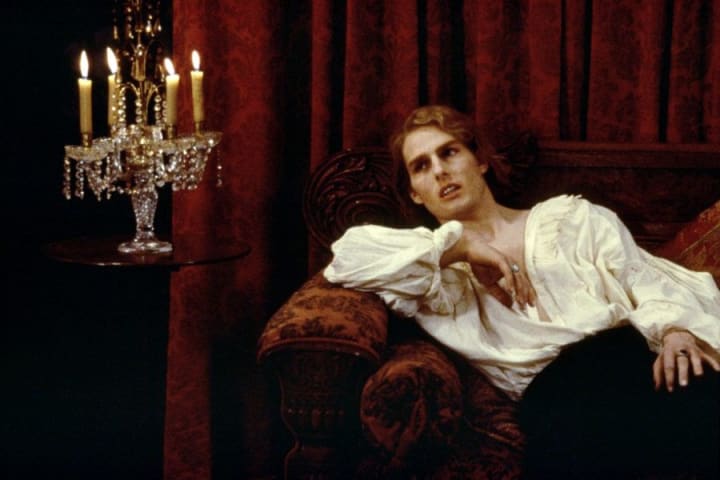
Historical Settings are settings from a time in the distant or near past that are used to some impact, to tell the story. Most of the time, the historical setting has something to do with the overall narrative.
When historical settings are used in literature we need to make sure it is not the present to the author. Such as a book like "Jane Eyre" does not actually have a historical setting because it was written in perspective of Charlotte Bronte's own time. Whereas, a book like "The Name of the Rose" by Umberto Eco has, in fact, a historical setting.
Books that you can read include:
- Pillars of the Earth by Ken Follett
- The Wolf Hall Trilogy by Hilary Mantel
- I, Claudius by Robert Graves
- The Tudor Court Series by Philippa Gregory
- Circe by Madeline Miller
- The Last of the Wine by Mary Renault
- Romola by George Eliot
- Fingersmith by Sarah Waters
- Alias Grace by Margaret Atwood
- The House of the Spirits by Isabel Allende
What about in film?
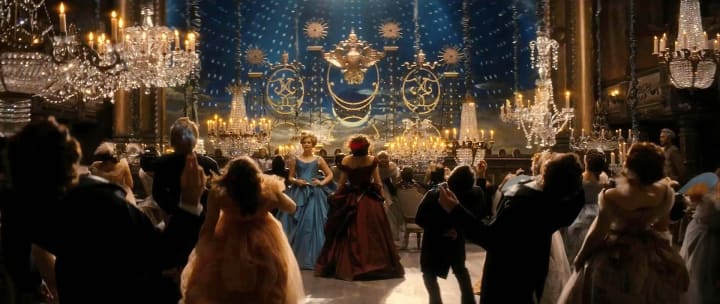
Historical settings in film are used for many different purposes of storytelling which all come from different aspects of literature and its many genres.
Some of the genres include but are not limited to:
Romance - in which historical settings are used mostly to depict class and society etc.
Horror - in a fashion of creating some sort of mythical alliance with the past in order to make the feeling of horror slightly more realistic
Adventure - settings are normally used in order to create a difference between the civilised and the savage, even though the differentiation within humans and other humans has often been frowned upon in the modern era due to the implications of racism and orientalist exclusion
Here are some films you could watch of all different genres to further investigate the different ways in which it is used:
- Cloud Atlas
- Interview with the Vampire
- Anna Karenina
- No Country for Old Men
- Schindler’s List
- Chaplin
- I’m Not There
- Twelve Years a Slave
- The Duchess
- Gangs of New York
- The Assassination of Jesse James by the Coward Robert Ford
- The Favourite
- Cold Mountain
- Dunkirk
- JFK
- Barry Lyndon
- Mary Queen of Scots
- Darkest Hour
- First Man
- Hidden Figures
So, now let’s take a look at some further reading that will help when understanding the different ways in which you can use historical settings throughout film by various secondary readings. Remember, in order to understand how historical settings are created in film, you may want to read books that are not just purposefully set in a different time but are also written in a different time. Unlike literature which is written in the modern day and set in the past, the best thing to do for film is to watch films about books that were written in the past and have been created and adapted into films we can view now.
Further Reading:
About the Creator
Annie Kapur
I am:
🙋🏽♀️ Annie
📚 Avid Reader
📝 Reviewer and Commentator
🎓 Post-Grad Millennial (M.A)
***
I have:
📖 280K+ reads on Vocal
🫶🏼 Love for reading & research
🦋/X @AnnieWithBooks
***
🏡 UK
Keep reading
More stories from Annie Kapur and writers in Geeks and other communities.
Book Review: "Quiet Days in Clichy" by Henry Miller
“Quiet Days in Clichy” I have to admit, is not one of Henry Miller’s best works but it is still something to be admired amongst the general realm of literature in which love letters are written to and about cities and places. In this text by Henry Miller, there is a general sense of awe pervading Paris and yet, something about it always seems a bit overly-romanticised. As if Henry Miller is really trying to make up for what the city lacks in substance, he builds up in stylistic writing and romantic images that require pastel-coloured backgrounds and berets sitting in a cafe somewhere in order to be full appreciated. I’m not saying that this is not a good idea, but what I am saying is to take this picture of Paris for what it is - a piece of art. It is not a representation of a city which is now basically in ruin and has been for a very long time. The contrast from New York to Paris is never really made definite upon the personalities within both with New York obviously having the more progressive types of people. Be that as it may, we cannot take away from the fact that the city of light has become of central importance to Henry Miller over the course of many texts of his and that it has served him well. One thing I have to say as well is that he makes this city, that is no longer in its prime, out to be something far greater than it is - and that is a skill, not a fault.
By Annie Kapur5 years ago in Geeks
Silver Screen Magic with Mae West
American actress and singer Mae West became a popular film actress during the Great Depression. She started entertaining in vaudeville, then performed on Broadway, and finally went to Hollywood. She signed up with Paramount Pictures and made her debut in the 1932 film “Night After Night.” She also starred in musicals, comedies, and crime dramas. The American Film Institute named her one of the best classic Hollywood actresses.
By Rasma Raisters4 days ago in Geeks
Toxic Movie Cast Salaries Revealed: Yash, Nayanthara & Kiara's Massive Paychecks Uncovered
The teaser for Yash's upcoming film Toxic has become a massive hit. Fans are now curious about the cast's paychecks, so here's a look at how much Yash, Nayanthara, and Kiara are earning.
By Dena Falken Esq6 days ago in Geeks
Miss Persephone's Manual to a Seemingly Ordinary Life
Miss Persephone was found at the dining table, her blue eyes swollen, her tears arriving and retreating like the tides of the ocean. Earlier that day, her family had visited her in the retirement home where she had lived for eight years. It was her eightieth birthday.
By Imola Tóth2 days ago in Fiction


Comments
There are no comments for this story
Be the first to respond and start the conversation.