
Book Review: "Murder as a Fine Art" by Carol Carnac
5/5 - a twisted murder of motives in the world of fine art and secrecy...

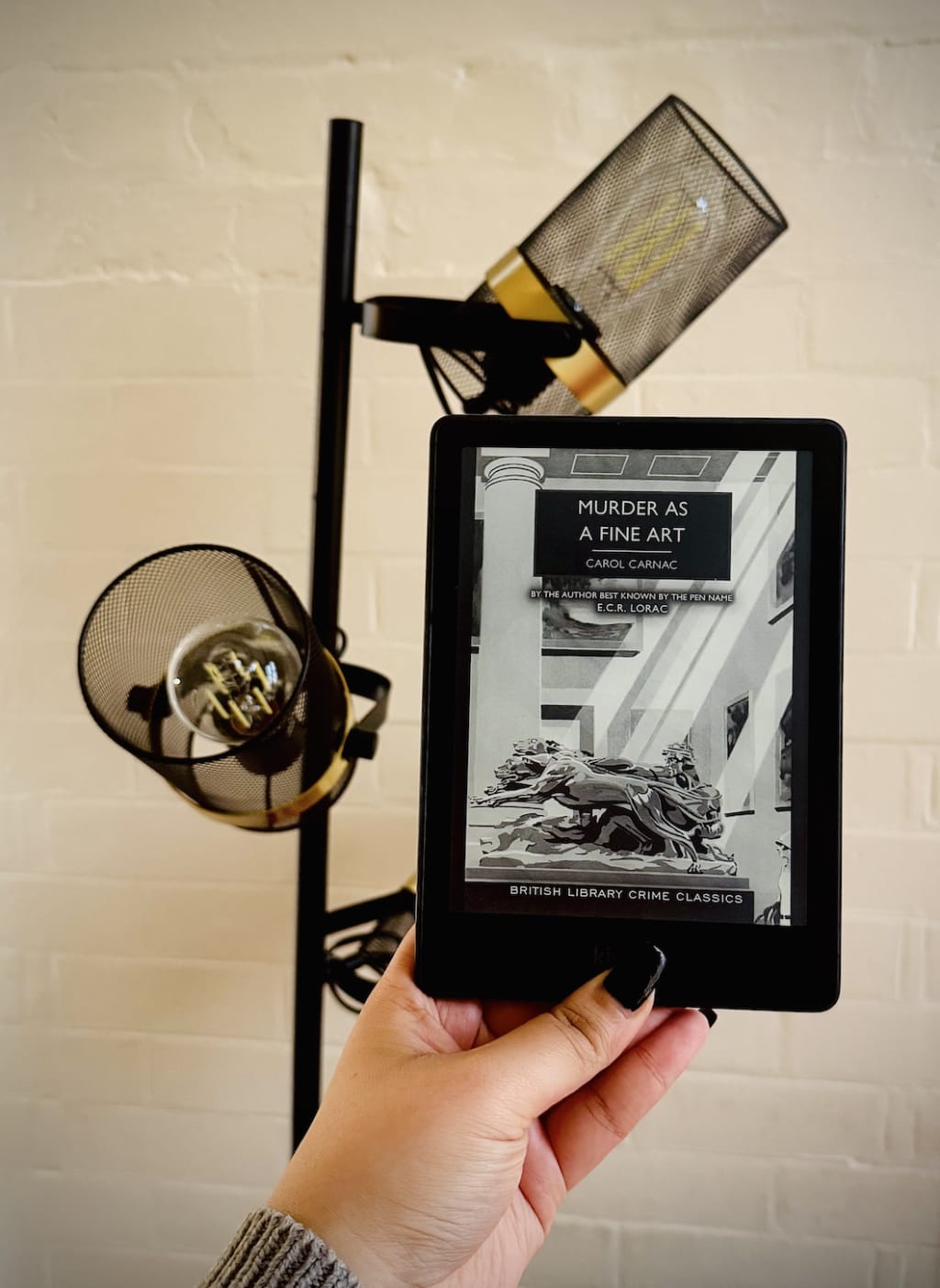
I'm not laughing, you are. We all expected that I would return to the British Library Crime Classics collection some day. There is something strangely addictive about those books that it needs to be said: I hope they keep publishing these until after I die. The collection is amazing and on top of this - they are mostly all available on Kindle Unlimited, making them free to read as many as you like of for around £8 a month. I'm pretty sure I made people regret giving me unlimited access to these books a few years back when I read them almost exclusively and absolutely obsessively. But, that's a story for another time (if you go back into my reviews you might find something from some years ago). So, let's get on with it then...
Carol Carnac was a writer who usually wrote under the pseudonym ECR Lorac and when you read the name ECR Lorac, you know the story is going to be good. It starts off with a faction called the Ministry of Fine Arts, introducing us to characters such as Humphrey David, a man obsessed with fine arts so much that even though he was against the idea of a government-run fine arts faction, they put him in charge of it. This is followed by a man called Pompfret ('Pompey') and a night watchman called Bob Titchmarsh. After a horrifying accident in the form of a man falling down the stairs and splitting his skull in the midst of the night, Scotland Yard must get involved because there's no way that man would have fallen down by itself. Worst of all, even though Titchmarsh appeared at the scene after the fact - nobody saw it happen.
When Lancing and his superior officer, Chief Inspector Julian Rivers arrive, there is something clearly amiss. Not only did the night watchman not see the accident, he didn't hear anything either. It was weird considering such a large man had falled and died on the floor in an otherwise empty fine art gallery. The graphic description of the horrid mess that has once been the dead man's brains inside his head is something to behold but, even more shocking considering the era it was written in initially. When some people start complaining about the man associated with the bust, stating they didn't really like him all that much - there is something clearly up. The question of what happened with the hit to the dead man was simply now concerning the fact that he was not alone on that floor. Plus the fact that the architecture of the gallery is strange and difficult to learn, the reader is left on edge to accuse the most probable suspects.
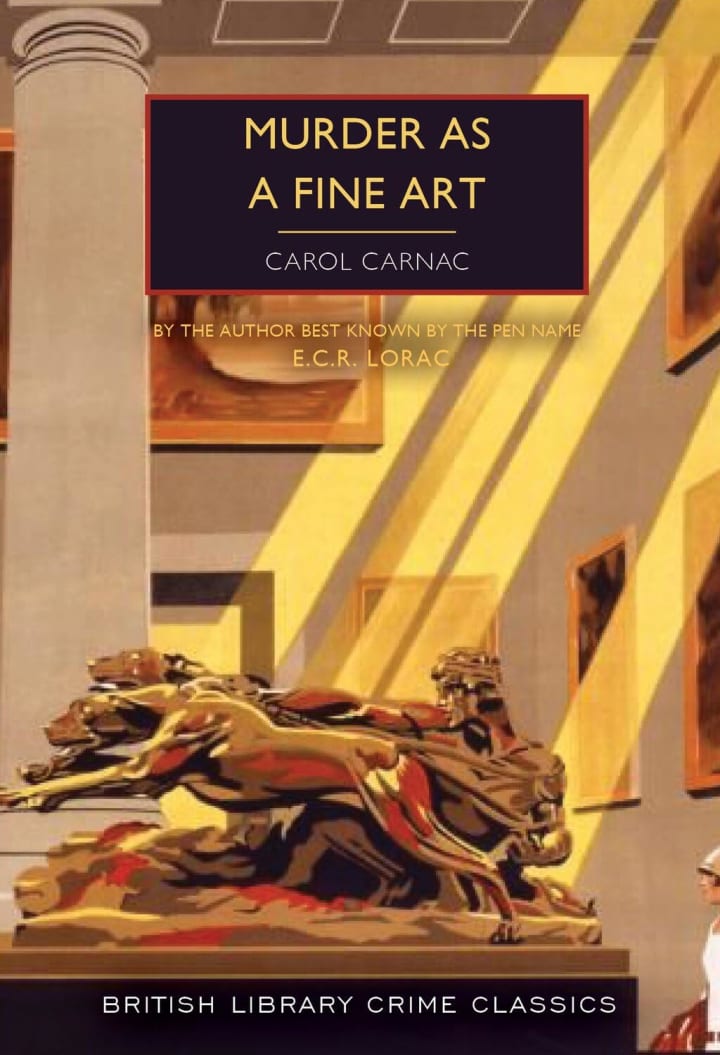
But this is not all. It is known that the Ministry of Fine Art is not a traditional nor an old institution. In fact, it has only had a few notable people. A lot of these people had since met their demise and yet, the current head feels more than comfortable in the position he is in. Although his former political alignments do not seem to agree with the gallery's purpose itself. When its discovered that the dead man did not actually die purely because of his fall down the staircase, the plot thickens even more as death begins to become the main theme of the evening. A lot of the characters exude a confidence which makes it more difficult for the culprit to be caught - everyone is waiting for everyone else to make a mistake. One thing that Julian Rivers cannot understand though is how the culprit managed to get the head off a statue and on to the dead man, killing him and knocking him down the stairs. The biggest question is even though he didn't die by falling down the stairs: when did he actually die during the fall?
As Julian and Lancing start to investigate each person, it is clear that there was more than one motive here. The dead man may not have made many enemies, but he certainly was not among friends. As we are introduced to more characters, it becomes almost certain that there was one or even more people involved in this heinous and graphic act of violence. The reader is invited to scrutinise the characters of each of these individuals under the microscope whilst the investigation takes some surprising turns.
All in all, this is another fantastic murder mystery published by the British Library's Crime Classics collection. Using art as a weapon has some great metaphors and perhaps, some people just really talk their way into it. You'll see what I mean when you read this book.
About the Creator
Annie Kapur
I am:
🙋🏽♀️ Annie
📚 Avid Reader
📝 Reviewer and Commentator
🎓 Post-Grad Millennial (M.A)
***
I have:
📖 280K+ reads on Vocal
🫶🏼 Love for reading & research
🦋/X @AnnieWithBooks
***
🏡 UK
Keep reading
More stories from Annie Kapur and writers in Geeks and other communities.
Silver Screen Magic with Mae West
American actress and singer Mae West became a popular film actress during the Great Depression. She started entertaining in vaudeville, then performed on Broadway, and finally went to Hollywood. She signed up with Paramount Pictures and made her debut in the 1932 film “Night After Night.” She also starred in musicals, comedies, and crime dramas. The American Film Institute named her one of the best classic Hollywood actresses.
By Rasma Raisters7 days ago in Geeks
The Devil's Cut
“Comrade, finally you’re awake.” The voice was smooth, sensual. A flickering incandescent bar was all that lit the white, sterile room. All Vladimir remembered was everything going black. He tried to move his arms and found them strapped to the gurney.
By Matthew J. Fromm6 days ago in Fiction


Comments
There are no comments for this story
Be the first to respond and start the conversation.