
Book Review: “Lou Reed: King of New York” by Will Hermes
5/5 - a solidification that Lou Reed was one of the finest songwriters of all time...


I have read perhaps two other books about Lou Reed in my time alive and both others where pretty good. There were very clearly high expectations for this one. Am I a big Lou Reed fan? I’m not sure that is for me to decide. I definitely prefer his solo songs to those by The Velvet Underground and I did listen to a lot of Lou Reed back when I was in university - perhaps the place where fans of his music actually really start to study his songs. I would call myself someone who deeply appreciates music that has been written from a place of intelligence - a piece of songwriting in which the songwriter is a balladeer or a troubadour, telling you a story where you can truly disappear into the narrative.
I loved the part where the book discusses the big influences on Lou Reed's life. These include two towering figures: Delmore Schwartz, his former professor, and Andy Warhol, his mentor in the art world. Schwartz, a respected poet, instilled in Reed the notion that literature could infuse rock lyrics with depth. Reed’s collaboration with Warhol, especially during his time with The Velvet Underground, led to the intersection of music and avant-garde art. Hermes details how this interplay between high art and pop culture influenced Reed’s persona and music, giving it a literary yet visceral edge.
Reed’s experience with electroconvulsive therapy as a young man—part of his parents’ misguided attempt to treat what was seen as a behavioural issue, possibly tied to his sexual orientation—is a central theme in Hermes' portrayal of Lou Reed as a hero of the rock scene. Lou Reed's early struggles with mental health, depression, and his complex relationship with his sexuality shaped his rebellious and often abrasive persona.
Hermes details how the trauma from the treatment, coupled with his anger towards his family and the medical system, became a recurring theme in his music. Songs like "Kill Your Sons," where Reed bitterly reflects on his treatment, illustrate the depth of his personal pain. That song is probably one of my favourites from the whole of Lou Reed's catalogue. It really does tell one of the great stories of being angry at those whoe were supposed to be there for you.
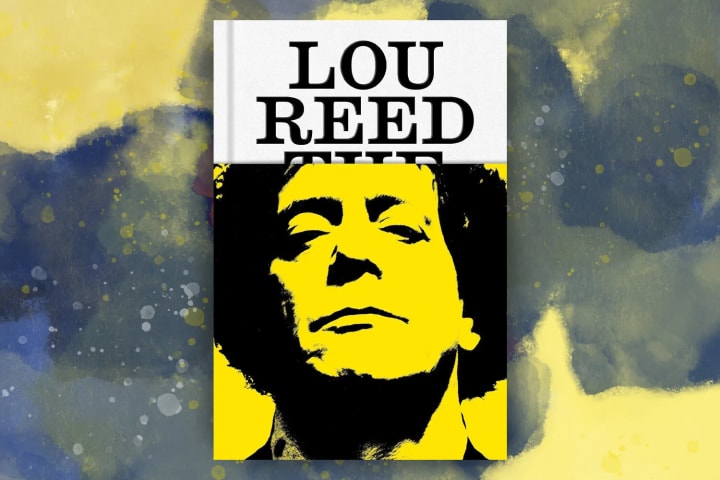
Lou Reed as the 'King of New York' is portrayed in fascinating ways with the city almost as a character of its own in the timeline. This means that New York City is presented as both a backdrop and a character in Reed’s life. The city’s gritty, chaotic, and diverse cultural scene in the 1960s and 1970s was crucial to Reed’s development as an artist. Hermes shows how New York’s art world, nightlife, and underground subcultures fed into Reed’s music. The city's rough energy and constant flux mirrored Reed’s own restless creativity. Songs like "New York" reflect his complex relationship with the city, one of love, critique, and admiration for its rawness. This is where I often think that Lou Reed did better work on his own rather than as an artist collaborating with others.
Throughout the book, Hermes explores the dichotomy between Reed’s tough, often abrasive public persona and the vulnerability that lay beneath. Hermes suggests that much of Reed’s aggression was a defense mechanism, shaped by early traumas like his difficult relationship with his family and his experience with ECT. Reed’s music allowed him to express his vulnerabilities indirectly, through characters and scenarios that blurred the line between autobiography and fiction. This duality is what made Reed both a challenging and compelling figure. If the word 'compelling' was ever used to describe a person, it should be absolutely reserved for Lou Reed, who is about as compelling as they come.
All in all, I think I enjoyed this book about Lous Reed the most out of all the three that I have read now. It is a deep and intimate look at the artist as an artist rather than a commercial product of other people using his music or as a star of the alternative scene for wannabe gritty teens who listened to one Lana Del Rey song. This is an autobiography of nothing more than a man who turned himself into an immortal by writing some of the greatest songs the 20th century has ever had the pleasure of listening to. He was truly an icon on a new level.
About the Creator
Annie Kapur
I am:
🙋🏽♀️ Annie
📚 Avid Reader
📝 Reviewer and Commentator
🎓 Post-Grad Millennial (M.A)
***
I have:
📖 280K+ reads on Vocal
🫶🏼 Love for reading & research
🦋/X @AnnieWithBooks
***
🏡 UK
Keep reading
More stories from Annie Kapur and writers in Geeks and other communities.
Book Review: "Road Ends" by Mary Lawson
"It was the distance between herself and home that bothered her. . . . she could see herself here in five years' time. In ten. Her family going on its way without her. Thinking of her less and less, as she would probably think of them less and less. . . . The emptiness inside her gradually filling with other things, other people. The word 'home' taking on a different meaning, so that when she went back to visit she would no longer belong there. She would no longer be the person she would have been if she'd stayed." - Road Ends by Mary Lawson
By Annie Kapurabout a year ago in Geeks
Silver Screen Magic with Mae West
American actress and singer Mae West became a popular film actress during the Great Depression. She started entertaining in vaudeville, then performed on Broadway, and finally went to Hollywood. She signed up with Paramount Pictures and made her debut in the 1932 film “Night After Night.” She also starred in musicals, comedies, and crime dramas. The American Film Institute named her one of the best classic Hollywood actresses.
By Rasma Raisters10 days ago in Geeks
What is Baddie Hub?
What It Is and Where It Came From The term “baddie” used to describe a person with bold style and confidence has moved from social media slang into a broader online space focused on fashion and lifestyle inspiration. Originally popularized by creators on Instagram and TikTok, this trend soon grew into online communities and platforms dedicated to sharing looks, beauty tips, and ways to stand out confidently in both appearance and attitude.
By Dena Falken Esq5 days ago in Geeks
The Summer I Was Chosen by a Northern Mockingbird
During the long, suspended days of the pandemic, a wild mockingbird began visiting my driveway and chose me, again and again. What started as a strange encounter became a brief, meaningful connection that I still carry with me.
By Erica Roberts 3 days ago in Petlife


Comments (1)
I read the Victor Bockris bio, and I have seen this in bookstores. I do miss the Lou (no ''s", by the way). He taught me how to play guitar ("Sweet Jane" is east to learn). And I have to confess that I met his ex, Laurie Anderson. She gave a performance in Montréal and I spoke to her after a show...and she gave me a hug!