
Book Review: "Literature for the People" by Sarah Harkness
5/5 - a beautiful nonfiction on the building of a publishing empire infused with change and brilliance...

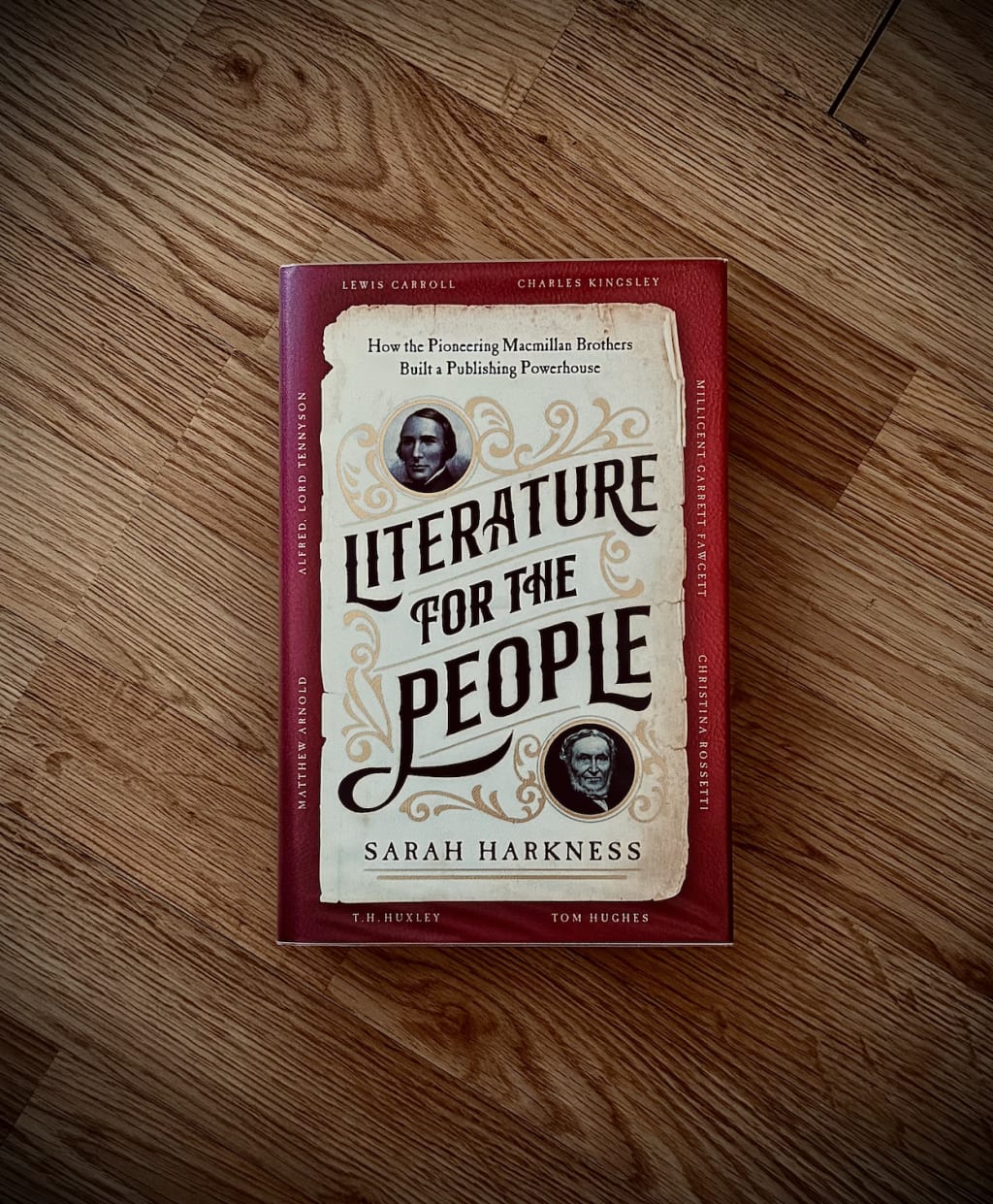
As I have discussed previously, I have recently found a great love for reserving books at the library and then picking them up instead of sticking around in what is less of a library and more of a social club. Yes, I'm ranting about why people can't be quiet in a library these days. I will have to say though that back when I was in Birmingham, most people were quiet in the library and the library itself was bigger with far, far more people in it. Perhaps it is just this one that's like this (I hope so). But I reserved this book and I am so glad I did. Big and chunky, it is all about the history of Macmillan Publishing.
Daniel and Alexander Macmillan were born into a humble crofter’s family on the Isle of Arran in Scotland, a setting that deeply shaped their outlook on life. Growing up in a rural, isolated environment, they had little access to formal education, but their natural curiosity and love for learning propelled them forward. Despite the challenges of poverty and limited opportunities, they developed a passion for books, which would become the driving force behind their later success. Harkness presents their early years as a testament to the transformative power of education and self-improvement, themes that would define their publishing philosophy.
Seeking a better life, the brothers left Scotland for London in the 1830s, determined to carve out a future in the world of books. They started as booksellers, working their way up in the bustling literary capital, learning the intricacies of the book trade, and gaining valuable insights into what readers wanted. This hands-on experience helped them realise that there was an unmet demand for affordable yet high-quality literature; books that could be enjoyed not just by the elite but by ordinary working people. The author depicts this period as crucial to the development of their vision, showing how they transitioned from mere traders of books to passionate advocates for wider literary access. Honestly, this is my favourite part of the book. The decision that was made here really changed the world of literature for the better.
With a clear sense of mission, the brothers founded Macmillan & Co., determined to produce books that would not only entertain but also educate and uplift society. They saw literature as more than a commodity—it was a means to broaden minds, challenge existing ideas, and promote social progress. Unlike many contemporary publishers who prioritised profit over quality, the Macmillans struck a balance, maintaining high editorial standards while ensuring their books remained accessible. Harkness highlights how their approach was both radical and deeply principled, setting them apart in the fiercely competitive world of Victorian publishing. I loved reading about the era of Victorian Publishing because it seemed so human in comparison to a lot of the stuff we have in the industry today which massive leans towards the social and digital media realms. The author wrote this part just brilliantly, it completely takes you away.
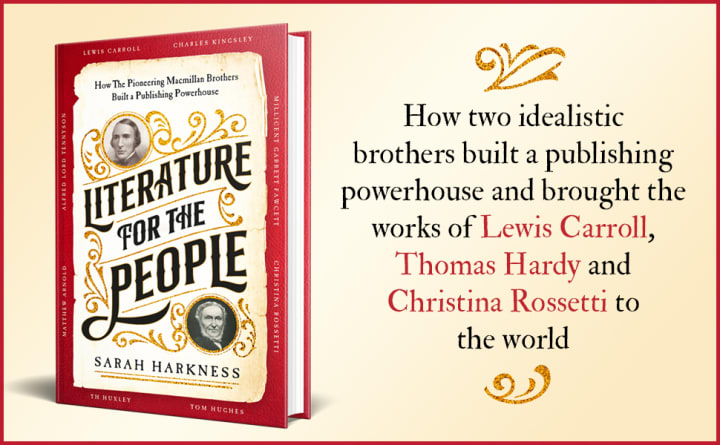
One of the most significant aspects of Macmillan & Co.’s legacy was the calibre of authors they attracted. They played a key role in publishing some of the most influential literary figures of the era, including Lewis Carroll, Thomas Hardy, Alfred Lord Tennyson, and Charles Kingsley. They also championed the works of poets such as Matthew Arnold and Christina Rossetti, ensuring that poetry remained a central part of public literary consumption. The author details how the Macmillans worked closely with their authors, often providing them with support and guidance that extended beyond the typical publisher-writer relationship, further reinforcing their dedication to literary excellence. You can imagine how much I enjoyed reading all the different authors and their works being named in this text. Well, it's even more than whatever you're thinking.
Despite their growing success, the Macmillans faced considerable obstacles. Daniel, in particular, struggled with ill health, suffering from tuberculosis, which would eventually claim his life at a relatively young age. His declining health added a sense of urgency to their mission, pushing them to establish a strong foundation for the publishing house before it was too late. On the business side, they had to navigate an unpredictable and often ruthless industry, contending with financial pressures and the ever-changing tastes of readers. The author presents these challenges not as deterrents but as fuel for their perseverance, showing how they overcame adversity through sheer determination and strategic thinking. Reading about Daniel's death was difficult because by this point, you've seen they have always done this together. However, this also gives Alexander a sense of purpose in continuing the enterprise for his brother's memory. It's both sad and beautiful at the same time.
There are many other things to appreciate in this book including the way in which this pubishing house rose to suit our own times through its legacy. But I think that my personal favourite parts definitely relate to the changes the company shaped the new way of books being sold in the Victorian era. So, if you're not sure whether you want to tackle this big one then I would highly recommend you do.
About the Creator
Annie Kapur
I am:
🙋🏽♀️ Annie
📚 Avid Reader
📝 Reviewer and Commentator
🎓 Post-Grad Millennial (M.A)
***
I have:
📖 280K+ reads on Vocal
🫶🏼 Love for reading & research
🦋/X @AnnieWithBooks
***
🏡 UK
Keep reading
More stories from Annie Kapur and writers in Geeks and other communities.
War and Peace - The Nazis and the Pope
During World War II, the relationship between the Vatican and Nazi Germany remains one of the most contentious and mysterious chapters of history. The central figure in this debate is Pope Pius XII, whose actions, or lack thereof, during the Nazi regime have been the subject of intense scrutiny. Some claim that Pius XII was sympathetic to Hitler’s regime, citing his silence in the face of the Holocaust and his controversial negotiations with Nazi officials. Others argue that he worked behind the scenes to protect Jews and sabotage Nazi plans. With conflicting accounts, limited evidence, and decades of secrecy surrounding Vatican archives, the truth remains elusive, leaving us to question whether Pius XII was a passive bystander, a secret collaborator, or a cautious diplomat caught between a tyrannical regime and a neutral church.
By Annie Kapur9 months ago in Geeks
Silver Screen Magic with Mae West
American actress and singer Mae West became a popular film actress during the Great Depression. She started entertaining in vaudeville, then performed on Broadway, and finally went to Hollywood. She signed up with Paramount Pictures and made her debut in the 1932 film “Night After Night.” She also starred in musicals, comedies, and crime dramas. The American Film Institute named her one of the best classic Hollywood actresses.
By Rasma Raisters5 days ago in Geeks



Comments
There are no comments for this story
Be the first to respond and start the conversation.