
War and Peace - The Nazis and the Pope
Why It's Shifty (Week 10)

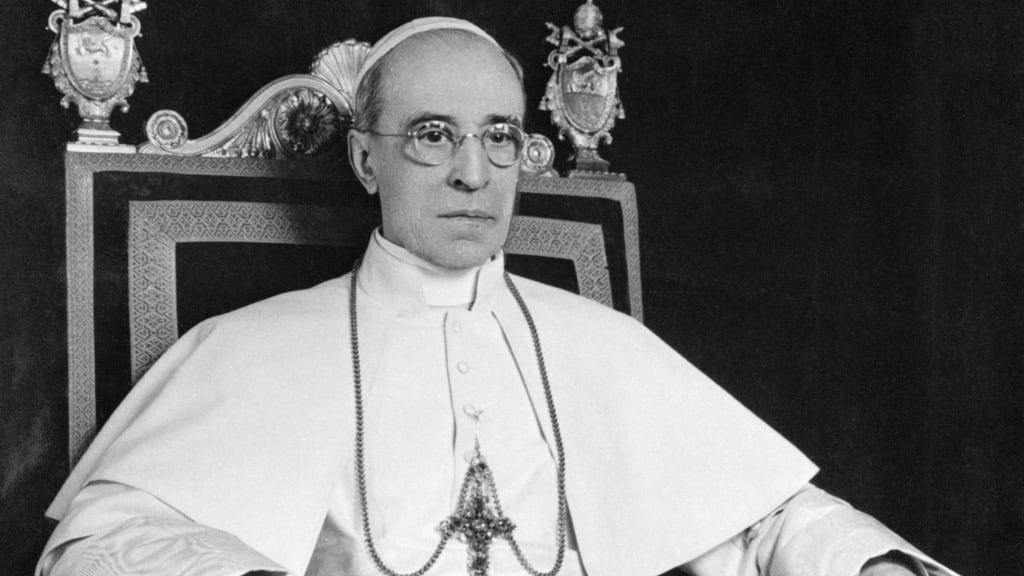
During World War II, the relationship between the Vatican and Nazi Germany remains one of the most contentious and mysterious chapters of history. The central figure in this debate is Pope Pius XII, whose actions, or lack thereof, during the Nazi regime have been the subject of intense scrutiny. Some claim that Pius XII was sympathetic to Hitler’s regime, citing his silence in the face of the Holocaust and his controversial negotiations with Nazi officials. Others argue that he worked behind the scenes to protect Jews and sabotage Nazi plans. With conflicting accounts, limited evidence, and decades of secrecy surrounding Vatican archives, the truth remains elusive, leaving us to question whether Pius XII was a passive bystander, a secret collaborator, or a cautious diplomat caught between a tyrannical regime and a neutral church.
Plot
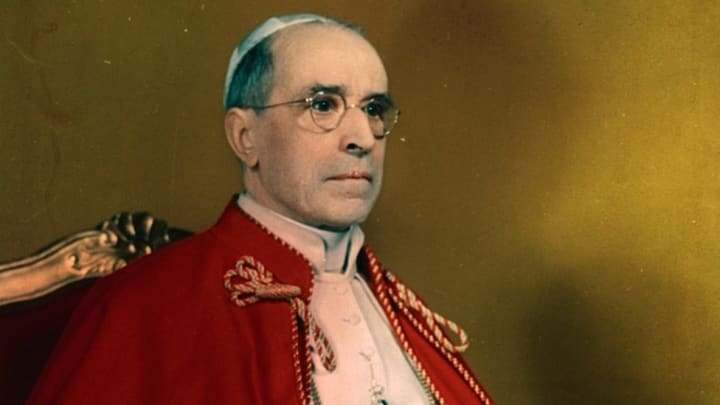
Pope Pius XII, born Eugenio Pacelli on March 2, 1876, in Rome, was one of the most significant and controversial figures in the history of the Catholic Church. He was the 260th pope, reigning from 1939 until his death in 1958. Pius XII's papacy coincided with one of the most tumultuous periods in modern history, including World War II and the early stages of the Cold War, which shaped much of his legacy. His actions during these years, particularly in relation to Nazi Germany, have led to ongoing debate about his role in the Holocaust and his stance on fascism.
Before becoming pope, Pacelli had a long career in the Church's diplomatic service. He was appointed papal nuncio (ambassador) to Germany in 1920, where he quickly became acquainted with the rise of Adolf Hitler and the Nazi Party. During his time in Germany, Pacelli navigated the increasingly complex political landscape, and it is here that his future as a key figure in Vatican diplomacy began to take shape. In 1933, he played a pivotal role in negotiating the Reichskonkordat, a treaty between the Vatican and Nazi Germany. The concordat was intended to protect the rights of the Catholic Church in Germany under the Nazi regime. However, many critics argue that it effectively legitimised Hitler's government and gave the Nazi regime a veneer of international respectability, despite the brutal policies already being enacted against Jews and political dissidents.
Pius XII was elected pope on March 2, 1939, just months before the outbreak of World War II. His papacy would be defined by his attempts to maintain the Vatican’s neutrality during the conflict, a position that many later questioned. His role during the war is controversial; while he was praised for his efforts to provide humanitarian aid and shelter for those fleeing Nazi persecution, particularly Jews, he has been heavily criticised for his silence on the atrocities committed by the Nazis, especially the Holocaust. Pius XII's policy of neutrality and discretion was rooted in the belief that the Vatican should not become embroiled in political matters. However, his failure to publicly denounce the Nazi regime has led to accusations of complicity or indifference.
Throughout the war, Pius XII was deeply concerned with maintaining the sovereignty of the Vatican and the Church’s ability to influence global affairs. His silence, some argue, was not out of indifference but a pragmatic approach to safeguard the Church’s position. Behind closed doors, however, it is clear that the Vatican was involved in covert operations to protect Jews and other persecuted groups. The Vatican provided refuge to thousands of Jews, with some estimates suggesting that as many as 4,000 Jews were hidden in the Vatican and its properties. Additionally, numerous religious orders and Church officials risked their lives to shelter Jews, often with the knowledge or approval of the pope.
However, the most damning criticism against Pius XII lies in his failure to publicly denounce the Holocaust. While he was privately active in aiding those persecuted, his lack of an outspoken condemnation of the atrocities has led to accusations of moral cowardice. Some historians argue that Pius XII’s actions were driven by a desire to maintain good relations with fascist regimes, including Mussolini's Italy and Hitler's Germany, in order to preserve the Church's influence and protect its interests.
Pius XII's legacy is one of deep division. While some view him as a cautious and pragmatic leader who preserved the Church's autonomy during a period of great danger, others see him as an ineffective and morally compromised figure who failed to stand up to the horrors of Nazi Germany. His reign remains a subject of ongoing debate, with historians continuing to question the balance between political prudence and moral responsibility in his papacy.
Into the Theories
Sympathetic:
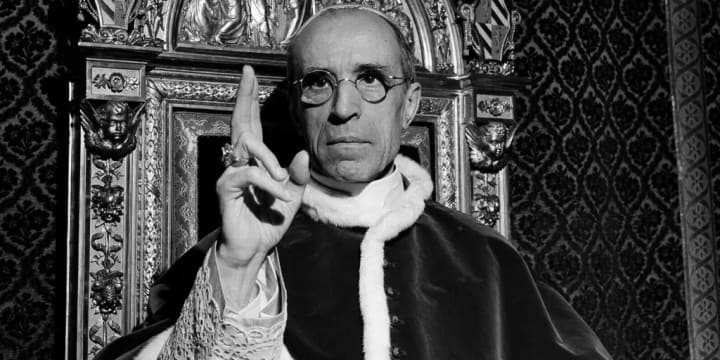
One theory posits that Pope Pius XII was sympathetic to Nazi Germany and its fascist ideology, or at the very least, willing to tolerate Hitler’s regime in the hopes of protecting the interests of the Catholic Church. The most notable evidence for this claim is the 1933 Reichskonkordat, a treaty between the Vatican and Nazi Germany, which some argue legitimised the Nazi government. Critics suggest that Pius XII’s quiet diplomacy and reluctance to denounce Hitler’s atrocities were politically motivated, allowing the Church to maintain influence in Europe. They argue that the Pope’s silence in the face of the Holocaust was, in part, a strategic decision to avoid antagonising a regime that could have led to further persecution of Catholics. This theory paints Pius XII as a pragmatist, sacrificing moral outrage for the perceived greater good of the Church.
Opposed:
Another theory contends that Pope Pius XII was secretly opposed to Nazi ideology and worked behind the scenes to thwart Hitler’s regime, even though he did not publicly condemn it. Proponents of this view point to the Vatican’s covert efforts to provide sanctuary for Jews during the Holocaust, with some suggesting that Pius XII personally authorised these actions. The Pope is also credited with using his diplomatic ties to encourage resistance against Nazi occupation in Italy. Some argue that Pius XII’s public silence was a strategic decision aimed at preserving Vatican neutrality in an increasingly perilous world. According to this theory, the Pope’s quiet opposition was driven by the belief that direct confrontation with the Nazis would have led to even greater suffering for Catholics and Jews alike, and that diplomatic backchannels were a more effective tool.
Collaborating?
A more conspiratorial theory suggests that Pope Pius XII was not just complicit with the Nazis but may have secretly collaborated with them. This theory posits that Pius XII’s failure to openly oppose Nazi policies was part of a hidden agenda, possibly involving the Vatican’s efforts to align itself with fascist regimes for political or economic gain. Some conspiracy theorists argue that the Church may have hoped to benefit from an alliance with Nazi Germany in its struggle against communism and to retain its influence in Europe. There is speculation that the Pope allowed Nazi operatives to use Vatican resources, including money and escape routes, to help facilitate the Nazis’ war effort, even as the world was unaware of the Vatican’s role. This theory casts Pius XII as a manipulative figure who prioritised the Church’s power over moral clarity, fostering a darker, more cynical view of his reign.
Why It's Shifty
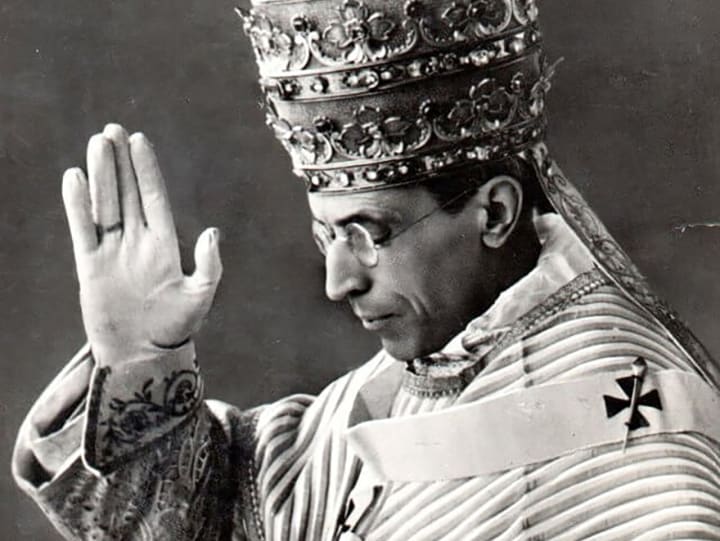
The relationship between Pope Pius XII and Nazi Germany remains controversial due to the moral and historical implications of his actions during World War II. His silence in the face of the Holocaust and failure to publicly denounce Nazi atrocities have sparked intense debate about whether he was complicit, passive, or strategically neutral. This controversy is compounded by the lack of conclusive evidence, with conflicting accounts of his actions and motivations. The secrecy surrounding Vatican archives only deepens the mystery, leaving historians and the public divided over whether Pius XII was a silent bystander or a hidden hero in a time of immense moral crisis.
Conclusion
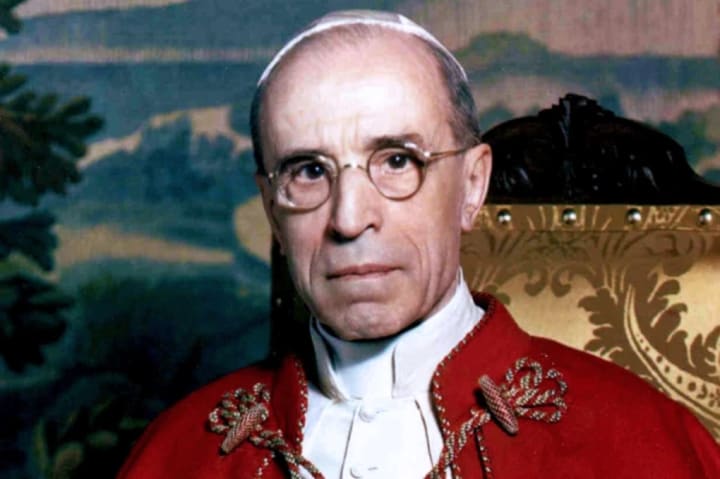
The most likely explanation is that Pope Pius XII sought to maintain Vatican neutrality during World War II, prioritising the preservation of the Church’s influence in a deeply volatile political climate. While his silence on Nazi atrocities has led to criticism, it seems he acted cautiously, believing that open confrontation would lead to greater suffering for Catholics and Jews. Behind the scenes, the Vatican did aid persecuted individuals, and Pius XII is thought to have covertly worked to protect them. His actions, though not without flaws, appear to reflect a delicate balancing act between moral responsibility and political pragmatism.
Next Week: King Solomon’s Riches
About the Creator
Annie Kapur
I am:
🙋🏽♀️ Annie
📚 Avid Reader
📝 Reviewer and Commentator
🎓 Post-Grad Millennial (M.A)
***
I have:
📖 280K+ reads on Vocal
🫶🏼 Love for reading & research
🦋/X @AnnieWithBooks
***
🏡 UK
Keep reading
More stories from Annie Kapur and writers in Geeks and other communities.
"A Laugh, Distinct, Formal, Mirthless"
Background and Context: About 8 years' ago, I was planning to do a podcast on soundcloud, but I never did. I wrote over 15'000 words of content on Jane Eyre alone and lots more on a bunch of other 19th Century novels so, enjoy.
By Annie Kapur9 months ago in Geeks
Silver Screen Magic with Mae West
American actress and singer Mae West became a popular film actress during the Great Depression. She started entertaining in vaudeville, then performed on Broadway, and finally went to Hollywood. She signed up with Paramount Pictures and made her debut in the 1932 film “Night After Night.” She also starred in musicals, comedies, and crime dramas. The American Film Institute named her one of the best classic Hollywood actresses.
By Rasma Raisters5 days ago in Geeks
Agnes Abdullahu's DiaMondaine Diamantaires Club partners with Isis Fashion Awards (Brings Diamonds, Luxury and Deluxe Dubai Flair to Amsterdam)
In the glittering world of high-end jewelry and haute couture, there are those who simply attend events, and then there are those who weave the very fabric of the experience. As the calendar turned toward the highly anticipated 4th edition of the Isis Fashion Awards (IFA) on May 6th, a new and formidable alliance began to take shape.
By postworldviewa day ago in Geeks
Miss Persephone's Manual to a Seemingly Ordinary Life
Miss Persephone was found at the dining table, her blue eyes swollen, her tears arriving and retreating like the tides of the ocean. Earlier that day, her family had visited her in the retirement home where she had lived for eight years. It was her eightieth birthday.
By Imola Tóth3 days ago in Fiction


Comments
There are no comments for this story
Be the first to respond and start the conversation.