
Book Review: "Junky" by William S. Burroughs
5/5 - possibly his best book...

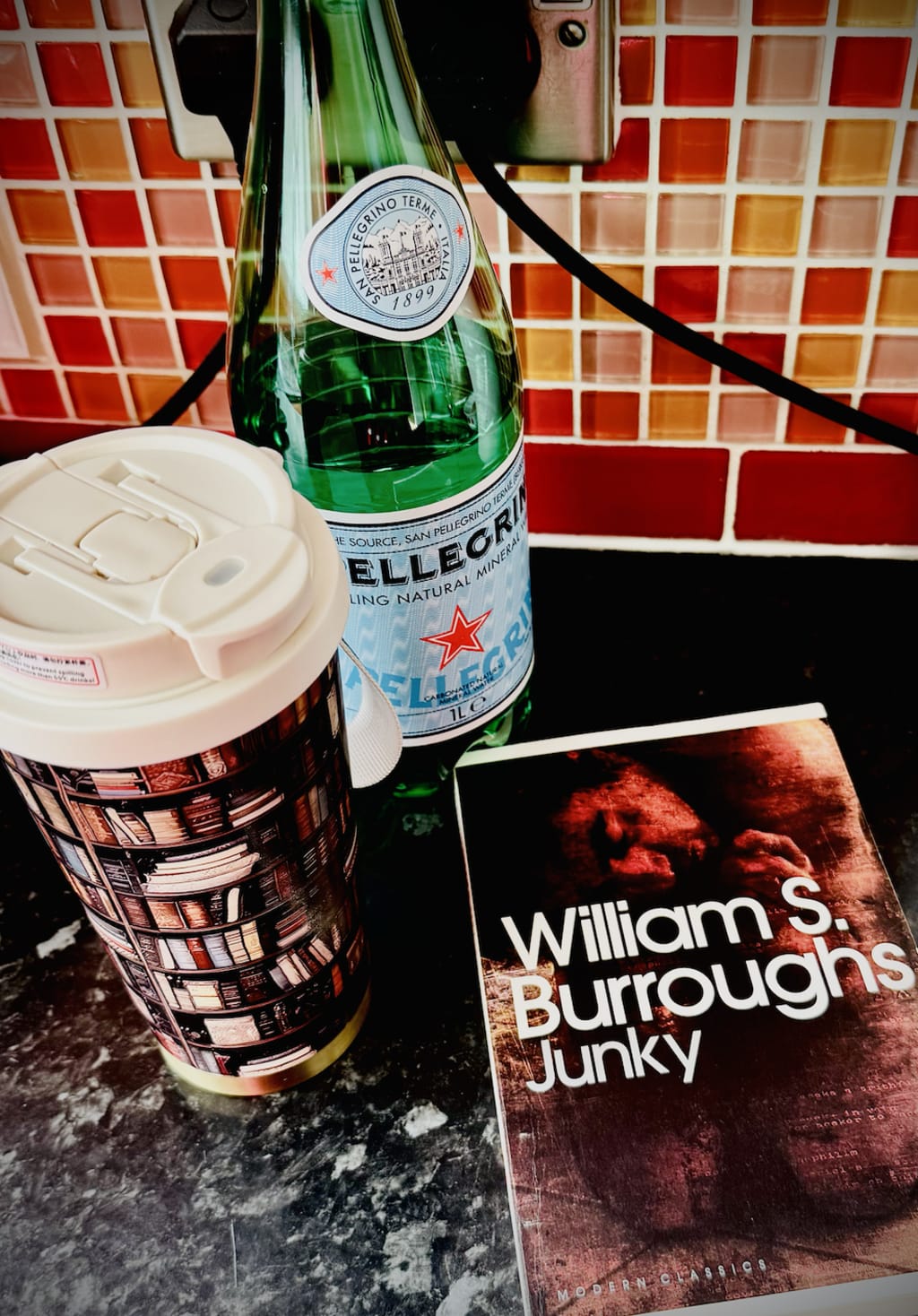
Here we go, we're back with some William S. Burroughs. If you haven't read my previous stuff about him then here's a quick shortcut of an introduction: I'm on the fence about a lot of his writing. Back in university I read the book he wrote with Kerouac entitled And the Hippos Were Boiled in their Tanks and amongst the phoney bohemians had to almost pretend like I enjoyed it. My review of The Soft Machine can be read by clicking the link here. And also a more 'on the fence' review of The Wild Boys can be read here.
If you want to read my other reviews of Burroughs books, then we have...
I hope you enjoy them. Now, on to the review...
The book begins with Burroughs’ alter ego, William Lee, narrating his first encounters with drugs in 1940s New York. He tries morphine and heroin out of curiosity rather than desperation, describing the sensations with clinical detachment. Unlike other texts of the time, Burroughs frames "junk" use as both banal and all-consuming, an inevitable progression once the body develops dependency. The tone is matter-of-fact and doesn't romanticise the situation at all. I like the way Burroughs is so open and honest about the whole thing. He uses metaphors to elongate the image rather that prescribe a set of 'cool' atmospheres to it.
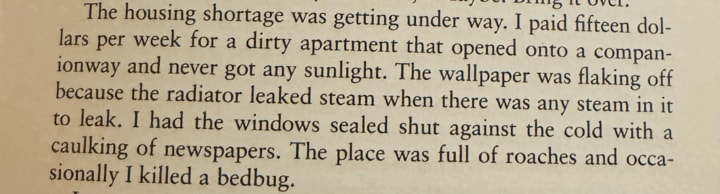
Lee carefully describes the “junk cycle”: the temporary high, the rapid onset of tolerance, and the brutal sickness of withdrawal. He introduces readers to the underground economy of addicts, fixers, and dealers who are people perpetually chasing their next shot. Burroughs looks at how junk dictates behaviour: decisions, movements, and even relationships are subordinated to scoring the next fix. The narrative becomes a map of alleyways, cheap hotels, and backrooms where heroin circulates. This is about where the atmosphere becomes heavier but instead of looking 'cool' and like the rest of his generation - 'adventurous', instead it is disgusting, rampant with insects and gruesome imagery. If you have ever required to be put off taking drugs then this is probably for you.
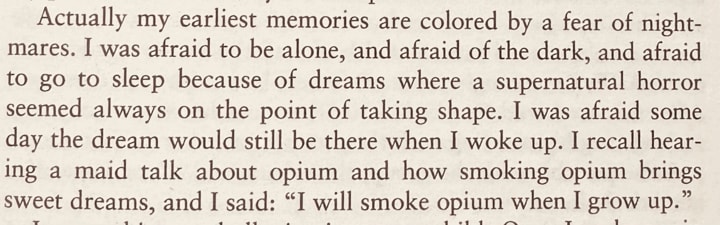
Lee sketches vivid portraits of other addicts: broken men and women who live in perpetual cycles of sickness and euphoria. These vignettes, often told in humorous or grotesque detail, show how junk flattens individuality as every addict becomes predictable, shaped by the same cravings and fears. Burroughs contrasts the supposed thrill of drug use with its grinding monotony, showing that heroin reduces lives to repetition and need. I can honestly say that this is probably not only true for heroin but for any addiction. The one that comes to mind in our modern day is screen and/or social media addiction. It fuels a destructive lifestyle rather than supports a healthy one. It makes you sad, but you do it anyway. It initially has the buzz of being novelty but then becomes banal and empty as usage continues. The language of William S. Burroughs in this book is really something else - it speaks to something deep within the reader that desperately wants to stay hidden from public view.
At various points, Lee makes attempts to get clean, often during times when access to junk dries up or circumstances force him to confront withdrawal. These attempts are brutal, involving sweating, vomiting, and hallucinations. Burroughs writes about these episodes without melodrama, describing them as mechanical processes, they are sufferings to be endured until the body resets. Yet each time, the pull of junk drags him back, showing how powerful and cyclical dependency is. Again, the way in which we see this is nothing that is romanticised but rather a case of what happens in a way that strips the cycle of its 'greatness'. I think this is probably the one thing that makes Burroughs stand out against his own generation the most - his refusal to glamorise the process of life, no matter how intense the feeling, the nightmare or the mechanism.
All in all, I think this book is probably my new favourite by the author. It definitely has all the power of a book that wants to tell you something by stripping the glamour and romantics of the atmosphere. This is a book the world is afraid to look at because, as Oscar Wilde said, it shows us our own shame.
About the Creator
Annie Kapur
I am:
🙋🏽♀️ Annie
📚 Avid Reader
📝 Reviewer and Commentator
🎓 Post-Grad Millennial (M.A)
***
I have:
📖 300K+ reads on Vocal
🫶🏼 Love for reading & research
🦋/X @AnnieWithBooks
***
🏡 UK
Keep reading
More stories from Annie Kapur and writers in Geeks and other communities.
Book Review: "The Running Man" by Stephen King
I have no idea why I chose to read this but it was just there and so I did. Sometimes, you just need some Stephen King in your life. I feel like during the Halloween season you'll probably see more of this from me but yet again, I read this one on my phone. The Running Man is a very interesting dystopian story and, as we know, another dystopian story by Stephen King has recently been adapted and so if you haven't read The Long Walk then I would highly recommend it. However, this review is about The Running Man so let's get back on topic...
By Annie Kapur5 months ago in Geeks
Pan’s Labyrinth
Pan’s Labyrinth was released on December 29, 2006. In the summer of 1944 in Francoist, Spain eleven-year-old Ofelia and her pregnant but sick mother, Carmen, journey to live with Carmen’s new husband, Captain Vidal. Carmen is bedridden and Ofelia finds time to explore. One night she is visited by a fairy who takes her to a faun. There, she discovers she is the lost princess Moanna and will have to complete three tasks before the full moon in order to return to her kingdom. I have been recommended this film countless times and I finally saw it on Netflix. My neighbor liked how I referred to it as a Spanish Narnia. One fact about this film is in Spanish it is called El Laberinto del Fauno which translates in English to The Labyrinth Of The Faun. Despite the English title it was released as, it has nothing to do with the faun called Pan in Greek Mythology which I had originally thought but that did not sway my interest in the slightest. I only found myself imagining I was a little girl again and going on an adventure.
By Melissa Clark5 days ago in Geeks


Comments
There are no comments for this story
Be the first to respond and start the conversation.