
Book Review: "Exterminator!" by William S. Burroughs
5/5 - possibly the author's best work, in my opinion...

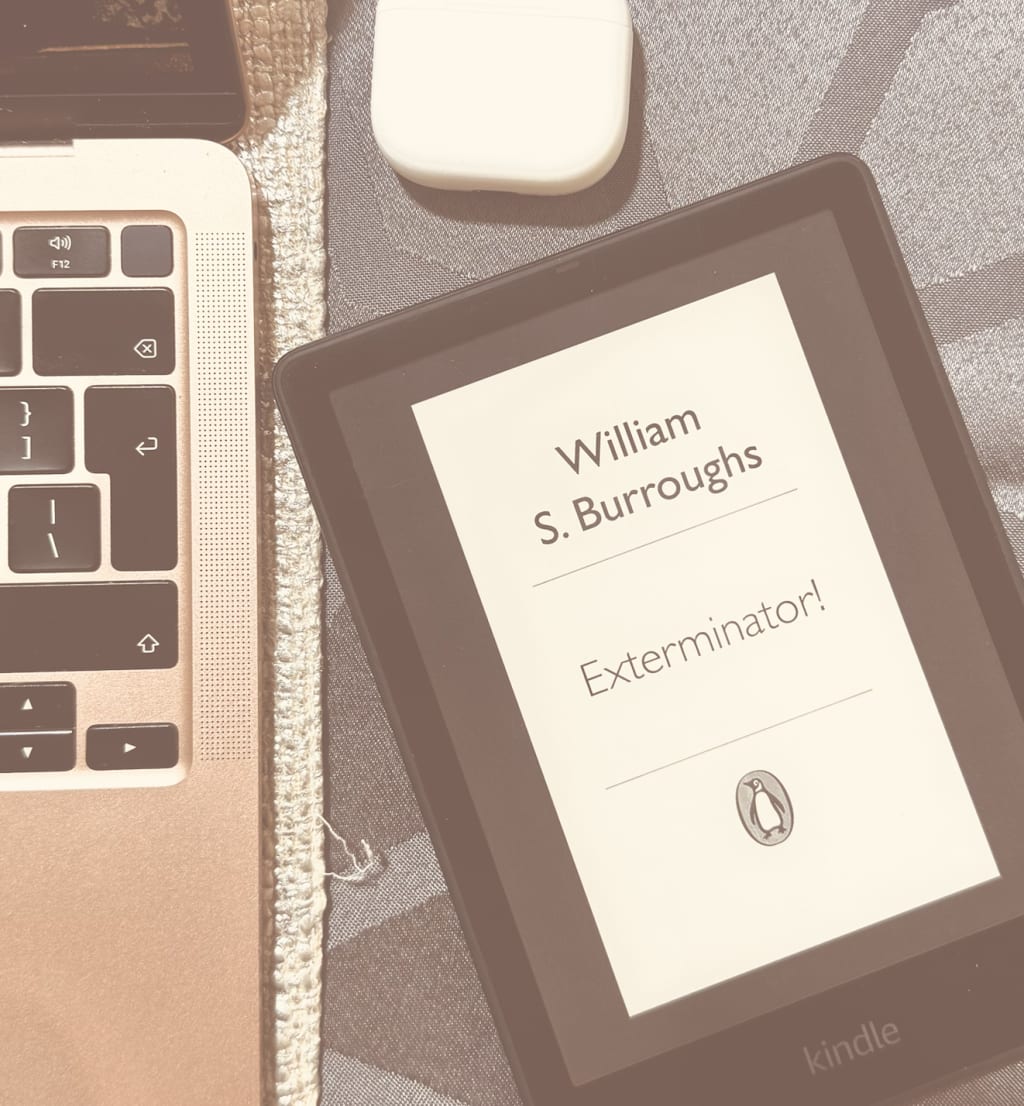
As you know, my encounters with William S Burroughs have been a bit here and there. I have often enjoyed his works but, then again some have missed the mark entirely. Some years' ago I read The Wild Boys which was definitely in the middle of that line it seems, though tipping over to the side of enjoyment from time to time. When I read Queer however, I found out what the problem really was: that it would have been much better if it wasn't William S. Burroughs who had written it. So, let's explore what I thought of the fragmentary experimental novel Exterminator! where yet again, Burroughs has planted himself firmly (it seems) in the autobiography of the character and plot.
The opening sketches present Burroughs’ alter ego as a literal pest exterminator, spraying insecticide in infested rooms. But very quickly, this role becomes a metaphor: he’s not just killing bugs, he’s eradicating corruption, mind control, and societal rot. His weapon of choice is a poison doubling as both cure and contamination, and the act of extermination is described with grotesque relish, setting the tone for the rest of the book. Honestly, this seemed a bit on the nose at times, but then again William S. Burroughs was writing at a time where these metaphors for anti-corruption were literally everywhere. I'm going to give him the benefit of the doubt and say though I found it at times, to be a little obvious, it possibly was more revolutionary for the time period considering it was still becoming more popular amongst writers.
Burroughs portrays urban life as a grotesque portrait of decay: grimy motels crawling with cockroaches, bureaucratic offices filled with meaningless paperwork, bars populated by junkies and predators. These images are rotten and disgusting but they definitely make the book more interesting and filled with the kind of atmosphere you expect when reading a Burroughs text. I'm not going to lie though, it isn't too far away from our own reality at the moment. There is still a bunch of bureaucratic offices packed full of nightmarish paperwork for very little to no reason. Characters drift in and out, often nameless, addicts, hustlers, officials, and killers who exist on the fringes of society but embody its true nature. This is more of a timeless message than I think Burroughs gets credit for. It definitely still applies to our own time.
Heroin, alcohol, and pills appear in story after story, but Burroughs makes clear that addiction isn’t just chemical. Bureaucrats are addicted to rules, police to brutality, capitalists to profit, politicians to power. He collapses the boundary between “junkie” and “respectable citizen,” showing both as trapped in endless cycles of need and degradation. Addiction becomes a metaphor for the whole machinery of control. I cannot fault him on this one. This is something very deep and psychological, something I haven't seen much of in my reading of Burroughs' work. Honestly, this was like a breath of fresh air, I didn't think I would agree so much with a message in one of his books but here we are.
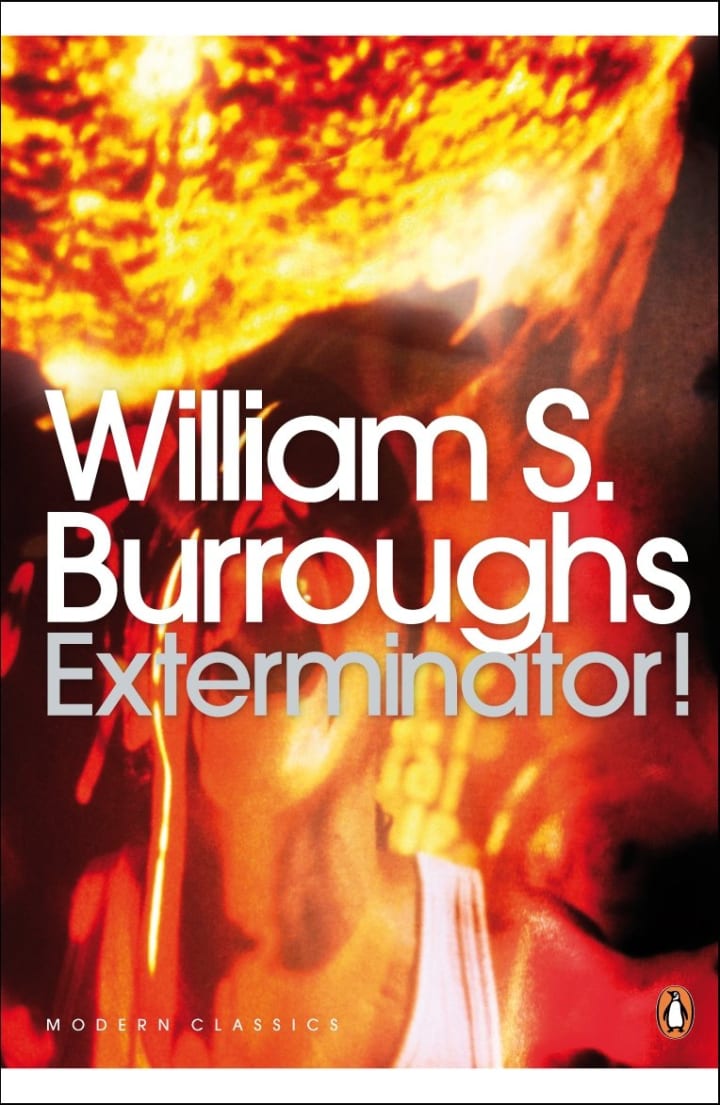
Apart from this characters are shot, mutilated, or poisoned in grotesque detail, but the tone is always laced with black humour. The author delights in the absurdity of power figures brought low: a police officer slipping on his own entrails or a bureaucrat poisoned at his desk. The violence is never solemn, instead it’s cartoonishly surreal, underscoring how brutality underpins the functioning of society while mocking its self-importance. Oh my gosh, was I really starting to enjoy the way in which the metaphor I had previously bashed for being too obvious was starting to unfold. There's so many images in here which are definitely there for the dark comedy and satire but also feel realistic in an ironic way.
The recurring settings are collapsing cities, garbage-strewn landscapes, and oppressive institutions: schools, prisons, government offices, all depicted as if diseased. The author often lingers on sensory detail: the smell of rotting meat, the buzzing of flies, the greasy touch of decay. Civilisation itself is presented as a body in terminal decline, with its authority figures presiding not over order but over decomposition. As the image grows larger and starts to encompass the entire society within the text. Honestly, I didn't think I'd like it as much as I did.
All in all, I thought this book was fantastic and as I read on, my opinion of the book definitely changed. I hope from this that perhaps I can re-read the other works I have already read and my opinion of them can at least, be improved. This is probably, for me, the best work by the author.
About the Creator
Annie Kapur
I am:
🙋🏽♀️ Annie
📚 Avid Reader
📝 Reviewer and Commentator
🎓 Post-Grad Millennial (M.A)
***
I have:
📖 300K+ reads on Vocal
🫶🏼 Love for reading & research
🦋/X @AnnieWithBooks
***
🏡 UK
Keep reading
More stories from Annie Kapur and writers in Geeks and other communities.
Book Review: "Carrion Crow" by Heather Parry
I'm so happy that I've been able to read some of my books on my phone. It is usually not a possibility because as soon as you sit there on your phone everyone assumes you're being anti-social and doomscrolling. But, because I haven't been out and about lately, I've been able to get some books going on my phone and read them. One of these books was Carrion Crow by Heather Parry. Back when I read Orpheus Builds a Girl by the same author, I did say I wasn't sure whether I was going to give Parry another chance because the book was a bit of a let down for me. However, I did get snatched away by the fantastic opening chapter to Carrion Crow. Let's hope it stays this good...
By Annie Kapur6 months ago in Geeks
A Knight of the Seven Kingdoms Series Review (Season 1)
As one of the biggest properties in fantasy, A Song of Ice and Fire remains immensely popular with audiences. After reaching far into the past with House of the Dragon, a second spin-off was on the cards. A Knight of the Seven Kingdoms serves up a bite-sized slice of action and drama, but it still claims a spot among the best small-screen titles.
By Robert Cain15 days ago in Geeks
How 'A Knight of the Seven Kingdoms' Proves Daenerys' Plan To Retake Westeros Was Never Going To Go As Well As She Thought
Nearly seven years after it aired, the eighth and final season of the phenomenon that was Game of Thrones is still remembered for one of the most divisive TV series endings of all time. Much of the controversy stems from fans believing the ending was too rushed, particularly the scenes in which Queen Daenerys Targaryen, seemingly depicted as a hero for most of the series, succumbs to Targaryen madness and burns many of the innocent commoners of King's Landing in her bid to seize the Iron Throne.
By Kristy Andersona day ago in Geeks



Comments (1)
I love gore and black humour but the story doesn't intrigue me though. Loved your review!