
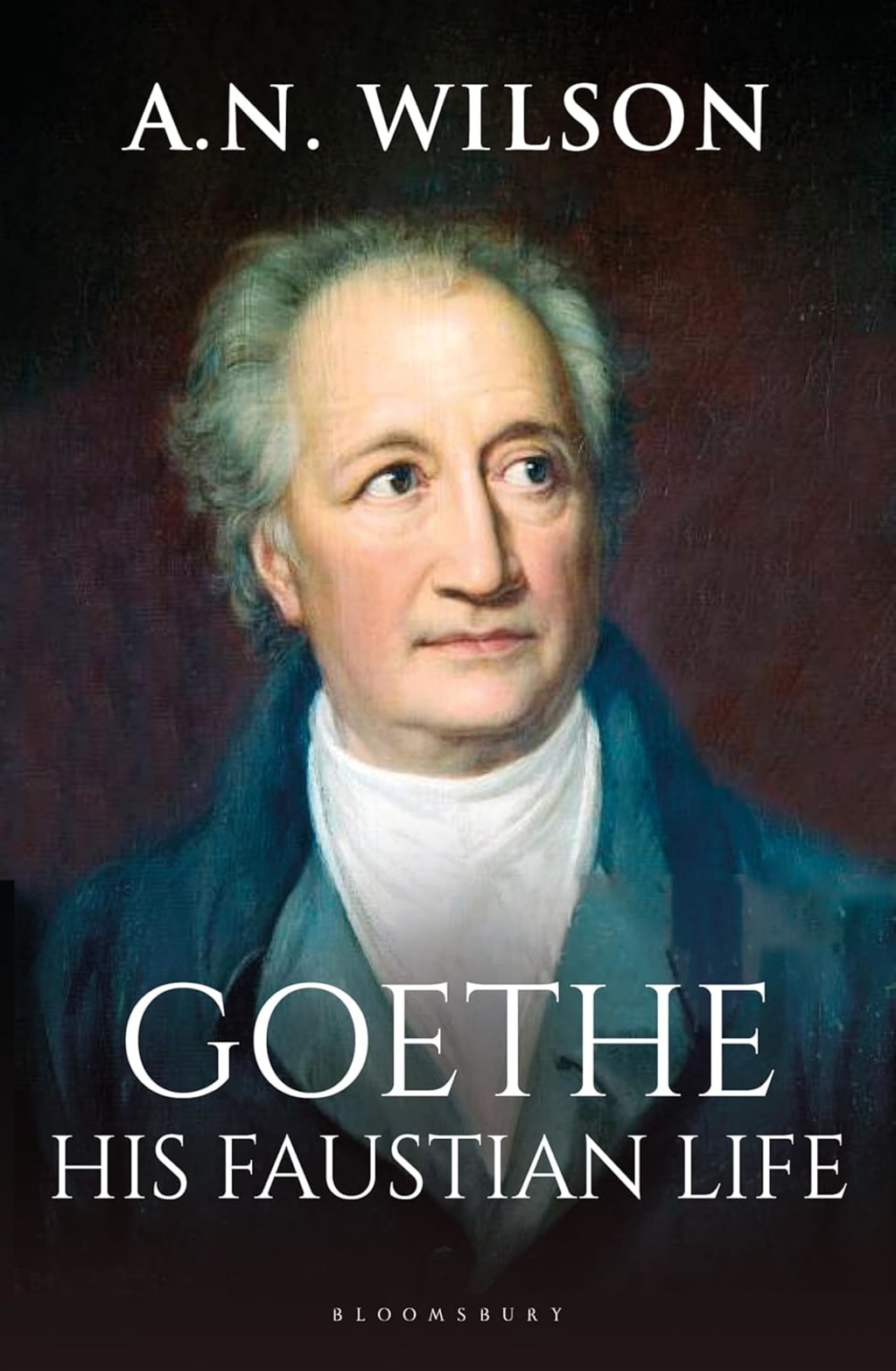
Book Review: "Goethe: His Faustian Life" by A.N Wilson
5/5 - an immersive and cultural experience of Goethe's life and times...

It's old I know - but here's my review of AN Wilson's book on Queen Victoria.
I've read quite a bit of AN Wilson, including his books on Queen Victoria, Charles Dickens and Charles Darwin (regrettably I have not yet read his book on CS Lewis but if anyone can tell me whether it's any good, then I'd be forever grateful). AN Wilson is known for his immersive biographies in which you can get completely lost in.
I remember that his book on Charles Dickens was something of a great achievement - out of the five or six biographies of Dickens I had read, it had to be one of the best, if not the best. AN Wilson has a real talent for not only research but telling us the stories of our favourite writers and figures whilst also maintaining something of a impartial view himself. He is a national treasure. If you haven't yet read him, I would be more than happy if you picked up his books today. Let's take a look at his book on Goethe...
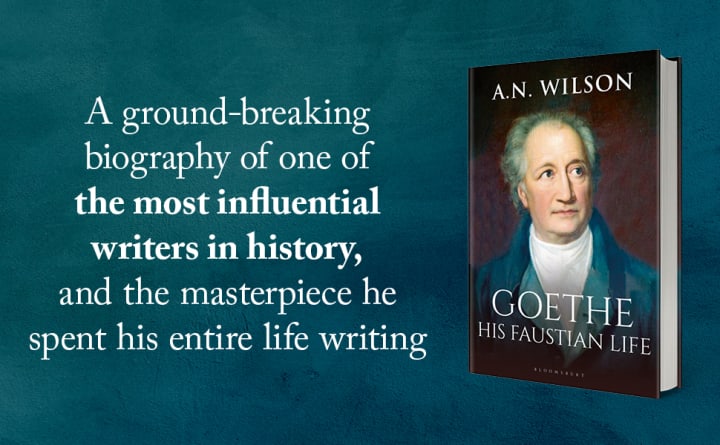
Wilson delves into Goethe's lifelong engagement with Faust, a tale that evolves in parallel with his own intellectual journey. This opus reflects Goethe’s unceasing quest to reconcile the spiritual with the empirical, revealing layers of philosophical turmoil that mirrored Enlightenment and Romantic thought. Wilson shows Goethe’s Faust not as static but as a dynamic narrative continually reshaped by Goethe’s personal changes and the political upheavals around him. This is something that is quite characteristic of Wilson's books - everything is somewhat a product of time and place. It definitely helps the reader to put it into perspective.
Goethe’s thinking, Wilson argues, pioneered key ideas later central to modern philosophy and psychology. Goethe’s exploration of identity, moral relativism, and the limits of knowledge influenced thinkers like Nietzsche and Jung. Wilson interprets Faust as a confrontation with human ambition and existential choice, casting Goethe as a prophet of modern anxieties and crises, reflecting society’s transition into modern individualism and moral ambiguity. I like this idea not only because it offers someone other than Voltaire as a pioneer of this era, but it also offers the idea that Germany was already well into its own psychological enlightenment.
Goethe’s intense relationships with figures like Schiller, his lover Christiane Vulpius, and numerous intellectual peers are essential to Wilson’s biography. These figures were more than confidants; they influenced his art and worldview, feeding into characters and themes within Faust and his other works. Wilson’s treatment of these relationships shows Goethe as both an emotionally complex and deeply flawed human, whose social interactions brought out many of his artistic innovations. When it comes to reading about how Goethe based his characters on people, this can be very interesting - especially considering that a lot of the book is on The Sorrows of Young Werther.
Wilson explores Goethe’s pioneering contributions in areas such as optics and botany, explaining how these pursuits shaped his philosophies of interconnectedness and transformation. His theory of colors, although controversial, reflects Goethe's holistic view of nature, merging science and spirituality. Wilson suggests that Goethe’s scientific work added depth to Faust’s portrayal of nature as a force of chaos and creativity, making Goethe one of the few polymaths who bridged the gap between art and science. Though I agree that Goethe was a polymath, when I first read Goethe's Faust I don't think I saw this come through or else I would have questioned it. I've heard a lot of people comment on the fact that his Faust is one of the best ways to see his abilities as a polymath - but that is not the case for me.
Goethe’s influence extended beyond his writings into the cultural-political sphere, especially in Weimar, where he helped cultivate an intellectual community. Wilson contends that Goethe and the Weimar Circle became symbolic of an idealised cultural utopia, impacting German identity and European thought for generations. Wilson examines Goethe’s impact as both an artistic genius and a shaper of modern intellectual ideals, exploring the mythologised version of Goethe that later generations came to revere as an icon of cultural refinement and philosophical depth. Wilson does a great job at showing every single little bit of influence that Goethe held here. It is a brilliantly in-depth biography.
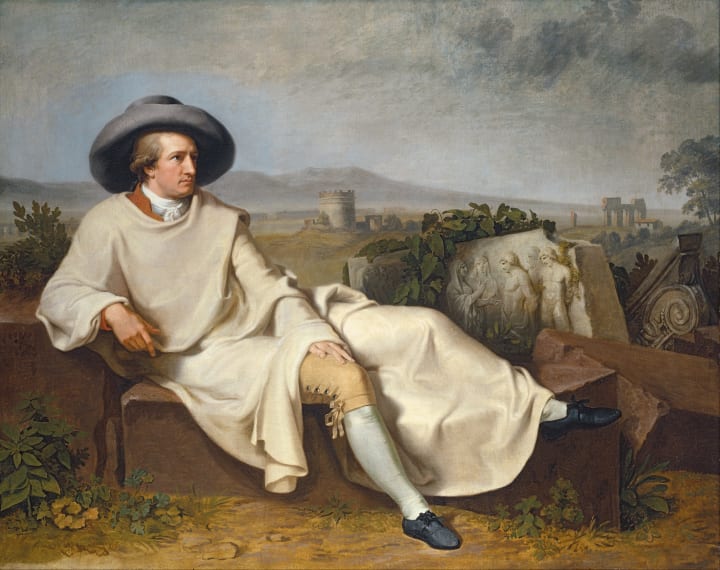
All in all, though it is not my favourite book by this particular author, it is somewhere at the top and I loved being immersed in the German culture in which Goethe lived. The way in which The Sorrows of Young Werther was banned in Leipzig for apparently glamourising suicide, the way in which Goethe has a painting of himself that looks like he has two left legs, the Weimar Circle that came to show the mythical ideals that Germany once had for itself. But most of all, the way in which Goethe spent the vast majority of his life writing Faust.
About the Creator
Annie Kapur
I am:
🙋🏽♀️ Annie
📚 Avid Reader
📝 Reviewer and Commentator
🎓 Post-Grad Millennial (M.A)
***
I have:
📖 280K+ reads on Vocal
🫶🏼 Love for reading & research
🦋/X @AnnieWithBooks
***
🏡 UK
Keep reading
More stories from Annie Kapur and writers in Geeks and other communities.
The Sea is My Brother by Jack Kerouac
The Sea is My Brother is Jack Kerouac's first novel, written in 1942 but not published until 2011, long after his death in 1969. The novel was originally written when Kerouac was just 20 years old, during a period of personal and literary exploration. It remained unpublished during his lifetime, reflecting Kerouac's own dissatisfaction with it and his desire to refine his writing style further.
By Annie Kapurabout a year ago in Geeks
Silver Screen Magic with Mae West
American actress and singer Mae West became a popular film actress during the Great Depression. She started entertaining in vaudeville, then performed on Broadway, and finally went to Hollywood. She signed up with Paramount Pictures and made her debut in the 1932 film “Night After Night.” She also starred in musicals, comedies, and crime dramas. The American Film Institute named her one of the best classic Hollywood actresses.
By Rasma Raisters7 days ago in Geeks
Grant Gustin's Chances Of Returning As The DC Universe's Flash Have Just Increased After New Update
The Flash has yet to be cast for the new DC Universe, and after a new update, the rumors of Grant Gustin's return as Barry Allen in the new franchise have gained strength once again. Gustin made history by playing Barry for The Flash's nine seasons. The actor also starred in multiple Arrowverse crossovers, becoming one of the franchise's fan-favorites.
By Dena Falken Esq5 days ago in Geeks


Comments
There are no comments for this story
Be the first to respond and start the conversation.