
The Sea is My Brother by Jack Kerouac
Why It's a Masterpiece (Week 38)

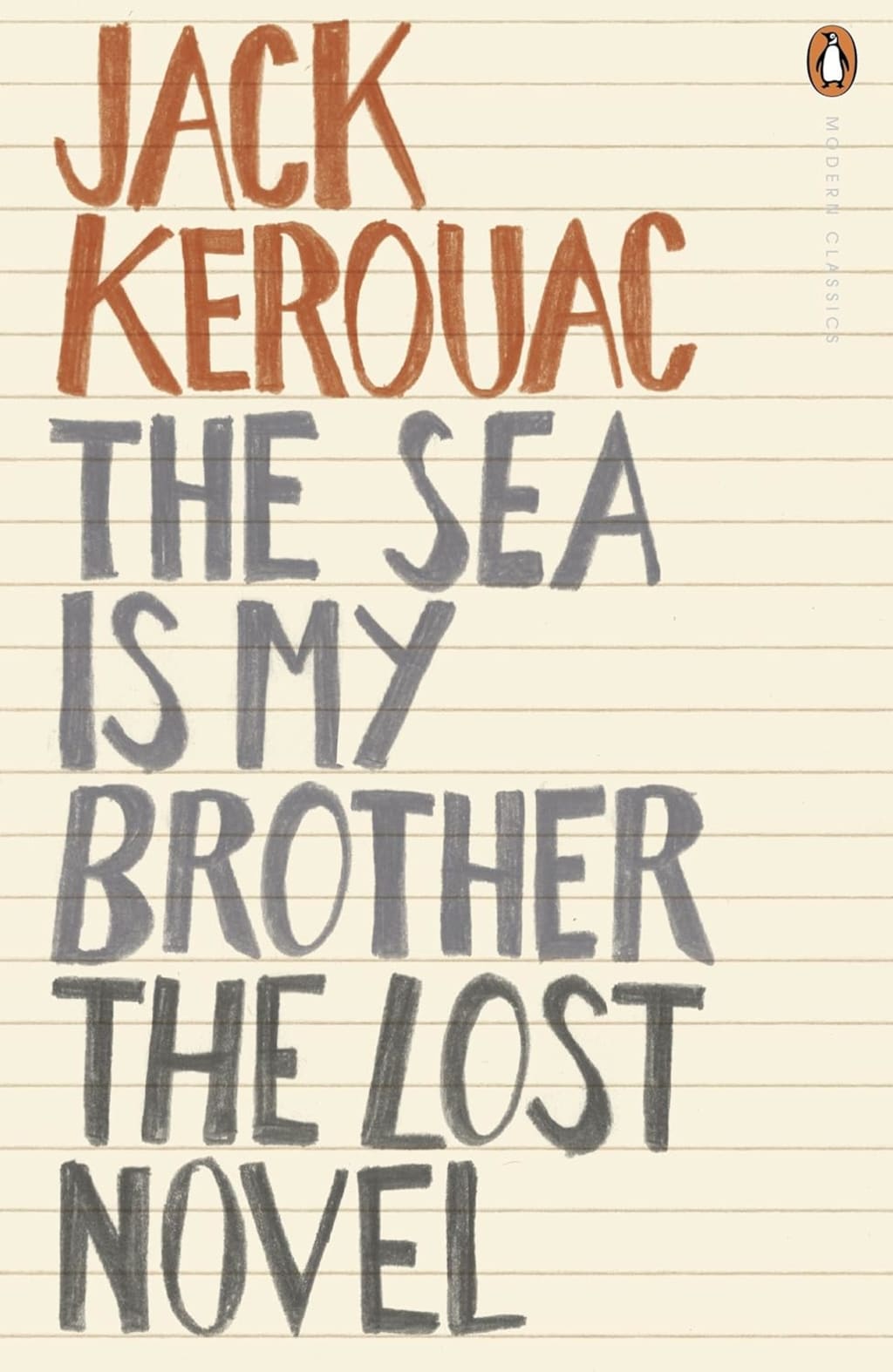
The Sea is My Brother is Jack Kerouac's first novel, written in 1942 but not published until 2011, long after his death in 1969. The novel was originally written when Kerouac was just 20 years old, during a period of personal and literary exploration. It remained unpublished during his lifetime, reflecting Kerouac's own dissatisfaction with it and his desire to refine his writing style further.
The manuscript was discovered among Kerouac's papers by his brother-in-law, John Sampas, who edited and prepared it for publication. Its release in 2011 provided literary scholars and fans of Kerouac's work with an opportunity to delve into his early influences and writing style before he achieved fame with On the Road and other works associated with the Beat Generation.
The Sea is My Brother explores themes that would later become central to Kerouac's oeuvre: the search for meaning, the allure of adventure, and the restless spirit of youth. Set against the backdrop of World War II, the novel follows the journey of two young men, Wesley Martin and Bill Everhart, as they contemplate life, friendship, and the complexities of existence. The novel's publication shed light on Kerouac's formative years and provided insight into his early literary aspirations and themes that would resonate throughout his career.
Plot
The Sea is My Brother follows the journey of Wesley Martin, a young intellectual who sets out on a merchant marine ship bound for Greenland during World War II. On board, he meets Bill Everhart, a charismatic sailor who becomes his companion on this voyage of discovery. The novel explores their evolving friendship, philosophical discussions, and encounters with fellow crew members.
As they sail through the Atlantic, Wesley and Bill engage in deep conversations about life, literature, and the meaning of existence. They grapple with existential questions, pondering the nature of freedom, duty, and the pursuit of happiness amidst the chaos of war. Their interactions with the crew members provide glimpses into the diverse personalities and motivations of those living and working on the ship.
The narrative unfolds through vivid descriptions of life at sea, capturing both the beauty and harshness of the maritime environment. Kerouac's prose reflects his early experimentation with language and narrative style, offering readers a glimpse into his evolving literary voice.
Overall, The Sea is My Brother is a coming-of-age story that explores themes of friendship, identity, and the search for meaning against the backdrop of a world engulfed in war.
Into the Book
The Sea is My Brother prominently explores the existential quest for meaning and identity amidst the backdrop of World War II. Kerouac's protagonist, Wesley Martin, embodies this theme as he grapples with his intellectual pursuits and philosophical musings while at sea. His introspective nature is highlighted in passages where he contemplates the purpose of life and his role in the world.
This theme resonates throughout the novel as Wesley seeks deeper connections with his surroundings and questions societal norms. His interactions with Bill Everhart and the other crew members serve as catalysts for introspection, reflecting Kerouac's exploration of the complexities of human existence.
"Wesley stared out into the vast expanse of the sea, feeling a profound sense of insignificance amidst its endless waves. He wondered if his life held any purpose beyond the confines of his own ambitions."
- The Sea is My Brother by Jack Kerouac
Friendship emerges as a central theme in "The Sea is My Brother," depicting the evolving relationship between Wesley Martin and Bill Everhart. As they navigate the challenges of life at sea, their bond deepens through shared experiences and mutual support. Kerouac portrays the nuances of their camaraderie through moments of camaraderie and conflict.
This theme underscores the importance of human connection amidst adversity, illustrating how friendship becomes a source of strength and resilience for the characters in their pursuit of personal and collective goals.
"Bill's laughter echoed through the cramped quarters of the ship, breaking the monotony of their journey. Wesley found solace in their conversations, grateful for Bill's unwavering loyalty in the face of uncertainty."
- The Sea is My Brother by Jack Kerouac
Kerouac romanticises the idea of adventure and freedom through the maritime setting of the novel. The open sea symbolizes a boundless realm of possibility and escape from the constraints of conventional society. Wesley's yearning for exploration and discovery is palpable as he immerses himself in the rhythms of ship life.
This theme captures the allure of the unknown and the transformative power of travel, reflecting Kerouac's own fascination with the road and the quest for transcendence. The novel celebrates the spirit of adventure as a means of self-discovery and personal growth.
"As the ship cut through the ocean's waves, Wesley felt a surge of exhilaration, captivated by the freedom that lay beyond the horizon. He yearned to explore distant lands and discover new truths about himself and the world."
- The Sea is My Brother by Jack Kerouac
Why It's a Masterpiece

The Sea is My Brother is considered a masterpiece primarily for its early exploration of themes and styles that would define Jack Kerouac's later work. Despite its initial publication long after his death, the novel provides valuable insights into Kerouac's formative years as a writer and thinker.
Firstly, the novel showcases Kerouac's burgeoning literary voice and his early experimentation with narrative techniques. His vivid descriptions of life at sea and introspective musings reflect a rawness and authenticity that would characterise his later, more celebrated works.
Secondly, The Sea is My Brother lays the foundation for Kerouac's exploration of existential themes such as the search for meaning and the quest for identity. These themes resonate deeply throughout the novel, offering readers a glimpse into the philosophical underpinnings that would permeate much of Kerouac's writing.
Lastly, the novel serves as a testament to Kerouac's ability to capture the essence of youth and the spirit of adventure. Through the characters of Wesley and Bill, Kerouac portrays the restlessness and yearning for freedom that defined the Beat Generation's ethos.
In essence, The Sea is My Brother is celebrated not only for its literary merit but also for its role in contextualising Kerouac's broader literary journey. It stands as a testament to his early aspirations and provides a valuable lens through which to explore the themes and stylistic innovations that would define his later, more renowned works.
Conclusion

Throughout his career, Kerouac continued to revisit and expand upon the themes introduced in The Sea is My Brother, demonstrating a persistent fascination with the human condition and the quest for transcendence. The novel's publication posthumously allowed readers to trace Kerouac's literary evolution and appreciate the ways in which his early ideas and stylistic innovations shaped the landscape of American literature.
Ultimately, The Sea is My Brother serves as a testament to Kerouac's enduring legacy as a writer who dared to explore the depths of human experience with honesty and introspection. Its themes continue to resonate with readers today, offering a timeless exploration of the universal desire for freedom, connection, and self-discovery.
Next Week: The Grass Arena by John Healy
About the Creator
Annie Kapur
I am:
🙋🏽♀️ Annie
📚 Avid Reader
📝 Reviewer and Commentator
🎓 Post-Grad Millennial (M.A)
***
I have:
📖 280K+ reads on Vocal
🫶🏼 Love for reading & research
🦋/X @AnnieWithBooks
***
🏡 UK
Keep reading
More stories from Annie Kapur and writers in Geeks and other communities.
Book Review: "William" by Mason Coile
I did not think I would find a good new-age Halloween read this year but, yet again I was wrong. Dystopia is fine, horror is fine, but when we combine both of them to create what is a great new-age thriller - that is something else entirely. When I heard of this book I knew I had to have it straight away.
By Annie Kapurabout a year ago in Geeks
Silver Screen Magic with Mae West
American actress and singer Mae West became a popular film actress during the Great Depression. She started entertaining in vaudeville, then performed on Broadway, and finally went to Hollywood. She signed up with Paramount Pictures and made her debut in the 1932 film “Night After Night.” She also starred in musicals, comedies, and crime dramas. The American Film Institute named her one of the best classic Hollywood actresses.
By Rasma Raisters7 days ago in Geeks
How to Succeed at the Benson Directory®
Congratulations and welcome to the Benson Directory® employee #22391! As our newest call handler, you will have the privilege of speaking with dozens of unique and interesting people on a daily basis as well as the opportunity to earn bonuses for high performance. Contained within this handbook you will find a set of ease to follow instructions designed to help you settle in to your new role and begin paving the way to success.
By S. A. Crawford3 days ago in Fiction



Comments
There are no comments for this story
Be the first to respond and start the conversation.