
Book Review: "Fake Heroes" by Otto English
5/5 - some heroes really do have a thousand faces...

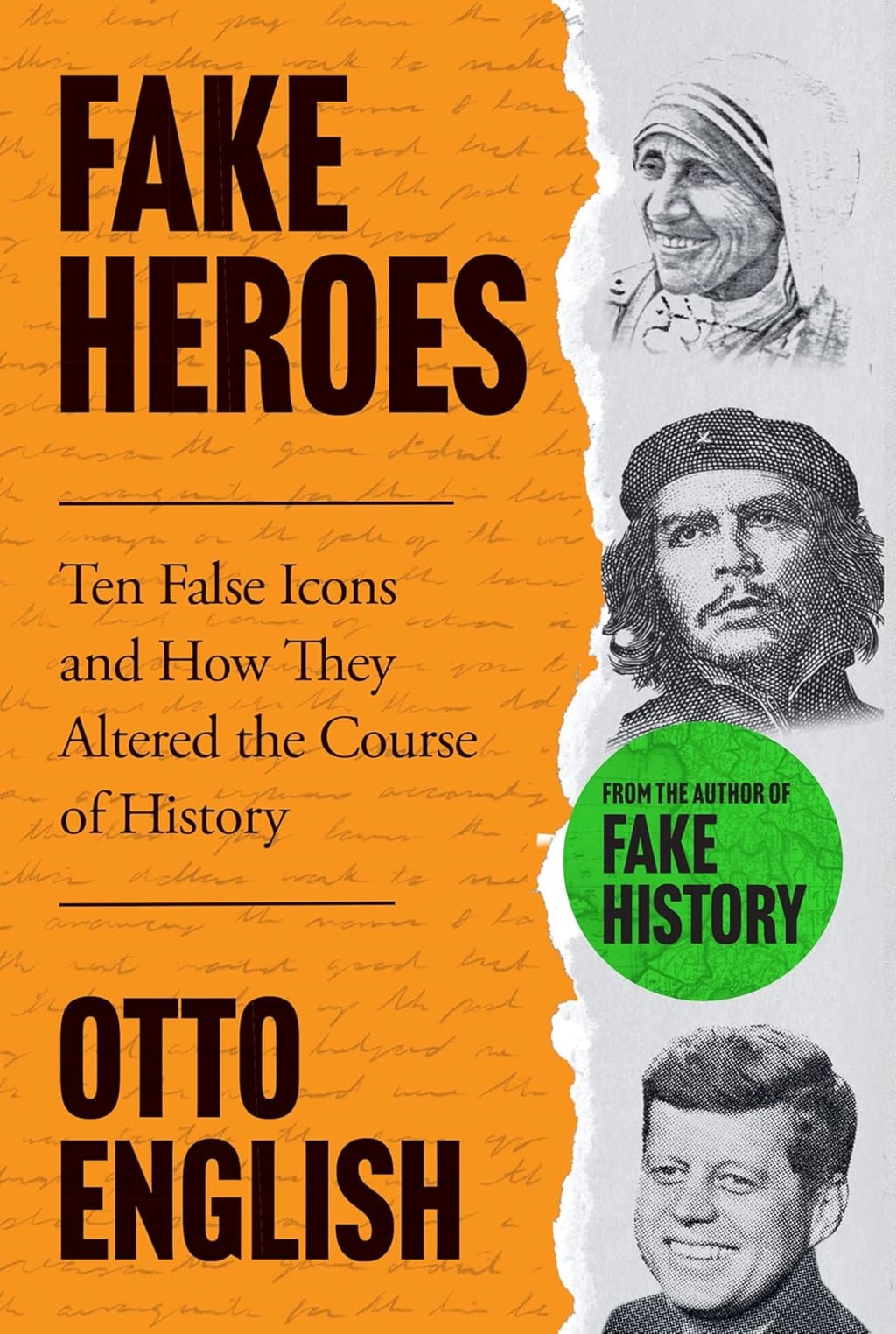
You can really tell when I've been paid because I'll splash out on a book I've wanted to read for ages but has always been a bit expensive even to buy on the Kindle. Fake Heroes is one of those books. This is one of those books where I thought 'yes it's nonfiction, but is it going to be more data-based or entertaining?' and it happened to be a cool mix of the two. I was not really very surprised by the people explored in the book and the way in which for example, the cinema industry exploited the death of Rudolph Valentino in order to shake up talk for the re-release of his movies. But what I was surprised about is how it made me confront how I often idolise people like perhaps JFK - who has a lengthy chapter in this book that doesn't colour him a very good person.
One of the most fascinating chapters delves into the story of Wesley Autrey, a New York construction worker whose heroic act on a subway platform catapulted him into global fame. Autrey’s story is one that many will recognize: in 2007, he leapt onto the subway tracks to save a young man, Cameron Hollopeter, who had fallen during a seizure. With a train barreling toward them, Autrey pinned Hollopeter into the trench between the rails, saving his life as the train passed over them.
English treats Autrey’s bravery with the respect it deserves—he doesn’t deny the courage and selflessness of the act. However, the chapter explores what happened after the moment of heroism and how the narrative surrounding Autrey spiraled out of his control. English highlights how the media, politicians, and corporations quickly seized on Autrey’s story, transforming him into the “Subway Hero” overnight. He became a symbol of selflessness and ordinary heroism, celebrated on talk shows, featured in news stories, and even given honours by city officials. This is something that gets explored in the book - how the media shapes our opinions about people.
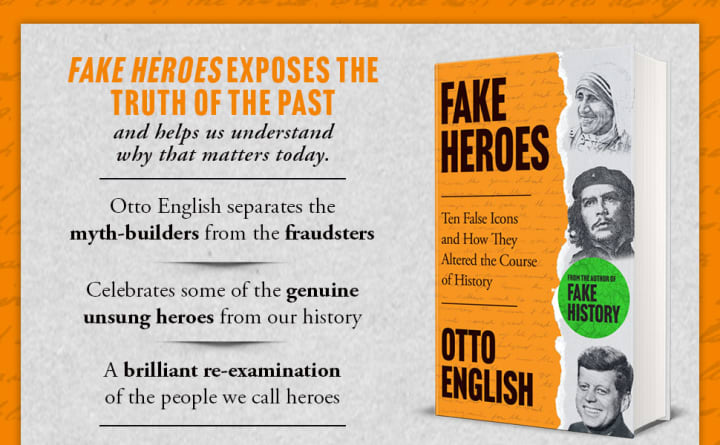
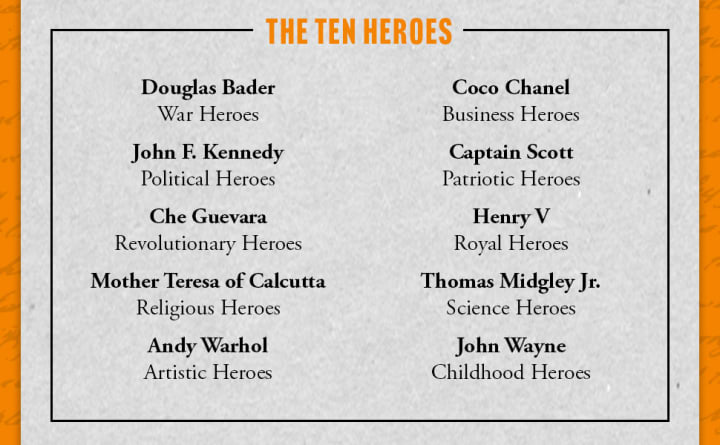
Similarly, John F. Kennedy is subjected to English’s scrutiny, and the result is a searing critique of the carefully cultivated Camelot myth. While JFK is often remembered as a charismatic and forward-thinking leader, English unpacks the darker aspects of his presidency, including his reckless personal behavior and questionable political decisions. English doesn’t just focus on Kennedy’s extramarital affairs—though these are explored in detail—but also delves into his covert involvement in disastrous operations like the Bay of Pigs invasion. English paints a picture of a man whose charm and photogenic family masked a presidency fraught with missteps and moral compromises. Again, this is something I have personally had to confront as I admittedly have a great interest in the family Kennedy - especially the two late brothers: JFK and RFK.
Another part of the book deals with someone who I have had some personal gripes with though I often do not voice them. Che Guevara’s transformation from revolutionary leader to global symbol of rebellion is another fascinating case study. English explores how a man responsible for acts of violence, authoritarianism, and oppression became a pop culture icon plastered on T-shirts and posters. The chapter delves into Guevara’s role in post-revolution Cuba, highlighting his support for mass executions and his belief in rigid, dogmatic socialism. English critiques the oversimplification of Guevara’s legacy, which often ignores the more troubling aspects of his ideology and actions. Che Guevara is one of those classic examples of people perhaps misunderstanding what he actually did.
While the individual case studies are compelling in their own right, the true strength of Fake Heroes lies in the broader questions it raises about why we create heroes in the first place. English argues that hero worship often serves as a way to simplify complex historical narratives, turning messy, morally ambiguous events into digestible stories with clear protagonists and antagonists. This process, he contends, not only distorts history but also allows those in power to manipulate public perception for their own ends.
All in all, this is a bold, provocative, and deeply thought-provoking book that will leave you questioning everything you thought you knew about the figures who shaped our world. If you’re ready to challenge your assumptions and dive into the murky waters of historical truth, Fake Heroes is the perfect place to start. I know I'm going to think about it more often.
About the Creator
Annie Kapur
I am:
🙋🏽♀️ Annie
📚 Avid Reader
📝 Reviewer and Commentator
🎓 Post-Grad Millennial (M.A)
***
I have:
📖 280K+ reads on Vocal
🫶🏼 Love for reading & research
🦋/X @AnnieWithBooks
***
🏡 UK
Keep reading
More stories from Annie Kapur and writers in Geeks and other communities.
Book Review: "The Eyes are the Best Part" by Monika Kim
I had no idea what this book was going to be about before I got it because again, I fell into the trap of judging a book by its cover. I mean, just look at the covers of the book - all of them look so freaky and strange I had to have it. I read a little bit about how this was the author's debut novel and got a bit sad thinking about the fact I wouldn't be able to investigate anything they had written before. A deeply disturbing horror novel that flickers with social commentary, bleary-eyed with satire and then spits on itself with black comedy; this is really one for our modern ages - a truly great contemporary horror novel.
By Annie Kapur10 months ago in Geeks
Silver Screen Magic with Mae West
American actress and singer Mae West became a popular film actress during the Great Depression. She started entertaining in vaudeville, then performed on Broadway, and finally went to Hollywood. She signed up with Paramount Pictures and made her debut in the 1932 film “Night After Night.” She also starred in musicals, comedies, and crime dramas. The American Film Institute named her one of the best classic Hollywood actresses.
By Rasma Raisters7 days ago in Geeks
Reed Richards And Doctor Doom's Longtime Feud, Explained
American superhero comics are filled with unending rivalries between do-gooders and evil-doers. Few are more enduring and epic than the feud shared by Mister Fantastic/Reed Richards, leader of the Fantastic Four, and his nemesis, the tin-plated tyrant Doctor Victor von Doom.
By Dena Falken Esq7 days ago in Geeks




Comments (3)
This article you have created is fantastically insightful and thought-provoking. your exploration of Fake heroes really sheds light on how media and public perception shape the way we idolize figures, often distorting reality. The capter on welsy Autrey, in particular, highlits the complexity behind heroism and the consequences of fame.it enormously captivating to the reader and an excellent post, I pray, all over among the vocal reader as a top end of the week.
We all have feet of clay, but I'm very glad to see Mother Teresa's face on the cover (she deserves the take down).
Great article. Thanks for sharing