
Book Review: "Exam Nation" by Sammy Wright
3/5 - an important book which could have done with actual research instead of anecdotes and student opinion...

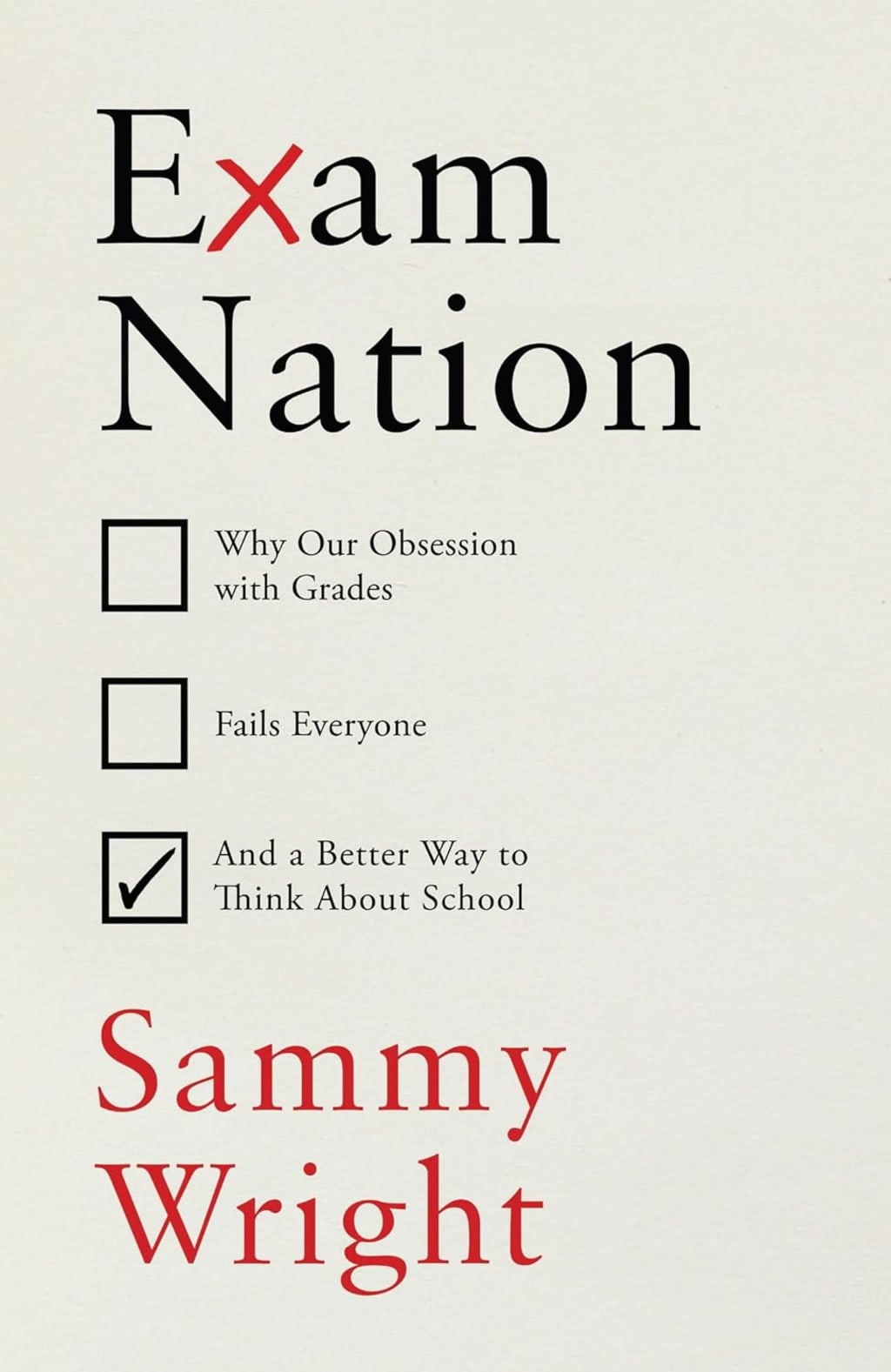
A lot of people have told me that this is one of the primary books on 21st century post-COVID secondary education to read and so, I had a go at reading it. I'm not going to lie to you - it is rather a mixed bag. Some of it is pretty well researched and other parts are anecdotal bulls*** that doesn't apply to anywhere else except for his small context. There are also oddities in the arguments he makes.
For example: one of the arguments is that there is not much writing or reading required but instead, there can be conversation in class - this is as he tells a story in part 2 about some Dead Poet's style teaching method that in reality, doesn't actually work when you've got students who cannot access the depth of the conversation. All in all, I think a lot of this book is wishful thinking because I would like to ask: if we do not examine students on their ability in the subject, then how do we test how capable they are on a scale? We can't.
Wright argues that the current exam-centric model ties a student’s worth to their grades, causing them to internalise failure as a personal flaw. This link between achievement and self-esteem pressures students to chase high grades as proof of their value, which can undermine their intrinsic love for learning. He suggests that when students define themselves by results, it stifles their confidence to explore and make mistakes—key elements for real intellectual growth and self-discovery. This is all well and good, but my question is: if there is a child who loves learning but is not very good at doing it effectively, should we let them fail because they love doing the learning their way or should we actually teach them to do well regardless of how they feel about it? Which one is going to have a better outcome that is measurable? My point exactly.
The grading system’s bias during the COVID-19 crisis illustrated how the system penalises disadvantaged schools. Wright describes how statistical models that factored in past performance ended up penalising students at low-performing schools, resulting in lower-than-deserved grades. He uses this crisis to illustrate how data-driven assessment tools, while intended to provide fairness, can entrench social inequities and send damaging messages to students who are already marginalised, reinforcing cycles of underachievement. This I actually agree with. If you're going to put all of your resources online and on Zoom, you have to be ready for those children who do not have access to that stuff. Also, you have to be ready for a widening gap in those resources since the ones that are richer will have no doubt, access to better resources.
Wright argues that the current model perpetuates inequality by ignoring factors like financial instability, overcrowded housing, and limited resources that disproportionately affect poorer students. He describes how such students often face barriers to success long before they reach the exam room, with the rigid exam model showing no flexibility for these challenges. By failing to account for these contexts, the system unfairly disadvantages students, making true educational equality nearly impossible. I think that though this is true, the methods that some schools have implemented into solving it are just plain wrong. Michaela Community School seems to be the only one that has been successful and others can learn from it.
Wright highlights how exam-centric education incentivises a narrow curriculum, focusing on “core” subjects like English and Math while downplaying the importance of the arts, physical education, and vocational studies. Teachers are often pressured to teach “to the test” to boost exam results, which limits students' exposure to a well-rounded education. This narrow focus, he argues, restricts students’ opportunities to explore diverse interests and develop a wide range of skills that would better prepare them for varied future challenges. This may be a good point if he were to offer an alternative instead of looking at it through the idea of 'love of learning' which cannot be measured. If we wanted to measure something and look at one thing that can be measured and one thing that cannot - which one are we going to look at in order to measure it? Exactly.
Wright calls for sweeping changes to the UK educational system to promote a culture that respects varied talents, backgrounds, and paths to success. His vision is an education system that celebrates diversity, focuses on nurturing resilience and emotional health, and prepares students for a wide range of careers and lifestyles. This approach, he argues, would produce not only academically capable individuals but also adaptable, compassionate citizens, fostering a society that values personal fulfillment and societal contribution as much as academic excellence. All in all, this is something I can get on board with if there is a clear vision rather than something that sounds like it's from a Hollywood movie with little actual research on the big topics. I'm sorry, I cannot believe this cherry-picked interviewing-students research which is, in itself, laden with tons of confirmation bias on each side.
I would like to thank 'May Contain Lies' by Alex Edmans for fostering my analysis of data that has now clouded it so much that I am cynical about everyone's research for everything. Yeah mate, thanks a lot.
About the Creator
Annie Kapur
I am:
🙋🏽♀️ Annie
📚 Avid Reader
📝 Reviewer and Commentator
🎓 Post-Grad Millennial (M.A)
***
I have:
📖 280K+ reads on Vocal
🫶🏼 Love for reading & research
🦋/X @AnnieWithBooks
***
🏡 UK
Keep reading
More stories from Annie Kapur and writers in Geeks and other communities.
Book Review: "Surrounded by Liars" by Thomas Erikson
You guys probably remember when I read Surrounded by Idiots by Thomas Erikson some time ago when I was staying in Manchester for a bit. You also probably remember how I said it had a huge data problem in which it didn't really have very much research going on at all. Unfortunately, this trend has spilt over into Surrounded by Liars but that does not mean it's no fun to read. The book is still quite a lot of fun if you're not going to take it too seriously and so, that being said, I'm going to move away from the obvious data problem because I've already looked at that. Instead, let's just focus on what the book has to say about liars and lying.
By Annie Kapurabout a year ago in Geeks
Silver Screen Magic with Mae West
American actress and singer Mae West became a popular film actress during the Great Depression. She started entertaining in vaudeville, then performed on Broadway, and finally went to Hollywood. She signed up with Paramount Pictures and made her debut in the 1932 film “Night After Night.” She also starred in musicals, comedies, and crime dramas. The American Film Institute named her one of the best classic Hollywood actresses.
By Rasma Raisters5 days ago in Geeks
The Devil's Cut
“Comrade, finally you’re awake.” The voice was smooth, sensual. A flickering incandescent bar was all that lit the white, sterile room. All Vladimir remembered was everything going black. He tried to move his arms and found them strapped to the gurney.
By Matthew J. Fromm4 days ago in Fiction



Comments
There are no comments for this story
Be the first to respond and start the conversation.