
Book Review: "By Grand Central Station I Sat Down and Wept" by Elizabeth Smart
5/5 - one of the most passionate books I've read this year...

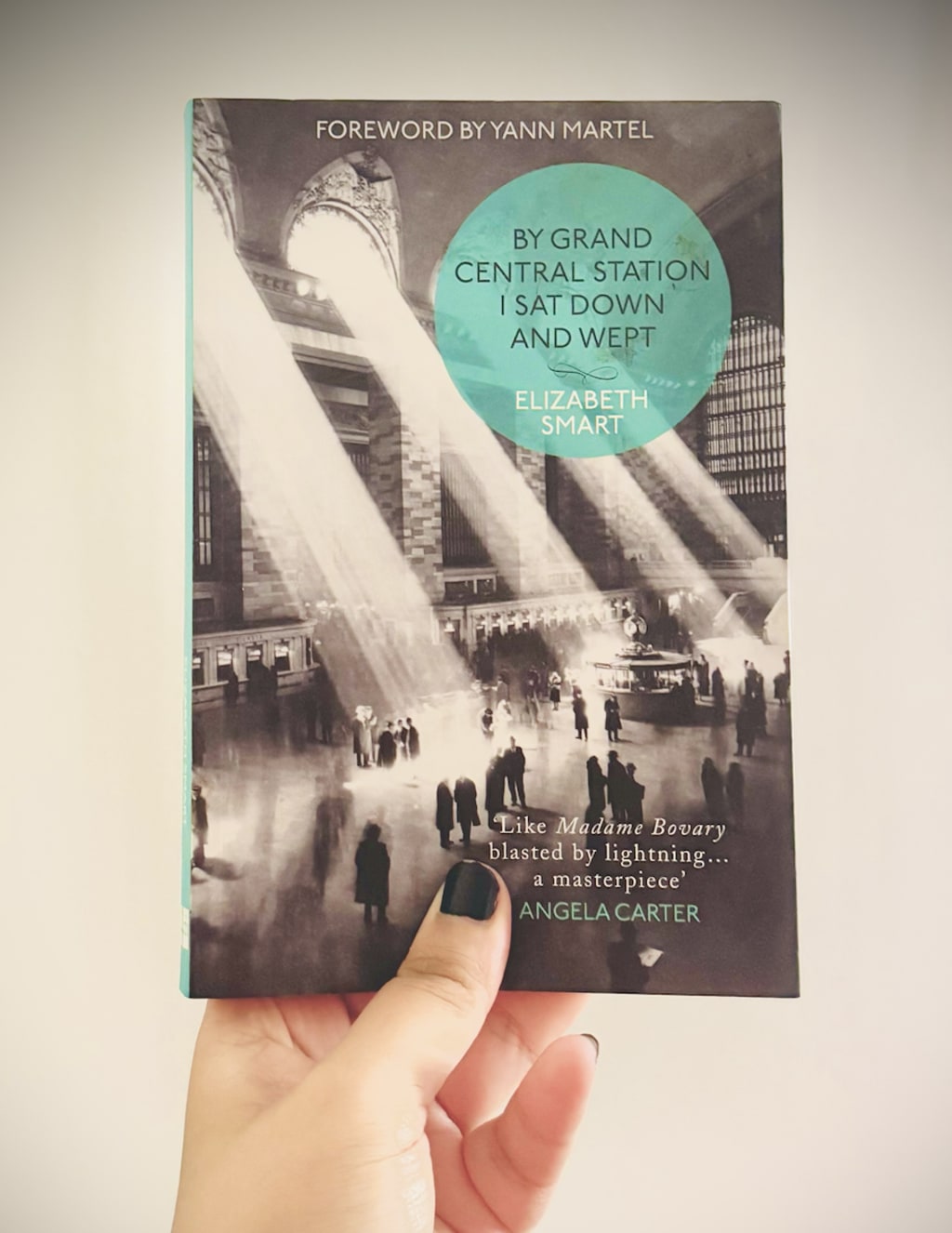
I randomly picked up this book from a used bookshop online for like £2 and at the time, I had heard of it but vaguely. I didn't realise though just how important By Grand Central Station I Sat Down and Wept was until I actually started reading it. Let's just say you can really see the influence it had over The Smiths - so I guess that was a surprise. This book is wonderfully written - the poetic nature of the author's emotions seems to capture what it feels like to be falling continuously down a deep, dark hole of madness. Some of the passages are worth a second read and some of them are so brilliant, you can't seem to move past them.
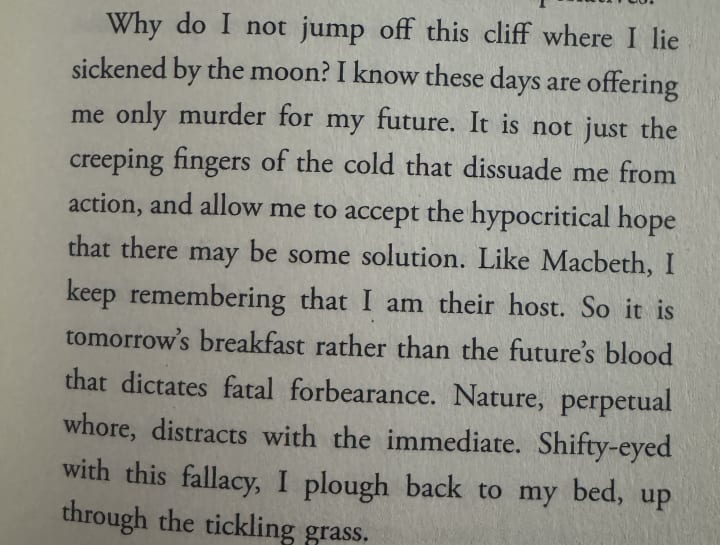
Passion, despair and love are three of the key emotions that underline this unconventional novel of prose poetry. Compact as it is, it still seems to cover these emotions in great depth, complete with meditations and philosophies on how things become more and more misunderstood as life goes on. There's a passage I particularly loved in this book in which the author discusses suicide in a way that is purposefully shaded by other thoughts. It is a beautiful passage and Elizabeth Smart has very clearly chosen each and every word for its purpose. I'll attach it as a picture here so that you can have a look to, maybe it will get you to read the book.
The novel is about an affair and as the affair progresses, there is clearly more of a fire in the text. The narrator experiences moments of ecstatic union followed by crippling loneliness and shame. The beloved becomes both god and executioner, both the source of illumination and torment. This language seems to echo the allusions to Greek and Roman mythology, which is also something that continues throughout the text. I'm not going to lie, there is definitely some relation between this book and probably the works of Ovid considering the way in which the language of passion and torment are used.
Smart’s beloved is a poet and he is a man whose art becomes intertwined with his cruelty. The narrator sees him as both muse and destroyer, the one who gives her vision but denies her peace. Through this dynamic, Smart critiques the gendered imbalance of artistic myth: the male genius who consumes the woman who loves him. It is one of the biggest themes in the text in which the author often uses mythology. I have to say again, I was absolutely floored by the way this writer can intertwine the beauty of language with the destructive quality of being a woman in a relationship with a man.
The narrator’s love becomes a form of mysticism, it is an encounter with the divine through the body. Biblical rhythms and allusions abound: she compares herself to Mary Magdalene, to Rachel weeping for her children, to Christ bearing the cross. This fusion of the sensual and spiritual gives the prose a hypnotic intensity. Love is transfigured into worship; sin becomes revelation. It's both incredible and often, it disgusts me because I know that this is definitely a one-way thing. Unrequited obsession and all those horrors bubble around. He is quite honestly nowhere near as emotional about her as she is about him. You can almost tell just by the way she uses these allusions.
One of the most famous episodes in the book is when the author is arrested at the American border on suspicion of immoral behaviour. Questioned by officials, she experiences the full humiliation of being judged by the banal machinery of society. Yet even here, she refuses reduction: her interior world remains vast and radiant. She comments on how this institutional rigidity and this masculine way of dealing with things more than often, in more than just love, seeks to crush female passion and emotion out of fear of the way in which they love and care. I think every woman has experienced having her emotions and her passion crushed or disregarded by a man and honestly, it is probably why we don't talk to most of them anymore.
All in all, I thought this book was fantastic. It is a brief moment in a woman's life but has profound changes upon her character. It is such an important book - if you can pick up a copy I would highly recommend it.
About the Creator
Annie Kapur
I am:
🙋🏽♀️ Annie
📚 Avid Reader
📝 Reviewer and Commentator
🎓 Post-Grad Millennial (M.A)
***
I have:
📖 280K+ reads on Vocal
🫶🏼 Love for reading & research
🦋/X @AnnieWithBooks
***
🏡 UK
Keep reading
More stories from Annie Kapur and writers in Geeks and other communities.
Book Review: "Southern Mail/Night Flight" by Antoine de Saint-Exupéry
You've probably read my review of Flight to Arras by Saint-Exupéry and if you haven't then I suggest you check it out. I'm making it my business to read his other books and not just The Little Prince, no matter how legendary The Little Prince may be. There's something incredibly moving about his words, the way he writes is constantly embued with atmosphere and philosophy. When I read Flight to Arras there was that extract about the clocks which I have to say, once I finished the book, I went back and reread. His books are all so well written, so why limit yourself to just one? Let's take a look at his book Southern Mail/Night Flight which was just as fantastic...
By Annie Kapur3 months ago in Geeks
Silver Screen Magic with Mae West
American actress and singer Mae West became a popular film actress during the Great Depression. She started entertaining in vaudeville, then performed on Broadway, and finally went to Hollywood. She signed up with Paramount Pictures and made her debut in the 1932 film “Night After Night.” She also starred in musicals, comedies, and crime dramas. The American Film Institute named her one of the best classic Hollywood actresses.
By Rasma Raisters5 days ago in Geeks
2026 Hollywood: The Year of Frankensteined Franchises
A quick Google search on 2026 Western movie releases will provide one with a very curious list: The Odyssey, The Batman Part II, Blade, Masters of the Universe, The Legend of Aang: The Last Airbender, Aladdin 2, 28 Years Later: The Bone Temple, Scream 7, Fantastic Beasts 4 (really? another one?), Shrek 5, Toy Story 5, Jumanji 3 (which should be the fourth one, but people seem to have forgotten about Robin Williams' (R.I.P.) film), The Hunger Games: Sunrise on the Reaping (what more of this franchise could there be to tell?), Star Wars: The Mandalorian and Grogu (people will only show up for Grogu), Spider-Man: Brand New Day...
By Andrei Babanin6 days ago in Geeks


Comments (1)
I'm a little confused 😅 Is this fiction or non fiction? Loved your review!