
Book Review: "A Taste for Poison" by Neil Bradbury
5/5 - a captivating account of the deadliest poisons of the past and present...

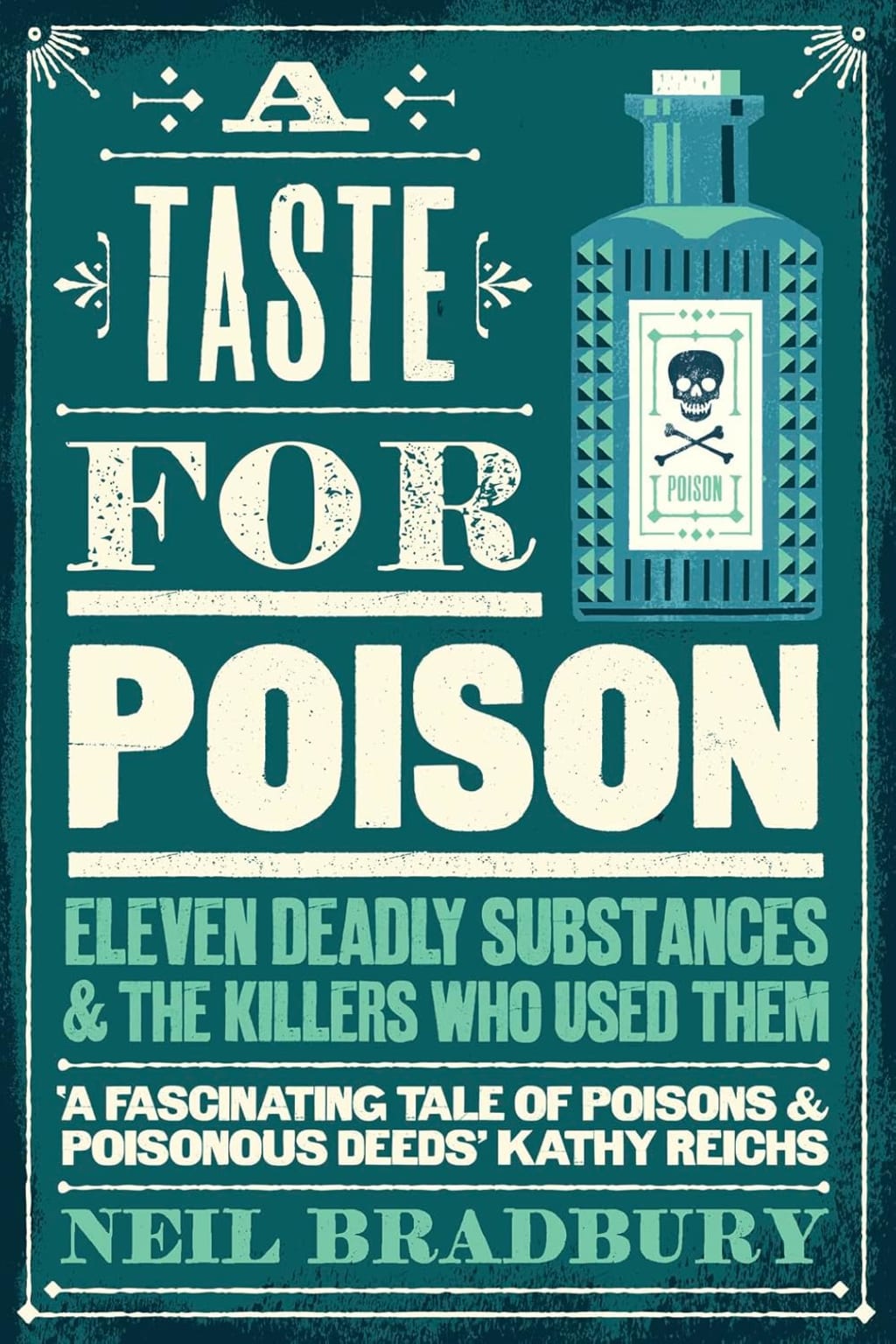
I love my fair share of books about weird deaths that happened in the Victorian Era. But this book is even more interesting as it mixes the Victorian Era weird death complex with the idea that certain substances even by the start of the 20th century, were thought to be entirely safe - not even used for the poisonings that they are so very well known for. It was a turbulent time that fifty or so years that saw the downturn of the Victorian Era and the upstart of out modern times, but this is also where so many chemicals and toxins also changed their tune and no longer were things like Strychnine considered a 'pick-me-up', though I've got no doubt it could definitely make you smile.
Bradbury explores how each poison exerts its effects at the cellular and molecular level. He explains the processes by which poisons interrupt cellular functions, such as respiration or neurotransmission. For example, cyanide prevents cells from using oxygen by blocking a critical enzyme in the mitochondria, which causes cells to die from lack of energy.
Bradbury also discusses the speed and efficiency of different poisons in shutting down bodily functions, illustrating why some poisons cause immediate symptoms while others may take days or weeks to manifest. I found this fascinating and given the fact I hated science at school, that is really saying something. Bradbury teaches us this with incredible detail and it makes so much of a difference when we learn about individual cases.
The book delves into the long history of poisons, used for assassination, political maneuvering, and in wars. Bradbury describes infamous cases from ancient times—like Cleopatra’s use of snake venom for suicide—and later examples, such as Catherine de’ Medici, who reportedly experimented with different toxins to learn their effects. These accounts highlight how poison has been a tool for those in power or those who needed a discreet weapon, emphasising the strategic planning often involved in such acts. This makes the book a lot more interesting because now we know we're going to see the people who killed others using poison.
Each poison Bradbury discusses is linked to a real-life case, providing a narrative that connects science with true crime. He recounts cases like that of Graham Young, who poisoned his family and colleagues over years, using thallium. These case studies offer insight into the psychology of poisoners and their meticulous planning, as well as the forensic challenges investigators faced in the absence of advanced toxicology tools.
Bradbury also looks at famous poisonings, like the murder of Russian dissident Alexander Litvinenko using radioactive polonium, underscoring the adaptability of poisons for modern crimes. This is something that is really eye-opening because many of us only encounter these kinds of poisonings in British Crime Novels of the 1930s and before. Moving these not only to real life, but to the modern day shows us that these things are not just for the early 20th century novel.
The book reveals the surprising array of deadly poisons found in everyday products. For instance, ethylene glycol in antifreeze is deadly if ingested and has been used in homicides due to its sweet taste, making it hard to detect. Bradbury also describes how certain ornamental plants, such as oleander and foxglove, contain powerful toxins that can cause cardiac arrest if ingested.
This section of the book shows that familiarity with these household toxins can prevent accidental poisonings and highlights the role of chemistry in understanding everyday dangers. This is also true when we come to the end of the book and see the section on 'Garden of Death'. There is something actually quite frightening about living amongst so many deadly things in our everyday lives - things that seem almost unsuspecting.
All in all, Bradbury reflects on why poison has had a unique allure for killers throughout history—it is discreet, requires little physical strength, and often allows the poisoner to avoid direct confrontation. He explores how poison has been viewed as a “cowardly” weapon, but also notes its prevalence among educated criminals who understood its scientific properties.
He raises ethical questions about the use of poison in warfare and espionage, suggesting that it has been chosen as a means of control, evoking fear while often leaving no obvious signs of violence. It is something most captivating when you learn about how these people went about their crimes and tried to prevent themselves from being found out.
About the Creator
Annie Kapur
I am:
🙋🏽♀️ Annie
📚 Avid Reader
📝 Reviewer and Commentator
🎓 Post-Grad Millennial (M.A)
***
I have:
📖 280K+ reads on Vocal
🫶🏼 Love for reading & research
🦋/X @AnnieWithBooks
***
🏡 UK
Keep reading
More stories from Annie Kapur and writers in Geeks and other communities.
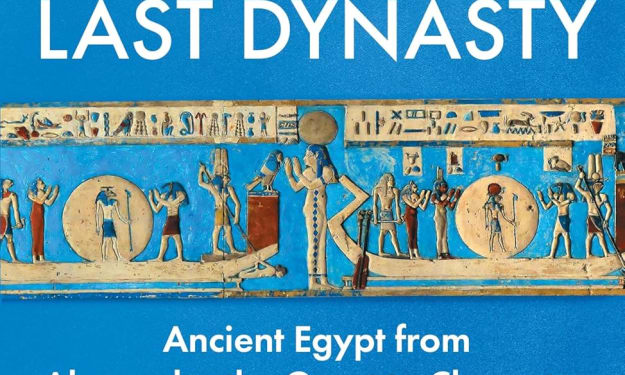
Book Review: "The Last Dynasty" by Toby Wilkinson
Full Title = The Last Dynasty: Ancient Egypt from Alexander the Great to Cleopatra by Toby Wilkinson I have never ever read anything by this author before but the book was in my Amazon Recommendations. Yes, I know, how did it get there, I have no idea. I don't really read anything about Ancient Egypt very often and so, I was confused and interested. As you can tell, I have been reading a lot of nonfiction lately and I promise, I will get back to fiction soon, but for some reason there has been a lot of great nonfiction found and released. For example: the new biography on Goethe and I also found some book on the Pendle Witches. I'm not someone who reads self-help books so that's not what I mean when I say nonfiction - instead, there are many random topics I'd like to know about and so, I seek them out.
By Annie Kapurabout a year ago in Geeks
Silver Screen Magic with Mae West
American actress and singer Mae West became a popular film actress during the Great Depression. She started entertaining in vaudeville, then performed on Broadway, and finally went to Hollywood. She signed up with Paramount Pictures and made her debut in the 1932 film “Night After Night.” She also starred in musicals, comedies, and crime dramas. The American Film Institute named her one of the best classic Hollywood actresses.
By Rasma Raisters6 days ago in Geeks
Reed Richards And Doctor Doom's Longtime Feud, Explained
American superhero comics are filled with unending rivalries between do-gooders and evil-doers. Few are more enduring and epic than the feud shared by Mister Fantastic/Reed Richards, leader of the Fantastic Four, and his nemesis, the tin-plated tyrant Doctor Victor von Doom.
By Dena Falken Esq7 days ago in Geeks
Wild Card Weekend Recap: What Happens Now?
I think I figured out why I love Wild Card Weekend so much. It's because it's the first playoff anything of the calendar year. The NFL season starts in the fall, and once upon a time, the champion was crowned either on or slightly before New Year's. The evolution of the NFL schedule has resulted in the playoffs starting just into the New Year, and currently, the final week of the season falls on the first weekend of the New Year, with Wild Card Weekend coming a week after that. So yes, chronologically, the NFL's Wild Card Weekend serves as the first playoff anything of the calendar year.
By Clyde E. Dawkins7 days ago in Unbalanced



Comments
There are no comments for this story
Be the first to respond and start the conversation.